
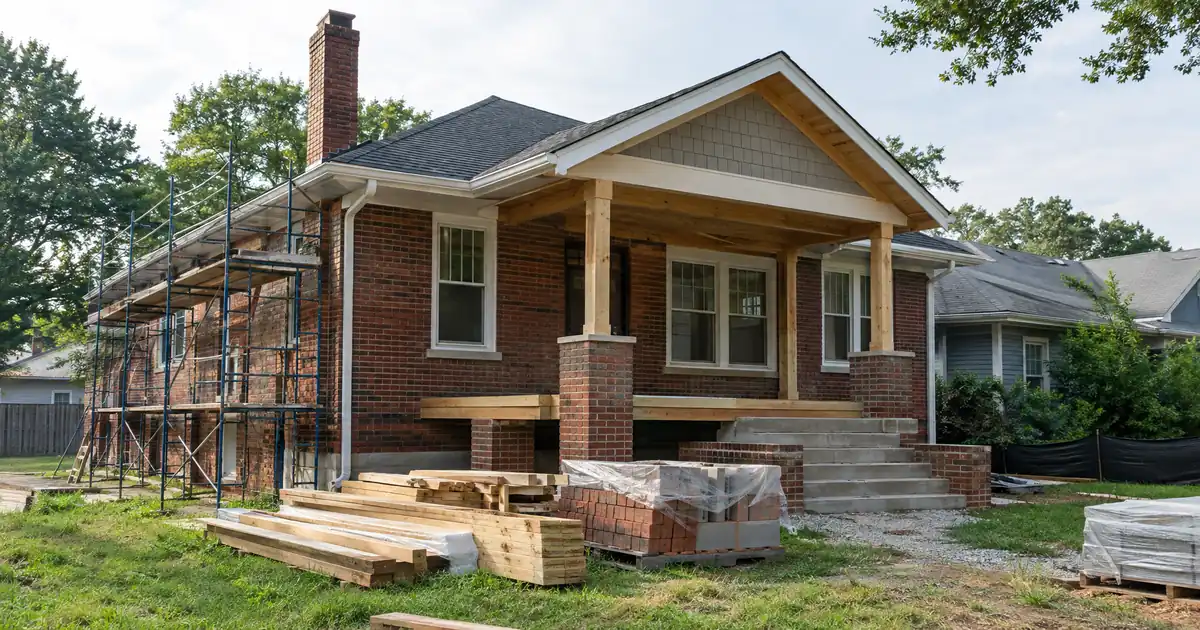
The Quick Read: A 40-year DSCR loan is long-term financing for a leased, stable rental, while a hard money loan is short-term bridge capital for a property that is not ready for permanent debt yet, and the cash-out decision comes down to which of those two situations the property is actually in.
- The DSCR route qualifies primarily on property-level rental income covering the payment, subject to lender guidelines.
- Hard money is asset-based: it reviews the property’s value, the plan and the exit.
- Across the wholesale network, cash-out on a standard rental tops out near 75% LTV. Hard money cash-out on a non-owner-occupied property runs up to 65% of value, and both vary by lender, property and experience.
- A 40-year term is available through select lenders and is usually 10 years interest-only plus 30 years amortizing.
- Clearing a coverage ratio is not the same as positive cash flow.
Who Each Option Is Really For
The 40-year DSCR loan fits an investor who owns a leased rental and wants equity out without a maturity date hanging over the property. Hard money fits an investor who needs capital against a property that cannot yet pass a rental-income review. Think vacant, mid-rehab or just acquired.
Both are business-purpose loans on non-owner-occupied property. They are built for different stages. Most of the bad files in this space come from using one tool at the other tool’s stage.
The cash-out label adds a wrinkle. On a DSCR file, cash-out means cash back above the payoff and costs. On a hard money file, the loan is often a bridge: it funds a purchase or rehab, or pulls equity out of a property that has no stable rent history. The structures are different, so the comparison below goes line by line.
Side-by-Side
The hard money column reflects published industry norms and the parameters used across the wholesale network. Every figure varies by lender, property and borrower experience, and nothing here is a commitment to lend.
| Factor | 40-Year DSCR Loan | Hard Money Loan |
|---|---|---|
| Review basis | Rent vs. full housing payment | Property value, plan, exit |
| Personal income docs | Not the qualifying basis | Not the qualifying basis |
| Credit review | Common floor 620-660; 700+ for top tiers | Around 620 minimum; added conditions below 660 |
| Cash-out leverage | Around 75% LTV, standard rentals | Up to 65% of value on cash-out |
| Term | Long-term; 10-yr IO plus 30-yr amortization is common | 6-18 months, interest-only |
| Exit needed | None; no maturity cliff | Required; sale or refinance |
| Property types | Leased or rentable 1-4 unit rentals | Non-owner-occupied 1-4 units |
| Seasoning | About 6 months common on cash-out | Lender-specific |
| Reserves | Often near 6 months of PITIA; varies | Lender-specific |
| Rehab funding | Generally not offered | Rehab draws available in the program |
| Entity vesting | LLC common, per program terms | LLC common |
Two rows deserve a second look. The first is the leverage row. People assume hard money always means more leverage. On a cash-out refinance in this network, the opposite is common, because the highest hard money tiers apply to cost-based purchase and rehab deals rather than equity pulls. The second is the exit row. A hard money cash-out is only as good as the refinance that retires it.
What “40-Year” Actually Means
A 40-year DSCR loan is usually not 40 years of straight amortization. The common build is a 10-year interest-only window, followed by 30 years of amortization. A true 40-year amortizing schedule exists at some lenders, but it is rarer. Both are available through select lenders in the network, not across the board. The spine of the network is still the 30-year fixed, and above $2,500,000 the network generally holds to 30-year fixed structures.
The structure matters for coverage. DSCR is eligible rent divided by PITIA: principal, interest, taxes, insurance and any association dues. A longer or interest-only structure lowers the payment the lender tests. A property with thin coverage on a 30-year schedule can show a stronger number on the same rent.
Here is the catch. Programs differ on which payment they test. Some qualify on the interest-only payment. Others make the file clear at the eventual fully amortizing payment. Same rent, same property, different answer. Ask which payment is tested before you build the deal around the ratio.
Two more mechanics matter:
- No principal paydown during the IO window. The balance stays flat until amortization starts.
- Payment reset. When the IO period ends, the payment steps up even though rent may not have moved.
When a 40-Year DSCR Loan Is the Better Fit
Pick the DSCR path when the property is stabilized and the plan is to keep it. The decision rule is simple: if the unit is leased, the rent is documentable and the work is done, permanent financing fits.
The property is leased and the rehab is finished. The lender orders an appraisal and a rent schedule. Coverage is measured against the full payment. There is nothing to bridge.
You want no maturity cliff. A hard money loan ends in months. A DSCR cash-out has no short-term maturity and no forced sale or refinance. For a long hold, that removes the biggest execution risk on the file.
Your income is hard to document. The loan is reviewed on documented rental income under the applicable program, not on personal income paperwork. Self-employed investors and portfolio owners often prefer that. Credit still matters. Most programs want around 660, and the strongest leverage tiers want 700+.
You are paying off a hard money note. The BRRRR exit is the classic case. Many investors refinance out of hard money into long-term DSCR financing once the property is stabilized, and Lendmire brokers that path. If the new loan covers only the payoff and costs, it generally behaves like a rate-and-term refinance, so seasoning rarely blocks it. Cash back above that triggers cash-out rules. Lendmire’s piece Hard Money Bridge vs Cash-Out Refinance for a Landlord Short on Time covers how that sequencing choice plays out.
Marginal coverage. Many select programs start at a 1.00 DSCR, and a 40-year interest-only structure can help a borderline file clear that line. A separate select-lender path takes coverage below 1.00, with leverage and terms adjusted. Neither is automatic, and both depend on the lender.
The DSCR route has its own friction points:
- Appraisal risk. Cash-out is sized on the refinance appraisal, not your projected after-repair value. A light appraisal shrinks the proceeds.
- Reserves. Commonly around 6 months of PITIA. Conservative rate-and-term files at modest leverage under $1,500,000 can see reserves waived, while larger loans step up to about 9 months. It varies by lender, leverage and loan size.
- Seasoning. About 6 months is the common expectation on a cash-out. A recent purchase hits this wall.
- Coverage is not cash flow. The ratio ignores repairs, vacancy, management, utilities and capex. A property can clear 1.00 and still leave thin real cash flow.
For the mechanics behind all of this, see the complete DSCR loans guide.
When a Hard Money Loan Is the Better Fit
Pick hard money when the property fails the DSCR test for reasons that have a fix and a date. Not leased. Mid-renovation. Freshly bought below market. The loan reviews value, plan and exit, so a property with no rent history can still be a candidate.
A hard money loan, as Business.com describes it, is a short-term loan backed by collateral, usually real estate, and funded by private investors rather than bank depositors. That description matches how the network places these files. Typical parameters, which vary by lender, property and experience:
- Terms of 6-18 months, interest-only, with no prepayment penalty.
- Cash-out and rate-and-term refinance up to 65% of value.
- Loan amounts up to $5,000,000, with larger by exception.
- A 620 minimum credit score, with added conditions below 660.
- Non-owner-occupied residential, 1-4 units. Exact terms depend on the lender’s guidelines, property type, leverage, and a full review of the borrower’s file.
Heavy rehab. DSCR generally will not fund the work. Hard money can fund the rehab budget in draws against completed work. If the property needs real construction before it rents, DSCR is not the tool yet.
An unstabilized property. A vacant or half-finished unit has no lease for a lender to count. The bridge buys time to finish and lease.
A credit profile on the lower end. Hard money underwriting stays asset-based. A 620 score can work at the lower tiers, with added conditions. Strong experience reduces friction. It does not replace a viable property case.
A defined exit. This is the test. Before choosing a bridge, write down the exit: sale, or refinance into long-term debt, and what coverage the property will need to clear then. A bridge that only postpones the real refinance question can mean paying closing costs twice.
Hard money carries risks too. The maturity is short. The cash-out leverage in this network sits below the DSCR cap. And if the exit appraisal comes in weak, the payoff may not be covered at the DSCR cash-out ceiling. Investors who hold hard money and then discover the property cannot clear the next loan are in a bad spot.
Lendmire’s article Bank Statement Hard Money Refinance Rules for Rate-and-Term vs Cash-Out goes deeper on that classification.
Key Terms Defined
Cash-out refinance: A new loan that pays off the existing lien and returns cash above the payoff and costs.
DSCR: Eligible monthly rent divided by PITIA, used as the main qualifying test on a rental.
Interest-only period: A stretch at the start of the loan when payments cover interest only and the balance does not fall.
Seasoning: The ownership time a lender wants to see before it will fund cash-out on a property.
Exit strategy: The planned way a short-term loan gets repaid, by sale or by refinance.
Loan-to-value (LTV): The loan amount as a percentage of the property’s appraised value.
DSCR vs. conventional financing
There are two common ways to finance an investment property, and they qualify you differently — here’s how investors weigh them.
Why investors choose it
- Qualifies on the property’s rental income — no personal tax returns, W-2s, or pay stubs needed to document income.
- No personal debt-to-income ceiling to clear, so existing mortgages and obligations don’t cap your borrowing the same way.
- Can be closed in an LLC, keeping the property inside a business entity.
- Built for scaling — not held to the limit on number of financed properties that conventional financing applies.
- Underwriting centers on the deal: generally qualifies when the rent covers the payment, a 1.00x coverage ratio being a common baseline (confirmed in underwriting).
- Designed specifically for investment property, including long-term and, where the program allows, short-term rentals.
Where it’s strong
- Often the lowest ongoing financing cost for a buyer who fully qualifies on personal income — a fit for a first property or a cost-first purchase.
Trade-offs for investors
- Requires full personal income documentation and must fit within a debt-to-income limit — salary, existing debts, and other mortgages all count.
- Typically held in your personal name rather than a business entity.
- Caps how many financed properties you can carry, which can become a ceiling as a portfolio grows.
- Evaluates you as a borrower as much as the property, which usually means more paperwork.
How investors usually choose: a first or single property often optimizes for the lowest financing cost; portfolio builders often optimize for leverage, vesting in an LLC, and scaling past conventional caps. The right answer depends on your goals, the property, and current guidelines — both paths run through select lenders in Lendmire’s wholesale network, with eligibility and terms confirmed in underwriting.
A Scenario in Ratios
Say an investor owns a finished fourplex on a hard money note, fully leased. The refinance appraisal supports cash-out at roughly 75% LTV on a standard rental, and rent clears the tested payment at around 1.2x. That file fits a 40-year DSCR cash-out: the payoff is covered, there is cash back, and the maturity cliff goes away. Every figure here varies by lender and program — guidelines, property type, leverage, and credit profile all apply.
Now change one fact. The same fourplex is half vacant. There is no lease for two units and the rehab budget is unspent. The DSCR review has little to count, and the investor is better off holding the bridge until the units lease. Same property, different stage, different tool.
Now change the appraisal. The value comes in light. At 75% LTV, the new loan may not cover the payoff plus costs. The options are a lower-leverage rate-and-term payoff, a reconsideration request with better comps, or holding the bridge longer. Run the weak-appraisal case before choosing either path. Final terms depend on lender guidelines, property type, leverage, and the borrower’s complete credit picture.
Business-Purpose Framing
Both loans are made on non-owner-occupied investment property. Because they are business-purpose investor loans, they are reviewed differently from a standard owner-occupied mortgage. The Federal Register text of the CFPB’s ability-to-repay rule says business-purpose loans fall outside its coverage, and that investment-purpose loans are treated as business-purpose loans. The CFPB’s TILA examination manual lists credit extended primarily for a business purpose as exempt. That is why neither loan needs an income-based debt-to-income test. Tax treatment can depend on how the funds are used and how the property is held; investors should keep clear records and speak with a qualified tax professional before relying on any deduction.
The Verdict
Neither loan beats the other in the abstract. They sit at different points in a property’s life.
Use hard money to get a property from not reviewable to reviewable: buy it, fix it, lease it. Use a 40-year DSCR loan to hold it once it is leased. The cleanest sequence is often both, in that order, with a documented exit before the first closing.
If the property is already leased and stable, going straight to DSCR avoids a second set of closing costs and a maturity date. If it is not, forcing a DSCR file through usually ends in a kickback. The honest test is one question: could a lender count a lease on this property today?
If you are buying, rehabbing or refinancing an investment property on a short timeline and want to see how the numbers work, Lendmire can help you compare hard money options based on the project, the exit plan, leverage and your goals. Eligibility for LLC-vested files is subject to lender program eligibility.
Frequently Asked Questions
Can a hard money loan be used for a cash-out refinance?
Yes, on a non-owner-occupied 1-4 unit property, typically up to 65% of value, with the loan sized on the property and the exit plan. Terms usually run 6-18 months, interest-only, and details vary by lender, property and experience.
Is a 40-year DSCR loan really 40 years of amortization?
Usually not. The common structure is 10 years interest-only followed by 30 years of amortization, though some select lenders offer a true 40-year amortizing schedule. Availability is limited to select lenders in the network.
Does clearing the DSCR test mean the property cash flows?
No. The ratio compares rent to PITIA only. Repairs, vacancy, management, utilities and capex sit outside the calculation, so a property can pass and still have thin real cash flow.
Can I refinance out of hard money into a DSCR loan?
Often, once the property is leased and stable. If the new loan covers only the payoff and costs, it generally behaves like a rate-and-term refinance. Cash back above that follows cash-out rules, including a typical seasoning expectation of about 6 months and leverage near 75% LTV on a standard rental.
Will DSCR fund my rehab?
Generally no. DSCR underwrites a rentable property against its rent. Rehab funding belongs to the hard money side, where the rehab budget funds in draws against completed work.
About Lendmire
Lendmire is a DSCR-focused mortgage brokerage, NMLS# 2371349, placing investor loans across 41 markets, including Washington, D.C. DSCR eligibility is generally reviewed by the lender around a property’s rental income rather than personal income documentation, which fits LLC-held rentals, self-employed investors, and portfolios scaling past conventional financed-property limits. Scotsman Guide named Lendmire a Top Mortgage Workplace in both 2025 and 2026.
Get Started
Ready to find the right loan for you?
In about 30 seconds you can review financing options available for your investment property. No commitment required.
Informational only. Not a Loan Estimate, approval, or commitment to lend. Program availability and eligibility are subject to lender guidelines, credit approval, property review, and underwriting.
References
1. Business.com: Hard Money Loans and Private Lenders
2. Federal Register: Ability-to-Repay and Qualified Mortgage Standards
3. CFPB: Truth in Lending Act Examination Procedures
This article is part of Lendmire’s hard money loan program — full qualification details, guidelines, and scenarios live on the program page.
Related reading: Conventional Cash-Out Refinance for Central Texas Hard Money Borrowers · Cash-Out Refinance on a Rental for Investors: Where to Reinvest the Cash · FHA Cash-Out vs DSCR Cash-Out on a Rental for a Lock-In Homeowner
Brandon Miller
Founder & CEO, Mortgage Loan Originator, Lendmire LLC
- Mortgage Loan Originator · NMLS# 1129696 · Verify on NMLS Consumer Access
- North Carolina Real Estate Broker · License# 343312 · Verify on NCREC
- North Carolina Insurance Producer · License# 19053198 · Property, Casualty, Life, Health · Verify on NAIC SBS
- Lendmire LLC · Firm NMLS# 2371349 · Verify firm licensure
Important disclosures. Lendmire (NMLS# 2371349) is a licensed mortgage brokerage. Lendmire is not a direct lender, depository institution, or financial advisor. All loan inquiries are subject to lender underwriting; this article does not constitute a commitment to lend. Rates, terms, and program guidelines are subject to change without notice and vary by borrower profile, property type, and state. Information in this article is general in nature and is not financial, legal, or tax advice. Equal Housing Opportunity. NMLS Consumer Access: nmlsconsumeraccess.org.