
The Quick Read: Usually neither one is the default fit for a first rental, because the two loans answer different questions and neither is built to hold a stabilized rental long term. Hard money is short-term, interest-only bridge money that makes sense when the property needs work. A profit-and-loss loan is a way to document self-employed income, not a rental product. For a rent-ready first rental you plan to keep, a DSCR loan is usually the closer match.
- Hard money reviews the property, the plan, and the exit.
- A profit-and-loss loan underwrites the borrower’s documented income.
- A DSCR loan is reviewed primarily on property-level rental income covering the payment, subject to lender guidelines.
- Hard money runs 6-18 months, interest-only, so it suits rehab and bridge plans.
- Many investors use hard money to buy and renovate, then refinance into long-term DSCR financing.
Why Is This Comparison Mismatched?
The two loans are not true alternatives. Hard money answers “what is the property, and how do I get out?” A profit-and-loss loan answers “how do I prove what a self-employed borrower earns?” A DSCR loan answers “does this rent cover its own payment?”
What this loan actually costs to carry.
Hard money is sized against the project and priced by time. Enter the deal and see how much the program will lend, the cash required at closing, the carry while you hold it, and what is left at the exit.
Leverage tiers on the current program: 85% with fewer than 2, 90% with 2 or more, 93% with 5 or more completed projects — every tier capped at 75% of after-repair value. Loan amounts up to $5,000,000, larger by exception; terms of 6 to 18 months, interest-only, no prepayment penalty. The rehab portion funds in draws against completed work, not at closing.
Program parameters shown update from Lendmire’s centralized guideline source. Rate, points, and months are editable assumptions, not quoted terms.
Cost cap sets the loan · positive spread
Illustrative estimate only — not a quote, Loan Estimate, approval, or commitment to lend. Rate, points, and months are editable assumptions. Hard money is business-purpose financing for real estate investors, not a consumer mortgage. Leverage on the current program tops out at 93% of project cost for investors with a documented track record, capped at 75% of after-repair value, with rehab funding up to 100% of the documented budget released in draws; actual terms vary by lender, borrower experience, property, and exit. Lendmire is a mortgage broker, not a lender.
That is why the question trips up first-time buyers. A new investor can need one, two, or all three in sequence. Picture a buyer who finds a dated duplex, buys it with a bridge loan, renovates, leases it, then moves into long-term financing. That buyer used the right tool at each stage. Someone who bought a finished, rent-ready property and put a short-term loan on it just bought themselves a deadline.
What Is Hard Money, and When Does It Fit a First Rental?
Hard money is asset-based, interest-only bridge financing. That is the right mental model for a first-timer.
Across the wholesale network Lendmire works with, the typical hard money structure for business-purpose, non-owner-occupied 1-4 unit residential looks like this. All of it varies by lender, property, and experience:
- Fix-and-flip leverage: 93% of project cost at 5+ completed projects, 90% at 2+, and 85% with fewer than 2. Every tier is capped at 75% of after-repair value.
- Bridge purchase without rehab: up to 80% of purchase price.
- Refinance, cash-out or rate/term: up to 65% of value.
- Rehab funds: up to 100% of the rehab budget, released in draws against completed work. That is a rehab-budget figure, not a purchase LTV.
- Terms: 6-18 months, interest-only, no prepayment penalty.
- Credit: 620 minimum, with additional conditions below 660. First-time investors qualify at the lower leverage tiers.
- Loan size: up to $5,000,000, with larger by exception.
Read that leverage list carefully. The top tier is reserved for experienced investors. There is no true 100% purchase program, so a first-timer should plan on bringing meaningful cash to the closing table. Underwriting stays asset-based, meaning lenders look at the property, the scope of work, and the exit plan. Nothing here is a commitment to lend.
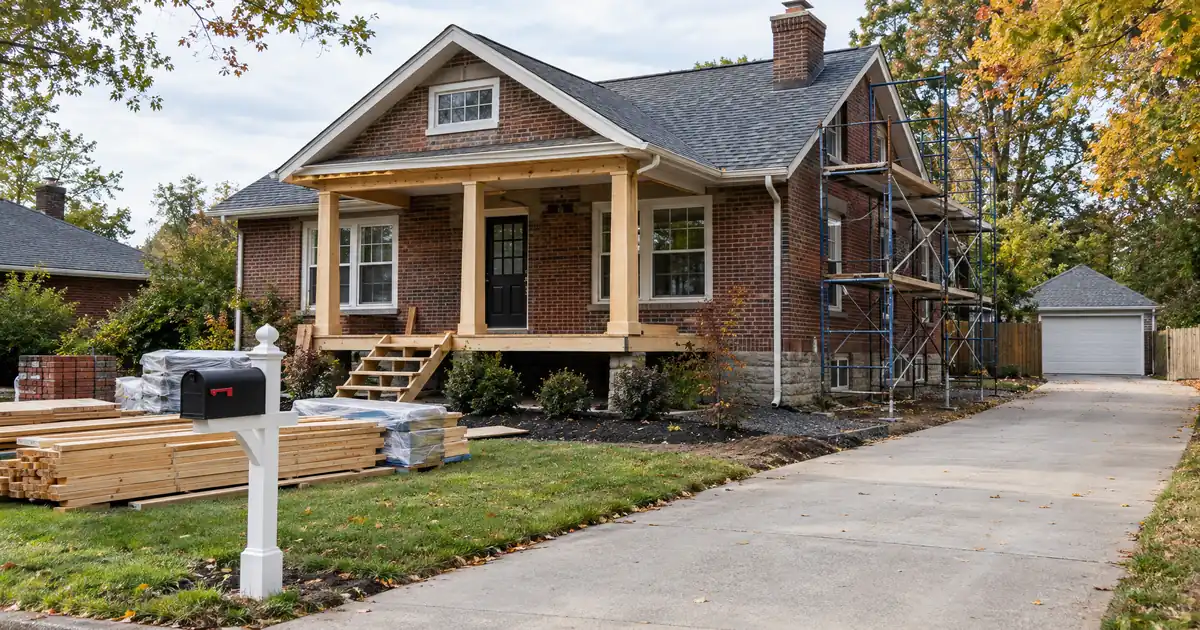
Hard money fits a first rental in two situations. The first is a property that needs real work, where a long-term lender will not touch it until it is livable. The second is a deal where the structure of the purchase demands a short-term loan. Outside those, it is usually the wrong place to sit.
One misconception is worth clearing up. Using hard money does not mean the borrower is unqualified for other financing. Often the property’s condition drives the choice, not the borrower’s file.
What Is a Profit and Loss Loan?
A profit-and-loss loan is an income-documentation method for self-employed borrowers. Instead of leaning on adjusted gross income from traditional personal-income documentation, the lender derives qualifying income from bank statements or a P&L statement. Scotsman Guide describes the lane this way: the borrower supplies 12 to 24 months of statements, and the lender calculates income using an expense factor or a P&L prepared by a third-party tax professional. The same piece notes that non-QM lenders must still confirm ability to repay.
So “P&L” does not mean “no documentation.” It means the documentation is different. The loan still looks at credit, assets, debts, and the property. Requirements vary by lender.
Here is the catch for a first rental. A P&L loan tells the lender you earn enough. It says nothing about whether the rental pays for itself. If the property’s rent is the story, a P&L file adds paperwork about you that a rental-coverage loan would never ask for.
Where Does DSCR Enter the Picture?
DSCR is the usual long-term answer for a rent-ready first rental. It divides the property’s monthly rent by its full monthly obligation: principal, interest, taxes, insurance, and any HOA dues. Qualification runs primarily on that property-level coverage, subject to lender guidelines, rather than on personal income documents. Lendmire’s complete DSCR loans guide walks through the mechanics in full.
Typical ranges across the network, framed as guidelines and not promises:
- Purchase leverage: most files land at 75%-80% LTV on an investment property (20%-25% down). Select high-leverage programs reach 85% LTV (15% down) with roughly a 700+ score.
- Cash-out refinance: tops out around 75% LTV across most of the network.
- Coverage: 1.00 is where many select programs start. A separate select-lender path takes coverage below 1.00, with leverage and terms adjusted. Stronger ratios open better pricing and leverage.
- Credit: a 620 floor exists in parts of the network, most programs want around 660, and 700+ unlocks the strongest leverage tiers.
- Reserves: commonly around 6 months of PITIA, though they vary by lender, leverage, loan size, and transaction type.
One honest limit: clearing 1.00 is not the same as positive cash flow. DSCR compares rent to the payment only. Repairs, vacancy, management, utilities, and capex all sit outside the calculation, so a first-timer should budget for them separately.
DSCR also does not suit a gut rehab. The property generally needs to be rentable, because the coverage test uses rent the property can actually earn.
How Do the Three Loans Compare Side by Side?
| Factor | Hard Money | P&L Loan | DSCR Loan |
|---|---|---|---|
| What is underwritten | Property, plan, exit | Borrower’s documented income | Property’s rent vs. payment |
| Property condition | Rough or vacant is fine | Usually livable | Rent-ready |
| Intended hold | Under 18 months | Long-term | Long-term |
| Documentation | Plan, budget, entity docs | 12-24 months of statements or a P&L | Lease or rent schedule, entity docs |
| First-timer friction | Lower leverage tiers | Income and business history | Credit, reserves, down payment |
| Main risk | Maturity with no exit | Income file not ready | Rent too thin for the payment |
Program specifics vary by lender, property, and experience. Treat the table as a map of structure, not a quote.
Which One Fits Your Situation?
Self-employed buyer, rent-ready property, long-term hold. DSCR is usually the cleaner path, since the rent carries the file and personal income stays out of the conversation. A P&L loan becomes relevant only if the rent cannot carry the payment but business cash flow is strong. That is a different lane, and it underwrites you, not the property.
Rough property, tight timeline. Hard money is the tool. Plan the rehab budget, the draw schedule, and the refinance before you sign. Many investors refinance out of hard money into long-term DSCR financing once the property is stabilized, and Lendmire brokers that path. Lendmire’s piece Profit and Loss Only Loan vs Delayed Financing for a First Rental covers a related funding question.
Income file not ready. A newly self-employed borrower, or one with under two years in business, may find programs differ on required history. Underwriters in that lane tend to weigh liquid assets and credit quality more heavily. Fixing the file first often beats forcing the wrong loan.
Buy-and-hold with a thin down payment. Here is a real flip point. If you cannot bring 15%-25% down on a DSCR purchase, hard money will not fix that. Its tiers also want cash, and the exit still needs to clear a refinance. Consider a lower-priced property or a longer savings runway before choosing a tool. These specifics are subject to lender guidelines and a full review of property, leverage, and credit.
What Does a First-Timer Risk on Each Path?
Hard money’s biggest risk is the clock. If the rehab runs long or the property appraises light, the refinance may not clear before the term ends. A 6-18 month interest-only structure leaves little room, so the exit plan matters more than the entry.
A P&L loan’s risk is the file itself. Statements must be clean, consistent, and prepared the way the lender requires. Messy books do not become strong income because the program is flexible.
DSCR’s risk is thin coverage. A first rental that barely clears the floor leaves no cushion for a vacancy month or a repair. Stress-testing the number before offering is worth the time.
Practitioner observation: across files like these, the cleanest first rentals tend to share one trait. The buyer chose the loan after deciding whether the property would be held or sold, not before. Starting with the exit instead of the product removes most of the confusion.
A Note on Business-Purpose Status
DSCR loans are designed for non-owner-occupied investment properties. Because they are business-purpose investor loans, they are reviewed differently from a standard owner-occupied mortgage. The Federal Register rule preamble treats investment-purpose loans as business purpose, which is why the same logic applies to hard money. Business purpose is not automatic, though. Using cash-out proceeds for personal spending can change how a loan is treated, so investors should keep the purpose of funds clear and documented.
Tax treatment varies; consult a qualified professional.
Key Terms Defined
Hard money: short-term, interest-only financing secured by the property, underwritten on the asset and the exit.
Profit-and-loss loan: a self-employed income-documentation method that uses a P&L statement or bank statements instead of traditional personal-income documentation.
DSCR: the property’s monthly rent divided by its full monthly obligation, used to judge whether the rent covers the payment.
Loan-to-cost: the loan as a share of the total project cost, purchase plus rehab, not just the purchase price.
After-repair value (ARV): the estimated value of the property once renovations are finished.
Seasoning: the time you must own a property before certain refinance options open up.
Frequently Asked Questions
Can a first-time investor get a hard money loan?
Yes, at the lower leverage tiers. Fix-and-flip leverage is 85% of project cost with fewer than two completed projects, capped at 75% of after-repair value, while the top tiers go to experienced investors. A 620 minimum credit score applies, with additional conditions below 660. All terms vary by lender, property, and experience.
Can a profit-and-loss loan be used on an investment property?
Some programs allow it, but it is mainly an income-documentation tool for self-employed borrowers. It underwrites you, not the rental’s performance. If the property’s rent is strong, a DSCR loan can avoid the personal-income question entirely, subject to lender guidelines.
Is hard money more expensive than a DSCR loan?
Hard money is built as a short-term bridge, so it carries different costs and is meant to be repaid on a short clock. A short hold can offset a higher carrying cost, but staying too long erodes it. Pricing varies by lender and file, so compare total cost over your expected hold.
Can I use hard money first and a DSCR loan later?
Yes, and it is a common sequence. Buy and renovate with a 6-18 month hard money loan, lease the property, then refinance into long-term DSCR financing. The refinance has to clear on its own merits, including coverage, credit, and reserves, so plan for it before you buy.
Does a P&L loan mean no documentation?
No. Scotsman Guide notes lenders must still confirm ability to repay. The borrower is reviewed on documented income under the applicable program, subject to lender guidelines.
Next Step
If you are buying, rehabbing or refinancing an investment property on a short timeline and want to see how the numbers work, Lendmire can help you compare hard money options based on the project, the exit plan, leverage, and your goals. Lendmire is a mortgage broker arranging financing through select lenders in a wholesale network covering 41 markets, including Washington, D.C. Qualification, leverage, and terms depend on lender guidelines, credit approval, and property review, and nothing here is a commitment to lend.
About Lendmire
Lendmire is a DSCR-focused mortgage brokerage, NMLS# 2371349, placing investor loans across 41 markets, including Washington, D.C. DSCR eligibility is generally reviewed by the lender around a property’s rental income rather than personal income documentation, which fits LLC-held rentals, self-employed investors, and portfolios scaling past conventional financed-property limits. Scotsman Guide named Lendmire a Top Mortgage Workplace in both 2025 and 2026.
Get Started
Ready to find the right loan for you?
In about 30 seconds you can review financing options available for your investment property. No commitment required.
Informational only. Not a Loan Estimate, approval, or commitment to lend. Program availability and eligibility are subject to lender guidelines, credit approval, property review, and underwriting.
References
1. Scotsman Guide: Rev Up the Engine for Non-QM Lending
2. Federal Register: ATR/QM Standards under Reg Z
This article is part of Lendmire’s hard money loan program — full qualification details, guidelines, and scenarios live on the program page.
Related reading: How a Lender Reads a Seller-Carried Note on a Hard Money Loan · Can a DSCR Refinance Close Before Hard Money Maturity on a Long Rehab? · Hard Money Loan ARV Requirements in a Small Town With No Comps
Brandon Miller
Founder & CEO, Mortgage Loan Originator, Lendmire LLC
- Mortgage Loan Originator · NMLS# 1129696 · Verify on NMLS Consumer Access
- North Carolina Real Estate Broker · License# 343312 · Verify on NCREC
- North Carolina Insurance Producer · License# 19053198 · Property, Casualty, Life, Health · Verify on NAIC SBS
- Lendmire LLC · Firm NMLS# 2371349 · Verify firm licensure
Important disclosures. Lendmire (NMLS# 2371349) is a licensed mortgage brokerage. Lendmire is not a direct lender, depository institution, or financial advisor. All loan inquiries are subject to lender underwriting; this article does not constitute a commitment to lend. Rates, terms, and program guidelines are subject to change without notice and vary by borrower profile, property type, and state. Information in this article is general in nature and is not financial, legal, or tax advice. Equal Housing Opportunity. NMLS Consumer Access: nmlsconsumeraccess.org.