
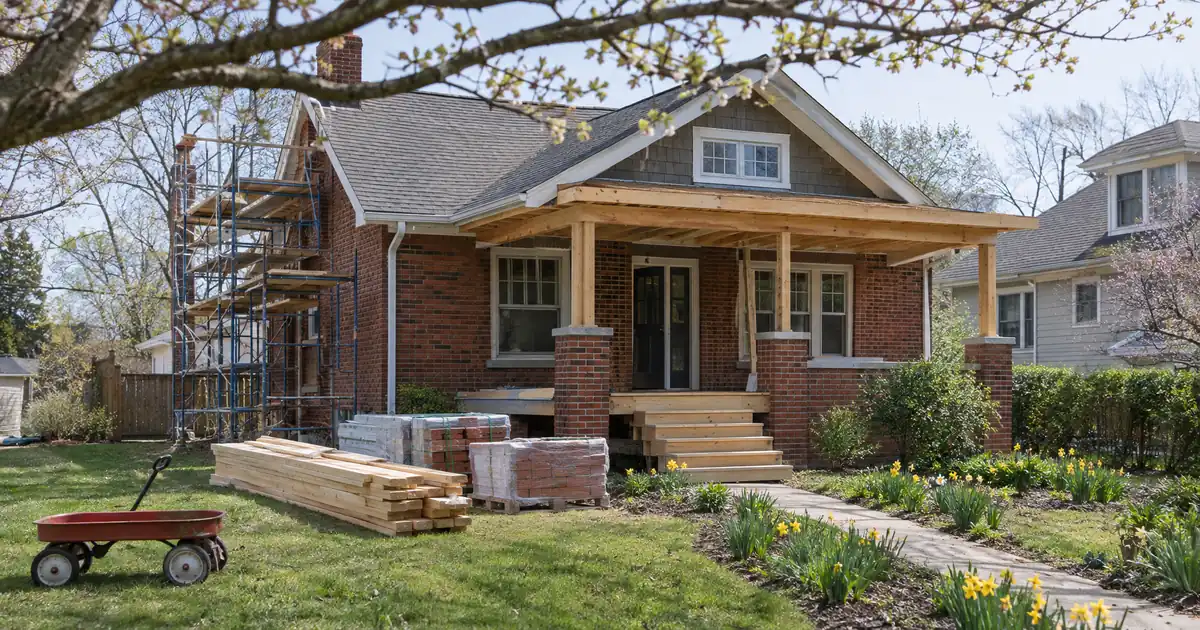
The Quick Read: There is no legal minimum loan size for a small fix and flip loan; the floor is each lender’s own, and it varies by lender, property, and experience, so a small balance narrows your choices and spreads fixed costs over fewer dollars, while leverage tiers, credit, and property rules apply the same way at any size.
- Floors come from lender economics, not from any rule. Underwriting, valuation, title, and draw work cost about the same on a small file as on a large one.
- Leverage is sized on project cost and capped against after-repair value (ARV). The lower number governs.
- On the programs Lendmire places, the minimum credit score is typically 620, with extra conditions below 660. Terms run 6-18 months, interest-only.
- A deal below a lender’s floor still has options: bundle, add scope, use private money, or bring more cash.
Why Do Lenders Set a Minimum Loan Size?
Final terms depend on the lender’s guidelines, the property type, and the borrower’s complete credit picture.
What this loan actually costs to carry.
Hard money is sized against the project and priced by time. Enter the deal and see how much the program will lend, the cash required at closing, the carry while you hold it, and what is left at the exit.
Leverage tiers on the current program: 85% with fewer than 2, 90% with 2 or more, 93% with 5 or more completed projects — every tier capped at 75% of after-repair value. Loan amounts up to $5,000,000, larger by exception; terms of 6 to 18 months, interest-only, no prepayment penalty. The rehab portion funds in draws against completed work, not at closing.
Program parameters shown update from Lendmire’s centralized guideline source. Rate, points, and months are editable assumptions, not quoted terms.
Cost cap sets the loan · positive spread
Illustrative estimate only — not a quote, Loan Estimate, approval, or commitment to lend. Rate, points, and months are editable assumptions. Hard money is business-purpose financing for real estate investors, not a consumer mortgage. Leverage on the current program tops out at 93% of project cost for investors with a documented track record, capped at 75% of after-repair value, with rehab funding up to 100% of the documented budget released in draws; actual terms vary by lender, borrower experience, property, and exit. Lendmire is a mortgage broker, not a lender.
Lenders set floors because the work on a loan does not shrink with the balance. Someone still reviews the entity, the contract, and the budget. Someone orders the valuation, clears title, and inspects each draw. A small loan pays for all of that with a smaller income stream.
That is why flips with lower purchase prices are the hardest to place. Many lenders simply route small files elsewhere. Others take them but price them with a bump or a flat fee floor, so the cost per dollar borrowed runs higher.
“Small” has no fixed definition. A balance that is routine at one lender is below the floor at another. Across the wholesale network, smaller balances vary by lender. The upper end is clearer: loans run up to $5,000,000, larger by exception.
The practical takeaway is simple. Ask any lender for its floor before you spend time on a package. Then size the project to clear it, or pick a lender whose floor fits the deal.
What the Network Typically Asks at a Glance
These are typical ranges from select lenders in Lendmire’s wholesale network. They vary by lender, property, and experience. They are not a commitment to lend.
| Item | Typical range on these programs |
|---|---|
| Fix-and-flip leverage | 85% to 93% of project cost, capped at 75% of ARV |
| Bridge purchase, no rehab | Up to 80% of purchase price |
| Refinance (cash-out or rate/term) | Up to 65% of value |
| Rehab funding | Up to 100% of the rehab budget, released in draws |
| Loan amount | Up to $5,000,000; smaller balances vary by lender |
| Term | 6-18 months, interest-only, no prepayment penalty |
| Credit score | 620 minimum; added conditions below 660 |
| Collateral | Non-owner-occupied residential, 1-4 units |
Notice what is missing: one universal minimum loan figure. No honest broker can give you one number, because it changes with the lender.
How Is a Small Loan Sized? (The Lower-of Rule)
Every fix and flip file is sized two ways, and the lower result wins. The first test is loan-to-cost, which compares the loan to the purchase price plus the rehab budget. The second is a cap against the after-repair value.
Leverage tiers follow documented completed projects. At 5 or more completed projects, leverage reaches 93% of project cost. At 2 or more, it is 90%. With fewer than 2, it is 85%. Every tier is capped at 75% of ARV. The top tier is reserved for experienced investors.
Small deals tend to hit the ARV cap first, because the margins are thin. Run the math in percentages. Say total project cost is 70% of ARV. A loan at 90% of cost works out to 63% of ARV, which sits under the cap, so the cost test governs.
Now say project cost is 85% of ARV. A loan at 90% of cost would be 76.5% of ARV. That is over 75%, so the ARV cap governs and you bring more cash than the cost test alone suggests. The lender never makes up the gap.
An inflated ARV does not help. The valuation uses sold comps, and a lower number just shrinks the loan at appraisal. Heavy-rehab deals are limited by ARV, not by a low purchase price.
Requirements Beyond the Minimum
A file that clears the size floor can still stall on the other items. Underwriting is asset-based, but it is not borrower-blind. Lenders review the property, the plan, and the exit, and they still look at the borrower.
Here is what a clean file usually contains:
- Credit. A 620 minimum score on these programs, with additional conditions below 660. First-time investors qualify at the lower leverage tier.
- Experience. A schedule of prior projects sets your tier. Fewer than 2 completed projects means the 85% of cost tier.
- Liquidity. Proof of funds for the down payment, closing costs, and interest carry.
- Entity documents. Operating agreement, articles, and EIN where the loan goes to an LLC, subject to lender program eligibility.
- Purchase contract. The signed contract on the subject property.
- Rehab budget. An itemized scope with contractor bids. A thin or round-number budget is a common reason files get sent back.
- Property fit. Non-owner-occupied residential, 1-4 units.
Three things most often stall small files. The first is a budget that does not match the scope. The second is proof of funds that covers the down payment but not the carry. The third is an ARV that the comps do not support.
Business-purpose loans on investment property are reviewed differently from a standard owner-occupied mortgage. The borrower signs a business-purpose and occupancy certification.
Is 100% Financing Real on a Small Flip?
No. There is no true 100% purchase program. What exists is up to 100% of the rehab budget, funded in draws as completed work is verified.
That distinction matters on small deals. Your down payment, closing costs, and interest carry are still due in cash. Reserves and proof of funds still apply. Some investors read a 100% rehab figure and assume no cash is needed. That assumption sends files back.
Draws also shape your schedule. Money is held back and released as work is requested and checked. Ask any lender whether interest runs on the full balance or only on funds drawn, and plan your carry around the answer.
What a Small Balance Really Costs
Fixed costs take a bigger share of a small balance. The table below is qualitative on purpose. Pricing is lender-specific, and the pattern is what matters.
| Factor | Small balance | Mid-size balance |
|---|---|---|
| Fixed processing cost | Larger share of the loan | Smaller share |
| Lender choice | Fewer lenders | More lenders |
| Pricing adjustments | More common | Less common |
| Margin for overruns | Often thin | Usually more room |
Some lenders in the wider market also require a minimum interest period even if you sell early. The programs placed through Lendmire carry no prepayment penalty, but confirm it for any lender you consider.
Is a Small Hard Money Loan Worth It?
It is worth it when projected profit still clears the total cost of carrying the deal. Build that check before you apply. Tally the fees, the interest for the full hold, the closing costs on both ends, and a cushion for overruns. Then compare the total to the profit at a conservative sale price.
If a ten-percent budget overrun erases the profit, the deal is too thin for any lender. If it survives, the financing cost is just one line in a workable plan. Tax treatment varies; consult a qualified professional.
A thin spread is the usual risk on small flips, not the loan itself. The stronger play is often the slightly larger project. It clears more floors and leaves more room for error.
What If Your Deal Is Below the Floor?
You have several workable paths. None is a guarantee, and each trades something away.
| Option | When it fits | Tradeoff |
|---|---|---|
| Bundle properties into one request | You are buying 2 or more small properties | More exposure on one file |
| Add rehab scope | The extra work lifts ARV | More budget risk |
| Combine purchase and rehab in one request | You financed them separately | Needs a clear scope |
| Private money | Friends, family, or a private individual | Terms are negotiated and informal |
| Cash or partner capital | You can fund the whole deal | Less leverage on your capital |
| Different lender | Another floor fits better | Different terms and leverage |
Adding scope only helps if the work is real. A lender will check the budget against the comps. Padding a scope to reach a floor can backfire at the valuation.
First-Time Flippers and Small Loans
First-timers can qualify, but at lower leverage. The 85% of project cost tier applies with fewer than 2 completed projects, still capped at 75% of ARV. Expect to bring more cash, and expect the lender to look harder at the budget and your liquidity.
The best preparation is a tight package. Show a realistic scope, a conservative ARV with sold comps, and cash for the carry. A first flip with a clean file usually draws less friction than a larger one with a loose budget.
Single-family flips are the most common first project.
Where the General Rule Breaks
A few edge cases change the answer.
Heavy rehab on a cheap purchase. The ARV cap controls here, not the purchase price. A low price does not make the loan smaller or larger by itself.
Individual borrower versus LLC. Most flip lenders ask for an entity. Business-purpose loans to non-natural persons are generally exempt from consumer mortgage rules under Regulation Z’s business-purpose exemption. The ABA Banking Journal notes that an individual’s business-purpose loan is also not covered whether or not an LLC guarantees it. Coverage turns on the primary purpose of the loan.
Not every investment property is automatically exempt. Compliance Alliance explains that the exemption depends on loan purpose, occupancy, and unit count. That is one reason these programs stay with non-owner-occupied 1-4 unit collateral. These loans are exempt from the consumer disclosure regime, so the standard Loan Estimate and Closing Disclosure do not apply. Read the note and the draw terms yourself.
True hard money versus fix-and-flip programs. Pure hard money is priced off the asset and caps lower. Fix-and-flip programs underwrite the asset, the borrower, and the plan together, so they usually lend more.
Out-of-state investors. Distance adds friction on draws and inspections.
How to Prepare and Apply
Run these steps before you submit anything.
1. Ask for the floor first. Confirm the minimum loan size and any flat fee floor before you build a package. Each figure is subject to lender guidelines and a complete review of property type, leverage, and credit.
2. Size the deal both ways. Calculate loan-to-cost and the ARV cap, then use the lower number to find your cash need.
3. Build the budget. Itemize the scope, attach contractor bids, and leave a cushion for overruns.
4. Assemble the entity file. Operating agreement, articles, and EIN, plus your project track record.
5. Document liquidity. Show cash for the down payment, closing costs, and the full interest carry.
6. Plan the exit. Know whether you will sell or refinance, and what the sale price assumption is.
On the exit: many investors refinance out of hard money into long-term DSCR financing once the property is stabilized, and Lendmire brokers that path. The complete DSCR loans guide explains how that takeout works. Remember that clearing a rental coverage ratio is not the same as positive cash flow, because repairs, vacancy, and management sit outside that calculation.
Key Terms Defined
After-repair value (ARV): The estimated market value of the property once the planned work is done.
Loan-to-cost: The loan amount as a share of purchase price plus rehab budget.
Draw: A release of held-back rehab money after completed work is requested and verified.
As-is value: What the property is worth in its current condition, before repairs.
Interest-only: A payment structure where you pay interest during the term and repay principal at the end.
Bridge loan: Short-term financing for a purchase with no rehab budget, used until a sale or refinance.
Frequently Asked Questions
What is the minimum loan size for a small fix and flip loan?
No single figure applies. Each lender sets its own floor, and smaller balances vary by lender. Lendmire arranges loans through select lenders in its wholesale network, up to $5,000,000, larger by exception. Ask for the floor before you apply.
Can I borrow less than a lender’s minimum?
Usually not on that lender’s program. You can bundle properties, add real scope, use private money, or fund more with cash. Another lender with a lower floor may also fit the deal.
Do I need flipping experience?
No, but experience sets your leverage tier. With fewer than 2 completed projects, leverage is typically 85% of project cost. At 2 or more it reaches 90%, and at 5 or more it reaches 93%, all capped at 75% of ARV. These vary by lender, property, and experience.
What credit score do I need?
The minimum on these programs is typically 620, with added conditions below 660. Underwriting stays asset-based, so the property, the plan, and the exit matter alongside your score.
How much cash do I need on a small flip?
Enough to cover the gap between the loan and total project cost, plus closing costs and interest carry. Up to 100% of the rehab budget is funded in draws, but that is a rehab figure, not a purchase loan-to-value.
Next Step
If you are buying, rehabbing or refinancing an investment property on a short timeline and want to see how the numbers work, Lendmire can help you compare hard money options based on the project, the exit plan, leverage, and your goals. Lendmire is a broker arranging financing through select lenders in its wholesale network across 41 markets, including Washington, D.C. Nothing here is a commitment to lend, and every file is underwritten individually.
About Lendmire
Lendmire (NMLS# 2371349), a non-QM mortgage broker serving investors in 41 markets including Washington, D.C., helps structure DSCR scenarios commonly evaluated around a property’s rental income rather than personal income paperwork, subject to lender guidelines. A Scotsman Guide Top Mortgage Workplace in 2025 and 2026, Lendmire places loans through wholesale investor lenders and is not a direct lender.
Many investors treat hard money as the acquisition tool and plan the exit up front – see the hard money loan overview.
Get Started
Ready to find the right loan for you?
In about 30 seconds you can review financing options available for your investment property. No commitment required.
Informational only. Not a Loan Estimate, approval, or commitment to lend. Program availability and eligibility are subject to lender guidelines, credit approval, property review, and underwriting.
References
1. Regulation Z, 12 CFR 1026.3 (CFPB)
2. When the loan applicant is an individual but the guarantor is an LLC (ABA Banking Journal)
3. Regulation Z and investment properties
This article is part of Lendmire’s hard money loan program — full qualification details, guidelines, and scenarios live on the program page.
Related reading: Can Hard Money Cover a Fix and Flip Purchase? · Should You Ask a Hard Money Lender Questions Before a Fix and Flip? · Can You Use Hard Money to Flip a Triplex or Fourplex?
Brandon Miller
Founder & CEO, Mortgage Loan Originator, Lendmire LLC
- Mortgage Loan Originator · NMLS# 1129696 · Verify on NMLS Consumer Access
- North Carolina Real Estate Broker · License# 343312 · Verify on NCREC
- North Carolina Insurance Producer · License# 19053198 · Property, Casualty, Life, Health · Verify on NAIC SBS
- Lendmire LLC · Firm NMLS# 2371349 · Verify firm licensure
Disclosure information. Lendmire is a state-licensed mortgage brokerage under NMLS# 2371349. Lendmire is not a depository institution, direct lender, or financial advisor — all loans referenced are placed through wholesale lender partners and are subject to each lender's underwriting standards. This article is provided for general informational purposes and is not a commitment to lend, nor does it constitute financial, legal, or tax advice. Loan programs, terms, rates, and qualification standards change without notice and depend on borrower profile, property type, and the state in which the subject property is located. Equal Housing Opportunity provider. NMLS Consumer Access: nmlsconsumeraccess.org.