
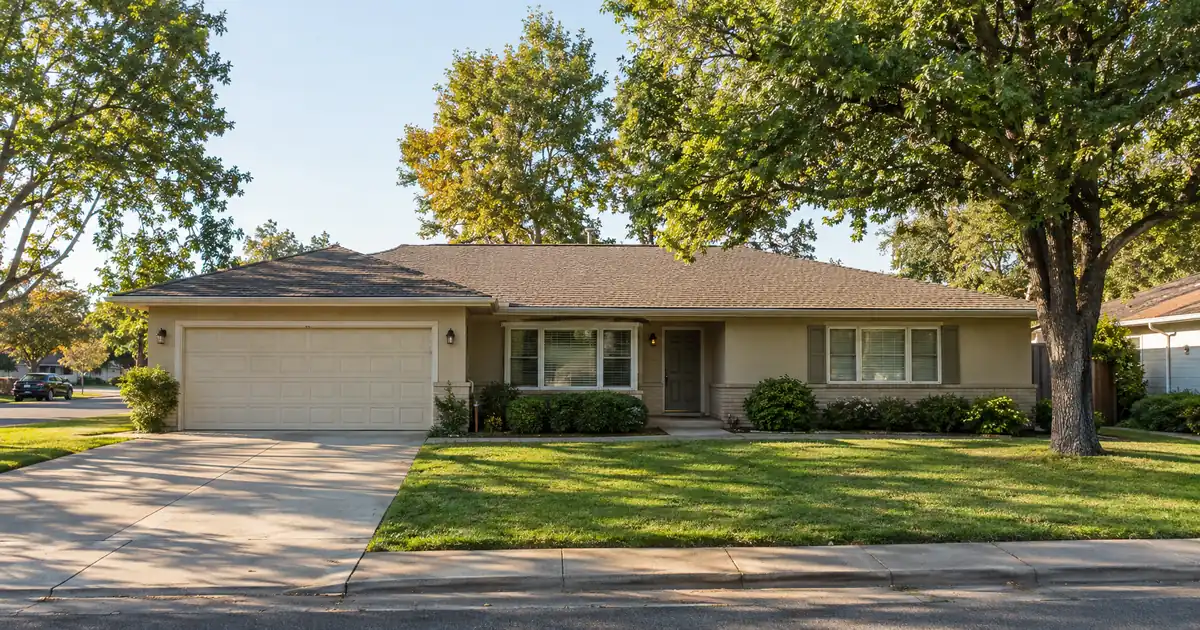
The Quick Read: Yes, often, but only when an heir holds clear recorded title, every co-owner whose interest is pledged signs, and the borrower is reviewed on credit, income, and the home’s equity. Inheriting a house does not make it borrowable until ownership is settled on the record.
- Title comes first. A will or an expected inheritance is not title.
- Co-owners must sign. One heir generally cannot pledge the whole house alone.
- Occupancy sets the ceiling. On an investment property, the network’s home equity lines cap at 70% CLTV and $500,000.
- Alternatives exist. A buyout of co-heirs or a DSCR cash-out refinance may fit a keeper who plans to rent the home.
Who Actually Owns the House?
Ownership is a recorded fact, not a family understanding. Until title is cleared, no lender has a clean lien to take.
How large a line the equity supports.
An equity line is sized by combined loan-to-value, occupancy, and credit — not by rental coverage. Switch the occupancy or the credit band and the ceiling moves with it.
Investment-property lines require a 700 minimum credit score; second-home lines start at a 640 minimum and primary-residence lines at 600, and the combined-LTV ceiling steps down as the credit band drops on primary-residence and second-home lines and holds on investment-property lines; the line cap steps down on primary-residence lines and holds at every tier on investment-property and second-home lines.
A debt-to-income ratio above 45% requires 680+ credit. Profiles under 640 are limited to single-family homes. At least 75% of the approved line is drawn at closing. Ceilings, floors, and caps update from Lendmire’s centralized guideline source.
Line estimate
Illustrative estimate only — not a quote, Loan Estimate, approval, or commitment to lend. The rate is an editable assumption; equity-line pricing is variable through both the draw and repayment periods and never converts to fixed. Occupancy and credit drive the ceiling together: an investment property tops out at 70% combined LTV (minimum credit 700, line cap $500,000); a second home tops out at 90% combined LTV (minimum credit 640, line cap $500,000), with the ceiling stepping down as the credit band drops (the cap holds at every tier); a primary residence tops out at 90% combined LTV (minimum credit 600), and its $750,000 maximum line is available only at 75% combined LTV or below with a 700-or-better credit profile (720 on the longer-runway program) and a full appraisal. Lines above $500,000 require a full appraisal. Credit, debt-to-income, property type, and full underwriting review all affect the final line.
Iowa State’s Center for Agricultural Law and Taxation notes that heirs who skip probate may possess a property but lack the clear title to prove they own it. That gap can leave them unable to use the home as collateral. The same center explains that probate is the court-supervised process for moving assets after a death, and that non-probate routes include transfer-on-death designations and joint tenancy with right of survivorship.
Probate is one route. A trust is another, and a recorded transfer-on-death deed is a third. Each ends in the same place: a name on the deed.
If the home passed to several heirs, they usually hold it as tenants in common. Each holds an undivided share. Nobody owns the kitchen or the back bedroom.
Does Every Heir Have to Sign?
When the lender needs a lien on the whole property, every record owner generally has to sign. A single heir can pledge only their own share, and lenders are cautious about taking a fractional interest as collateral.
A Washington State Department of Revenue outline on co-ownership states the general principle. A tenant in common can encumber only an undivided interest, and encumbering the whole property takes the signature of every tenant in common. That is a general property-law idea. State rules vary, so a probate or real estate attorney should confirm yours.
A North Carolina law firm’s Q&A makes the practical point for one state. Using the entire house as collateral generally takes every owner’s signature, or it takes the borrower acquiring all the interests by deed first. Treat it as an illustration, not a national rule.
Here is the catch for a holdout. Being the heir who will not sell does not give you the power to borrow against the whole house. It protects your share. It does not unlock the others’.
Who Can Borrow, and Who Signs?
| Title situation | Can a line be placed now? | Who signs |
|---|---|---|
| Estate still in probate | Generally not by an individual heir | The personal representative |
| Sole heir with recorded deed | Yes, if the borrower qualifies | The sole heir |
| Several heirs on title | Only with every pledged owner’s consent | All record owners |
| Trust-held home | Depends on trust type | The trustee, if eligible |
| Heirs’ property, no probate | Not until title is cleared | No one yet |
An irrevocable trust is a real problem on this network. The home equity programs Lendmire’s wholesale partners offer take title only from an individual borrower or a revocable living trust. Irrevocable, blind, and land trusts cannot hold title, and neither can LLCs or corporations.
What About the Existing Mortgage?
An inherited home often comes with a loan. That loan follows the property, and heirs should contact the servicer and document their status early.
Federal law protects heirs here. The Garn-St Germain Act limits a lender’s ability to call a loan due when a protected transfer happens, including a transfer to a relative on the borrower’s death. Those protections keep the existing loan in place. They do not create a right to a new home equity line, and a new line still gets full underwriting. A non-relative heir may not get the same protection, so check the statute’s text for your situation.
A reverse mortgage works differently. It generally becomes due at the borrower’s death, and heirs should plan for that early.
How Lines Work on This Network
Across Lendmire’s wholesale network, a home equity line is a standalone line in first or second lien position. Pricing floats and never converts to fixed. At least 75% of the line is drawn at closing. Those facts shape how well a line suits a buyout.
Ceilings depend on how the home is used, and the occupancy has to be stated before any number is.
- Investment property: 70% CLTV and up to $500,000, with a minimum credit score of 700. The structure is a 5-year interest-only draw followed by a 25-year repayment period.
- Primary residence: the ceiling reaches 90% CLTV, but only at a 720-or-better credit profile and up to $500,000. Lower credit tiers step down. Lines up to $750,000 are available at 75% CLTV, and those above $500,000 need a credit profile of 700 or better (720 on the longer-runway structure) and a full appraisal.
- Second home: up to 90% CLTV at 720 or better, with a $500,000 line cap and a 640 minimum score. Terms vary by lender guidelines, property type, leverage, credit profile, and full file review.
Two draw structures exist on primary residences and second homes. One is a 3-year interest-only draw with a 17-year repayment. The other is a 5-year draw with a 25-year repayment. Tennessee shortens both. Debt-to-income tops out at 50%, and 45% applies to credit profiles from 600 to 679.
Lines at or below $500,000 ordinarily use an automated valuation. A full appraisal is required above that amount, and a borrower can request one anyway. These figures come from select lenders and are subject to lender guidelines and full file review. This product is arranged only in Lendmire’s 16 full-service states.
If You Are the Heir Who Wants to Keep the House
Keeping the home usually comes down to buying out the co-heirs. Funding that buyout is the real question, and a home equity line is one tool among several.
The strongest version of the plan has the keeper take over the whole title, then borrow against it. That puts one owner and one lender on the deed. Compare the options plainly.
| Option | Structure | Best fit | Main risk |
|---|---|---|---|
| Home equity line | Revolving, floating pricing | Keeper who will live in the home | Floating cost after the draw |
| Home equity loan | Lump sum | One-time payout to co-heirs | Needs title and qualification |
| Cash-out refinance | Replaces the first loan | Whole-property buyout | Gives up a low existing loan |
| DSCR cash-out | Rent-based, investor loan | Keeper who will rent the home | Rent must cover the payment |
Say one heir keeps a house with a low existing first mortgage. A line behind it preserves that loan. The same heir might instead refinance everything, which puts new terms on the whole balance. Lendmire’s piece HELOC Behind a Low First Mortgage for Homeowners Who Will Not Refi covers that tradeoff in more depth.
Floating pricing matters for a lump-sum buyout. A line that never converts to fixed carries payment risk through the draw and the repayment period. A borrower who needs one large payout and wants stable terms may prefer a different instrument.
Qualification also shifts to the keeper. Inherited equity does not stand in for income. The keeper’s own credit, debt-to-income, and the property all get reviewed.
When the Home Becomes a Rental
A home equity line is built around the borrower’s income. A DSCR loan is built around the property’s. DSCR loans are designed for non-owner-occupied investment properties, and they are reviewed differently from a standard owner-occupied mortgage. The complete DSCR loans guide walks through the basics.
For a keeper who plans to rent the inherited home, the DSCR cash-out refinance often fits better. It qualifies primarily on property-level rental income covering the payment, subject to lender guidelines.
Across most of the network, here is what a keeper should expect:
- Cash-out leverage: tops out around 75% LTV on a standard long-term rental, with about 6 months of seasoning as the common expectation.
- Coverage: 1.00 is where many select programs start. A separate select-lender path takes coverage below 1.00, with leverage and terms adjusted.
- Credit: most programs want around 660, a 620 floor exists in parts of the network, and 700 or better opens the strongest leverage tiers.
- Loan size: up to $3,000,000 on standard programs (smaller balances available through select lenders), with reserves commonly around 6 months of PITIA, varying by lender and file.
Clearing 1.00 is not the same as positive cash flow. DSCR compares rent to the full housing payment only. Repairs, vacancy, management, and utilities sit outside the calculation.
Run it as a scenario. Say one heir buys out two siblings and the home rents for enough to clear roughly 1.2x coverage. That ratio is a modeled assumption, not a market fact, and it still depends on appraisal and lender review. Lendmire’s piece Can Heirs Who Won’t Sell an Inherited Home Get a Bank Statement HELOC? covers one more route for self-employed heirs.
If You Are the Heir Who Wants to Sell and Others Will Not
Partition is the legal backstop. Many states have partition laws with special provisions for heirs’ property, and the Iowa State center notes that heirs without clear title may lose property through a partition action or unpaid property taxes. These protections are aimed at letting family members who do not want to sell keep their shares.
Mediation and a written agreement usually cost less than court. A sale of your own share is sometimes possible, though buyers for a fractional interest are scarce.
Pending litigation complicates borrowing. A lender is unlikely to place a line on a home with a live title dispute.
Tax and Carrying Costs
Inherited property’s basis is generally its fair market value at the date of death, as explained in IRS Publication 551. That is a tax concept, not the value a lender uses. Tax treatment can depend on how the funds are used and how the property is held; investors should keep clear records and speak with a qualified tax professional before relying on any deduction.
While a dispute drags on, someone pays property taxes, insurance, and repairs. Reimbursement claims between co-owners are common. A written agreement on who pays what heads off most of those fights.
Key Terms Defined
Heirs’ property: real estate passed down without a formal probate or title transfer, leaving several heirs with unclear ownership.
Tenants in common: co-owners who each hold an undivided share and can pledge only that share.
Partition: a court process that divides a co-owned property or forces its sale.
CLTV: combined loan-to-value, which adds every lien on the home and divides by its value.
Successor in interest: an heir or transferee who takes over a home that carries an existing mortgage.
First 30 Days: A Short Checklist
- Confirm who is on title and pull the recorded deed.
- Settle probate, or confirm the trust or transfer-on-death route.
- Agree on a value and a written buyout or co-ownership plan.
- Decide whether the home is a primary residence, second home, or rental.
- Talk to a probate or real estate attorney and a lender before applying.
Frequently Asked Questions
Can one heir get a HELOC without the others?
Only against that heir’s own share, and lenders rarely take a fractional interest as collateral. To pledge the whole home, every record owner generally has to sign.
Can I get a HELOC during probate?
Generally not as an individual heir. While the estate is open, financing typically runs through the personal representative. Once title is recorded in your name, the home can be reviewed like any other.
Can a holdout block a sale forever?
Not necessarily. Any co-owner can usually ask a court for partition, which may divide the property or force a sale. Heirs’ property protections in many states give non-selling heirs a chance to buy out the others first.
Does inheriting a home with a mortgage trigger payoff?
For protected transfers to relatives, federal law generally keeps the lender from calling the loan due. The heir still has to notify the servicer and document their status. Reverse mortgages work differently and generally come due at the borrower’s death.
When should I call an attorney?
Before you sign anything, and as soon as title is unclear, a co-owner objects, or a partition filing is possible. Property law varies by state, and an attorney can tell you what applies to your deed.
If you are considering a home equity line and want to see how the numbers work, Lendmire can help you compare HELOC options based on the property, the equity available, credit profile, combined leverage, and your goals. Lendmire is a broker arranging financing through select lenders in its wholesale network, which covers 41 markets including Washington, D.C. for DSCR loans, and none of this is a commitment to lend.
About Lendmire
Lendmire — NMLS# 2371349 — is a mortgage broker that arranges home equity lines of credit in its 16 full-service states through wholesale lenders, on primary residences, second homes and investment properties. Every line is subject to the lender’s guidelines and full underwriting. Scotsman Guide named Lendmire a Top Mortgage Workplace in both 2025 and 2026.
Get Started
Ready to find the right loan for you?
In about 30 seconds you can review financing options available for your home or investment property. No commitment required.
Informational only. Not a Loan Estimate, approval, or commitment to lend. Program availability and eligibility are subject to lender guidelines, credit approval, property review, and underwriting.
References
1. Iowa State CALT – The Problem with Heirs’ Property
2. Washington DOR – Co-Ownership of Real Property outline
3. Pierce Law – co-owner collateral Q&A
This article is part of Lendmire’s home equity line of credit program — full qualification details, guidelines, and scenarios live on the program page.
Related reading: Can a First-Time Equity Borrower Get a HELOC on an Inherited Home? · How to Get a HELOC on an Inherited Home When Heirs Refuse to Sell · Can a First-Time HELOC Borrower Use Bank Statements on an Inherited Home?
Brandon Miller
Founder & CEO, Mortgage Loan Originator, Lendmire LLC
- Mortgage Loan Originator · NMLS# 1129696 · Verify on NMLS Consumer Access
- North Carolina Real Estate Broker · License# 343312 · Verify on NCREC
- North Carolina Insurance Producer · License# 19053198 · Property, Casualty, Life, Health · Verify on NAIC SBS
- Lendmire LLC · Firm NMLS# 2371349 · Verify firm licensure
Compliance and disclosures. Lendmire (NMLS# 2371349) is a licensed mortgage broker and is not a direct lender, depository institution, financial advisor, or tax professional. Content in this article is general market analysis and educational information — not financial, legal, or tax advice for any specific situation. Lendmire does not guarantee loan approval; every transaction is subject to underwriting by the funding lender. Mortgage pricing and loan program guidelines are subject to change at any time without notice and vary by borrower characteristics, property type, and state regulations. Lendmire complies with Equal Housing Opportunity. Licensure verification: NMLS Consumer Access.