
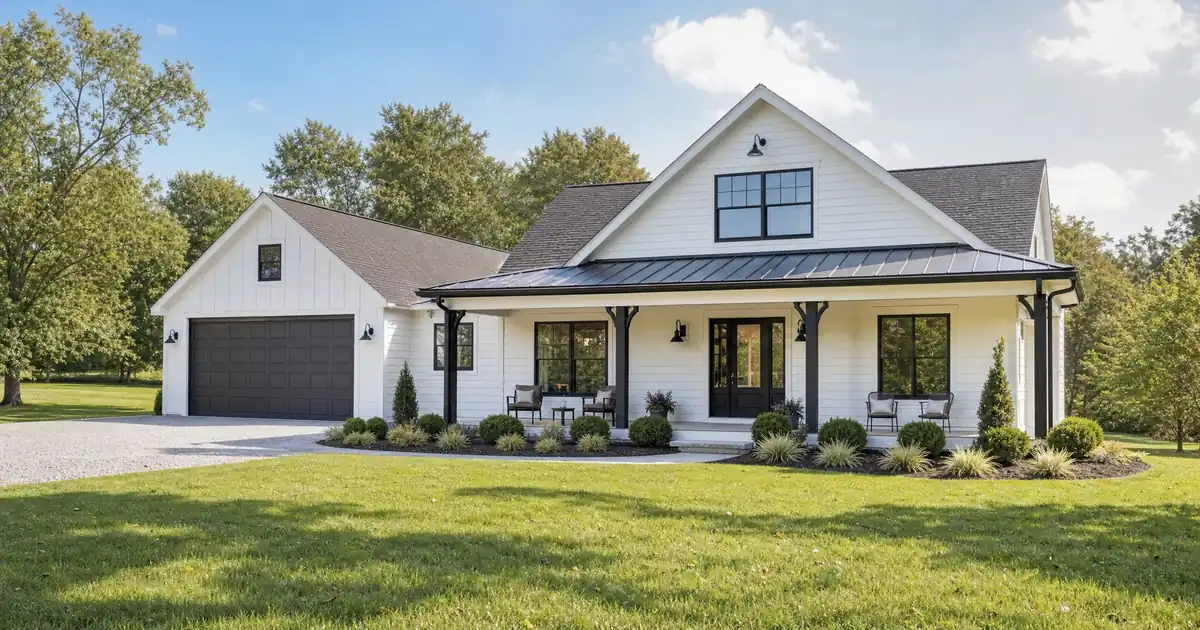
HELOC Denied Because The Rental Property Is Rural — The Quick Read: A rural denial almost never means the property has no value — it means the lender’s valuation tool couldn’t find enough comparable sales to trust a number, and second-lien products like HELOCs are already the hardest loan type to get approved on non-owner-occupied real estate. The fix isn’t repairing credit. It’s matching the property to a lender or a loan structure built to underwrite thin-comp rural collateral, which sometimes means a HELOC alternative rather than a HELOC at all.
Key Takeaways
- “Rural” is not a legal disqualifier. It’s a lender overlay triggered by thin comparable-sales data, and every lender draws that line differently.
- HELOCs on rental property are already denied roughly half the time industry-wide before rural even enters the picture, according to Bankrate, because second liens carry more risk than first mortgages.
- Automated valuation models need dense comp data to work. Rural parcels frequently kick a file into a slower, costlier full-appraisal lane — and sometimes into a decline before the appraisal is even ordered.
- Acreage, outbuildings, and agricultural zoning are separate scrutiny points from comp scarcity — a property can have plenty of comps and still get flagged for looking too much like a farm.
- When a rural rental gets stuck on the HELOC side, a DSCR loan evaluates the same property on its rent-to-payment math instead of comp-dense equity math — a structurally different underwriting path worth understanding before writing the property off.
Key Terms Defined
AVM (automated valuation model): software that estimates a property’s value by comparing it to recent nearby sales — fast and cheap, but only as good as the comp data available in that area.
How large a line the equity supports in your market.
An equity line is sized by combined loan-to-value, occupancy, and credit — not by rental coverage. Switch the occupancy or the credit band and the ceiling moves with it.
Investment-property lines require a 700 minimum credit score. Second-home tiers reach 640; primary-residence tiers reach 600.
A debt-to-income ratio above 45% requires 680+ credit. Profiles under 640 are limited to single-family homes. At least 75% of the approved line is drawn at closing. Ceilings, floors, and caps update from Lendmire’s centralized guideline source.
Line estimate
Illustrative estimate only — not a quote, Loan Estimate, approval, or commitment to lend. The rate is an editable assumption; equity-line pricing is variable through both the draw and repayment periods and never converts to fixed. Occupancy and credit drive the ceiling together: investment property runs to 70% combined LTV with a 700 credit floor and a $500,000 cap; a second home runs to 70% at a 640 floor with a $500,000 cap; a primary residence reaches up to 80% at a 600 floor, and its $750,000 maximum line applies only at 75% combined LTV or below with 720+ credit and a full appraisal. Lines above $500,000 require a full appraisal. Credit, debt-to-income, property type, and full underwriting review all affect the final line.
Comparable sales (comps): recently sold properties similar in size, condition, and location used to support an appraised value; rural markets typically produce fewer of them.
CLTV (combined loan-to-value): the ratio of all liens on a property — first mortgage plus the HELOC balance — against the property’s appraised value; it’s the number lenders cap on equity lines.
Adverse action notice: the written denial explanation a lender must provide under the Equal Credit Opportunity Act, spelling out the specific reason for the decline rather than a vague catch-all.
DSCR (debt service coverage ratio): a measure comparing a rental property’s monthly rent to its monthly mortgage payment (principal, interest, taxes, insurance, and HOA dues), used to review a loan on the property’s income instead of the borrower’s personal income.
Why “Rural” Shows Up as a Denial Reason
Rural location becomes a HELOC problem because the valuation tools most lenders default to are built for markets with heavy sales volume. McKissock Learning, which trains appraisers, notes that rural areas typically have fewer real estate transactions than urban or suburban markets, which makes comparable sales data scarce — and that scarcity is exactly what an AVM can’t work around.
Most HELOCs today get approved through an AVM, a desktop review, or a hybrid appraisal rather than a full traditional appraisal, because those methods are faster and cheaper. But they depend on abundant nearby comparable sales. When a property sits outside a dense sales corridor, the model doesn’t have enough data to produce a confident number, and the file gets bumped to a full appraisal — the slowest, most expensive valuation tier, and the one most likely to surface a low number or additional underwriting conditions.
That’s the mechanical root of a rural denial. It’s not that the property lacks value. It’s that the fast-lane tool couldn’t confirm the value, and the slow-lane tool then found something the underwriter didn’t like — thin comps, unusual acreage, or a property that reads more agricultural than residential.
The Compounding Problem: Rural Stacked on Rental
A rural rental faces two separate risk overlays stacked on top of each other, and that combination is worse than either alone. Investment-property HELOCs are already a tougher product to get approved than owner-occupied HELOCs — lenders require more built-up equity, cap leverage lower, and want stronger credit before they’ll take a subordinate lien position on a property the borrower doesn’t live in. Layer a rural comp shortage on top of that baseline overlay, and the file now has to clear two independent hurdles instead of one.
Second liens are already the harder half of the equity-lending world. According to Bankrate, roughly half of home equity loan and HELOC applications don’t get approved industry-wide — a far higher rate than first-lien mortgage denials — because lenders can’t sell second liens on the secondary market as easily as first mortgages, and in a default they’re paid back after the primary lender. Add rural collateral, and the file is fighting a two-front battle: a product category that’s inherently hard to place, on a property category that pushes toward the slowest, priciest valuation method available.
This is the exact gap most home-equity content misses. General HELOC guides talk about rental risk. Appraisal guides talk about rural comp scarcity. Almost nothing addresses what happens when the same file carries both problems at once — which is precisely the file an investor holding a rural rental is trying to finance. Investors dealing with the rental-risk half of this stack on its own should also read why a HELOC gets denied because the property is a rental, which covers the non-owner-occupied side in depth.
How Underwriting Actually Works Through a Rural File, Step by Step
The path from application to decision follows a fairly predictable sequence on a rural rental HELOC file.
1. Location flag at intake. Some retail HELOC lenders restrict investment-property equity lines by location as a matter of internal policy, independent of the borrower’s credit profile — this happens before valuation even starts.
2. Valuation method assignment. The file gets routed toward an AVM, desktop review, hybrid appraisal, or full appraisal. Rural and unusual properties are the category most consistently pushed off the AVM path because the model has too little sales data to trust.
3. Comp search with an expanded radius. Standard appraisal practice targets comps within roughly a one-mile radius sold within the past six to twelve months. Robinson Appraisal Group notes that in rural areas, large lot sizes and undeveloped surroundings can mean a shortage of recent truly comparable sales nearby, so appraisers pull comps from farther away when they represent the best available indicator of value. There’s no fixed distance cap in rural markets — the appraiser goes as far as the data requires.
4. Rent-comparable analysis, if rental income factors into qualification. The same comp-scarcity problem that hits the sales-comparison approach hits the rent-comparison approach too — fewer nearby rental comps means a thinner basis for supporting the market rent figure.
5. Character review — residential vs. agricultural. Outbuildings, barns, and acreage get evaluated for whether they suggest the property functions as a farm rather than a residence. A small barn with minimal contributory value is usually fine; a large outbuilding, silo, or multiple animal facilities can tip the classification toward non-residential.
6. Adverse action notice, if declined. Under Regulation B, the lender must give a specific written reason — not a vague reference to “internal standards.” A denial for “rural location / insufficient comparables” is a reason the borrower is entitled to receive in writing under 12 CFR § 1002.9.
That last point matters more than most investors realize. A borrower who receives a vague denial letter can push back — the CFPB has stated directly that overly broad or vague adverse-action reasons that obscure the actual basis for the decision don’t satisfy the lender’s disclosure obligation.
There’s No Legal Definition of “Rural” — Which Is Why Two Lenders Disagree
The single most useful fact for a denied borrower to understand: no federal statute defines “rural” for mortgage-eligibility purposes. The U.S. Census Bureau classifies rural as everything left over once an urban area is defined — a residual category, not a positive one. An urban area, for Census purposes, requires at least 2,000 housing units or a population of 5,000; everything outside that threshold is rural by default.
Because there’s no bright-line legal standard, every lender sets its own internal overlay for what “too rural” means — acreage limits, minimum surrounding development, distance from population centers. That’s why the exact same property can get declined at one shop and approved at another. A rural denial is a program-fit problem, not a permanent verdict on the asset.
Where Acreage and Zoning Break the File
Acreage caps are one of the sharpest lines in equity lending on rural collateral, and the number is program-specific rather than universal. Some lenders in the equity-lending space cap acreage as low as five acres before automatically declining a file; others allow up to ten, and a small number of specialty programs extend to twenty acres for properties that still cash-flow like a normal rental — the underlying variance is well documented across the industry, with some programs treating the acreage line as a hard cutoff and others reviewing larger-lot properties individually.
Agricultural or EFU zoning gets treated as its own category, separate from ordinary residential-rural zoning. Standard equity-lending guidelines generally exclude properties on agricultural zoning, raw land, and properties functioning as a farm, ranch, or commercial operation — the same underlying logic every conventional lender applies when distinguishing a residential property with some accessory farm characteristics from a true agricultural operation.
Log-cabin-styled properties sit in a similar gray zone. A structure with log-cabin exterior styling but standard infrastructure — HVAC, running water, a septic system — and comparable properties nearby is a different underwriting conversation than a true seasonal vacation cabin with no permanent utilities. Standard equity-lending guidelines exclude log homes and barndominiums outright, along with manufactured homes, co-ops, condotels, and timeshares, regardless of how well the property otherwise cash-flows.
Where Lendmire’s HELOC Guidelines Actually Land on Rural Rentals
On the investment-property side of Lendmire’s equity-line network, the ceiling is 70% CLTV, with a 700 minimum credit score and a maximum line size of $500,000 — the leverage table is two-tiered, meaning a 720 score and a 700 score both reach the same 70% ceiling, so credit above 700 buys eligibility on certain files rather than additional leverage.
There’s a practical upside buried in that structure for rural files specifically: because a full appraisal only comes into play above $500,000 in Lendmire’s network, and investment-property lines cap at $500,000 by rule, an investment HELOC through this network is structurally always in the automated-valuation lane. That doesn’t eliminate the comp-scarcity problem entirely — an AVM still needs enough data to produce a confident number, and a borrower can request a full appraisal in any case — but it does mean rural investment files aren’t automatically routed to the slowest, costliest valuation tier the way they can be with lenders that require full appraisals across the board.
Title and vesting matter here too, and this is where a lot of rural rental owners hit an unexpected wall. Lendmire’s equity-line guidelines require the property to be held fee simple by the individual borrower or in an inter vivos revocable living trust — LLCs, corporations, and partnerships cannot hold title on this product. A rural rental already deeded to an LLC for liability reasons needs a vesting change to pursue this HELOC path, or a different financing structure entirely, subject to lender program eligibility.
On the property-type side, the exclusions line up closely with the categories that trip up rural files most often: manufactured homes, log homes, barndominiums, agricultural zoning, raw land, and mixed-use or commercial properties are not eligible under these guidelines, regardless of acreage or comps. Texas properties on this product are capped at 10 acres specifically. And exposure limits apply across the board — a borrower is limited to three lines totaling $750,000 combined, and ownership of more than 15 properties takes a borrower out of eligibility on this program.
Anyone dealing with a rural rental denial that’s also tangled up in high debt-to-income should look at why a HELOC gets denied for DTI reasons, and anyone who recently pulled cash out of the same property should check why a recent cash-out refinance can trigger a HELOC denial — both are separate overlays that can compound with a rural comp problem on the same file.
When the HELOC Path Doesn’t Work: The DSCR Alternative
A rural rental that keeps hitting comp-scarcity walls on the equity-line side is often a much better fit for a DSCR loan, because the two products underwrite different things entirely. A HELOC leans on appraised equity and comparable-sales data. A DSCR loan is reviewed primarily on property-level rental income covering the payment, subject to lender guidelines — the underwriting question shifts from “what does this property compare to?” to “does the rent cover the payment?”
Lendmire’s DSCR network generally structures purchase files at 75%-80% loan-to-value, with select high-leverage programs reaching 85% for borrowers around a 700+ credit profile. Cash-out refinances typically top out near 75% LTV, with roughly six months of seasoning expected on most files. Coverage of 1.00 is where select programs begin — a floor for specific lenders, never a universal standard — and stronger coverage ratios generally open better leverage and pricing. Credit floors run as low as 620 in parts of the network, though most programs want closer to 660, and a 700+ score unlocks the strongest leverage tiers. Loan sizes across the network generally run up to $3,000,000 on standard programs, with smaller balances available through select lenders, and files above $2,500,000 typically structured as 30-year fixed.
Reserve requirements vary by lender, leverage, loan size, and transaction type — commonly landing around six months of PITIA, with conservative rate-and-term files at modest leverage under $1,500,000 sometimes seeing reserves waived, and files above that size often stepping up toward nine months. None of this guarantees an outcome; it’s a range reflecting how the network generally structures files, subject to full underwriting review.
For a rural property where long-term rent alone falls short of 1.00 coverage, sub-1.00 structures are available through select lenders in the network, with leverage and terms adjusted to reflect the lower coverage — and for borrowers who already own a primary residence, no-ratio structures are available only through select lenders as well. Neither path is guaranteed on any given file; eligibility review depends on lender guidelines, credit profile, reserves, and property review. Lendmire’s complete DSCR loans guide walks through how coverage, leverage, and credit interact across the network in more depth.
One thing worth being honest about: clearing 1.00 DSCR is not the same thing as positive cash flow. The ratio compares rent to principal, interest, taxes, insurance, and HOA dues only — it says nothing about vacancy, repairs, property management, or capital expenditures, all of which sit outside the calculation and still come out of an owner’s pocket.
Rural rentals that couldn’t clear a rate-shopped HELOC because comps were too thin often clear a DSCR file without the same friction, because the appraiser is confirming rent and property condition rather than fighting to find enough recent sales within a mile. That’s the practical reason rural investors so often end up on the DSCR side of the ledger even when they originally applied for a HELOC. Tax treatment of any loan proceeds can depend on how the funds are used and how the property is held, so investors should keep clear records and talk to a qualified tax professional before relying on any deduction.
If a rural rental is stuck between a thin-comp HELOC decline and a straightforward cash-out alternative, comparing the two structures side-by-side is worth doing before reapplying anywhere — see HELOC vs. cash-out refinance on a rental property for that comparison directly.
If you are buying or refinancing a rural rental property and want to see how the numbers work, Lendmire can help compare DSCR loan options based on the property’s income, credit profile, leverage, and investor goals — reach the team at 828-256-2183 or request a quote to start that conversation.
Frequently Asked Questions
Does a rural location mean automatic HELOC denial?
No. Rural means scrutinized, not rejected. It pushes the file toward a slower, more comp-dependent valuation method and adds acreage, zoning, and outbuilding checks that don’t apply to a suburban file — but plenty of rural rentals clear those checks with the right lender fit.
Can I appeal a low appraisal on a rural rental HELOC?
Yes, and it’s worth doing before assuming the file is dead. A low value tied to thin comps can sometimes be challenged with better or more recent comparable sales the original appraiser missed, particularly ones from a wider radius than the standard one-mile search.
What does an adverse action notice have to tell me if I’m denied?
A specific reason, not a vague reference to internal policy. Under Regulation B, a lender must state the principal reason for the decline — if rural comps were the actual issue, the notice has to say so rather than hiding behind boilerplate language.
Does owning acreage or a barn automatically disqualify the property?
No, it’s a matter of proportion. A small barn or stable with minimal value relative to the home is typically fine; a large outbuilding, silo, or multiple animal facilities can tip the appraiser’s classification toward agricultural, which is a separate problem from acreage alone.
Why would a DSCR loan work when a HELOC on the same rural property didn’t?
Because the two products measure different things. A HELOC leans on appraised equity built from comparable sales, which is exactly what’s scarce in rural markets. A DSCR loan is reviewed primarily on whether the property’s rent covers its payment, subject to lender guidelines — a question a thin comp set doesn’t interfere with the same way.
About Lendmire
A DSCR-focused mortgage broker, Lendmire (NMLS# 2371349) places investor financing across 40 markets — 39 states plus Washington, D.C. — with DSCR eligibility generally reviewed by the lender on property cash flow instead of tax returns, subject to lender guidelines. Scotsman Guide named Lendmire a Top Mortgage Workplace in 2025 and 2026.
Lendmire’s Top Mortgage Workplace recognition is documented by Scotsman Guide 2025 Top Mortgage Workplace and Scotsman Guide 2026 Top Mortgage Workplace.
Get Started
Ready to find the right loan for you?
In about 30 seconds you can review financing options available for your home or investment property. No commitment required.
Informational only. Not a Loan Estimate, approval, or commitment to lend. Program availability and eligibility are subject to lender guidelines, credit approval, property review, and underwriting.
References
1. Bankrate — What to Do If Denied a HELOC
2. McKissock Learning — Appraising Rural Properties
3. Robinson Appraisal Group — Fannie Mae Guidelines for the Appraiser
4. Consumer Financial Protection Bureau — Regulation B § 1002.9
5. CFPB Circular 2023-03 — Adverse Action Notification Requirements
Brandon Miller
Founder & CEO, Mortgage Loan Originator, Lendmire LLC
- Mortgage Loan Originator · NMLS# 1129696 · Verify on NMLS Consumer Access
- North Carolina Real Estate Broker · License# 343312 · Verify on NCREC
- North Carolina Insurance Producer · License# 19053198 · Property, Casualty, Life, Health · Verify on NAIC SBS
- Lendmire LLC · Firm NMLS# 2371349 · Verify firm licensure
Legal disclosures. Lendmire (NMLS# 2371349) is a state-licensed mortgage brokerage that arranges financing through wholesale lender relationships. Lendmire is not a direct lender, depository institution, or registered financial advisor. The discussion above is general informational content about real estate financing — it is not financial, legal, or tax advice, and readers should consult licensed professionals for guidance on their individual circumstances. Loan inquiries are subject to lender underwriting; this article does not represent a commitment to lend. Loan terms, rates, and qualification standards vary by borrower, property, and state, and are subject to change at any time. Equal Housing Opportunity. NMLS Consumer Access: nmlsconsumeraccess.org.


