
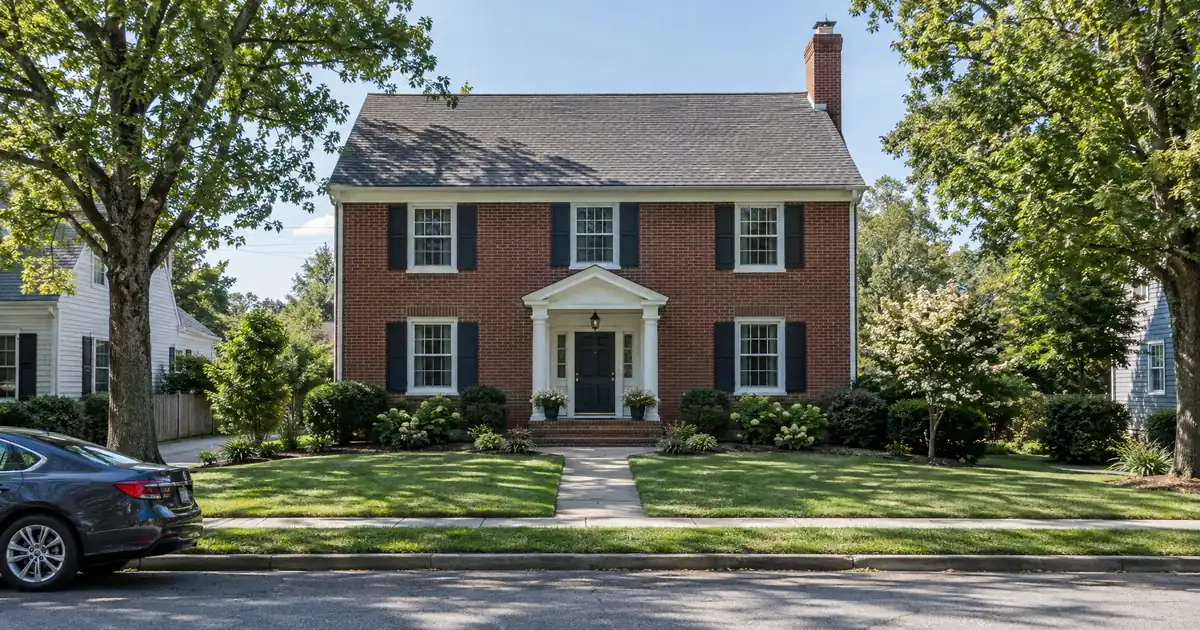
The Quick Read: No law tells a lender to demand a lease on a rental home equity line, so the requirement is lender policy, and a signed lease is the safe baseline for any file. On an investment HELOC, though, your credit, debt-to-income ratio, and equity decide the outcome. The lease is supporting evidence.
- Lenders set lease rules. Your credit, debt load, and equity carry the approval.
- On Lendmire’s network, an investment line tops out at 70% CLTV and $500,000, with a 700 minimum credit score.
- The bigger hurdle is title. An LLC cannot hold title on these lines.
- A DSCR loan treats the lease very differently. There, the lease is a core underwriting document.
- A first-time landlord who just bought the rental usually has little equity to borrow against.
Key Terms Defined
HELOC: A home equity line of credit, a revolving line secured by a property, with a draw period followed by a repayment period.
CLTV: Combined loan-to-value, meaning all liens on the property added together and divided by its value.
DTI: Debt-to-income ratio, the share of your monthly income that goes to debt payments.
DSCR: Debt service coverage ratio. It divides the property’s monthly rent by its full monthly payment (principal, interest, taxes, insurance, and any HOA dues).
Form 1007: An appraiser’s rent schedule that estimates what a one-unit home should rent for. Form 1025 does the same job for two-to-four-unit properties.
Rent roll: A list of each unit, its tenant, and its rent.
How large a line the equity supports.
An equity line is sized by combined loan-to-value, occupancy, and credit — not by rental coverage. Switch the occupancy or the credit band and the ceiling moves with it.
Investment-property lines require a 700 minimum credit score; second-home lines start at a 640 minimum and primary-residence lines at 600, and the combined-LTV ceiling steps down as the credit band drops on primary-residence and second-home lines and holds on investment-property lines; the line cap steps down on primary-residence lines and holds at every tier on investment-property and second-home lines.
A debt-to-income ratio above 45% requires 680+ credit. Profiles under 640 are limited to single-family homes. At least 75% of the approved line is drawn at closing. Ceilings, floors, and caps update from Lendmire’s centralized guideline source.
Line estimate
Illustrative estimate only — not a quote, Loan Estimate, approval, or commitment to lend. The rate is an editable assumption; equity-line pricing is variable through both the draw and repayment periods and never converts to fixed. Occupancy and credit drive the ceiling together: an investment property tops out at 70% combined LTV (minimum credit 700, line cap $500,000); a second home tops out at 90% combined LTV (minimum credit 640, line cap $500,000), with the ceiling stepping down as the credit band drops (the cap holds at every tier); a primary residence tops out at 90% combined LTV (minimum credit 600), and its $750,000 maximum line is available only at 75% combined LTV or below with a 700-or-better credit profile (720 on the longer-runway program) and a full appraisal. Lines above $500,000 require a full appraisal. Credit, debt-to-income, property type, and full underwriting review all affect the final line.
Who Decides What the Lease Must Say?
The lender does. Each lender writes its own rules about whether a lease is needed, how long it must run, and what proof goes with it. Across a wholesale network, those rules differ more than most first-time landlords expect.
A rental HELOC is a personal-credit product. The lender looks at you first: credit, debt load, reserves, and the equity left after the first mortgage. The lease shows the home is rented and gives a sense of the income. It is rarely the thing that qualifies you.
A DSCR loan flips this. It qualifies primarily on property-level rental income covering the payment, subject to lender guidelines. That makes the lease central. Many first-time landlords asking about lease requirements are really weighing these two products without knowing it.
What Counts as a Good Lease on a HELOC File?
A signed, current lease with named tenants, a stated rent, and a stated term is the cleanest evidence. Everything else is weaker, and the weaker it gets, the more the lender leans on you personally. The table shows how common situations usually read.
| Situation | How it usually reads | What to supply |
|---|---|---|
| Signed term lease | Strongest evidence | Lease, deposit records |
| Month-to-month | Acceptable at some lenders | Lease plus rent history |
| Verbal or no lease | Weak evidence | Written lease before applying |
| Vacant or between tenants | Income not documented | Market-rent opinion, strong credit |
| Brand-new landlord | Little track record | Lease, deposits, management agreement |
A lease that has never been paid helps very little. Lenders often want bank statements showing rent landing in an account, and the deposits should match the lease. Keep rent in its own account so the trail is clean.
Why a Lease Alone Rarely Gets a First-Timer Approved
A rental HELOC can be hard to find even when your paperwork is perfect. NerdWallet notes that a HELOC on an investment property is possible, but fewer lenders offer one and you can generally borrow less than against a primary home. It ties this to lenders seeing higher default risk on rentals.
One BiggerPockets thread shows the pattern. An owner had just moved out of a home, had no tenant yet, and found most banks would not write a line on it. Replies suggested workarounds. One was to reposition with a different loan type first and build a landlord track record.
Be careful with advice about timing an application around occupancy. Your application must describe how the property is actually used. Misstating occupancy is fraud, and no line of credit is worth that.
What the Network’s Investment HELOC Looks Like
Lendmire is a broker, not a lender. It arranges home equity lines through select wholesale partners, and every figure below is subject to lender guidelines and full file review. These lines are offered in Lendmire’s 16 full-service states, which is narrower than its 41-market DSCR footprint (40 states plus Washington, D.C.)
On an investment property, the numbers are tight:
- Leverage: 70% CLTV is the ceiling on an investment line. Credit above 700 buys eligibility, not extra leverage.
- Credit: 700 is the minimum. There is no tier below it.
- Line size: up to $500,000. There is no higher investment tier.
- Structure: a standalone line in first or second lien position, with a 5-year interest-only draw followed by a 25-year repayment. At least 75% of the line is drawn at closing, and pricing floats rather than converting to fixed.
- DTI: up to 50% is the program maximum, and a ratio above 45% requires a 680 score. Investment already floors at 700.
- Valuation: because the line caps at $500,000, an automated valuation usually replaces a traditional appraisal, though a full appraisal can be requested.
- Properties: single-family, two-to-four units, PUDs, townhomes, and condos, including non-warrantable condos. Manufactured homes, co-ops, condotels, log homes, and commercial or mixed-use properties are not offered.
For context, NerdWallet describes the typical market structure as a 10-year draw period followed by repayment of up to about 20 years. The network’s investment structure is the 5-year draw and 25-year repayment above.
Title Comes Before the Lease
An investment line must be held by you personally or by a revocable living trust. LLCs, corporations, partnerships, and irrevocable, blind, or land trusts cannot hold title. Many landlords put rentals in an LLC, and this is the sharpest structural difference from a DSCR loan. A DSCR loan can allow entity vesting, subject to lender program eligibility.
If your rental is already deeded to an LLC, a HELOC means changing the vesting first. Otherwise a DSCR cash-out is the likelier route. Read the deed before you spend time gathering lease documents.
A Worked Example: The Math on a New Landlord
Run the numbers on a first-time landlord who buys a duplex with 20% down. The first mortgage sits at 80% of value. The investment ceiling is 70% CLTV, so there is no room left. The lease is perfect and the line is still unavailable. Exact terms depend on the lender’s guidelines, property type, leverage, and a full review of the borrower’s file.
Change the picture. Say you own a rental free and clear, or the first mortgage is about 50% of value. A 70% CLTV ceiling leaves roughly 20% of value for a line, still capped at $500,000 and still subject to credit and DTI. The lease backs up the income story, but equity is doing the work.
That is the honest expectation for a first-timer. Equity builds with time, paydown, or renovation. A fresh purchase rarely has enough of it.
Where the Lease Matters Most: DSCR
If you want to borrow against rental income, the lease becomes the main exhibit. Across the network, the rent used for lender review is generally the lower of the signed lease or the appraiser’s market rent. An above-market lease won’t raise it, and a below-market lease can lower it.
A vacant property is not automatically a dead end. The Form 1007 market rent can stand in when no tenant is in place. A first-time landlord can still buy without a tenant.
Lendmire’s complete DSCR loans guide covers the full mechanics. The short version of the program ranges looks like this:
- Purchase: most files land at 75%-80% LTV, and select high-leverage programs reach 85% LTV with roughly a 700+ score.
- Cash-out refinance: tops out around 75% LTV on standard rentals across most of the network. Short-term-rental cash-out is lower, around 70%. About six months of seasoning is the common expectation.
- Coverage: 1.00 is where many select programs start. A separate select-lender path goes below 1.00, with leverage and terms adjusted.
- Credit: a 620 floor exists in parts of the network, most programs want about 660, and 700+ unlocks the strongest leverage.
One warning: clearing 1.00 is not the same as positive cash flow. DSCR compares rent to the monthly payment only. Repairs, vacancy, management, utilities, and capital expenses sit outside it.
HELOC vs. DSCR Cash-Out: Which Fits?
| Factor | Rental HELOC | DSCR cash-out |
|---|---|---|
| Reviewed on | Your credit, DTI, equity | Property rent vs. payment |
| Title | Individual or revocable trust | Entity vesting may be allowed |
| Role of the lease | Supporting evidence | Core document |
| Structure | Variable, draw then repayment | 30-year fixed spine |
| Best fit | Low first mortgage, strong credit | Entity-held or self-employed owners |
A DSCR cash-out replaces your first mortgage. A HELOC sits beside it. If your existing first mortgage is one you want to keep, that difference matters.
DSCR files on rentals held by new landlords often hinge on one issue: the lease and the market rent disagree. A lease signed a little under market, perhaps to land a tenant fast, quietly drags the coverage figure down. Getting the lease right before it is signed is cheaper than explaining it afterward.
Regulatory Context, Briefly
If you apply for a HELOC, the lender must hand you a consumer brochure on home equity lines. The CFPB’s Learn More page covers the brochure requirement, and a Federal Register notice records that responsibility for it moved to the CFPB. The booklet speaks about a home as collateral. It says nothing about leases or rentals, which confirms the lease rule is lender-made.
Tax treatment can depend on how the funds are used and how the property is held; investors should keep clear records and speak with a qualified tax professional before relying on any deduction.
Mistakes That Stall a First Rental File
- Assuming the lease qualifies you. On a HELOC, credit and DTI decide.
- Skipping the deed check. An LLC-titled rental cannot take an investment line.
- Counting on a 20%-down purchase to leave equity. At 70% CLTV there is none.
- Leaving the lease unpaid on paper. No deposits, no proof.
- Using HELOC money as a long-term down payment. A BiggerPockets reply to one first-investment question said it works better on a deal you can refinance out of, since long-hold cash flow is slim.
- Ignoring the variable payment. Pricing floats through both the draw and repayment periods.
What If the Answer Is No?
First, check which product you were actually declined for. A HELOC denial is about you and your equity. A DSCR loan looks at the property.
If equity is thin, wait and let it build, or restructure. If title is the problem, fix the vesting or move to DSCR. If credit is under 700, a DSCR file may still work, since a 620 floor exists in parts of the network. Reserves run around six months of PITIA on many files and vary by lender, leverage, and loan size.
Lendmire’s investment property HELOC checklist for a first-time landlord lays out the pre-application steps. If you are weighing a line and want to see how the numbers work, Lendmire can help you compare HELOC options based on the property, the equity available, credit profile, combined leverage, and your goals. The brokerage’s calculator gives an illustrative estimate only, not a quote.
Frequently Asked Questions
Is a lease required for an investment property HELOC?
No law requires one. Lenders set their own policy, and a signed lease is the safest thing to bring. It supports the income story, but credit, DTI, and equity carry the decision.
Does a month-to-month tenant count?
At some lenders, yes, especially with a rent payment history behind it. A written agreement with deposit records is stronger than a handshake. Expect the lender to ask for proof the rent is actually paid.
Can I qualify with no tenant yet?
Sometimes, but a rental HELOC with no tenant is harder to place. A DSCR loan handles this better, because a Form 1007 market rent can stand in for the lease. Occupancy must always be stated truthfully.
Does being a first-time landlord block approval?
Not by itself. On a HELOC, your credit and equity matter more than landlord history. A signed lease, deposit records, and a management agreement all help a thin track record.
Can my LLC hold title on an investment HELOC?
No. Title must be in your name or a revocable living trust. If the property sits in an LLC, a DSCR cash-out is the usual alternative, subject to lender program eligibility.
About Lendmire
Lendmire — NMLS# 2371349 — is a mortgage broker that arranges home equity lines of credit in its 16 full-service states through wholesale lenders, on primary residences, second homes and investment properties. Every line is subject to the lender’s guidelines and full underwriting. Scotsman Guide named Lendmire a Top Mortgage Workplace in both 2025 and 2026.
Get Started
Ready to find the right loan for you?
In about 30 seconds you can review financing options available for your home or investment property. No commitment required.
Informational only. Not a Loan Estimate, approval, or commitment to lend. Program availability and eligibility are subject to lender guidelines, credit approval, property review, and underwriting.
References
1. NerdWallet – Can You Get a HELOC on an Investment Property
2. BiggerPockets – HELOC on investment property
4. Federal Register – Notice of Availability of Revised Consumer Information Publication
5. BiggerPockets – HELOC from primary home for first investment property
This article is part of Lendmire’s investment property HELOC program — full qualification details, guidelines, and scenarios live on the program page.
Related reading: Texas DSCR Cash-Out Vesting Requirements for an LLC-Held Rental · Top-Leverage Hard Money Payoff Options at the DSCR Cash-Out Ceiling · DSCR Cash-Out Criteria for a Lock-in Landlord Weighing a Second Lien
Brandon Miller
Founder & CEO, Mortgage Loan Originator, Lendmire LLC
- Mortgage Loan Originator · NMLS# 1129696 · Verify on NMLS Consumer Access
- North Carolina Real Estate Broker · License# 343312 · Verify on NCREC
- North Carolina Insurance Producer · License# 19053198 · Property, Casualty, Life, Health · Verify on NAIC SBS
- Lendmire LLC · Firm NMLS# 2371349 · Verify firm licensure
Compliance and disclosures. Lendmire (NMLS# 2371349) is a licensed mortgage broker and is not a direct lender, depository institution, financial advisor, or tax professional. Content in this article is general market analysis and educational information — not financial, legal, or tax advice for any specific situation. Lendmire does not guarantee loan approval; every transaction is subject to underwriting by the funding lender. Mortgage pricing and loan program guidelines are subject to change at any time without notice and vary by borrower characteristics, property type, and state regulations. Lendmire complies with Equal Housing Opportunity. Licensure verification: NMLS Consumer Access.