
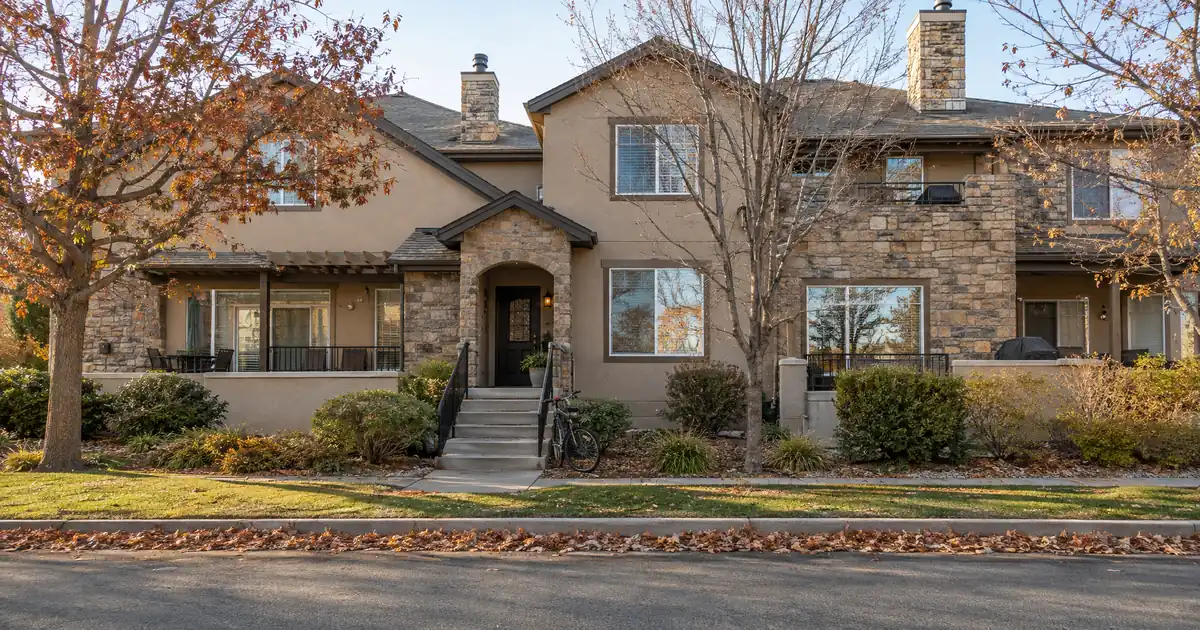
The Quick Read: A condo line of credit has to pass three tests: the borrower’s credit and equity, the condo building’s health, and how the state taxes and records the lien. In a high-cost closing state, that third test can punish an oversized line. Every figure below is subject to lender guidelines and full file review.
- Building first. The lender reviews the association’s budget, reserves, insurance, litigation, and rental mix before your credit matters.
- Occupancy sets the ceiling. Investment lines top out at 70% CLTV, while primary-residence and second-home lines reach 90% only at a 720 credit profile.
- Title matters. The unit must sit in your personal name or a revocable living trust. An LLC cannot hold title on these lines.
- Size the line to the need. Some jurisdictions tax the full credit line at recording, and at least 75% of the line is drawn at closing anyway.
- Not every state is covered. Lines are available only in Lendmire’s 16 full-service states.
Key Terms Defined
CLTV (combined loan-to-value): Every loan on the unit, including the new line, added together and divided by the unit’s value.
Warrantable condo: A building that meets standard project rules on reserves, litigation, and owner-occupancy mix.
Non-warrantable condo: A building that fails one of those project rules. The label applies to every unit in the building, not just yours.
Vesting: The name or entity that holds legal title to the property.
Recording tax: A state or local tax charged when a mortgage or lien is recorded. In some jurisdictions it is based on the full credit line.
DSCR (debt service coverage ratio): Monthly rent divided by the full monthly housing payment. DSCR loans qualify primarily on property-level rental income covering the payment, subject to lender guidelines.
Condotel: A condo building run like a hotel, with a rental desk and nightly bookings.
How large a line the equity supports.
An equity line is sized by combined loan-to-value, occupancy, and credit — not by rental coverage. Switch the occupancy or the credit band and the ceiling moves with it.
Investment-property lines require a 700 minimum credit score; second-home lines start at a 640 minimum and primary-residence lines at 600, and the combined-LTV ceiling steps down as the credit band drops on primary-residence and second-home lines and holds on investment-property lines; the line cap steps down on primary-residence lines and holds at every tier on investment-property and second-home lines.
A debt-to-income ratio above 45% requires 680+ credit. Profiles under 640 are limited to single-family homes. At least 75% of the approved line is drawn at closing. Ceilings, floors, and caps update from Lendmire’s centralized guideline source.
Line estimate
Illustrative estimate only — not a quote, Loan Estimate, approval, or commitment to lend. The rate is an editable assumption; equity-line pricing is variable through both the draw and repayment periods and never converts to fixed. Occupancy and credit drive the ceiling together: an investment property tops out at 70% combined LTV (minimum credit 700, line cap $500,000); a second home tops out at 90% combined LTV (minimum credit 640, line cap $500,000), with the ceiling stepping down as the credit band drops (the cap holds at every tier); a primary residence tops out at 90% combined LTV (minimum credit 600), and its $750,000 maximum line is available only at 75% combined LTV or below with a 700-or-better credit profile (720 on the longer-runway program) and a full appraisal. Lines above $500,000 require a full appraisal. Credit, debt-to-income, property type, and full underwriting review all affect the final line.
What Is a “High-Cost Closing State,” Really?
The phrase has no legal definition. It is shorthand for places where closing a loan costs more, usually because of transfer taxes, recording taxes, or attorney-driven closings.
The best public ranking comes from ClosingCorp data republished by NAR. It covers purchase closings, including transfer taxes. Washington, D.C. topped the list at $29,888, followed by Delaware at $17,859, New York at $16,849, Maryland at $14,721, and Washington State at $13,927.
Those are purchase costs, so they do not predict what a line of credit costs. For a HELOC, the cost driver is usually recording tax on the lien, plus attorney and title practice in that state. A state can rank high on purchases and still be modest for a line, and the reverse also happens.
One more point comes first. Lendmire places home equity lines only in its 16 full-service states, which is a narrower set than the 41-market DSCR footprint. Several jurisdictions at the top of the closing-cost data, such as Washington, D.C., Delaware, New York, and Maryland, fall outside those 16. Confirm your state before anything else.
The Three Gates a Condo HELOC Must Clear
A condo line is underwritten twice, once on you and once on the building. The state cost layer then decides how much line is worth opening.
| Gate | What gets tested | Common failure |
|---|---|---|
| Building | Budget, reserves, insurance, litigation | Special assessments, lawsuit |
| Borrower and title | Credit, DTI, equity, vesting | Unit held in an LLC |
| State cost layer | Recording tax, title, attorney fees | Oversized line |
Most files stall at the first gate, because the association controls the paperwork.
How the Building Gets Reviewed
The lender decides whether the project is acceptable, not you. CBS News notes that condo approval depends heavily on the building. It points to adequate master insurance and a financially healthy association, and it warns that an underfunded HOA, major repairs ahead, or frequent special assessments can lead to a decline.
Trade press on condo underwriting lists the same project-level checks. Scotsman Guide names litigation against the HOA, adequate reserves, and the split between owner-occupied and investor-owned units.
Expect the lender to request a condo questionnaire from the HOA or its manager. The usual supporting documents are:
- the current budget and dues statement,
- the master insurance certificate,
- the rental rules,
- any notice of a special assessment.
Our wholesale network accepts condominiums, including non-warrantable ones, on home equity lines. That is a real difference from lenders that decline the building outright. Non-warrantable is a financing label, not a defect in your unit. Condotels and co-ops are not eligible on these lines.
One red flag deserves its own sentence. Rental caps or minimum lease lengths in the HOA documents can decide a rental file before any math happens. Short-term rental rules can vary by city, county, HOA, and property type, so investors should confirm local rules before relying on projected rental income.
Borrower and Title Requirements
Occupancy is the biggest driver of the borrower requirements, so the ceiling depends on how the unit is used. Our network ceilings split like this, each subject to lender guidelines.
| Occupancy | Min credit | Ceiling | Max line |
|---|---|---|---|
| Primary residence | 600 | 90% CLTV (720+ only) | $500,000 at 90% CLTV; $750,000 at 75% CLTV, 700+ (720 on the longer-runway program) |
| Second home | 640 | 90% CLTV (720+ only) | $500,000 |
| Investment property | 700 | 70% CLTV | $500,000 |
The lower credit tiers step down from there. On a primary residence, a 640 profile reaches 80% CLTV and a 620 profile reaches 70%. A line above $500,000 is for primary residences only. It requires a 700 or better credit profile (720 on the longer-runway program, described below), caps at 75% CLTV, and requires a full appraisal.
Market surveys report that condo HELOC limits tend to run lower than for detached homes, roughly 70% to 80% depending on lender and building, per CBS News. For an investor, the network figure is the one that matters: 70% CLTV on an investment property.
Other borrower rules to know:
- DTI: the maximum is 50%, and it drops to 45% for credit profiles between 600 and 679. The lender reviews your file on the interest-only payment calculated on the maximum draw.
- Valuation: lines at or below $500,000 ordinarily use an automated valuation, though a higher CLTV may require a second valuation. Lines above $500,000 need a full appraisal.
- Credit report: it can be no more than 90 days old at closing.
- Exposure: a borrower is limited to three lines, and an owner with more than 15 financed properties is not eligible.
A line comes from one of two wholesale programs. One reaches higher leverage. The other has a longer interest-only runway. Where their terms differ, each figure applies only within its own program.
The vesting trap
Title must be held by you personally or by your revocable living trust. LLCs, corporations, partnerships, and irrevocable, blind, or land trusts cannot hold title. This is the sharpest structural difference from a DSCR loan. A condo already deeded to an LLC needs a vesting change first, or a DSCR cash-out instead.
Do not re-deed the unit right before applying without asking the lender first. A last-minute transfer can complicate the file.
What Changes in a High-Cost Closing State
The line’s structure interacts with the state’s cost mechanics in a way most borrowers miss. In some jurisdictions, including New York and Florida, recording taxes can attach to the full credit line rather than to the amount you draw. Secondary sources describe this mechanic, and the exact base and rate depend on local law. Title or closing counsel should confirm it for your unit before you pick a line size.
Here is why that matters. Under these programs, at least 75% of the line is drawn at closing. So the idea that you only pay on what you draw does not hold up well. A line sized well above your real need costs you twice: in recording tax on the whole line, and in interest on money you drew just to keep the line open.
The CFPB’s HELOC brochure lists the usual up-front costs. These include appraisal and application fees, attorney and title charges, document preparation, and taxes. It also flags that a HELOC generally must be paid in full on sale and that some lines carry an early termination fee. Read the credit agreement for that fee before you sign.
Condo files add a few costs of their own, such as HOA questionnaire fees and document fees. These are small on their own, but they stack with the state layer.
A cash-out refinance has its own trap in a recording-tax jurisdiction. The new first mortgage is generally taxed as new debt, so a refinance can cost more than a line sized to the same need. Run both on paper with a title company.
The honest boundary is this. Lender policy sets the leverage and credit rules. The building sets the condo rules. State law sets the recording costs.
Worked Scenarios
These scenarios use ratios and percentages only. They are illustrations, not quotes.
Scenario one: the rental condo in your own name. Picture an investor who holds a rental condo personally, has a 710 score, and has a clean building. The ceiling is 70% CLTV on an investment property, and the maximum line is $500,000. The investor’s first mortgage already uses part of that 70%, so the usable line is whatever room remains under the cap. The practical move is to size the line to the renovation or down-payment need and stop there.
Scenario two: the same condo in an LLC. Say you own the unit through an LLC. A home equity line is off the table until the vesting changes. A DSCR cash-out refinance is the usual alternative. Across most of our network it tops out around 75% LTV, and roughly 6 months of seasoning is the common expectation. Coverage is where many select programs start at 1.00, while a separate select-lender path goes below 1.00 with leverage and terms adjusted. HOA dues count on the payment side of the ratio, so a high-dues building lowers coverage. And clearing 1.00 does not mean the property cash flows, because repairs, vacancy, and management sit outside the calculation. Final terms depend on lender guidelines, property type, leverage, and the borrower’s complete credit picture.
Scenario three: the building fails. A condo with an active lawsuit against the HOA may be non-warrantable. These lines accept non-warrantable condos, but a lender will still weigh the severity of the issue. Investor concentration is often workable. Structural litigation or hotel-style operations are much harder. Building health also narrows your future refinance and exit pool, so factor that in.
HELOC or DSCR Cash-Out on a Condo?
| Factor | HELOC | DSCR cash-out |
|---|---|---|
| Reviewed on | Personal income and DTI | Rent coverage |
| Title | Individual or revocable trust | LLC possible, per program terms |
| Existing first mortgage | Stays in place | Replaced |
| Best for | Staged needs | Lump sum |
A line fits when your first mortgage is worth keeping and you need money in stages. A DSCR cash-out fits when the unit sits in an LLC, your DTI is stretched, or you need one lump sum. DSCR loans are designed for non-owner-occupied investment properties. Because they are business-purpose investor loans, they are reviewed differently from a standard owner-occupied mortgage.
If you want the full picture, Lendmire’s complete DSCR loans guide walks through coverage, leverage, and credit tiers.
A Practical Order of Operations
1. Confirm your state and occupancy. Availability and ceilings depend on both.
2. Check title. If an LLC holds the unit, decide between a vesting change and a DSCR cash-out.
3. Ask the HOA early. Request the budget, master policy, rental rules, and any assessment notices before you apply.
4. Price the state layer. Ask title or closing counsel whether recording tax applies to the full line.
5. Size the line to the need. Remember that at least 75% is drawn at closing.
6. Compare against a cash-out. Run both with real closing-cost estimates.
Tax treatment can depend on how the funds are used and how the property is held; borrowers should keep clear records and speak with a qualified tax professional before relying on any deduction.
If you are considering a home equity line and want to see how the numbers work, Lendmire can help you compare HELOC options based on the property, the equity available, credit profile, combined leverage, and your goals. Call 828-256-2183 or request a quote at Lendmire.
Frequently Asked Questions
Can a condo qualify for a HELOC if the building is non-warrantable?
It can on our network, since condominiums including non-warrantable ones are eligible, subject to lender guidelines. The lender still reviews the building’s problems, and severity matters. Condotels and co-ops are not eligible.
Does the line have a lower ceiling on an investment condo than on my own home?
Yes. An investment property tops out at 70% CLTV with a 700 minimum credit score and a $500,000 maximum line. A primary residence reaches 90% CLTV only at a 720 profile.
Do I only pay recording tax on the amount I draw?
Not necessarily. In some jurisdictions the tax attaches to the full credit line, so an oversized line costs more at recording. Because at least 75% of the line is drawn at closing here, size the line to the real need and have title counsel confirm the base.
Can I get a line on a condo held in my LLC?
No. These lines require title in your name or a revocable living trust. An LLC-held unit needs a vesting change or a DSCR cash-out instead, subject to program terms.
Does a high-cost closing state mean a high-cost HELOC?
Not automatically. The ranking comes from purchase closings that include transfer taxes. A line’s cost depends mostly on recording tax and local attorney and title practice.
About Lendmire
Lendmire (NMLS# 2371349) is a mortgage broker. Home equity lines of credit — on a primary residence, a second home or an investment property — are arranged through wholesale lenders in Lendmire’s 16 full-service states, and every line is underwritten by the lender under its program guidelines. Scotsman Guide named Lendmire a Top Mortgage Workplace in both 2025 and 2026.
Get Started
Ready to find the right loan for you?
See your offer in seconds. No credit pull, no obligation.
Informational only. Not a Loan Estimate, approval, or commitment to lend. Program availability and eligibility are subject to lender guidelines, credit approval, property review, and underwriting.
References
1. NAR: state closing costs (ClosingCorp data)
2. CBS News: home equity loan on a condo
3. Scotsman Guide: condo underwriting concepts
4. CFPB: HELOC consumer brochure
This article is part of Lendmire’s HELOC & home equity loan program — full qualification details, guidelines, and scenarios live on the program page.
Related reading: How an Investment Property HELOC Works on a Condo or Townhome · Can You Get a HELOC on a Condotel? · Can You Get an Investment Property HELOC on Acreage in a High-Cost State?
Brandon Miller
Founder & CEO, Mortgage Loan Originator, Lendmire LLC
- Mortgage Loan Originator · NMLS# 1129696 · Verify on NMLS Consumer Access
- North Carolina Real Estate Broker · License# 343312 · Verify on NCREC
- North Carolina Insurance Producer · License# 19053198 · Property, Casualty, Life, Health · Verify on NAIC SBS
- Lendmire LLC · Firm NMLS# 2371349 · Verify firm licensure
Compliance and disclosures. Lendmire (NMLS# 2371349) is a licensed mortgage broker and is not a direct lender, depository institution, financial advisor, or tax professional. Content in this article is general market analysis and educational information — not financial, legal, or tax advice for any specific situation. Lendmire does not guarantee loan approval; every transaction is subject to underwriting by the funding lender. Mortgage pricing and loan program guidelines are subject to change at any time without notice and vary by borrower characteristics, property type, and state regulations. Lendmire complies with Equal Housing Opportunity. Licensure verification: NMLS Consumer Access.