
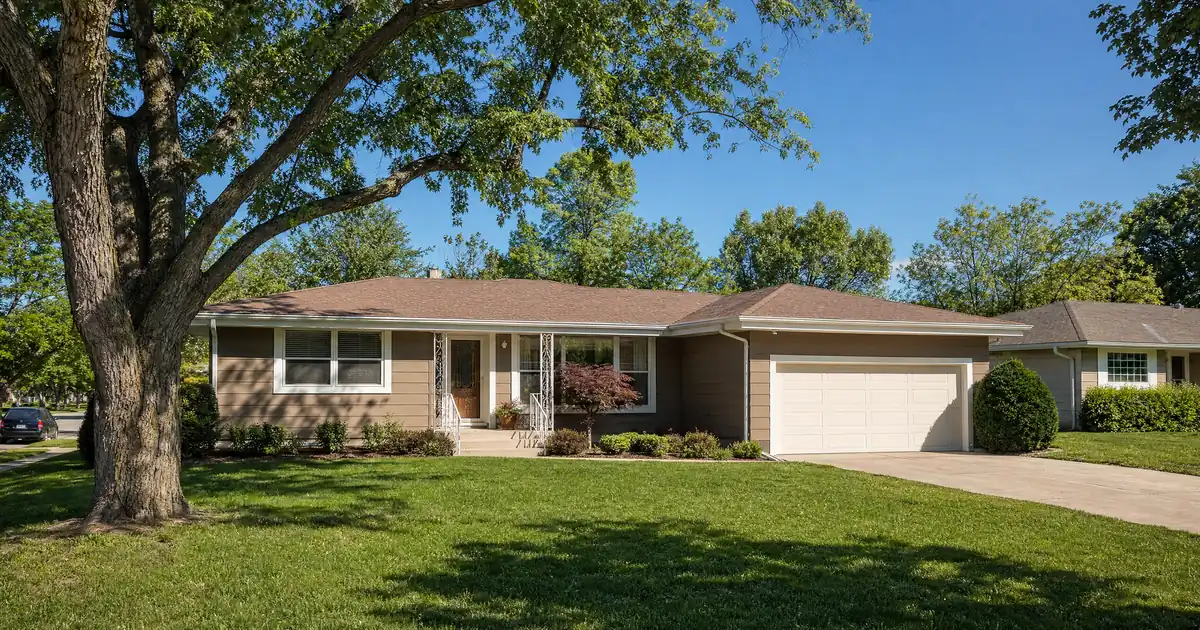
HELOC Vs Home Equity Loan For Investment Property — The Quick Read: A HELOC gives you a revolving credit line against a rental property’s equity. You draw money as you need it. A home equity loan works differently. It hands you one lump sum with a set repayment schedule starting on day one. For non-owner-occupied property, the line-of-credit version is the more common product. Lendmire’s wholesale network structures investment property HELOCs up to $500,000, with a 70% combined-loan-to-value ceiling. A true lump-sum home equity loan on a rental is a narrower, less standardized product across the market. Some investors need bigger leverage. Some want to pull cash out of an LLC-titled property. Others want the loan qualified on rent instead of personal income. These investors usually end up comparing both options against a DSCR cash-out refinance.
Both products borrow against the same thing: equity you’ve built in a property you already own. The difference shows up in how that equity gets handed to you. It also shows up in how the repayment obligation behaves afterward. On a primary residence, both products are common. On a rental, things change. Availability tightens. Underwriting gets stricter. And the two products start to diverge in ways that matter for how an investor actually uses the money.
How large a line the equity supports in your market.
An equity line is sized by combined loan-to-value, occupancy, and credit — not by rental coverage. Switch the occupancy or the credit band and the ceiling moves with it.
Investment-property lines require a 700 minimum credit score. Second-home tiers reach 640; primary-residence tiers reach 600.
A debt-to-income ratio above 45% requires 680+ credit. Profiles under 640 are limited to single-family homes. At least 75% of the approved line is drawn at closing. Ceilings, floors, and caps update from Lendmire’s centralized guideline source.
Line estimate
Illustrative estimate only — not a quote, Loan Estimate, approval, or commitment to lend. The rate is an editable assumption; equity-line pricing is variable through both the draw and repayment periods and never converts to fixed. Occupancy and credit drive the ceiling together: investment property runs to 70% combined LTV with a 700 credit floor and a $500,000 cap; a second home runs to 70% at a 640 floor with a $500,000 cap; a primary residence reaches up to 80% at a 600 floor, and its $750,000 maximum line applies only at 75% combined LTV or below with 720+ credit and a full appraisal. Lines above $500,000 require a full appraisal. Credit, debt-to-income, property type, and full underwriting review all affect the final line.
Key Terms Defined
HELOC (home equity line of credit): a revolving credit line secured by a property’s equity. You draw what you need, repay it, and can draw again during the draw period.
Home equity loan: a single lump-sum loan secured by a property’s equity. The lender pays it out once, and you repay it on a fixed schedule starting at closing.
CLTV (combined loan-to-value): add up every loan secured by a property, then divide by the property’s value. This includes the existing first mortgage plus the new HELOC or home equity loan.
Second lien: a loan that sits behind an existing first mortgage in repayment priority. If the property is ever sold or goes into foreclosure, the first mortgage gets paid first. Nearly every equity product on a rental with an existing mortgage works this way.
Draw period: the window of time a HELOC lets you withdraw new funds. After that, the line converts to a set repayment schedule.
DTI (debt-to-income ratio): the share of your monthly income already committed to debt payments. Lenders use it to judge how much additional debt you can safely carry.
Business-purpose loan: a loan made for investment or business use, not personal, family, or household use. DSCR loans, covered later, fall into this category. Home equity products on a rental typically don’t.
Side-by-Side
The line-of-credit structure and the lump-sum structure solve different problems. The eligibility gates differ more than most investors expect, too, once occupancy shifts from primary residence to rental.
| Factor | HELOC (Investment Property) | Home Equity Loan |
|---|---|---|
| Structure | Revolving line, draw as needed | Single disbursement at closing |
| Review basis | Personal credit, income, DTI, property equity | Personal credit, income, DTI, property equity |
| Documentation | Personal income docs, credit report, valuation | Personal income docs, credit report, valuation |
| Title/entity vesting | Individual or revocable living trust only | Varies by lender; commonly individual title only |
| Repayment shape | Interest-only draw period, then amortizing repayment | Set repayment schedule from day one |
| Reserve/exposure limits | Combined line count and dollar exposure caps apply | Varies by lender |
Every row above describes structure and eligibility, not pricing. Whatever rate or payment a specific offer carries is a separate conversation with the lender presenting it. That number isn’t part of how these two products are built.
Two Different Paths, One Confusing Label
Investors researching this topic often mix up two very different transactions that happen to share a name. One path borrows against a primary residence to fund a rental purchase or renovation. That’s consumer-purpose lending, and it runs through a different underwriting lane entirely. The other path borrows directly against the rental property itself. That’s the path this article and Lendmire’s guidelines cover.
That second path is where availability actually tightens. Fewer lenders build a dedicated non-owner-occupied HELOC or home equity loan product at all. The ones that do generally apply stricter credit and equity cushions than they would on an owner-occupied home. The Federal Reserve’s interagency guidance directs banks to build explicit debt-service capacity, creditworthiness, and collateral standards into home equity underwriting. This supervisory language exists because second-lien collateral on non-owner-occupied property carries different risk than a primary home does. Occupancy classification gets decided at application. Per the Corporate Finance Institute, only properties with up to four units can even be classified as owner-occupied in the first place. Anything beyond that, or anything the owner doesn’t live in, gets underwritten in the stricter investment lane.
Nationally, homeowners are sitting on a large pool of equity to draw against. The Urban Institute’s Housing Finance Policy Center puts total household housing equity at roughly $34.7 trillion. That pool is exactly why second-lien products on rental property have become a growth area for investors who’d rather tap equity than disturb a first mortgage.
When a HELOC Is the Better Fit
A HELOC fits best when the cost is staggered, uncertain, or ongoing — not a single known number. Investors who want to pay for only what they actually draw gain the most from this structure. They don’t have to carry a full balance from day one.
Picture an investor scaling a small portfolio. This investor wants standing access to capital for the next acquisition’s down payment, a mid-lease renovation, or a run of maintenance calls that can’t be priced precisely in advance. A line of credit lets that investor draw against equity as costs come up. There’s no need to borrow a lump sum and pay on the full balance before it’s needed.
Lendmire structures its investment property HELOC as a standalone line, in first or second lien position. It runs a five-year interest-only draw period followed by a 25-year amortizing repayment period (Tennessee runs a shorter five-year draw and ten-year repayment). At least 75% of the approved line has to be drawn at closing. Any subsequent draw after that generally needs to be at least $1,000 — Texas sets that minimum at $4,000. Credit sits at a 700 floor for investment property specifically. Both the 700 and 720 credit tiers land at the same 70% CLTV ceiling. That means credit above 700 buys eligibility and file quality, not additional leverage.
A HELOC also fits investors whose ongoing rental income and personal debt load run comfortably under a 50% DTI ceiling. Lendmire helps you qualify the line on the interest-only payment calculated at the maximum available draw. That ceiling tightens to 45% for credit profiles between 600 and 679. Anything above 45% requires at least a 680 score.
When a Home Equity Loan Is the Better Fit
A home equity loan fits a single, defined expense — a full unit renovation before re-lease, a roof, a buy-out of a partner’s equity stake. Investors who want budget certainty from the first payment forward tend to prefer the lump-sum structure. They don’t want a revolving balance that can be redrawn.
Here’s the honest broker’s-eye view: the closed-end, lump-sum version of this product is genuinely scarcer on investment property than the line-of-credit version. Most lenders that bother building a dedicated non-owner-occupied home equity product build it as a HELOC instead. Why? A revolving line is easier to size conservatively and adjust if a rental’s income or occupancy shifts. A true fixed-disbursement home equity loan on a rental, underwritten the way it would be on a primary residence, shows up far less consistently across the market. Investors who specifically want that lump-sum, single-project structure often end up looking at a cash-out refinance on the first mortgage instead, or at a DSCR-based second-lien alternative built for exactly this gap.
What Lendmire’s Investment Property HELOC Actually Looks Like
Lendmire arranges these lines through select lenders in its wholesale network. The parameters are built specifically around non-owner-occupied and second-home collateral. On investment property, the line runs from $25,000 up to $500,000, with a 70% CLTV ceiling that doesn’t step up regardless of credit tier. Above $500,000, a full appraisal comes into play across the broader product. Because the investment tier tops out right at $500,000, an investment property HELOC is structurally almost always priced off an automated valuation model rather than a traditional appraisal. A borrower can still request a full appraisal in any case.
Property eligibility covers single-family homes, two-to-four unit properties, PUDs, townhomes, and condominiums — including non-warrantable condos — plus modular factory-built homes. Manufactured homes, co-ops, condotels, timeshares, barndominiums, log homes, and any commercial, mixed-use, agricultural, or raw-land property fall outside these programs entirely.
Credit review looks at a report obtained within program guidelines. It wants two tradelines seasoned 12 months, or one seasoned 24 months, and won’t accept rescores. Housing payment history needs to run clean: 0x30x6 and 1x30x12 for scores at 640 and above, tighter at 0x30x12 for the 600-639 band. That said, investment property’s own 700 floor already sits above those lower tiers. Bankruptcy needs four years of seasoning from discharge or dismissal. Foreclosure needs seven years. A pre-foreclosure, deed-in-lieu, or short sale needs four.
A borrower can hold up to three lines, with combined exposure to $2,000,000 on the higher-leverage program ($750,000 on the longer-runway program) and a 15-financed-property limit on both. A borrower who owns more than 15 financed properties isn’t eligible for this specific product. A handful of state overlays matter too. Michigan sets a $10,000 line floor. New Mexico and Ohio apply CLTV caps that shift with credit profile. Indiana, North Carolina, Pennsylvania, Tennessee, Texas, and Washington won’t extend the line to a property that’s currently listed for sale, or was listed within the past 60 days. Texas properties are also capped at 10 acres. This product is arranged only in Lendmire’s 16 full-service states — Alabama, California, Colorado, Florida, Georgia, Indiana, Michigan, Montana, New Mexico, North Carolina, Ohio, Pennsylvania, Tennessee, Texas, Virginia, and Washington. That’s a narrower footprint than Lendmire’s DSCR investor-loan coverage. Every figure above is a typical range from wholesale-network guidelines, not a promise. Review details remain subject to lender overlays and full file review.
Where an LLC Gets in the Way
Title vesting is where this product parts ways from a DSCR loan the fastest. Lendmire’s investment property HELOC requires the property to be titled to an individual borrower, or held in an inter vivos revocable living trust. LLCs, corporations, partnerships, and irrevocable, blind, or land trusts can’t hold title on this product at all.
That’s a real problem for the investor who deeded a rental into an LLC for liability protection — a common and reasonable move. But it means that property can’t tap this specific line without either re-vesting title back to an individual or trust, or pursuing a different loan type built for entity ownership. For a look at how the broader market handles equity access on rentals, Lendmire’s guides on home equity loans on investment property and an investment property home equity loan walk through the general landscape in more depth, alongside a rundown of who actually offers home equity loans on rental property.
When Neither Fits: The DSCR Alternative
DSCR loans are designed for non-owner-occupied investment properties. Because they are business-purpose investor loans, lenders review them differently than a standard owner-occupied mortgage. They solve two problems a HELOC or home equity loan can’t: entity-titled property and leverage beyond a $500,000 line.
A DSCR loan is reviewed mainly on one question: does the property’s rental income cover its monthly obligation? This is subject to lender guidelines. Lenders aren’t focused on the borrower’s traditional personal-income documentation or employment income. Across Lendmire’s wholesale network, purchase leverage typically lands at 75-80% LTV. Select high-leverage programs reach 85% for borrowers around a 700+ credit score. Cash-out refinance leverage tops out closer to 75% LTV across most of the network, generally after about six months of ownership seasoning. A 1.00 debt-service coverage ratio is where a number of select programs start. That’s a floor for those specific programs, not a universal standard. Stronger coverage tends to open better leverage. Coverage below 1.00 is available through select lenders in the network as well, typically with leverage and terms adjusted to compensate. Borrowers who already own a primary residence may also have access to no-ratio structures through select lenders, though that path isn’t tied to a fixed numeric floor.
Credit requirements run a 620 floor in parts of the network. Most programs prefer around 660, and the strongest leverage tiers open up around 700 and above. Loan sizes generally run up to $3,000,000 on standard programs, with smaller balances available through select lenders. Loans above $2,500,000 typically get structured as 30-year fixed. Reserve requirements vary by lender, leverage, and loan size. They commonly run around six months of housing payment reserves, sometimes waived on conservative rate-term deals at modest leverage under $1,500,000, and stepping up toward nine months on larger loans. Crucially, an LLC can hold title on a DSCR loan, subject to program eligibility — the exact fix for the vesting problem above. Investors weighing this path in full can review Lendmire (NMLS# 2371349)’s complete DSCR loans guide or the shorter comparison at DSCR vs. conventional financing to see how the qualification math actually runs. Lendmire arranges DSCR investor loans across 40 states plus Washington, D.C. — a considerably wider footprint than the 16-state HELOC network described above.
Tax treatment can depend on how the funds are used and how the property is held. Investors should keep clear records and speak with a qualified tax professional before relying on any deduction.
The Bottom Line
Neither product is objectively better. They’re built for different problems. A HELOC on a rental is the right tool for staggered, ongoing, or hard-to-predict costs. It lets an investor control exactly how much interest they carry at any given time. A home equity loan fits a single, priced project. Fixed disbursement and a set repayment schedule bring peace of mind. But on non-owner-occupied property, that closed-end version is genuinely harder to find than the line-of-credit version. And for the investor who’s titled property in an LLC, needs leverage past $500,000, or wants qualification built around rent rather than personal income, DSCR financing is usually the more direct path.
Nothing here is a commitment to lend, and no loan outcome is guaranteed. Every scenario described here is subject to lender approval and to full review of the borrower’s credit, the property, and the applicable program guidelines. This article is general information, not financial, legal, or tax advice.
If you’re weighing a HELOC, a home equity loan, or a DSCR cash-out on a rental property and want to see how the numbers actually run, Lendmire can help. The team compares options based on the property, your credit profile, and your goals — reach the team at 828-256-2183 or request a quote directly.
Frequently Asked Questions
Can I get a HELOC on a rental property I don’t live in?
Yes, though it’s a narrower product than a primary-residence HELOC. Within Lendmire’s wholesale network, investment property lines run up to $500,000 with a 70% combined-loan-to-value ceiling and a 700 minimum credit score. They’re available across Lendmire’s 16 full-service states.
Is a home equity loan or HELOC easier to qualify for on a rental?
Both are underwritten on the same basics: personal credit, income, DTI, and property equity. So difficulty comes down to availability, not qualification difference. The lump-sum home equity loan is simply a scarcer product on non-owner-occupied property, since most lenders that build a dedicated investment-property equity product build it as a revolving line instead.
Can I put an investment property HELOC in my LLC’s name?
No. Lendmire’s investment property HELOC requires title in an individual borrower’s name or an inter vivos revocable living trust — LLCs, corporations, and irrevocable trusts can’t hold title on this product. A property already deeded into an LLC generally needs either a vesting change or a DSCR cash-out refinance, which does allow LLC ownership subject to lender program eligibility.
What happens if my rental is listed for sale when I apply?
In several states — Indiana, North Carolina, Pennsylvania, Tennessee, Texas, and Washington — a property currently listed for sale, or listed within the past 60 days, becomes ineligible for this line. Other states in Lendmire’s footprint don’t carry that specific restriction, so it’s worth confirming state by state.
Why would an investor choose DSCR financing over a HELOC on a rental?
Mainly for leverage past $500,000 and for entity-titled property. DSCR loans qualify primarily on the property’s rental income, allow LLC vesting, and reach higher leverage in Lendmire’s network — typically 75-80% on a purchase. The HELOC line, by contrast, caps at a 70% CLTV ceiling and requires individual or trust title.
About Lendmire
Lendmire (NMLS# 2371349) is a mortgage brokerage built around DSCR investor lending, with programs available in 41 markets, including Washington, D.C. DSCR lenders commonly evaluate rental-income coverage instead of personal income paperwork — a practical fit for LLC-owned and multi-property investors. Terms vary by lender, property, leverage, and program. Scotsman Guide named Lendmire a Top Mortgage Workplace in both 2025 and 2026.
Get Started
Ready to find the right loan for you?
In about 30 seconds you can review financing options available for your home or investment property. No commitment required.
Informational only. Not a Loan Estimate, approval, or commitment to lend. Program availability and eligibility are subject to lender guidelines, credit approval, property review, and underwriting.
References
1. Federal Reserve — SR 05-11, Interagency Guidance on Home Equity Lending
2. Corporate Finance Institute — Non-Owner-Occupied Property Classification
3. Urban Institute Housing Finance Policy Center — Housing Finance Chartbook
This article is part of Lendmire’s investment property HELOC program — full qualification details, guidelines, and scenarios live on the program page.
Related reading: Home Equity Loan on Rental Property: What Investors Actually Get · Home Equity Loan For Rental Property · HELOC To Buy Investment Property
Brandon Miller
Founder & CEO, Mortgage Loan Originator, Lendmire LLC
- Mortgage Loan Originator · NMLS# 1129696 · Verify on NMLS Consumer Access
- North Carolina Real Estate Broker · License# 343312 · Verify on NCREC
- North Carolina Insurance Producer · License# 19053198 · Property, Casualty, Life, Health · Verify on NAIC SBS
- Lendmire LLC · Firm NMLS# 2371349 · Verify firm licensure
Important disclosures. Lendmire (NMLS# 2371349) is a licensed mortgage brokerage. Lendmire is not a direct lender, depository institution, or financial advisor. All loan inquiries are subject to lender underwriting; this article does not constitute a commitment to lend. Rates, terms, and program guidelines are subject to change without notice and vary by borrower profile, property type, and state. Information in this article is general in nature and is not financial, legal, or tax advice. Equal Housing Opportunity. NMLS Consumer Access: nmlsconsumeraccess.org.