
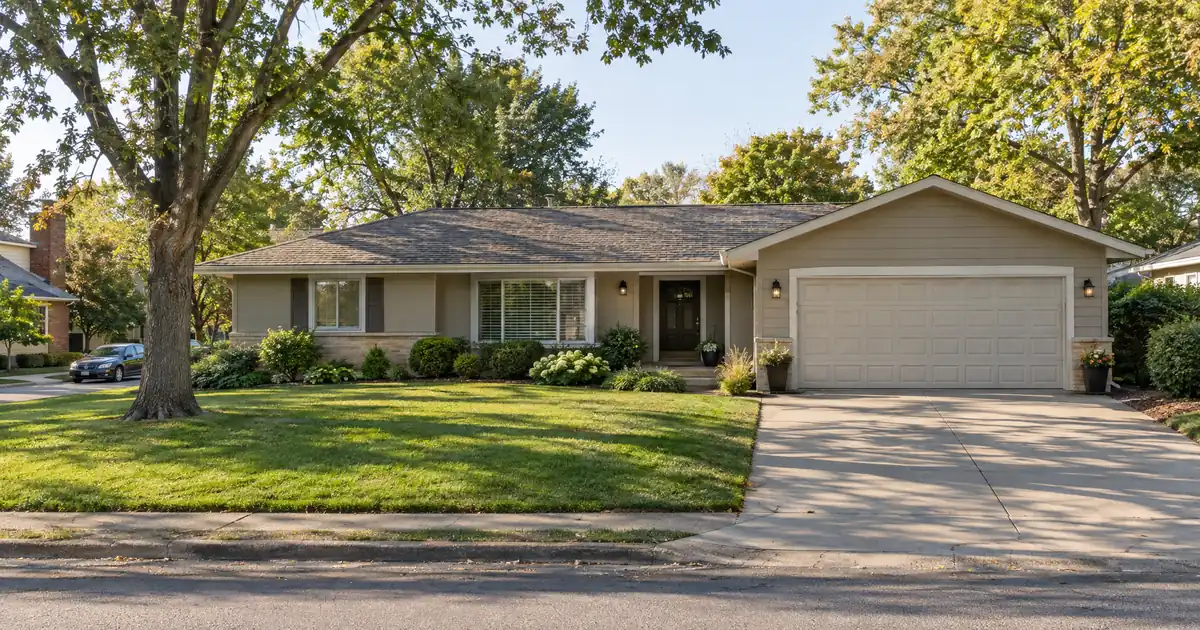
The Quick Read: A HELOC is a revolving line secured by your property, and it is built around equity and personal credit. Installer financing is usually a fixed-schedule loan sold at the point of sale, and its lien can range from nothing to a recorded mortgage. The right choice depends on how the loan is secured and what you plan to do with the property next.
- Term: an investment HELOC runs an interest-only draw phase, then a fully amortizing repayment phase. Installer loans usually run one fixed schedule.
- Lien position: a HELOC is a recorded first or second lien. An installer loan may be unsecured, an equipment filing, a recorded deed of trust, or a tax assessment.
- Qualification: neither product is reviewed on rent. Both look at you, not the lease.
- LLC-titled rentals do not fit.
- Later borrowing: whatever gets recorded now must be paid off, released or subordinated before a future cash-out refinance.
The Honest Answer First
A HELOC fits an owner who holds a rental in their own name, has real equity, and wants one recorded line they control. The structure is clear and the lien position is known up front. The cost is a leverage cap, a credit floor, and a draw phase that ends on a schedule.
How large a line the equity supports.
An equity line is sized by combined loan-to-value, occupancy, and credit — not by rental coverage. Switch the occupancy or the credit band and the ceiling moves with it.
Investment-property lines require a 700 minimum credit score; second-home lines start at a 640 minimum and primary-residence lines at 600, and the combined-LTV ceiling steps down as the credit band drops on primary-residence and second-home lines and holds on investment-property lines; the line cap steps down on primary-residence lines and holds at every tier on investment-property and second-home lines.
A debt-to-income ratio above 45% requires 680+ credit. Profiles under 640 are limited to single-family homes. At least 75% of the approved line is drawn at closing. Ceilings, floors, and caps update from Lendmire’s centralized guideline source.
Line estimate
Illustrative estimate only — not a quote, Loan Estimate, approval, or commitment to lend. The rate is an editable assumption; equity-line pricing is variable through both the draw and repayment periods and never converts to fixed. Occupancy and credit drive the ceiling together: an investment property tops out at 70% combined LTV (minimum credit 700, line cap $500,000); a second home tops out at 90% combined LTV (minimum credit 640, line cap $500,000), with the ceiling stepping down as the credit band drops (the cap holds at every tier); a primary residence tops out at 90% combined LTV (minimum credit 600), and its $750,000 maximum line is available only at 75% combined LTV or below with a 700-or-better credit profile (720 on the longer-runway program) and a full appraisal. Lines above $500,000 require a full appraisal. Credit, debt-to-income, property type, and full underwriting review all affect the final line.
Installer financing fits an owner who wants a packaged, point-of-sale solution and does not need to tap equity. The catch is that the product is not one thing. Depending on the paperwork, it can leave nothing on title or put a lien on it that a future lender must deal with.
Neither is a rental-coverage loan. A DSCR loan (debt service coverage ratio, meaning rent compared with the full monthly housing obligation) is a separate tool. It matters here because it is usually the next loan on the property. Whatever you sign for solar affects how smoothly that next loan goes.
One housekeeping note. The solar column below reflects published industry norms, not a program list. Lendmire’s wholesale network places HELOCs and DSCR loans, and file-level details vary by lender.
Side-by-Side
| Factor | Investment HELOC | Solar installer loan (industry norms) |
|---|---|---|
| Review basis | Personal credit and DTI | Mostly consumer credit |
| Does rent coverage count? | No | No |
| Documentation | Income, debts, deed, mortgage statement, insurance | Lighter; often gathered at sale |
| Term shape | Interest-only draw, then repayment | One fixed schedule, roughly 10 to 20+ years |
| Lien recorded | Standalone first or second lien | None, UCC-1, deed of trust, or tax lien |
| Leverage test | 70% CLTV cap on investment property | Usually sized to the system, not equity |
| Entity vesting | Individual or revocable trust only | Varies by lender and structure |
| Valuation | Often automated up to $500,000 | Usually none |
Two details need context. A HELOC draws on equity, so CLTV (combined loan-to-value, which adds every recorded loan against the property) is the test. Installer financing is sized to the equipment. It becomes a CLTV problem only when it records against the title.
Term: Draw-Then-Repay vs One Fixed Schedule
Start with the HELOC. The federal consumer-finance regulator describes a HELOC as an open-end line you can borrow against repeatedly. It has a draw period, then a repayment period. Payments can rise significantly when repayment begins. In some cases, the balance may come due when repayment starts.
On Lendmire’s network, an investment-property line runs a 5-year interest-only draw followed by a 25-year fully amortizing repayment. That is the only structure for investment lines. At least 75% of the line is drawn at closing. So this is not a card you leave empty for emergencies. Most of the money is working from day one, and the interest-only draw does not retire principal. The payment is variable and can change over time.
Now the solar loan. Cooley’s summary of the federal solar report says solar-specific loans are generally fixed-term installment loans covering panels and installation. Published term ranges differ from page to page, so think of the span as roughly a decade to more than two decades. The loan amortizes on one schedule, and the payment does not step up at a phase change.
Some unsecured solar loans are re-amortized. A lump sum is paid after about a year, and payments then fall. Ask whether yours works that way. If you plan to prepay with a tax credit refund or sale proceeds, confirm that early repayment carries no penalty.
Here is the practical term comparison:
- Payoff predictability: the installer loan wins. One schedule means one payoff date.
- Flexibility: the HELOC wins on paper, but the 75% draw at closing narrows that edge.
- Phase risk: only the HELOC has a cliff. An owner who treats the draw phase as the whole loan faces a payment step when repayment begins.
Lien Position: Where Each Option Sits
A HELOC through the network is a standalone line in first or second lien position. You know what gets recorded and where it ranks. Recording order sets priority, so a second lien recorded behind a first mortgage sits behind it. If you later refinance the first loan, the second must be paid off or subordinated. Going in the reverse order is harder.
Installer financing is where the unknowns are. There are four common structures.
1. Unsecured loan. Nothing is recorded on title. The debt follows you, not the property.
2. Loan with a UCC-1 filing on the equipment. This is the most common form. A UCC-1 is a notice filed to protect the lender’s interest in the panels. The federal solar financing report notes that such a lien is technically on the equipment, not the property. It can still muddy the title because some jurisdictions treat it as applying to the whole property. If that happens, the lien must be released or made subordinate to the mortgage or refinance. Installer-side sources say it is not a lien on the home, and that is true as a legal description. Title companies still flag it.
3. Loan secured by a recorded mortgage or deed of trust. This is a true junior lien. It takes a lien position, counts in CLTV, and ranks ahead of a HELOC you record afterward. A HELOC then sits third.
4. PACE assessment. PACE (property assessed clean energy) is repaid through your property tax bill. The CFPB says it is secured by a property tax lien, and the obligation stays with the property if you sell. It is the hard case. A UCC-3 termination (the filing that ends a UCC-1) does not clear a tax assessment. It is typically paid off from proceeds.
Leases and power purchase agreements work differently. The third-party owner files a UCC-1 to protect its equipment. That filing is not a lien on the rest of the property, but the owner usually needs notice before a sale, refinance or HELOC.
When a HELOC Is the Better Fit
A HELOC is the better fit when you want clean, known lien mechanics and you hold title personally. It works best in these situations.
You own the rental individually or in a revocable trust. Title must be held by an individual or a revocable living trust. LLCs, corporations, partnerships and irrevocable, blind or land trusts cannot hold it. A rental already deeded to an LLC needs a vesting change first, or a DSCR cash-out instead (subject to lender program eligibility).
You have equity and a strong personal profile. On an investment property, lines cap at 70% CLTV with a 700 minimum credit score and a $500,000 maximum line, subject to lender guidelines and full file review. DTI (debt-to-income) tops out at 50%, and it is calculated on the interest-only payment at the maximum draw. Rent coverage plays no part. A strong rent roll will not rescue a weak personal file.
You want one recorded instrument. One line means one lien to track. No equipment filing, no tax lien, no installer paperwork. Lines at or below $500,000 ordinarily use an automated valuation, so there is often no traditional appraisal, though higher CLTV can trigger a secondary valuation.
Your property fits. Single-family, 2-4 units, PUD, townhome and condo (including non-warrantable) are eligible. Manufactured homes, co-ops, condotels, log homes, commercial, mixed-use and agricultural zoning are not.
You can live with a variable payment. Check the first mortgage too. Read its due-on-sale and additional-lien language before recording anything. Federal law generally lets a lender enforce due-on-sale, with a carve-out for certain subordinate liens on residential property of fewer than five units. That carve-out was designed with owner-occupants in mind, and the first loan’s documents still control. On a rental, assume nothing.
The cost of all this is equity. A HELOC consumes CLTV capacity you might want for a DSCR cash-out later. Lendmire’s piece DSCR Second-Lien HELOC vs Cash-Out Refinance for Long-Term Hold walks through that tradeoff.
When Installer Financing Is the Better Fit
Installer financing is the better fit when your equity is thin, your title is in an LLC, or you want the solar debt kept apart from the property.
The rental sits in an LLC. A HELOC cannot go on LLC-titled property. An unsecured solar loan, a lease or a PPA may not touch title at all, so those routes can still work. The deal then stays between you and the installer’s lender.
You want an unsecured structure. An unsecured loan is tied to the person, not the property. That keeps title clean and keeps your CLTV capacity intact for a future refinance. For an investor planning a cash-out, this is the strongest argument for installer financing.
You prefer fixed-schedule certainty. One schedule, a known payoff date, no phase change. For an owner holding long term, that is easier to budget than a draw-then-repay structure.
Your equity is limited. A HELOC on an investment property needs room under a 70% CLTV cap. An owner with a high first mortgage may not have it.
The cost is in the details. Lenders often partner with installers and sell at the point of sale. Some embed dealer markups in the financed principal. A bigger principal means a bigger recorded claim if the loan is secured, not just a bigger bill. Compare the amount financed to the system’s quoted cost before signing. Ask directly what will be recorded: nothing, a UCC-1, a fixture filing, a deed of trust, or a tax assessment. Solar savings are also not guaranteed. Marketing claims and loan agreements are different documents, and the loan agreement usually says you owe the debt even if the system underperforms.
What Each Choice Does to Your Next Loan
The next loan is usually the one that matters. For a rental owner, that is often a DSCR cash-out or refinance. On standard rentals, cash-out tops out around 75% LTV across most of the network, with about 6 months of seasoning commonly expected. On short-term-rental collateral, the cash-out ceiling is 70%.
A DSCR loan is reviewed primarily on property-level rental income covering the payment, subject to lender guidelines. Here is how each solar path interacts.
| Solar structure | Effect on a later DSCR cash-out |
|---|---|
| Unsecured loan | Nothing on title; the payment sits outside PITIA |
| UCC-1 on equipment | Usually needs release (UCC-3) or subordination |
| Recorded deed of trust | Paid off or subordinated; counts as a lien |
| PACE assessment | Paid off from proceeds; ahead of the new lien |
| HELOC on the property | Second lien must be paid off or dealt with |
PITIA is principal, interest, taxes, insurance and association dues. A plain solar loan payment normally sits outside it. A tax assessment is different because it behaves like a property tax. Paying off a solar balance through the cash-out lowers your net cash but does not usually kill the deal.
Clearing 1.00 coverage is also not the same as positive cash flow. Repairs, vacancy, management and capex sit outside the DSCR calculation. Keep your solar math separate from your coverage math. Coverage of 1.00 is where many select programs start. A separate select-lender path goes below 1.00, with leverage and terms adjusted.
There is one more reason to pick the structure with care. The CFPB found PACE borrowers were more likely to fall behind on their first mortgage. Layered liens eat equity, and equity is what makes later options available. For the opposite order of the same question, see Lendmire’s article Variable Rental HELOC vs Fixed Cash-Out for a Long-Term Landlord.
Selling or Refinancing Mid-Term
The steps differ by option.
- HELOC: pay the balance and have the line closed and the lien released. Lenders may need a subordination request if you refinance the first loan instead.
- UCC-1 solar loan: pay off the loan, then confirm the secured party files a UCC-3. Payoff alone does not clear the filing automatically. Ask for a copy.
- Recorded deed of trust: pay off and get a recorded release.
- PACE: pay off from sale or refinance proceeds, since the obligation follows the property.
- Lease or PPA: notify the owner well ahead of a sale or refinance so it can temporarily remove its filing. Lead time varies by contract.
Key Terms Defined
CLTV: combined loan-to-value, the total of every recorded loan against the property divided by its value.
Draw period: the stretch when a HELOC lets you borrow, typically interest-only.
UCC-1 filing: a notice that protects a lender’s interest in equipment, not a mortgage.
UCC-3: the filing that terminates a UCC-1 after payoff.
Subordination: an agreement that moves one lien behind another in priority.
PACE: a clean-energy financing paid through a property tax assessment.
DSCR: rent divided by the full monthly housing obligation, used to qualify investment property loans.
The Verdict
Choose a HELOC when your title is personal, your equity and credit are strong, and you want one visible lien with a known phase structure. Choose installer financing when title is in an LLC, equity is limited, or you want the debt kept off the property. Unsecured and lease structures leave the most room for a later DSCR refinance. Recorded deeds of trust and PACE leave the least.
Neither option should surprise you at the title company. Ask what gets recorded before you sign. A free, lien-free solar structure beats a cheaper-looking one that ties up your next loan.
Tax treatment can depend on how the funds are used and how the property is held; investors should keep clear records and speak with a qualified tax professional before relying on any deduction.
Frequently Asked Questions
Can I get a HELOC on a rental after taking an installer solar loan?
It depends on what was recorded. An unsecured loan leaves nothing on title, but the payment still counts in your DTI. A UCC-1 or deed of trust has to be dealt with, and every recorded lien adds to CLTV. The 70% investment cap leaves little room once a recorded solar lien is counted.
Does paying off a solar loan clear the lien automatically?
Not necessarily. A UCC-1 is terminated when the secured party files a UCC-3. Ask for confirmation or a copy. A deed of trust needs a recorded release, and a PACE assessment is cleared through payment of the tax obligation.
Can my LLC take a HELOC to pay for solar?
Generally no. Lines on investment property require title in an individual’s name or a revocable trust, subject to lender guidelines. Some owners change vesting or use a DSCR cash-out instead, which can lend to an entity, subject to program terms. The cash-out replaces the first lien, so weigh that.
Does strong rent help a HELOC application?
It does not decide it. A HELOC is underwritten on personal credit and DTI, not rent coverage. Rent matters for a DSCR loan, which is the usual next step. Failing to repay a HELOC as agreed can lead to foreclosure on the secured property.
Which structure is easier to refinance around later?
Unsecured loans and leases or PPAs usually leave the least to clean up, though a lease owner needs advance notice. A PACE assessment is the hardest, since it sits ahead of the new mortgage and is paid from proceeds. File-level details vary by lender.
If You Are Weighing the Next Step
If you are considering a home equity line and want to see how the numbers work, Lendmire can help you compare HELOC options based on the property, the equity available, credit profile, combined leverage, and your goals. HELOC availability runs through a narrower set of states than DSCR lending. For the broader picture on rental financing, the complete DSCR loans guide covers how the main investor products fit together.
About Lendmire
As a mortgage broker (NMLS# 2371349), Lendmire helps homeowners and real estate investors in its 16 full-service states open home equity lines of credit arranged through wholesale lenders. Lendmire is never the lender; line amounts, ceilings and terms are set by the lender under its guidelines. Scotsman Guide named Lendmire a Top Mortgage Workplace in both 2025 and 2026.
Get Started
Ready to find the right loan for you?
In about 30 seconds you can review financing options available for your home or investment property. No commitment required.
Informational only. Not a Loan Estimate, approval, or commitment to lend. Program availability and eligibility are subject to lender guidelines, credit approval, property review, and underwriting.
References
1. CFPB – What is a home equity line of credit (HELOC)?
2. Cooley LLP – CFPB solar risks
3. CFPB – Issue Spotlight: Solar Financing (PDF)
This article is part of Lendmire’s home equity line of credit program — full qualification details, guidelines, and scenarios live on the program page.
Related reading: Can You Keep a HELOC in Second Position Through a Refinance? · How Much a HELOC Can Release on a Home With No Mortgage? · Does Florida Charge Doc Stamps on the Full HELOC or New Money?
Brandon Miller
Founder & CEO, Mortgage Loan Originator, Lendmire LLC
- Mortgage Loan Originator · NMLS# 1129696 · Verify on NMLS Consumer Access
- North Carolina Real Estate Broker · License# 343312 · Verify on NCREC
- North Carolina Insurance Producer · License# 19053198 · Property, Casualty, Life, Health · Verify on NAIC SBS
- Lendmire LLC · Firm NMLS# 2371349 · Verify firm licensure
Compliance and disclosures. Lendmire (NMLS# 2371349) is a licensed mortgage broker and is not a direct lender, depository institution, financial advisor, or tax professional. Content in this article is general market analysis and educational information — not financial, legal, or tax advice for any specific situation. Lendmire does not guarantee loan approval; every transaction is subject to underwriting by the funding lender. Mortgage pricing and loan program guidelines are subject to change at any time without notice and vary by borrower characteristics, property type, and state regulations. Lendmire complies with Equal Housing Opportunity. Licensure verification: NMLS Consumer Access.