
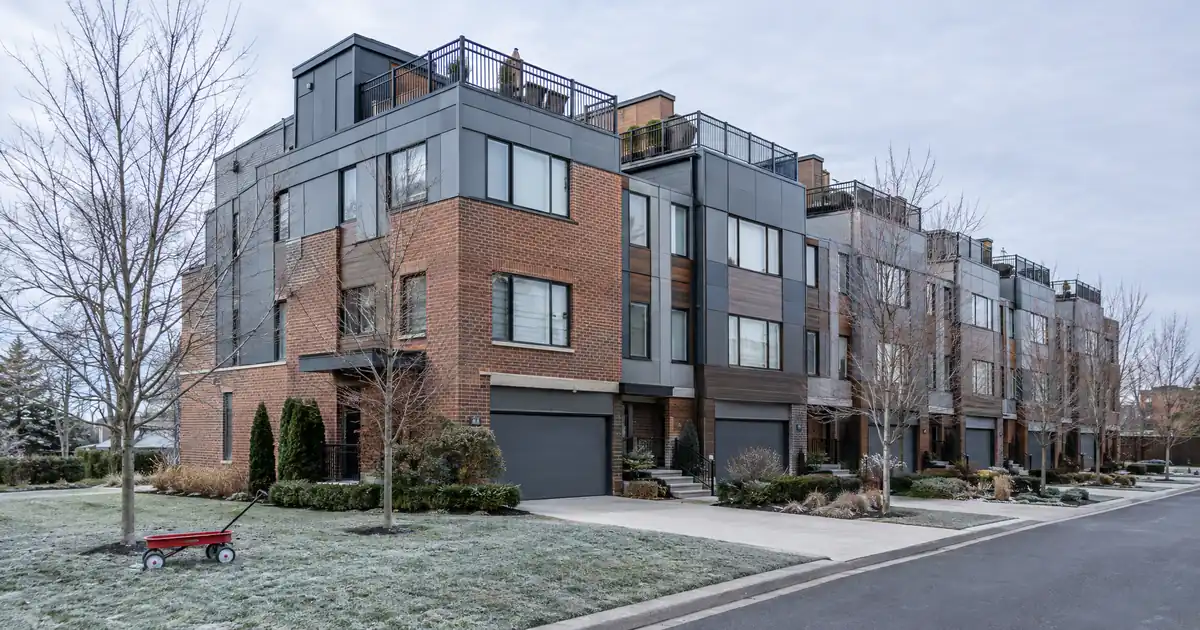
The Quick Read: On a four-condo DSCR portfolio loan, each unit’s HOA dues count as part of the monthly payment in the pooled coverage ratio, the building’s master insurance policy must pass the lender’s project review, and each owner still needs a separate HO-6 policy, so one high-dues or poorly insured building can pull down the entire pool. DSCR stands for debt service coverage ratio: rent divided by the full monthly housing payment. An HO-6 is the unit owner’s own condo insurance policy.
- Dues go into the payment side of the ratio. They are never subtracted from rent.
- Coverage on a portfolio loan is measured on the pool: combined rent over combined payment.
- Each building also faces project review, and the master policy is one of the main items checked.
- Clearing 1.00 does not mean positive cash flow, because vacancy, repairs, and management sit outside the ratio.
Key Terms Defined
PITIA is principal, interest, taxes, insurance, and association dues. It is the full monthly obligation a DSCR lender compares to rent.
Portfolio (blanket) DSCR loan is one note secured by several rentals. People also call it a cross-collateralized loan, and the terms mean the same thing: each property backs the whole debt, not just its own slice.
Master policy is the insurance the association buys for the building structure and common areas. It is paid for through dues.
HO-6 is the owner’s policy for the unit interior, belongings, liability, and loss assessment.
Loss assessment coverage pays your share when the association bills owners for a loss, such as a master policy deductible.
Declaration (often called the CC&Rs) is the governing document that says where the association’s responsibility ends and the owner’s begins.
Project review is the lender’s check of the building itself: budget, reserves, delinquencies, litigation, insurance, and ownership mix.
Non-warrantable describes a building that falls outside conventional project standards. It is not a verdict on whether the building can be financed.
How Do HOA Dues Enter the DSCR Ratio?
Dues sit in the denominator. A DSCR lender takes the rent used for review and divides it by PITIA, and the “A” in PITIA is the association. Dues are recurring and mandatory, so they count as part of the payment. They are not a deduction from rent.
Rent used for lender review is typically a lease or an appraiser-supported market rent, depending on the program. Vacancy, repairs, management fees, utilities, and capital expenses stay outside the ratio entirely. A file can clear 1.00 and still lose money after those items. The ratio is a lender’s test of whether rent covers the payment. It is not a profit measure.
The dues figure should come from the association’s own paperwork, such as the current HOA statement or condo questionnaire. A listing sheet is not a source. If the listing shows an outdated number, correcting it is legitimate, and the association’s document controls.
Across the wholesale network Lendmire works with, 1.00 is where select programs start, and stronger ratios open better pricing and leverage. A separate select-lender path takes coverage below 1.00 with leverage and terms adjusted. Eligibility always depends on lender guidelines, credit, reserves, and the property.
How the Four-Condo Pool Math Works
On a portfolio loan, coverage is pooled. You add the rent from all four condos, add the PITIA from all four, and divide. Strong units can offset weak ones. One high-dues unit can also drag the whole pool down.
For a four-condo file, the structure that usually fits is the 30-year portfolio DSCR loan. Select lenders in the network offer it for 2 to 20 properties under one note, with loan sizes from roughly $300,000 to $5,000,000. It allows leverage up to 80% of value on a purchase or rate-and-term refinance, and it measures a 1.00 coverage floor on the pool. Condos are an eligible property type, and an interest-only period is available. The credit floor is generally 640, with 680 or 720 on some structures, all subject to lender guidelines.
The other structure, the rental portfolio term loan, starts at five or more properties or units. Four condos fall short of that, so it applies only if you add a fifth.
Here is a modeled example. The numbers are index points, not dollars, and they assume four payments of similar size.
| Unit | Rent (index) | Payment (index) | Coverage |
|---|---|---|---|
| Condo A | 135 | 100 | 1.35 |
| Condo B | 120 | 100 | 1.20 |
| Condo C | 110 | 100 | 1.10 |
| Condo D | 90 | 100 | 0.90 |
| Pool | 455 | 400 | 1.14 |
| Pool after Condo C dues rise | 455 | 410 | 1.11 |
Condo D sits below 1.00 on its own. The pool can still work because underwriting tests the pooled coverage, the leverage, and the terms. In the last row, a dues increase that lifts Condo C’s payment by 10% takes that unit to exactly 1.00. The pool slips from about 1.14 to about 1.11. That is the cushion test: ask how much each unit’s dues can rise before the pool nears its floor.
If a dues increase pushes coverage under the floor, the lender may reduce the loan amount to restore it. Lendmire’s guide How to Raise a Thin DSCR on a Condo With HOA Dues covers the fixes in more depth.
What Does the Master Policy Cover, and Where Does Your HO-6 Start?
The master policy covers the building and common areas. Your HO-6 covers what the master policy leaves behind, and the gap depends on the master policy type. ValuePenguin describes three common structures, and Coverage Classroom notes that the labels vary by association, insurer, and state. The declaration and the policy documents settle the question, not the label.
| Master policy type | What the master covers | What your HO-6 must add |
|---|---|---|
| Bare walls | Structure and common areas | Interior walls, fixtures, finishes |
| Single entity | Structure plus original finishes | Upgrades, contents, liability |
| All-in | Most of the interior | Contents, liability, loss of use |
Insurify, citing the Insurance Information Institute, reports that most master policies do not cover any part of the unit interior. So the master policy never replaces your own policy. A bare-walls master pushes more coverage onto your HO-6, which raises the insurance line inside PITIA. An all-in master usually means a smaller HO-6 premium but often higher dues, since the association is buying more coverage.
For a unit under a master policy, the insurance line in PITIA is usually the HO-6 premium, not a full dwelling policy. Confirm with the lender how it treats that line before you run your numbers.
Deductibles and Assessments: Where the Hidden Cost Lives
The master policy deductible is the number that can reach you. Policygenius explains that this is why loss assessment coverage on the HO-6 matters.
Also ask your insurer how rent-loss coverage works, because many HO-6 policies treat landlord exposure differently from owner-occupant exposure.
Special assessments are a separate matter. Recurring dues belong in PITIA. A one-time special assessment is handled differently from lender to lender. Some lenders leave it out of the ratio, some spread a known assessment into the payment, and some treat it only as a reserves or cash-to-close item. Ask which method applies before the file goes to underwriting.
What the Lender Reviews at Each Building
Condos add a second gate that houses do not have. The loan must clear the pooled ratio, and every building must also pass project review. DSCR loans are non-QM, meaning they sit outside the conventional lending box. Each program runs its own project review, generally on similar risk factors with different thresholds.
| Review item | A clean answer | A flag |
|---|---|---|
| Budget | Funded, with reserve line | No reserve line |
| Delinquencies | Low and stable | Rising dues arrears |
| Litigation | None | Structural or safety suit |
| Master policy | Adequate, current | Lapsed or missing |
| Investor mix | Balanced owner/renter | Heavy investor share |
| Use | Residential | Hotel-style or commercial |
If your four condos sit in four buildings, expect four separate reviews. One bad building can stall the whole pool, even when the other three are spotless.
Four Condos, Three Different Shapes
“Four condos” can mean different things, and each shape changes the review.
Four units in four buildings. You get four project reviews, four sets of association documents, and four master policy checks. The pooled ratio still works across all of them. This shape has the most moving parts and the most ways for the file to stall.
Four units in one building. You get one project review, but concentration becomes the issue. Owning several units in a small building can raise the investor share, and a single association problem hits all four units at once.
Mixed associations. Say two units share a building and two sit in separate complexes. That means three reviews. Rank the buildings from strongest to weakest before you commit. If one building looks shaky, swapping that unit for a different one is often easier than curing the issue.
If one of the four fails review, you generally have three options: cure the issue, swap in a different unit, or restructure the pool. Which one fits depends on the lender and the problem.
Small Buildings With No Master Policy, or a Weak One
Many small two- to four-unit conversions have informal associations and sometimes no master policy at all. That does not make the unit unfinanceable by definition, but it does narrow the field. A lender wants evidence that the building is adequately insured. Without a master policy certificate, expect more questions, stricter terms, or a decline on that unit.
The practical fixes are to ask the association to place a master policy and provide a certificate before you go under contract, or to move to a different unit. A self-managed association also needs someone who can answer the project questionnaire in writing. A vague answer reads as a flag.
Where the Rules Break
Non-warrantable buildings. In most files, a non-warrantable building means lower leverage or a lower loan cap, not an automatic decline. It also means a smaller lender pool. A strong pooled ratio does not make up for a weak building.
Condotels and heavy nightly-rental buildings. These are the tightest class. Hotel-style operations or structural litigation can disqualify a building even for non-QM lenders, and mixed-use property is not eligible inside the pool.
HOA rental restrictions. A rental cap or short-term rental ban can remove rent used for lender review no matter what the ratio says. Short-term rental rules can vary by city, county, HOA, and property type, so investors should confirm local rules before relying on projected rental income.
State insurance rules. State law can change what a master policy must cover and what loss assessment floor applies. The national point is simply that the rules vary, so read the policy for your state.
Agency contrast. Conventional condo standards do not bind DSCR loans, but they show what a building review looks for. Fannie Mae’s condo project FAQ describes a 10% minimum budgeted reserve test under its full review. That is the annual reserve allocation divided by annual assessment income. A law-firm alert from Whiteford LLP reports a planned change to 15%. Check the primary source before relying on that. DSCR programs set their own thresholds.
Portfolio exit. Cross-collateralization turns selling one condo into a negotiated release, not a right. The release price runs above the property’s allocated balance, and the remaining pool must still cover its debt service. Read the release and prepayment language before you sign, and see Lendmire’s explainer Blanket Policy vs Condo Master Policies on a DSCR Portfolio Loan for a related look at how the structure interacts with insurance.
Document Checklist: One Row per Association
Request these early. Missing paperwork stalls more condo files than low coverage does.
- Current HOA statement showing dues and any pending increase.
- Condo questionnaire, completed by the association.
- Budget and reserve study or reserve line.
- Master policy certificate, with deductible and coverage type.
- Declaration and bylaws, for the master-versus-HO-6 line and deductible allocation.
- Delinquency report, litigation disclosure, and any special assessment notice.
- HO-6 binder for each unit.
- A written rent rule from the association, covering lease minimums and caps.
For the complete background on how DSCR files are built, see Lendmire’s complete DSCR loans guide.
Mistakes That Cost a File
- Netting dues out of rent instead of adding them to the payment.
- Using the listing’s dues figure instead of the association’s statement.
- Assuming the master policy replaces your HO-6.
- Ignoring the deductible allocation in the bylaws.
- Treating a 1.00 ratio as positive cash flow.
- Assuming a strong ratio overrides a weak building.
- Skipping the release clause on a pooled loan.
Frequently Asked Questions
Do HOA dues count against rent on a DSCR loan?
Dues count in the payment, not against the rent. They are added to principal, interest, taxes, and insurance to form PITIA. Qualification runs primarily on property-level rental income covering that full payment, subject to lender guidelines.
Does the master policy replace my own insurance?
No. Your HO-6 covers the interior, belongings, liability, and loss assessment. A bare-walls master requires more from your policy than an all-in master does.
Does a non-warrantable condo disqualify the file?
Not automatically. It usually means lower leverage, a lower loan cap, and fewer lenders willing to review it. Condotels, heavy nightly-rental buildings, and active structural litigation are the tightest cases.
What if one of the four buildings fails review?
You can cure the problem, swap that unit for another, or restructure the pool. Because the loan is cross-collateralized, a failed building cannot simply be ignored.
Are special assessments part of the DSCR ratio?
It depends on the lender. Recurring dues belong in PITIA. A one-time assessment may be left out, spread into the payment, or treated as a reserves item, so ask before underwriting.
Next Step
If you are buying or refinancing rental condos and want to see how the numbers work, Lendmire can help you compare DSCR loan options based on the property income, credit profile, leverage, and investor goals. As a broker, Lendmire arranges DSCR financing through select lenders across 41 markets, including Washington, D.C. Every file is reviewed individually, and nothing here is a commitment to lend.
The strongest four-condo pools are built building by building: clean associations first, then the ratio.
About Lendmire
Lendmire — NMLS# 2371349 — is a mortgage brokerage specializing in DSCR investor loans, helping arrange financing across 41 markets, including Washington, D.C., through wholesale and investor-lending channels. The model centers on property-level rental income reviewed by the lender rather than W-2 documentation, subject to lender guidelines, suiting entity-owned and multi-property investors. Lendmire holds Scotsman Guide Top Mortgage Workplace recognition for 2025 and 2026.
Get Started
Ready to find the right loan for you?
In about 30 seconds you can review financing options available for your investment property. No commitment required.
Informational only. Not a Loan Estimate, approval, or commitment to lend. Program availability and eligibility are subject to lender guidelines, credit approval, property review, and underwriting.
References
1. ValuePenguin: what condo insurance covers
2. Coverage Classroom: walls-in vs all-in coverage
3. Insurify condo insurance guide
4. Policygenius HO-6 condo insurance
5. Fannie Mae condo project FAQ
6. Whiteford LLP client alert on condo project standards
This article is part of Lendmire’s DSCR loan program — full qualification details, guidelines, and scenarios live on the program page.
Related reading: Can a W-2 Investor With Two Rentals Use a DSCR Loan on a Land Contract? · DSCR Portfolio Loan Appraisal Requirements for Every House · Is a 30-Year DSCR Loan Safer for an LLC Portfolio With 10+ Doors?
Brandon Miller
Founder & CEO, Mortgage Loan Originator, Lendmire LLC
- Mortgage Loan Originator · NMLS# 1129696 · Verify on NMLS Consumer Access
- North Carolina Real Estate Broker · License# 343312 · Verify on NCREC
- North Carolina Insurance Producer · License# 19053198 · Property, Casualty, Life, Health · Verify on NAIC SBS
- Lendmire LLC · Firm NMLS# 2371349 · Verify firm licensure
Disclosure information. Lendmire is a state-licensed mortgage brokerage under NMLS# 2371349. Lendmire is not a depository institution, direct lender, or financial advisor — all loans referenced are placed through wholesale lender partners and are subject to each lender's underwriting standards. This article is provided for general informational purposes and is not a commitment to lend, nor does it constitute financial, legal, or tax advice. Loan programs, terms, rates, and qualification standards change without notice and depend on borrower profile, property type, and the state in which the subject property is located. Equal Housing Opportunity provider. NMLS Consumer Access: nmlsconsumeraccess.org.