
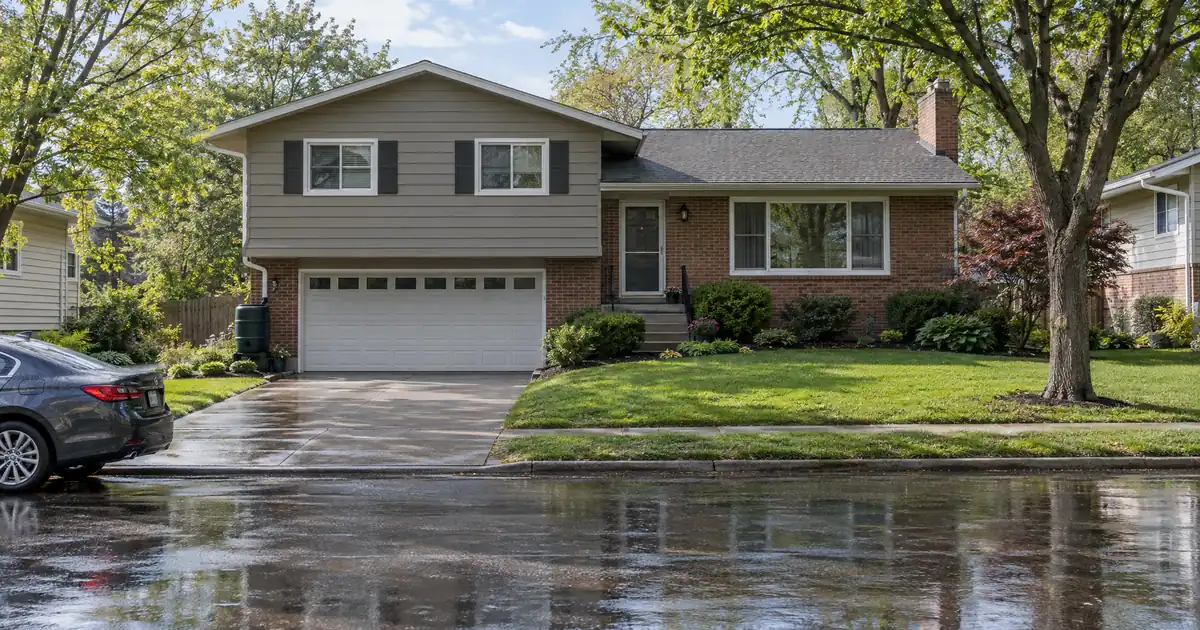
The Quick Read: Leave the house that carries (or will carry) your equity line out of the collateral schedule of any blanket or pooled loan, and the two liens never collide. “Pool” here means a loan pool, not a swimming pool. The pooled loan covers only the other rentals, and the held-out house stays on its own separate lien.
- A pooled (blanket) loan puts one lien on every property in it. A HELOC is a lien on one property. Putting the same house in both creates a priority fight.
- Keeping the house out means the equity-line lender never has to sign a subordination agreement.
- Title matters: an equity line on an investment property generally needs the house held by you personally or by a revocable living trust, not an LLC.
- The pool still has to qualify without the held-out house’s rent and equity.
- If the house is already in the pool, the exit depends on the release language in your note.
Why a Pool and a HELOC Collide
A pooled loan and a home equity line both want a lien on the same house. Only one can sit in first position, and the law decides priority by timing, not by preference.
Lien priority follows recording order. Nolo explains that mortgage liens run on “first in time, first in right,” and that when a refinance pays off a first mortgage, an older HELOC would normally move up into first position. The refinancing lender won’t accept that. It requires its own loan to be first and asks the HELOC lender to sign a subordination agreement.
Here is the catch. The HELOC lender can say no. A new lender can ask for subordination, but it cannot force it, and Wikipedia’s summary of subordination agreements notes that if the second-lien holder refuses, the new lender will not refinance the first. When that happens, the usual exits are closing the line before the refinance or rolling its balance into a cash-out loan. Bills.com lays out both. Either one ends the line you were trying to keep.
A blanket loan raises the stakes. Nav describes cross-collateralization as pledging collateral that the lender can take if you don’t pay, and it advises securing a release clause so individual properties can leave a blanket mortgage once conditions are met. Selling a property tied to a cross-collateralized loan is much harder without one.
So the clean answer is not to fight the collision. Avoid it.
Key Terms Defined
- Pool (blanket) loan: One note secured by several rentals. “Portfolio DSCR loan,” “blanket loan,” and “cross-collateralized loan” all describe this same structure.
- Cross-collateralization: Every property in the pool secures the whole debt, so a problem with one can reach the rest.
- Release clause: A term in the note that lets a property leave the pool, usually after a set paydown or sale.
- Subordination agreement: A recorded document in which one lienholder agrees to sit behind another.
- CLTV: Combined loan-to-value, meaning all liens on a property added together against its value.
- Vesting: How the deed names the owner: you personally, a trust, or an LLC.
Three Ways to Keep a House Out
Investors get there three ways. Which one fits depends mostly on timing.
| Approach | When it fits | What you give up | Confirm in the documents |
|---|---|---|---|
| Don’t pool it | Pool not yet closed | That house’s rent and equity in the pool math | Collateral schedule excludes it |
| Build a partial pool | Several candidates, one HELOC target | Some pooled leverage | Cross-default language scope |
| Release it later | House already pooled | Possible paydown and retest | Release terms in the note |
Don’t pool it. The pooled loan covers the other properties, and the held-out house is left off the collateral schedule, the cross-default language, and the pooled coverage calculation. Confirm the exclusion in the closing documents, not just in conversation.
Build a partial pool. If you own several rentals, you choose which ones go in. Across the wholesale network, the 30-year portfolio DSCR loan takes 2 to 20 properties under one note, and the rental portfolio term loan takes five or more rentals or units. You decide the roster, and that choice is the whole strategy.
Release it later. If the house is already in, the exit depends on what the note says. Partial releases, substitutions, and sale of one property out of the pool follow the loan documents and the lender’s release terms. The release price typically runs above the property’s allocated balance, and the remaining portfolio still has to cover its debt service.
How Underwriting Treats the Two Loans
The two lenders judge you on different things, and that is the part that surprises people.
A pooled DSCR loan is reviewed primarily on property-level rental income covering the payment, subject to lender guidelines. On the 30-year portfolio DSCR loan, the coverage floor is 1.00 measured on the pool: pooled rent against pooled debt service, so stronger properties can offset weaker ones. Leverage runs up to 80% on a purchase or rate-and-term refinance, and cash-out stays at or below 75% of pooled value. The credit floor is 640, and 680 or 720 on some portfolio structures. The loan size runs $300,000 to $5,000,000 on that structure. The rental portfolio term loan carries a larger loan range and a fixed term with a balloon, and it is the only place small multifamily of five or more units fits.
An equity line is different. It is underwritten mostly on you, with your credit and your debt-to-income ratio, plus the combined leverage on that one house. Across the wholesale network, an investment-property line caps at 70% CLTV, with a $500,000 maximum line and a 700 minimum credit score. Because investment lines stay under $500,000, they are structurally in the automated-valuation lane and commonly close without a traditional appraisal. The line draws for five years interest-only, then amortizes over 25 years, and pricing floats rather than converting to fixed. Property eligibility and exposure limits apply, subject to lender guidelines and full file review. Brokered by Lendmire through select wholesale partners, every figure here is a guideline range, not a commitment to lend.
Those are different bridges. A DSCR loan looks at the rent. A HELOC looks at you. Don’t assume the rent that qualifies the pool will qualify the line.
What Decides Whether the Carve-Out Works
Four things decide it.
1. Title. Equity lines on investment properties need the house vested in you individually or in a revocable living trust. LLCs, corporations, partnerships, and irrevocable, blind, or land trusts cannot hold title on these lines. A house already deeded to an LLC needs a vesting change first, or a DSCR cash-out instead. Re-titling can undo the liability protection the LLC gave you, so talk it through with your attorney before moving a deed. This is why the held-out house is so often the personally titled one. By contrast, a pooled loan may require a special-purpose entity on some structures, subject to program requirements.
2. Whether the pool survives the subtraction. Pooled coverage drops the held-out house’s rent and its equity. A thin remaining pool might not clear 1.00.
3. The pooled note’s covenants. Some notes include due-on-further-encumbrance language, which lets a lender call the loan if you add another lien. Fortra Law describes that language along with cross-default and partial-release provisions. Read yours.
4. Lender consent, if the house is already pooled. No federal rule hands you a right to partial release. Release rights come from the note and nowhere else.
A property listed for sale can also be ineligible for an equity line in a number of states, and manufactured homes, log homes, and barndominiums are not offered on these programs.
Picking the House to Hold Out
Choose the house with the most to give the line and the least to give the pool.
| Criterion | Favors holding it out | Favors pooling it |
|---|---|---|
| Equity | Large, usable at 70% CLTV | Thin |
| Title | Personal or revocable trust | LLC-held |
| Existing first mortgage | Old, cheap debt worth keeping | Debt you want to refinance |
| Rent coverage | Weak, would drag the pool | Strong, helps the pool |
| Exit plan | Long hold | Near-term sale |
Honestly, this is a genuine judgment call. A strong-rent house boosts the pool’s coverage, but a strong-equity house is the better line candidate. If one house is both, the other houses may not carry the pool alone. Run both versions before signing anything.
One more wrinkle. A house with a low-balance first mortgage is a natural hold-out. The first lien stays untouched, and the line can sit in second position behind it.
Sequencing: Before, After, or Already Inside
Line first, pool later. The simplest case. Open the equity line on the target house, then close the pool without that house. The pooled lender sees a documented lien elsewhere and has no reason to touch it, though it may ask about it.
Pool first, line later. Here the new line lender must be comfortable with the held-out house, and the pooled documents must not forbid additional borrowing. Check the further-encumbrance language before you close the pool, not after.
House already in the pool. You need a release from the pool, or a refinance, and both depend on the note. With a release clause, expect a paydown requirement and a retest of the remaining pool. Without one, Nav warns that removing a property is much harder, and the cost of the carve-out is whatever the lender chooses to demand.
An experience note from the broker side: files that go sideways here rarely fail on the headline numbers. They fail on paperwork nobody read, like a collateral schedule that quietly lists all the properties, or cross-default language reaching debts outside the pool. The strongest files get the exclusion written into the closing documents and ask each lender, in writing, what it requires.
A Worked Example
Say an investor owns five rentals. Four are LLC-held and one is held personally with a large equity cushion. The four LLC properties together cover their pooled debt service at roughly 1.2x. The fifth rental alone covers at about 1.0x.
Pool all five, and the pooled coverage blends down toward the middle. The fifth house’s equity gets locked under a lien that can’t coexist with an equity line. Pool only the four, and the pool keeps its roughly 1.2x cushion while the fifth house stays free for a line, up to 70% CLTV on an investment property, subject to lender guidelines.
The trade-off is real. The four-property pool carries slightly less total collateral, and a small pool leaves less room for the stronger properties to offset a weak one. If one of the four drifts toward 0.9x, the pooled number has less to absorb it.
On structure, a rental below 1.00 coverage can sit inside a pool, but underwriting tests the pooled coverage, the leverage, and the terms. Sub-1.00 programs are also available on single-property loans through select lenders in the network, with leverage and terms adjusted. And clearing 1.00 is not the same as positive cash flow. Repairs, vacancy, management, and capital expenses all sit outside the calculation.
What Can Go Wrong
- The line gets frozen. The CFPB’s HELOC brochure says lenders can generally freeze or reduce a line if the home’s value falls or the borrower’s finances worsen. Don’t treat an undrawn line as guaranteed liquidity.
- A sale triggers payoff. The same brochure says a sale generally requires paying the line off in full.
- A zero balance is not a released lien. The lien stays recorded until the line is formally closed.
- Retest after release. Pulling one property from a pool can push the rest below the coverage floor.
- Cross-default. If the pooled documents reach other debts of the guarantor, trouble on the held-out house could still matter.
- Recourse stays. On recourse loans, the personal guaranty generally remains after a property is released.
Pre-Signing Checklist
Ask each lender, in writing:
1. Is the held-out house excluded from the collateral schedule and from cross-default language?
2. Does the note restrict additional liens on non-pooled properties?
3. What are the release terms: paydown required, retest, timing, fees?
4. Is there a substitution right?
5. Does the equity-line lender count the pooled debt in its debt-to-income review? The line’s debt-to-income test caps at 50%, and it is reviewed on the interest-only payment calculated on the maximum draw.
6. How must the house be titled?
For the broader picture of how pooled and single-property DSCR financing work, see Lendmire’s complete DSCR loans guide. For the single-rental version of this decision, Lendmire’s piece Should a One-Rental Investor Add a HELOC and Keep the First Mortgage? walks through it.
If you are considering a home equity line and want to see how the numbers work, Lendmire can help you compare HELOC options based on the property, the equity available, credit profile, combined leverage, and your goals. Equity lines through the network are available only in Lendmire’s 16 full-service states, which is narrower than its 41-market DSCR footprint, and short-term rental rules can vary by city, county, HOA, and property type, so investors should confirm local rules before relying on projected rental income.
Frequently Asked Questions
Can I keep a HELOC if the house is already in a blanket loan?
Only if the pool lender releases that house first. The release depends on the note’s terms, since no federal rule grants a right to partial release. Expect a paydown requirement and a retest of the remaining pool.
What if my blanket loan has no release clause?
Removing a single property becomes much harder, and a sale can put the whole loan at risk under due-on-sale language. Negotiate release terms before signing, because afterward you have little leverage.
Can an LLC-owned rental carry a HELOC?
Not on this network. Equity lines require title in your name or a revocable living trust, and LLCs cannot hold title. A property already in an LLC needs a vesting change or a DSCR cash-out instead.
Does the equity-line lender care about my pooled loan?
Usually, yes, through your debt-to-income ratio and the combined leverage on the held-out house. Investment lines cap at 70% CLTV, and debt-to-income runs to a 50% maximum, subject to lender guidelines.
Should I open the line before or after the pool?
Opening the line first is usually simpler, as long as the pooled lender knows about it. If the pool closes first, make sure its documents don’t bar additional liens on non-pooled properties.
About Lendmire
As a mortgage broker (NMLS# 2371349), Lendmire helps homeowners and real estate investors in its 16 full-service states open home equity lines of credit arranged through wholesale lenders. Lendmire is never the lender; line amounts, ceilings and terms are set by the lender under its guidelines. Scotsman Guide named Lendmire a Top Mortgage Workplace in both 2025 and 2026.
Get Started
Ready to find the right loan for you?
In about 30 seconds you can review financing options available for your investment property. No commitment required.
Informational only. Not a Loan Estimate, approval, or commitment to lend. Program availability and eligibility are subject to lender guidelines, credit approval, property review, and underwriting.
References
1. Nolo – What a Subordination Agreement Means
2. Wikipedia – Subordination agreement
3. Bills.com
4. Nav – Cross Collateralization
5. Fortra Law – Cross-Collateralization and Cross-Default Provisions
This article is part of Lendmire’s investment property HELOC program — full qualification details, guidelines, and scenarios live on the program page.
Related reading: Can You Sell One Rental Before Your DSCR Blanket Loan Matures? · Per-Property vs Portfolio DSCR Tests on a Weak Rental · How to Size a DSCR Loan for a Newly Assembled Rental Pool
Brandon Miller
Founder & CEO, Mortgage Loan Originator, Lendmire LLC
- Mortgage Loan Originator · NMLS# 1129696 · Verify on NMLS Consumer Access
- North Carolina Real Estate Broker · License# 343312 · Verify on NCREC
- North Carolina Insurance Producer · License# 19053198 · Property, Casualty, Life, Health · Verify on NAIC SBS
- Lendmire LLC · Firm NMLS# 2371349 · Verify firm licensure
Legal disclosures. Lendmire (NMLS# 2371349) is a state-licensed mortgage brokerage that arranges financing through wholesale lender relationships. Lendmire is not a direct lender, depository institution, or registered financial advisor. The discussion above is general informational content about real estate financing — it is not financial, legal, or tax advice, and readers should consult licensed professionals for guidance on their individual circumstances. Loan inquiries are subject to lender underwriting; this article does not represent a commitment to lend. Loan terms, rates, and qualification standards vary by borrower, property, and state, and are subject to change at any time. Equal Housing Opportunity. NMLS Consumer Access: nmlsconsumeraccess.org.