
The Quick Read: A new lease helps the rent test on a DSCR takeout, but it does not set the number by itself. Across the wholesale network, most programs use the lower of the signed lease or the appraiser’s market rent, and the lender’s own appraisal sets value. Qualification runs primarily on property-level rental income covering the payment, subject to lender guidelines.
- The lease supports the rent test only. It does not shorten ownership seasoning or raise the appraised value.
- Most programs use the lower of the lease and the appraiser’s market rent.
- Coverage is tested on the new, larger loan. The bridge payment never enters the math.
- Value and rent are separate tests. Either one can cap the loan first.
- A vacant, finished rehab can still work, because the appraiser’s market rent stands alone.
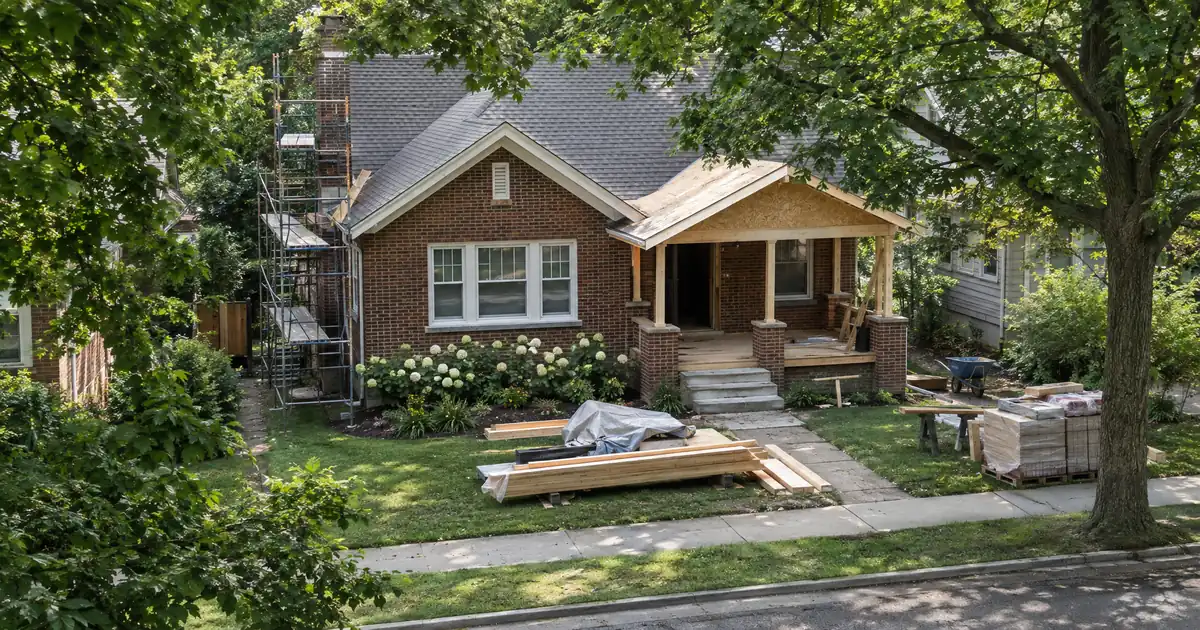
Picture a rehab that just wrapped. The tenant signed last week. The hard money note matures soon. The investor assumes the new lease is the proof the DSCR lender needs. It is part of the proof. It is not all of it. This piece walks through how the lease is read, step by step, and where the usual rule breaks.
What Is the Lender Actually Testing?
The lender tests four things: how long you have owned the property, what it appraises for, what rent counts, and how much leverage the file can carry. A new lease touches only one of those gates, the rent gate.
DSCR loans are designed for non-owner-occupied investment properties. Because they are business-purpose investor loans, they are reviewed differently from a standard owner-occupied mortgage. No federal rule governs how a lender treats a new lease. Each program sets its own policy on seasoning, rent used, and coverage floor, and that is why files on the same rehab can read differently from lender to lender. The complete DSCR loans guide covers the basics of how coverage is built.
The ratio itself is simple. Selected monthly rent is divided by PITIA: principal, interest, taxes, insurance, and association dues. The test runs on the new loan, not the hard money note. Across most of the network, 1.00 is where select programs start. A separate select-lender path takes coverage below 1.00, with leverage and terms adjusted. Stronger ratios open better pricing and leverage.
Key Terms Defined
DSCR: The selected monthly rent divided by the full monthly housing obligation on the new loan.
PITIA: Principal, interest, taxes, insurance, and association dues. It is the denominator in the ratio.
Market rent: The appraiser’s independent opinion of what the unit would rent for, built from comparable rentals.
In-place rent: The rent in the signed lease on the property today.
Rent schedule: The appraisal add-on that reports market rent. The one-unit form is the Single-Family Comparable Rent Schedule, Fannie Mae Form 1007 and Freddie Mac Form 1000.
Ownership seasoning: The lender’s required time as owner before the loan can be sized on appraised value. It is lender policy, not law.
Which Rent Counts?
Most programs take the lower of the lease and the appraiser’s market rent. The lender orders its own appraisal with a rent schedule attached, and that gives an independent market-rent opinion. Freddie Mac’s Form 1000 states that the lender uses the form to obtain market rent for a single-family investment property from the appraiser. The same form is published by Fannie Mae as Form 1007. Those are agency forms. DSCR files borrow the appraisal workflow, but they do not follow agency selling rules.
Two- to four-unit properties use a different form, and each unit’s rent is considered, usually with a rent roll.
| Situation | Rent typically used | What the lender asks for |
|---|---|---|
| Lease at market | Lease and market rent agree | Signed lease, deposit proof |
| Lease above market | Appraiser’s market rent | Lease as support only |
| Lease below market | The lease | Lease; a market-rent renewal can lift it |
| Month-to-month or expired | Market rent | Lease history as support |
| Vacant after rehab | Market rent alone | Strong comps, access for the appraiser |
This is a convention across the network, not a universal rule. Some programs vary, and each file is underwritten individually.
How Does a Lender Read a Brand-New Lease?
A lender reads a new lease as evidence of demand and documented rent, then checks that the paper is real. It proves a tenant exists and a rent was agreed. It does not prove a rent above the appraiser’s conclusion.
On most files the lender looks at:
1. Term and dates. A fixed-term lease with a clear start date reads cleaner than a vague or very short one.
2. Tenant name and identity. The lease should match the person actually moving in.
3. Deposit and first-month rent. Proof that money moved, usually a bank record, shows the lease is live.
4. Landlord name. If the borrower holds title in an LLC, the lease should be in the entity’s name, subject to program terms on entity borrowers.
5. Arm’s-length status. A lease to a relative or friend at an off-market rent draws questions. Discounted leases are a known snag when refinancing out of a bridge loan, as one BiggerPockets thread discusses. Because the lender takes the lower figure, a below-market lease caps the rent.
The exit file usually also carries the settlement statement, draw history, rehab invoices, insurance, and the bridge payoff statement. A lease signed before the work is complete, or on a unit with open permits, gives the lender a reason to ask more questions. Clean paper up front means fewer preventable gaps.
Does the Lease Fix Seasoning or Value?
No. A lease helps the rent test only. Ownership seasoning typically runs from the recorded deed. Finishing the rehab and signing the lease do not start or shorten that clock.
For a cash-out refinance, most of the network tops out around 75% LTV on standard rentals, with about 6 months of seasoning the common expectation. Inside the window, lenders generally size on the lower of appraised value or cost basis, meaning price plus documented rehab. After the window, appraised value governs. A lease changes none of that.
Whether a hard money lender will cash out a refinance at all is a separate question. Lendmire’s piece Will A Hard Money Lender Cash Out Refinance covers the bridge side. Here the point is narrower: the DSCR lender looks at its own appraisal and its own clock, not your after-repair value.
On the hard money side, leverage is sized on project cost and capped against after-repair value, and terms run 6 to 18 months, interest-only. Those figures vary by lender, property, and experience, and nothing here is a commitment to lend. The takeout is a different loan with different tests.
Worked Example: One Rehab, Three Leases
Run the numbers on one finished rehab three ways. These are modeled assumptions, not market data, and the figures are ratios only.
- Lease at market. The lease and the appraiser’s rent agree. Coverage lands near 1.25x on the new loan. The file is clean on the rent test.
- Lease below market. The investor signed fast to get a tenant in. The lender takes the lower figure, so coverage falls toward 1.05x. A small rent miss shrinks the loan by more than its percentage, because taxes and insurance do not shrink with the rent.
- Vacant. No lease exists. The appraiser’s market rent stands alone, so coverage tracks that opinion, about 1.25x if the comps are good.
Now flip it. A lease set above market near 1.25x can drop toward 1.10x when the appraiser comes in about 12% lower. The extra lease dollars do nothing for the ratio.
The remedies are short. Take less cash out. Renew the lease at market if the lease was the lower figure. Correct a documented appraisal error through a reconsideration request. Do not plan around a lease premium.
Where the Rule Breaks
Short-term rentals. The rent schedule was built for monthly lease comps. A nightly rate times 30 is not market rent. Short-term rental programs run separately: purchase to 75% LTV, refinance around 70%, cash-out 70%, with a 640+ score expected and about 12 months of hosting history. Coverage floors are 1.00 on purchases and refinances. Each figure is subject to lender guidelines and a complete review of property type, leverage, and credit.
Payoff-only refinance. Seasoning is sometimes treated more leniently, but little or no cash comes back. Some investors use it to stop the bridge clock and run a cash-out later. That means a second set of closing costs.
Delayed financing. It is built for cash buyers. A purchase funded with a bridge loan generally does not fit.
Seasoning accommodations. Some lenders relax the window because the bridge already documented basis. That is a program accommodation, not a norm.
Properties not offered. DSCR on manufactured homes, log homes, and barndominiums is not offered in the network.
A passing ratio is not cash flow. DSCR compares rent to PITIA only. Repairs, vacancy, management, utilities, and capex sit outside it.
When the Lease and the Appraisal Disagree
When the numbers split, the investor has a short list of moves. The right one depends on which gate is binding.
| Problem | Option | Trade-off |
|---|---|---|
| Market rent below lease | Take a smaller loan | Less cash back |
| Lease below market | Renew at market rent | Needs the tenant to agree |
| Value below plan | Bring cash or wait | Bridge cost keeps running |
| Bridge nearing maturity | Request an extension | Fees add to the payoff |
| Appraisal error | Reconsideration request | Needs documented comps |
Size the bridge backward from the exit. Use the exit appraisal and the rent test, not your ARV. Bridge payoff grows each month through interest, extension fees, and any exit fee, so a break-even appraisal needs to cover payoff plus exit costs against the cash-out cap. Many investors refinance out of hard money into long-term DSCR investor loans once the property is stabilized, and Lendmire brokers that path.
Myths Worth Dropping
“My lease is what counts.” Usually the lower of the lease and market rent counts.
“My ARV sets the new loan.” The lender’s own appraisal does.
“Signing a lease starts the seasoning clock.” It usually runs from the recorded deed.
“DSCR means no appraisal.” It means qualification runs on the property’s income rather than personal income. Appraisal waivers on DSCR files are rare.
“Form 1007 is a Fannie Mae requirement for my loan.” It is an agency form the DSCR appraisal workflow borrows.
“No lease is needed, so the lease never matters.” A vacant property can work, but a signed lease at market removes one variable from the file.
What to Send the Lender
- Signed lease with term, rent, and tenant name
- Proof of deposit and first-month rent
- Settlement statement and recorded deed
- Rehab draw history and invoices
- Insurance declarations
- Bridge payoff statement
- Entity documents, if title sits in an LLC, subject to program terms
- Rent roll for two- to four-unit properties
Frequently Asked Questions
Does a new lease raise my DSCR loan amount?
Not beyond market rent. Most programs take the lower of the lease and the appraiser’s market rent, so a lease above market adds nothing. A lease below market caps the rent at the lease figure, and with no lease the appraiser’s market rent stands alone.
Do I need a signed lease to refinance out of hard money?
Not always. A vacant property can work because the appraiser’s market rent stands alone. Some programs prefer a lease, so the answer depends on the lender, and every file is underwritten individually.
Does finishing the rehab or signing the lease start the seasoning clock?
No. Seasoning typically runs from the recorded deed and is lender policy, not law. Inside the window, lenders generally size on the lower of appraised value or cost basis.
What if the rent schedule comes in below my lease?
The appraiser’s figure caps the rent. Options include taking less cash or correcting a documented appraisal error. Taxes and insurance do not shrink, so a small rent miss cuts the loan by more than its percentage.
Can a lease to a family member work?
It can draw extra questions. An off-market rent from a related party may be read as a discounted lease, and the lender will generally use the lower figure. Clean documentation of deposit and rent payments helps.
Does clearing 1.00 mean the property cash-flows?
No. The ratio compares rent to PITIA only. Repairs, vacancy, management, utilities, and capex are outside it. Tax treatment varies; consult a qualified professional.
If you are buying, rehabbing or refinancing an investment property on a short timeline and want to see how the numbers work, Lendmire can help you compare hard money options based on the project, the exit plan, leverage, and your goals. Reach the team at 828-256-2183 or request a quote.
About Lendmire
A non-QM mortgage broker (NMLS# 2371349), Lendmire arranges DSCR financing for real estate investors in 41 markets — 40 states plus Washington, D.C. Because deals are underwritten primarily on property cash flow rather than personal income documentation, the structure suits self-employed buyers and entity-owned portfolios. Lendmire places loans through wholesale investor lenders; it is not a direct lender. Scotsman Guide named Lendmire a Top Mortgage Workplace in both 2025 and 2026.
Get Started
Ready to find the right loan for you?
In about 30 seconds you can review financing options available for your investment property. No commitment required.
Informational only. Not a Loan Estimate, approval, or commitment to lend. Program availability and eligibility are subject to lender guidelines, credit approval, property review, and underwriting.
References
1. Freddie Mac Form 1000 (Single-Family Comparable Rent Schedule)
3. BiggerPockets forum thread on DSCR refinancing out of hard money
This article is part of Lendmire’s hard money loan program — full qualification details, guidelines, and scenarios live on the program page.
Related reading: How a Portfolio DSCR Lender Underwrites a Small Partnership · How a DSCR Lender Reads a Vacancy Wave in a One-Employer Pool · How a DSCR Lender Reads a Stabilizing BRRRR Rehab Batch
Brandon Miller
Founder & CEO, Mortgage Loan Originator, Lendmire LLC
- Mortgage Loan Originator · NMLS# 1129696 · Verify on NMLS Consumer Access
- North Carolina Real Estate Broker · License# 343312 · Verify on NCREC
- North Carolina Insurance Producer · License# 19053198 · Property, Casualty, Life, Health · Verify on NAIC SBS
- Lendmire LLC · Firm NMLS# 2371349 · Verify firm licensure
Disclosure information. Lendmire is a state-licensed mortgage brokerage under NMLS# 2371349. Lendmire is not a depository institution, direct lender, or financial advisor — all loans referenced are placed through wholesale lender partners and are subject to each lender's underwriting standards. This article is provided for general informational purposes and is not a commitment to lend, nor does it constitute financial, legal, or tax advice. Loan programs, terms, rates, and qualification standards change without notice and depend on borrower profile, property type, and the state in which the subject property is located. Equal Housing Opportunity provider. NMLS Consumer Access: nmlsconsumeraccess.org.