
The Quick Read: Selling fits the investor who needs cash for the next project, wants no landlord duties, or sees thin rent coverage. Holding fits the investor whose rents comfortably cover the full payment and who doesn’t need the capital right now. Most batches end up split between the two.
- A DSCR loan is reviewed for the property primarily on rental income covering the payment, subject to lender guidelines.
- Clearing the coverage test is not the same as positive cash flow. Repairs, vacancy, and management sit outside the math.
- Flips held for sale are generally treated differently from rentals at tax time, so the tax decision and the lending decision belong together.
- A batch adds concentration risk that a single flip never carries.
- Sub-1.00 coverage is available through select lenders in the network, with leverage and terms adjusted.
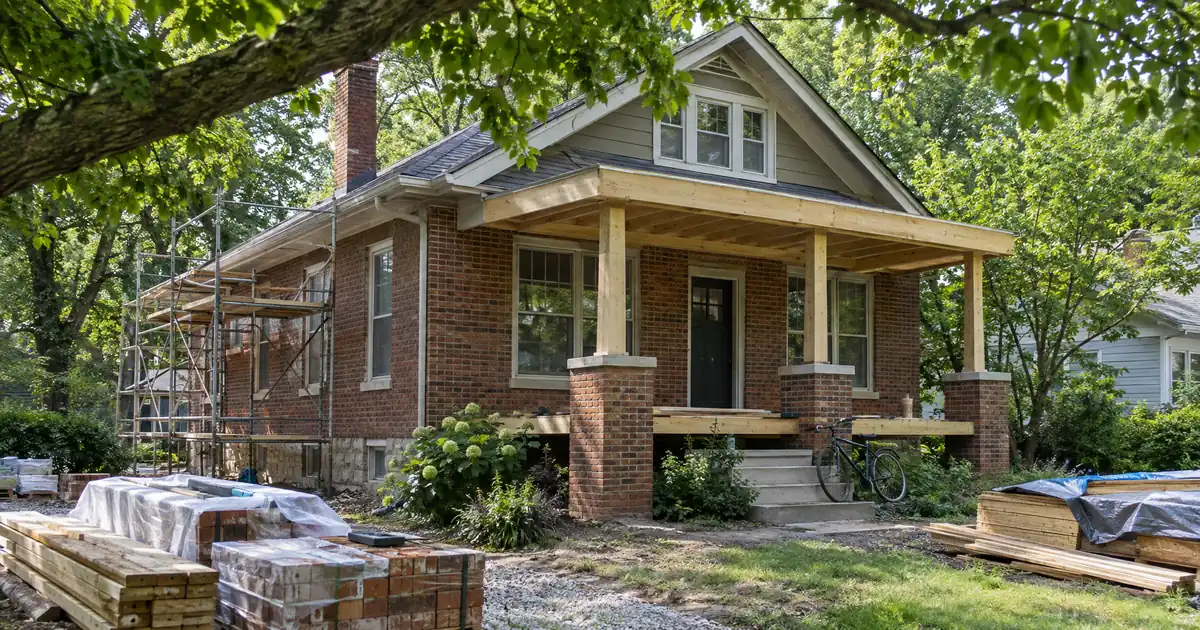
Picture a flipper with several renovated houses finishing in a market that has run hot. Prices are strong, buyers are active, and the question is whether to cash out or keep the keys. Both answers can be right. The better question is which answer fits each property.
Lendmire is a mortgage broker that arranges DSCR investor loans through select lenders in its wholesale network, across 41 markets including Washington, D.C. This piece compares the two exits fairly. For the wider picture, see the complete DSCR loans guide.
Side-by-Side
The table below uses the network’s DSCR parameters for the hold column. The sell column describes published industry norms for retail and investor sales.
| Factor | Sell the Batch | Hold on a DSCR Loan |
|---|---|---|
| Review basis | Buyers’ financing and appraisals | Property rent vs. full payment (PITIA) |
| Documentation | Sale contracts, payoff letters | Lease or rent appraisal, entity papers, reserves |
| Property types | Whatever buyers will finance | Most rentals; manufactured, log, and barndominium not offered |
| Entity vesting | Seller’s existing entity or name | LLC vesting common, per program terms |
| Timeline | Per-sale, buyer-driven | Per-loan, depends on appraisal and seasoning |
| Reserves | Cash needed for sale costs and taxes | Commonly about 6 months of PITIA; about 9 above $1,500,000 |
| Tax character | Gain recognized at sale | Rental income, deferred sale |
| Operations | None after closing | Landlord duties continue |
What a Batch Changes
A batch is not several single decisions stacked together. Three things shift.
Capital. Several flips finishing at once can lock up a large amount of cash. Selling returns it. Holding on a DSCR refinance returns part of it, and the amount is capped by leverage rules.
Concentration. Five rentals in one submarket share one set of risks: one employer base, one rent trend, one insurance market. A hot market can cool for all of them together.
Structure. A batch can be financed as separate loans or as one blanket note. Separate loans keep each property on its own footing. A blanket note gives one payment and one closing, but it cross-collateralizes the pool, and qualification is tested on aggregate rent against aggregate payment. Selling one property out of a blanket pool also requires a release provision, so check that before choosing the structure.
The Tax Fork
Tax treatment can depend on how the funds are used and how the property is held; investors should keep clear records and speak with a qualified tax professional before relying on any deduction.
One point matters enough to name. Under IRS Publication 544, a dealer’s sale proceeds are ordinary business income, and a flip held for sale is often treated that way. That is why the common plan to “just 1031 the flip” tends to fail: Pease Bell’s 1031 guide notes that for 2018 and later, 1031 treatment covers only real property held for business or investment, not property held primarily for sale. Ask a CPA which side of that line each property sits on before you decide.
When Selling Is the Better Fit
Selling wins when the property stops working as a rental, or when you stop wanting to run one.
- You need capital for the next deal. Refinance proceeds are limited by leverage. On a standard rental cash-out, the network tops out around 75% LTV, with about 6 months of seasoning the common expectation. A sale returns the full equity.
- Rent coverage is thin. If rents cover the payment only around 1.00x or below, the property carries little cushion. It is a real path, but a thin one.
- You don’t want to be a landlord. Management, turnover, and repairs are a different business from flipping.
- The market is at a peak for your product. A hot market rewards sellers. If the appraisal or the rent ever falls short later, you can’t go back and sell at the peak.
- The property is ineligible. DSCR programs in the network do not cover manufactured homes, log homes, or barndominiums. A flip of one of those has no hold path here. Each figure is subject to lender guidelines and a complete review of property type, leverage, and credit.
Selling is cleaner, but it ends the property’s income and starts a tax bill.
When Holding Is the Better Fit
Holding wins when the rent does real work and the capital is not needed elsewhere.
- Coverage is solid. Across the network, 1.00 is where many select programs start, while stronger ratios open better leverage. A property that clears the test with room to spare gives the lender, and you, more margin.
- You are building a portfolio. Holding keeps equity in place and lets a rental generate income over time. Dealer inventory cannot be depreciated, so converting to a rental changes the tax picture. Marschall Tax lays out how dealer and investment property are treated differently, including recapture on depreciation.
- You can meet the credit and reserve tests. A 620 floor exists in parts of the network, most programs want around 660, and 700+ unlocks the strongest leverage tiers. Reserves commonly run about 6 months of PITIA.
- You want to pull cash out without selling. Lendmire’s piece HELOC vs Hard Money for a Flip: Which Wins at Different Deal Sizes shows how short-term money is paid off. A DSCR refinance is the usual long-term replacement.
Here is the catch. Coverage compares rent to PITIA only. It ignores repairs, vacancy, management, utilities, and capital expenses. A property can clear 1.00 and still lose money after those costs, so run the full budget before you commit.
Same Property, Two Outcomes
Picture one renovated duplex in a strong market. Sold, it produces a lump sum, less sale costs and a tax bill that depends on your status. Held, it produces a smaller cash-out at no more than about 75% LTV on a standard rental refinance, then ongoing rent against a payment, minus the costs the coverage ratio skips. Leverage, reserves, and pricing vary by lender and program; the final terms follow the full file review.
The sale gives you more cash today. The hold gives you an asset that keeps producing. Neither wins on its face. The right answer depends on how much cash you need and how steady the rent is.
Splitting the Batch
Most investors don’t have to choose one path for everything. A balanced split might look like this.
| Property Profile | Lean |
|---|---|
| Strong rent coverage, low capital need | Hold |
| Thin coverage, high resale value | Sell |
| Ineligible property type | Sell |
| Strong coverage, but cash needed soon | Sell, or hold and stagger |
| Uncertain market, moderate coverage | Needs a closer look |
Staggering also reduces concentration. Hold the strongest, sell the weakest, and revisit the middle after you see how the first sales price.
Practitioner observation. On batch files, the trouble rarely comes from one weak property. It comes from several properties maturing at once, with appraisals landing in different places. Lining up your exits before the rehab ends, and knowing which properties you would sell if an appraisal comes in short, saves the most pain.
Mistakes and Fallbacks
- Assuming the hold path is automatic. Seasoning, appraisal, and coverage all have to line up first.
- Skipping the fallback. If an appraisal falls short, you need a plan to sell, extend the short-term debt, or bring cash to the table.
- Treating coverage as profit. Clearing the ratio is not positive cash flow.
- Letting tax drive blindly. Make the lending and tax calls together, with a CPA confirming status.
- Ignoring concentration. A whole batch in one submarket carries one market’s risk.
The Balanced Verdict
Sell when you need the capital, the coverage is thin, the property type is ineligible, or you simply don’t want landlord duties. Hold when the rent comfortably covers the full payment, you can meet credit and reserve tests, and you want the asset working for you. For most batches, a split is the honest answer: sell the properties that don’t earn their keep as rentals and hold the ones that do.
Frequently Asked Questions
Can I pay off my flip loan with a DSCR loan?
Often, yes, if the property qualifies. The new loan is sized on rental coverage and appraised value, and seasoning expectations apply. Select lenders in the network handle these files, subject to lender guidelines.
How much cash can I pull out instead of selling?
On a standard rental cash-out, most of the network tops out around 75% LTV. That limit means a refinance returns less capital than a sale would. Terms vary by lender guidelines, property type, leverage, credit profile, and full file review.
Does a DSCR loan work for a whole batch?
It can, either as separate loans or as one blanket note. The blanket route tests the pool as a whole and cross-collateralizes the properties, so one weak property can weigh on the rest.
Does clearing 1.00 mean the property cash flows?
No. The ratio compares rent to PITIA only. Repairs, vacancy, management, and capital costs sit outside it.
What if a property’s coverage is below 1.00?
Coverage below 1.00 is available through select lenders in the network, with leverage and terms adjusted. It is a separate path from programs that start at 1.00, and eligibility depends on the file.
If you are buying or refinancing a rental property and want to see how the numbers work, Lendmire can help you compare DSCR loan options based on the property income, credit profile, leverage, and investor goals.
About Lendmire
Lendmire, NMLS# 2371349, is a non-QM mortgage broker serving real estate investors in 41 markets, including Washington, D.C., through DSCR investor loan programs. Qualification is generally reviewed around the subject property’s rental income, not the borrower’s W-2 history — a practical fit for LLC-titled portfolios and self-employed investors. All scenarios remain subject to lender review and program guidelines. Two consecutive Scotsman Guide Top Mortgage Workplace recognitions (2025, 2026).
Get Started
Ready to find the right loan for you?
In about 30 seconds you can review financing options available for your investment property. No commitment required.
Informational only. Not a Loan Estimate, approval, or commitment to lend. Program availability and eligibility are subject to lender guidelines, credit approval, property review, and underwriting.
References
This article is part of Lendmire’s DSCR loan program — full qualification details, guidelines, and scenarios live on the program page.
Related reading: Can a Six-Unit Building and Two Houses Get a Portfolio DSCR Loan? · Can 25 Scattered Houses Go Under One 30-Year DSCR Loan? · DSCR Portfolio Refinance vs Selling Part of Your Rentals
Brandon Miller
Founder & CEO, Mortgage Loan Originator, Lendmire LLC
- Mortgage Loan Originator · NMLS# 1129696 · Verify on NMLS Consumer Access
- North Carolina Real Estate Broker · License# 343312 · Verify on NCREC
- North Carolina Insurance Producer · License# 19053198 · Property, Casualty, Life, Health · Verify on NAIC SBS
- Lendmire LLC · Firm NMLS# 2371349 · Verify firm licensure
Compliance and disclosures. Lendmire (NMLS# 2371349) is a licensed mortgage broker and is not a direct lender, depository institution, financial advisor, or tax professional. Content in this article is general market analysis and educational information — not financial, legal, or tax advice for any specific situation. Lendmire does not guarantee loan approval; every transaction is subject to underwriting by the funding lender. Mortgage pricing and loan program guidelines are subject to change at any time without notice and vary by borrower characteristics, property type, and state regulations. Lendmire complies with Equal Housing Opportunity. Licensure verification: NMLS Consumer Access.