
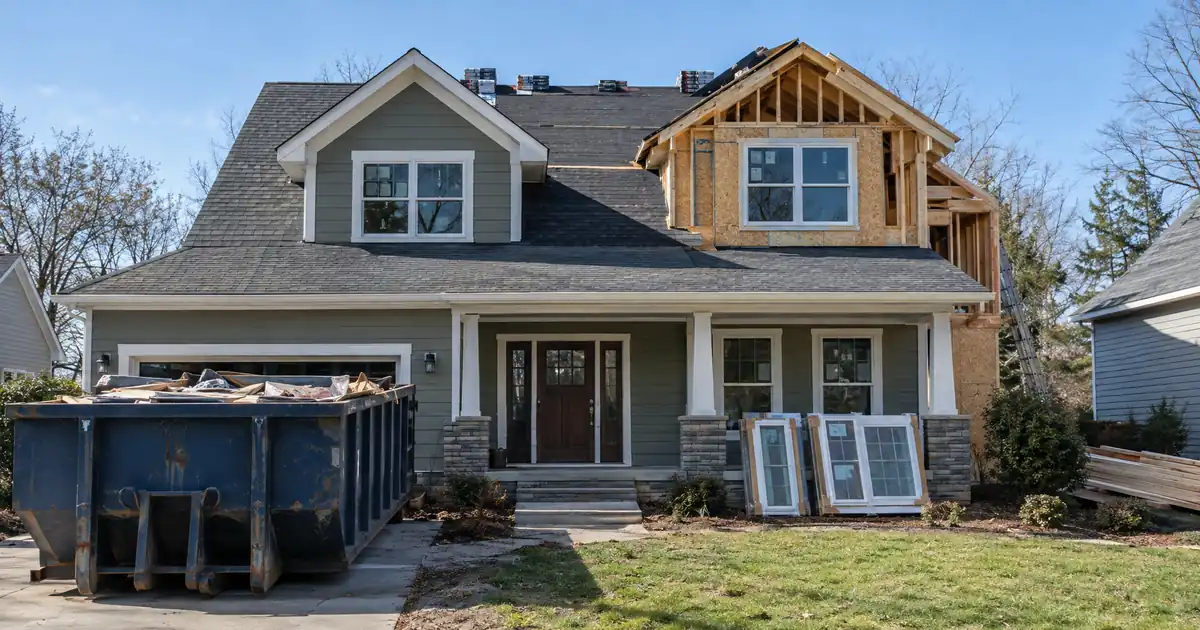
The Quick Read: A HELOC turns equity in a home you already own into cash for a flip or BRRRR. A land loan finances a vacant lot and releases no equity at all. For a typical house rehab the HELOC is the tool, and the land loan belongs to a different project type.
- On this wholesale network, an investment-property HELOC tops out at 70% CLTV and a $500,000 line, with a 700 minimum credit profile.
- On a primary residence, ceilings step up with credit. The 90% CLTV tier exists only at 720 or better, and only up to $500,000.
- Land loans are secured by the lot itself.
- A HELOC puts your own home behind the project. A land loan puts the lot behind itself.
- In a BRRRR, neither product is the long-term loan. The exit is usually a DSCR refinance on the finished rental.
Who Each Option Is Really For
Be honest about the mismatch first. These two products do different jobs, and the comparison only makes sense once you match the loan to the project.
How large a line the equity supports.
An equity line is sized by combined loan-to-value, occupancy, and credit — not by rental coverage. Switch the occupancy or the credit band and the ceiling moves with it.
Investment-property lines require a 700 minimum credit score; second-home lines start at a 640 minimum and primary-residence lines at 600, and the combined-LTV ceiling steps down as the credit band drops on primary-residence and second-home lines and holds on investment-property lines; the line cap steps down on primary-residence lines and holds at every tier on investment-property and second-home lines.
A debt-to-income ratio above 45% requires 680+ credit. Profiles under 640 are limited to single-family homes. At least 75% of the approved line is drawn at closing. Ceilings, floors, and caps update from Lendmire’s centralized guideline source.
Line estimate
Illustrative estimate only — not a quote, Loan Estimate, approval, or commitment to lend. The rate is an editable assumption; equity-line pricing is variable through both the draw and repayment periods and never converts to fixed. Occupancy and credit drive the ceiling together: an investment property tops out at 70% combined LTV (minimum credit 700, line cap $500,000); a second home tops out at 90% combined LTV (minimum credit 640, line cap $500,000), with the ceiling stepping down as the credit band drops (the cap holds at every tier); a primary residence tops out at 90% combined LTV (minimum credit 600), and its $750,000 maximum line is available only at 75% combined LTV or below with a 700-or-better credit profile (720 on the longer-runway program) and a full appraisal. Lines above $500,000 require a full appraisal. Credit, debt-to-income, property type, and full underwriting review all affect the final line.
A HELOC fits the homeowner who has equity and wants to buy and rehab a house. It qualifies the borrower, not the project. A land loan fits the investor who is buying dirt: a vacant lot, a subdivision parcel, or a ground-up build. It cannot supply a down payment for a house flip, because it never touches the equity in your home.
If your plan is a house, the real choice is usually a HELOC versus another capital source, such as hard money or a cash-out refinance. If your plan is land, the real choice is between land lenders. The two paths cross only when a homeowner uses home equity to fund the cash needed for a land purchase.
Side-by-Side
The table compares the HELOC parameters Lendmire sees across its wholesale network with published industry norms for land loans. The land column describes market practice, not a program with fixed terms.
| Factor | HELOC (network parameters) | Land loan (industry norms) |
|---|---|---|
| Collateral | Your home, 1st or 2nd lien | The lot being purchased |
| Review basis | Credit, DTI, equity | Credit, down payment, plan |
| Documentation | Credit report, valuation, title work | Survey, zoning, site plan |
| Property types | 1-4 unit, PUD, townhome, condo | Raw, unimproved, improved land |
| Entity vesting | Individual or revocable trust only | Varies by lender |
| Leverage | Investment 70% CLTV; primary up to 90% at 720+ | Down payment of 20%-50% by parcel |
| Reserves | Vary by lender and file | Vary by lender |
| What it funds | Cash for a down payment or rehab | The lot, and sometimes the build |
Two details in this table decide many files. First, HELOC vesting is narrow. LLCs, corporations, partnerships and land trusts cannot hold title on these lines. A property already deeded to an LLC needs a vesting change or a DSCR cash-out instead. Second, the land column carries real documentation work. Surveys, zoning and a development plan are normal asks.
How a HELOC Actually Works on a Flip
The HELOC underwrites you, not the deal. Lenders weigh credit, debt-to-income and combined loan-to-value, which counts every lien against the home’s value. On this network, DTI tops out at 50%, and it drops to 45% for credit profiles from 600 to 679. The lender reviews the file on the interest-only payment calculated on the maximum draw. That means the full line size counts against your DTI, even if you draw less.
Here is the leverage picture by occupancy. On a primary residence, ceilings run from 60% CLTV at a 600 score up to 90% CLTV, and the 90% tier requires a 720 profile and a line of $500,000 or less. On a second home, the top tier is also 90% at 720, with a 640 minimum. On an investment property, the ceiling is 70% CLTV at 700 or better, with a $500,000 maximum line. Subject to lender guidelines, those are the numbers that matter.
Structure matters for a flip. The network’s lines carry an interest-only draw period followed by amortizing repayment. Primary and second-home lines offer a 3-year draw with a 17-year repayment, or a 5-year draw with a 25-year repayment. Investment lines use the 5-year draw and 25-year repayment only. At least 75% of the line is drawn at closing, and pricing floats and never converts to fixed. So the cash is not a pure on-demand pool. You carry most of the line from day one.
BiggerPockets notes that many lenders do not offer HELOCs on rental properties at all, and that a typical draw period runs 10 years. Those are market-wide observations. The network figures above are what apply to a file placed through Lendmire.
When a HELOC Is the Better Fit
A HELOC is the better fit when the project is a house and the equity is real. It works best for a homeowner with strong credit, modest existing debt and a clear exit.
You are rehabbing or buying a house. The line supplies cash for a down payment, rehab, or both. A land loan cannot do that.
You want one underwriting event. The HELOC is reviewed on your personal file. Lines at or below $500,000 ordinarily use an automated valuation instead of a full appraisal, though a higher CLTV may call for a second valuation.
Your exit is a sale or a DSCR refinance. On a flip, the sale proceeds pay down the line. On a BRRRR, a DSCR cash-out refinance on the finished rental can retire it. Most programs in the network cap a standard-rental cash-out at around 75% LTV and expect about 6 months of seasoning. Coverage of 1.00 is where select programs start, and stronger ratios open better terms and leverage. A separate select-lender path goes below 1.00 with leverage and terms adjusted.
Your own cushion is deep. The honest test is whether you could carry the line if the exit slips. If the answer is no, the HELOC is the wrong tool, however good the numbers look.
The risk is blunt. A HELOC is debt secured by your home. If the project stalls, the home is exposed, and the line carries a floating payment. When you sell the home, the CFPB’s HELOC booklet says you are generally required to pay the line off in full immediately. Also read the agreement for use restrictions, since some lines limit renting the securing home.
Tax treatment can depend on how the funds are used and how the property is held; investors should keep clear records and speak with a qualified tax professional before relying on any deduction.
When a Land Loan Is the Better Fit
A land loan is the better fit when the asset you want is the land. It is the wrong answer to a house-rehab question, but it is the right answer to a different question.
You are buying a lot to hold, subdivide or build on. The collateral is the lot, so the loan sits on the asset, not on your home. A homeowner who wants no exposure on the primary residence may prefer that separation.
You can bring a real down payment. Mossy Oak Properties, a land brokerage, reports down payments of 30%-50% on raw land, 25%-35% on unimproved land and 20%-30% on improved or agricultural land. Those are market ranges, not network terms. The same source describes Farm Credit as the primary market for bare land with agricultural or timber potential.
You accept heavier documentation. Expect surveys, zoning or site plans and a development plan. Lenders weigh credit, down payment and intended use, and the lot produces no rent to underwrite against.
Federal bank regulators publish supervisory loan-to-value ceilings in the Interagency Guidelines for Real Estate Lending. They list 65% LTV for raw land loans, 75% for land development and 85% for improved property. These are internal-policy ceilings for insured depository institutions. They are not menus, and they do not bind non-bank lenders. The same guidance says that for a loan funding several phases, such as land plus construction, the limit that applies is the one for the final phase. Terms vary by lender guidelines, property type, leverage, credit profile, and full file review.
The tradeoffs are plain. Land has no income, it is illiquid, and fewer lenders will finance a given parcel. That is why land loans suit land plays and rarely scale a house-flipping business.
BRRRR Changes the Math
A flip repays from a sale. A BRRRR repays from a refinance, and the refinance depends on an appraisal you do not control.
Picture a homeowner who draws on a HELOC to buy and rehab a duplex. The rehab finishes, the rent lands, and the investor applies for a cash-out refinance. The new lender sizes the loan on its own appraised value, not the investor’s after-repair estimate. If the appraisal comes in short, the cash-out may not cover the HELOC balance, and the investor must bring the difference.
A DSCR refinance compares rent to the full monthly obligation of principal, interest, taxes, insurance and any HOA dues. Clearing 1.00 does not mean the property makes money. Repairs, vacancy, management, utilities and capex all sit outside the calculation. A thin ratio with a big HELOC balance still due is the stress case.
On this point, the stronger file is the one that clears two tests: enough equity and enough rental coverage. A larger down payment can lift the ratio, but it never erases leverage caps, credit floors, reserve rules or property eligibility. Reserves vary by lender, leverage, loan size and transaction type. They commonly run around 6 months of PITIA, and conservative files under $1,500,000 can see them waived.
Lendmire’s complete DSCR loans guide covers the exit side in depth. For the downside scenarios, Lendmire’s piece HELOC Risks for a Homeowner Funding a Flip or BRRRR walks through what happens when a line is frozen or a rehab runs long. If your flip is small and short-term, Lendmire’s piece HELOC vs Hard Money for Funding a Flip From Primary Home Equity is the better read.
Using Both (and the Questions to Ask First)
Some investors stack the two. They pull a HELOC for the cash needed to buy a lot, then use a land lender for the rest. It can work. It also stacks risk, since the home secures one piece and the lot secures the other.
Before stacking, ask the lender these questions:
- Does the HELOC lender allow borrowed funds to be used as a down payment on another property?
- Does the land lender restrict where down payment funds come from?
- Who must be on title and on the loan?
- What happens to the line if values drop or the project stalls?
Counts matter too. The network limits a borrower to three HELOC lines. A borrower with more than 15 financed properties is not eligible.
Property type matters as well. Manufactured homes, co-ops, condotels, log homes, commercial and mixed-use properties are not eligible for these lines. Manufactured homes, log homes and barndominiums are also not offered under the network’s DSCR programs.
HELOC availability is narrower than the DSCR footprint. The lines are placed in 16 full-service states, while DSCR financing runs across 41 markets, including Washington, D.C.
The Balanced Verdict
If you own a home with equity, you want to rehab a house, and you could carry the debt through a slow exit, a HELOC is usually the practical tool. If you want to buy land, bring a real down payment, and can live with heavier documentation, a land loan fits that project. They solve different problems.
The flip point is exposure. When the HELOC would be the only thing standing between a stalled rehab and your primary residence, a smaller project or a deal-secured loan may be wiser. When the land has no income and no near-term exit, the lot’s carrying cost can outrun your patience.
If you are considering a home equity line and want to see how the numbers work, Lendmire can help you compare HELOC options based on the property, the equity available, credit profile, combined leverage, and your goals. As a broker, Lendmire arranges financing through select lenders in its wholesale network. Every figure here is subject to lender guidelines and full file review, and none of it is a commitment to lend.
Key Terms Defined
HELOC: A home equity line of credit is a revolving line secured by a property you own, drawn during a set period and repaid afterward.
CLTV: Combined loan-to-value adds every lien against a property and divides the total by its value.
Raw land: Raw land is an unimproved parcel with no utilities, roads or other site work in place.
Improved land: Improved land has site work in place, such as utilities or road access, and usually carries lower down payment expectations.
BRRRR: Buy, rehab, rent, refinance, repeat is a strategy that pulls cash back out through a refinance after the property is stabilized.
DSCR: Debt service coverage ratio divides a property’s monthly rent by its monthly principal, interest, taxes, insurance and any HOA dues.
Frequently Asked Questions
Can a land loan pay for the down payment on a house flip?
No. A land loan finances the lot it is secured by and releases no equity from your home. It fits vacant-lot or ground-up projects. For a house rehab, you would look at a HELOC, hard money or a cash-out refinance on a property you already own.
Can my LLC borrow on a HELOC for the flip?
Not on the lines Lendmire sees in its network. LLCs, corporations, partnerships and irrevocable, blind or land trusts cannot hold title, so the borrower must be an individual or a revocable living trust. A property already deeded to an LLC needs a vesting change, or a DSCR cash-out may be the better route, subject to program requirements.
What happens to the HELOC when the flip sells?
Sale proceeds from the flip are what normally pay the line down. If you sell the home that secures the line, the CFPB’s booklet says the balance is generally due in full. Plan the payoff from the sale of whichever property secures the line.
Does a HELOC balance hurt a later DSCR refinance?
It can matter less than it would on a conventional loan, because a DSCR file qualifies primarily on property-level rental income covering the payment, subject to lender guidelines. Credit, reserves and property review still apply, so a large outstanding balance is not invisible.
Can I open a HELOC on a rental I already own?
Sometimes. Market sources note that many lenders do not offer lines on rentals. Across this network, an investment-property line requires a 700 minimum credit profile, caps at 70% CLTV and tops out at a $500,000 line, subject to lender guidelines.
About Lendmire
Lendmire (NMLS# 2371349) is a mortgage brokerage serving homeowners and real estate investors in its 16 full-service states. Home equity lines of credit are arranged through wholesale lending channels; Lendmire brokers the line and the lender underwrites each application under its occupancy-based guidelines. Scotsman Guide named Lendmire a Top Mortgage Workplace in both 2025 and 2026.
Get Started
Ready to find the right loan for you?
In about 30 seconds you can review financing options available for your home or investment property. No commitment required.
Informational only. Not a Loan Estimate, approval, or commitment to lend. Program availability and eligibility are subject to lender guidelines, credit approval, property review, and underwriting.
References
1. BiggerPockets, Cash-Out Refinance vs. HELOC
2. CFPB, What You Should Know About Home Equity Lines of Credit
3. Mossy Oak Properties, How to Finance Land
4. Federal Reserve, Interagency Guidelines for Real Estate Lending
This article is part of Lendmire’s home equity line of credit program — full qualification details, guidelines, and scenarios live on the program page.
Related reading: How to Document Retirement Income for a HELOC as a Widowed Homeowner · Can You Use a HELOC to Fund a Flip or BRRRR Project? · Can You Use a Primary Home HELOC to Buy Land?
Brandon Miller
Founder & CEO, Mortgage Loan Originator, Lendmire LLC
- Mortgage Loan Originator · NMLS# 1129696 · Verify on NMLS Consumer Access
- North Carolina Real Estate Broker · License# 343312 · Verify on NCREC
- North Carolina Insurance Producer · License# 19053198 · Property, Casualty, Life, Health · Verify on NAIC SBS
- Lendmire LLC · Firm NMLS# 2371349 · Verify firm licensure
Disclosure information. Lendmire is a state-licensed mortgage brokerage under NMLS# 2371349. Lendmire is not a depository institution, direct lender, or financial advisor — all loans referenced are placed through wholesale lender partners and are subject to each lender's underwriting standards. This article is provided for general informational purposes and is not a commitment to lend, nor does it constitute financial, legal, or tax advice. Loan programs, terms, rates, and qualification standards change without notice and depend on borrower profile, property type, and the state in which the subject property is located. Equal Housing Opportunity provider. NMLS Consumer Access: nmlsconsumeraccess.org.