
The Quick Read: Lenders run two separate tests on this loan. Deposits set the income, and the appraisal plus the lender’s rural policy set the property value and the loan size. Strong income cannot rescue a property the lender will not take as collateral, and a clean property cannot make up for thin deposits.
- Qualifying income comes from 12 months of business or personal bank statements, averaged, with a lender-specific expense factor applied to business deposits.
- On an owner-occupied primary residence, cash-out typically tops out around 80% LTV with a fixed expense ratio, and about 75% with an accountant-prepared ratio.
- On a second home, cash-out typically reaches 75% LTV. On an investment property, it tops out around 75% LTV.
- How the land is used, how the appraiser handles it, and the lender’s own acreage overlay decide how acreage affects the file.
- All of this is subject to lender guidelines. Every file is underwritten individually, and nothing here is a commitment to lend.
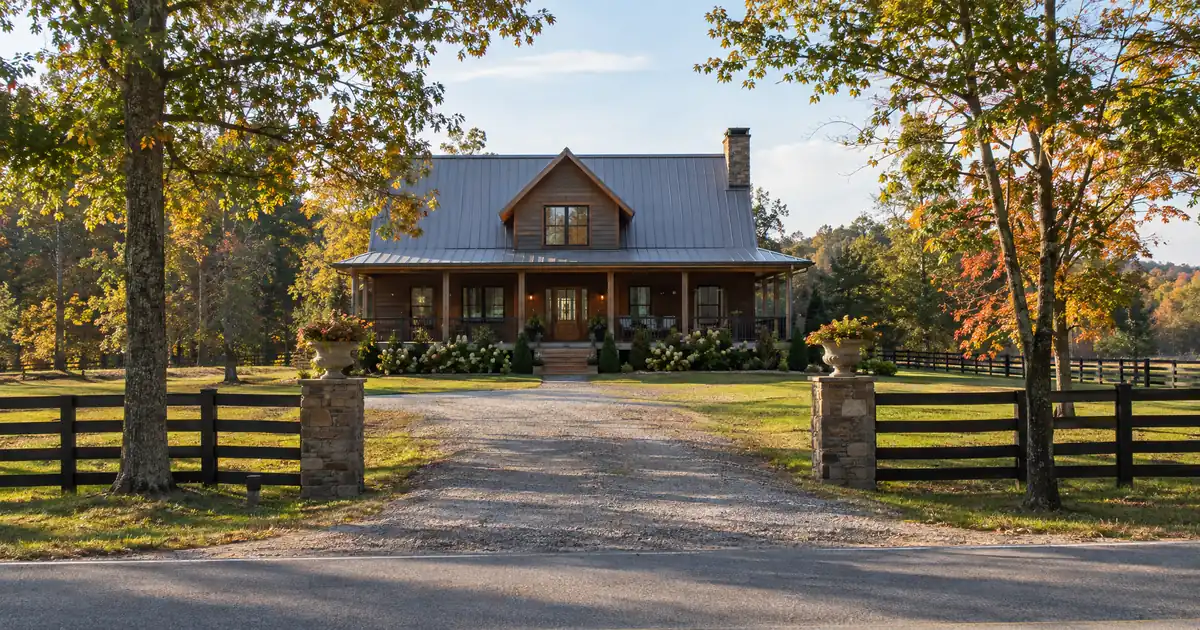
Picture a self-employed owner with a house on 40 acres, a paid-down mortgage, and a business that runs through one account. The tax returns show little because of write-offs. The deposits show the real picture. This article walks through how a lender reads that file, in order, and where it breaks.
What a Bank Statement Cash-Out on Acreage Actually Is
A bank statement cash-out refinance replaces your existing mortgage with a larger one and pays you the difference. The loan is reviewed on documented income under the applicable program, subject to lender guidelines. Instead of tax returns, the lender reads 12 months of statements and averages the deposits.
The rural piece changes the collateral, not the income test. Acreage means fewer nearby sales, more judgment calls in the appraisal, and an extra eligibility screen. Lendmire is a mortgage broker. It shops these files across a network of wholesale lenders and matches the scenario to a program, because rural overlays differ a lot from one lender to the next.
Key Terms Defined
- Expense factor: The percentage of business-account deposits a lender removes to approximate business costs before counting the rest as income.
- Qualifying income: The monthly figure the lender uses after averaging eligible deposits and applying the expense factor.
- Cash-out refinance: A new mortgage larger than the payoff of the old one, with the difference paid to the borrower.
- Excess land: Acreage beyond what the home site needs, which still adds some value but is often credited differently.
- Surplus land: Extra acreage that can be separated from the home site, usually valued apart from the residence.
- Highest and best use: The use of the land that is legally allowed, physically possible, and financially workable. Appraisers test it.
- Comparable sales (comps): Recent sales of similar properties that an appraiser uses to support the value.
- Reserves: Liquid funds that the lender wants left after closing.
- Seasoning: The ownership period a lender requires before it will pay cash out on a property.
How Do the Two Gates Work?
Think of the file as two gates. Both have to open.
| Gate | What it tests | Typical failure |
|---|---|---|
| Income | Deposits, expense factor, consistency | Mixed accounts, falling deposits, unexplained transfers |
| Property | Use, acreage, appraisal, comps | Farm use, excess land, thin comps |
Gate One: How Deposits Become Income
Lenders average eligible deposits over the statement window, multiply by the borrower’s ownership share, remove the expense factor on business accounts, and divide by the number of months. The result is the qualifying income. The loan then runs through a debt-to-income test like any other consumer mortgage.
Programs in the network typically use 12 months of statements, personal or business. Some lenders will consider a 24-month window, which can suit lumpy or seasonal income better. Expense factors are lender-specific. No universal formula exists, and anyone promising one is guessing.
What underwriters remove or question:
- Transfers between your own accounts.
- One-time asset sales and refunds.
- Loan proceeds and family loans.
- Large or irregular deposits without a paper trail.
Personal accounts need to show a clear pattern of business income. Mixed personal and business activity in one account shrinks eligible income. Falling deposits over the window get read as risk.
This is also where regulation shows up. On an owner-occupied loan, the lender has to show the borrower can repay, and the CFPB’s ability-to-repay compliance guide says bank statements are an acceptable way to verify income, as long as the records are reliable third-party documents. A borrower’s word alone does not count. That is why underwriters chase unexplained deposits.
Gate Two: How the Property Gets Screened
Acreage by itself is not the problem. Use is. A mortgage insurer’s rural appraisal training deck notes that the agencies set no maximum acreage, while many lenders set their own limits. Wholesale lenders also set their own acreage limits. One lender may draw the line at a given acreage, another may look at the whole parcel versus the portion in the mortgage, and another may care more about outbuildings and income from the land.
The screen usually covers:
- Zoning and use. The home should be primarily residential. Barns, orchards, ranch operations and farm income can signal agricultural use. The same training deck lists farms, orchards, ranches and undeveloped land among uses generally not allowed on residential collateral.
- Acreage overlays. Each lender’s own cap, and whether it applies to the full parcel.
- Property features. Well, septic, road access, and easements.
- Occupancy. Owner-occupied or rental. This changes the leverage ceiling and the disclosure rules.
The practical habit: ask the broker for the lender’s acreage and rural policy before you pay for an appraisal. A file that fails the property screen after a full appraisal has cost the borrower real money.
How the Appraisal Handles Land
Rural appraisals rest on judgment. Sales are scarce, so the appraiser may use older or more distant comps, and the same training deck says that is acceptable when the appraiser explains the choice. A land appraisal guide from a forestry practitioner explains that highest and best use is tested as if the land were vacant and again as improved, and that the answer drives which comps get selected.
Underwriters then look at distance and age of the comps, the size of the adjustments, and the site-size description. Automated valuation tools tend to fail on acreage, so expect a full appraisal.
Here is where excess land bites. A lender may split the file into the homesite, contributing acreage, and surplus land. If it does, value can be reduced to what the residential use supports. Picture the same 40-acre property valued three ways:
| Appraisal outcome | What it means for the cash-out |
|---|---|
| Full credit for all acreage | Cash-out sized on the whole value |
| Excess land excluded | Lower value base, smaller cash-out |
| Conservative comps | Value comes in light, smaller cash-out |
A survey or plat that breaks out acreage by use helps the appraiser. So does an appraiser with rural experience. If the value comes in light, an appraisal reconsideration request with better in-area comps is a routine step.
How the Cash-Out Amount Gets Set
Appraised value times the program’s LTV cap, minus the payoff of your existing loan. That is the ceiling. Income and reserves can pull it lower.
The caps depend on occupancy, and a cash-out cap is not a purchase cap:
| Property and occupancy | Cash-out LTV, typical |
|---|---|
| Primary residence, fixed expense ratio | Up to 80% |
| Primary residence, accountant-prepared ratio | Up to 75% |
| Second home | Up to 75% |
| Investment property | Up to 75% |
A bank-statement alternative that qualifies from liquid assets runs to about 80% LTV on a primary residence. Loan sizes in the network generally run from $125,000 to $3,500,000, and reserves commonly run around 6 months of the housing payment. All of it is subject to lender guidelines, credit, and property review.
Two questions come up on rural files. Can you cash out a paid-off property? Often yes, since the payoff is zero, but seasoning rules vary by lender and the settlement statement documents your ownership date. Do cash-out proceeds count toward reserves? That varies by program, so ask before assuming.
Owner-Occupied or Rental: Which Rules Apply?
Occupancy decides the disclosure regime. An owner-occupied file, whether primary or second home, is a consumer mortgage, and the consumer disclosure rules apply. A bank-statement loan on a non-owner-occupied rental, including a short-term rental, is business-purpose and exempt from those consumer disclosure rules. Regulation Z’s business-purpose exemption covers credit extended primarily for business purposes.
A mixed-purpose loan gets classified by its primary purpose. A business-purpose cash-out on an owner-occupied home is generally treated as a consumer loan.
Bank Statement or DSCR on a Rental Acreage Property?
On a rental, the choice comes down to whose numbers make the stronger case. Bank statement underwriting runs through your deposits and debt-to-income, so each new financed property stacks on the same income base. DSCR underwriting reads the property’s cash flow instead, so the expense factor never enters the file, and your personal deposits are not the test. DSCR is a business-purpose investor loan, and its leverage rules are a different conversation.
If the acreage property is a rental and your deposits are strong but your debt load is heavy, DSCR may fit better. If it is your home, bank statement is the route. Lendmire’s complete DSCR loans guide covers the rental side in full.
Where the General Rule Breaks
- Farm use. Agricultural income or working-farm activity can push a file out of residential-collateral eligibility. Some lenders will not touch it. Others handle it under different guidelines.
- Few sales nearby. Expect distant comps, larger adjustments, and a lower value than the seller or owner hoped for.
- Excess land. A heavy acreage-to-home ratio means the value base shrinks.
- Commingled deposits. Eligible income falls, and the cash-out limit drops with it.
- Stacked properties. Some lenders cap the number of financed properties, which matters for investors recycling cash from one acreage purchase into the next.
- The expense factor. Two lenders can read the same business deposits and land on different qualifying income, because each applies its own factor. A fixed ratio and an accountant-prepared ratio can also produce different income from the same statements, so the program choice moves the number before the appraisal is ever ordered.
What to Prepare Before the File Goes In
1. Pre-check the property. Ask the broker for each candidate lender’s acreage, rural and use policy before ordering anything.
2. Pull 12 months of statements. Use one clean account if you can, and mark the transfers and one-time deposits yourself.
3. Write short explanations. Cover any large or irregular deposit before the underwriter asks.
4. Gather property records. A survey or plat with acreage by use, well and septic records, and notes on outbuildings and land use history.
5. Order the appraisal. Request an appraiser with rural experience, and share any in-area sales you know of.
6. Clear the final conditions. Title, insurance, the payoff, and the source of any large deposits.
Have your reserves documentation and an accurate payoff statement ready before the final conditions come due.
Reasons These Files Stall
- The lender’s acreage cap was never checked before the appraisal.
- Farm or ranch activity surfaced late.
- Deposits mixed personal and business activity.
- Appraisal came in light with distant comps and no reconsideration packet.
- The borrower assumed a purchase LTV applied to a cash-out.
Frequently Asked Questions
Is there a maximum acreage for a bank statement cash-out?
No universal cap exists. The agencies set no acreage maximum, and individual lenders set their own limits, so the answer depends on which lender reviews the file. A broker can screen the acreage against several lenders’ policies before you pay for an appraisal.
Do bank statement loans skip the appraisal?
No. The appraisal sets the value that the LTV cap is applied to.
Does farm or hobby use change eligibility?
Yes, it can. Primary residential use is what most residential-collateral programs want. Barns, orchards, livestock or farm income can move the file toward lenders with different guidelines, or out of the program entirely.
Can excess land be excluded from the value?
Some lenders do split out the homesite from surplus acreage and credit only what the residential use supports. That lowers the value base and the cash-out. A survey showing acreage by use helps the appraiser support the split.
Can I cash out a paid-off rural home?
Often, subject to lender guidelines. The payoff is zero, so the cash-out is sized from the appraised value and the program’s LTV cap. Seasoning rules on a recent purchase vary by lender, and the settlement statement documents your ownership date.
Next Step
If you are self-employed and want to see how the numbers work, Lendmire can help you compare bank statement loan options based on your deposits, the property, credit profile, leverage, and your goals. Reach the team at 828-256-2183 or through the quote request page.
For how equity extraction works on an investment property, see Lendmire’s guide to cash-out refinance on an investment property.
For current guidelines and terms, see Lendmire’s bank statement loan programs page.
About Lendmire
As a mortgage broker (NMLS# 2371349), Lendmire helps self-employed and high-net-worth borrowers in 16 states qualify on bank statements, a profit-and-loss statement, 1099s or liquid assets instead of tax returns, through wholesale lenders. Scotsman Guide named Lendmire a Top Mortgage Workplace in both 2025 and 2026.
Get Started
Ready to find the right loan for you?
See your offer in seconds. No credit pull, no obligation.
Informational only. Not a Loan Estimate, approval, or commitment to lend. Program availability and eligibility are subject to lender guidelines, credit approval, property review, and underwriting.
References
1. CFPB ATR/QM small entity compliance guide
2. Enact rural appraisal training deck
3. American Forest Management land appraisal guide
This article is part of Lendmire’s bank statement loan program — full qualification details, guidelines, and scenarios live on the program page.
Brandon Miller
Founder & CEO, Mortgage Loan Originator, Lendmire LLC
- Mortgage Loan Originator · NMLS# 1129696 · Verify on NMLS Consumer Access
- North Carolina Real Estate Broker · License# 343312 · Verify on NCREC
- North Carolina Insurance Producer · License# 19053198 · Property, Casualty, Life, Health · Verify on NAIC SBS
- Lendmire LLC · Firm NMLS# 2371349 · Verify firm licensure
Legal disclosures. Lendmire (NMLS# 2371349) is a state-licensed mortgage brokerage that arranges financing through wholesale lender relationships. Lendmire is not a direct lender, depository institution, or registered financial advisor. The discussion above is general informational content about real estate financing — it is not financial, legal, or tax advice, and readers should consult licensed professionals for guidance on their individual circumstances. Loan inquiries are subject to lender underwriting; this article does not represent a commitment to lend. Loan terms, rates, and qualification standards vary by borrower, property, and state, and are subject to change at any time. Equal Housing Opportunity. NMLS Consumer Access: nmlsconsumeraccess.org.