
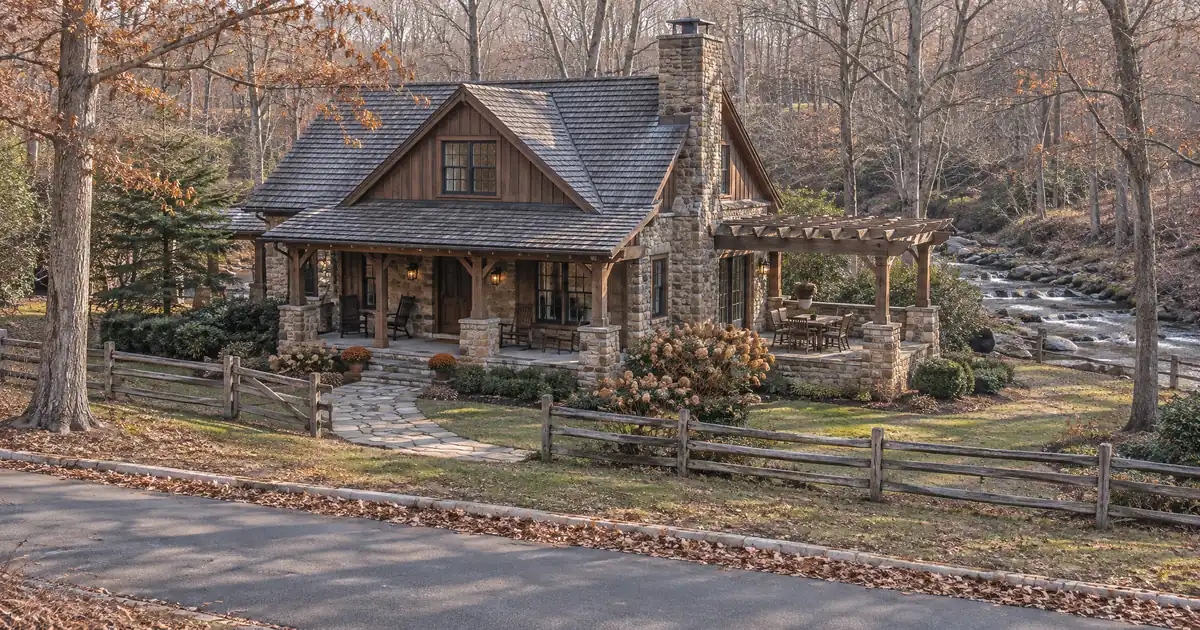
The Quick Read: The lender relies on an appraisal that explains, sale by sale, why thin data still supports a value. Few sales do not mean automatic denial. The appraiser may widen the search in time, distance and similarity, and the underwriter checks that the reasoning holds up. The appraised value then sets the ceiling on your loan, so a low or cautious number shrinks your cash-out faster than you might expect.
Key Takeaways
- Rural appraisals often rest on older, farther or less similar sales. The report must justify each one.
- The agencies set no flat distance limit and no flat acreage cap. Land use and documented support matter more.
- A cash-out refinance on a one-unit principal residence is written at up to 80% LTV, lower than a rate-and-term refinance. Every dollar the value misses comes off the top.
- The property must read as a residence, not a farm operation.
- Subject to lender guidelines and full file review, nothing here is a commitment to lend.
Key Terms Defined
Comparable sale (comp): A recently sold home similar enough to your property that its price helps estimate your value.
Adjustment: A dollar change the appraiser makes to a comp’s price to account for differences, such as lot size, square footage or a garage.
Market area: The geographic zone where buyers shop for homes like yours. In rural places it can cover several towns.
LTV (loan-to-value): Your loan balance divided by the appraised value, shown as a percentage.
Seasoning: The waiting period a lender requires, such as how long you have owned the home or held the loan you are paying off.
Cash-out refinance estimate
The starting figures are an example value with a balance and a cash request in proportion. Replace them with yours.
Editable benchmark: 7.18% as of November 5, 2026 · Freddie Mac 30-year average via FRED®. A conventional market reference, not a cash-out refinance quote.
Illustrative starting assumptions: a $350,000 home value, a $193,000 current balance, the agency cap on a one-unit principal residence, a thirty-year term at the current Freddie Mac benchmark, and property taxes and insurance estimated at typical national rates. Every field is editable.
Illustrative estimate only — not a Loan Estimate, approval, quote, or commitment to lend. The rate field carries the weekly Freddie Mac thirty-year conventional benchmark, a market reference and not a cash-out refinance quote; a cash-out loan is priced by the lender at lock. The cash available is the loan the program cap allows less the balances paid off, before closing costs, which are not included. The HELOC line is the program’s combined loan-to-value ceiling applied to the same value and balance. Taxes and insurance are editable estimates. Licensed in sixteen states for consumer mortgages.
Why Rural Homes Have Few Comps
Rural markets produce fewer sales. Lots are bigger, homes are more varied, and neighbors may be a mile or five apart. An appraiser looking for three similar sales within a year can come up short through no fault of the property.
It is a measured trend, too. The Federal Housing Finance Agency found that the share of appraisals with five or more comparables fell meaningfully between 2013 and 2021, and it varied considerably by state. Thin data is common, and the rules anticipate it.
A purchase has a contract price to anchor the value. A cash-out refinance does not. No buyer has agreed to anything, so the appraisal carries the entire weight of the value conclusion. That is why the comp story matters more here than on a purchase.
How the deal works, Step by Step
Across the wholesale programs Lendmire places consumer files with, the sequence is consistent. Here is how a rural cash-out typically unfolds.
1. Application and screening. The lender checks occupancy, your credit profile, your debts and the age of your current loan.
2. Eligibility clocks. On the conventional path, the first mortgage being paid off must be at least 12 months old, measured note date to note date, per Fannie Mae’s SEL-2023-01 announcement. A borrower must also have been on title for six months, with exceptions such as delayed financing, inheritance and legal awards.
3. Property screen. The lender asks whether this is a home or a working farm. More on that below.
4. Appraisal. The appraiser selects comps, adjusts them and writes the reasoning.
5. Underwriter review. The underwriter reads the comp selection and adjustments, not just the final number.
6. Loan sizing. The program’s LTV cap is applied to the appraised value.
7. Conditions and closing. The lender may add conditions, and you receive your appraisal copy before closing.
Lendmire’s cash-out refinance programs page lays out how the conventional, FHA and VA paths differ. The underwriting logic below applies across them, with program-specific wrinkles noted where they matter.
What the Appraiser Does When Sales Run Thin
The appraiser works down a ladder. Each rung widens the search, and each one demands documentation.
| Rung | What changes | What the report must show |
|---|---|---|
| Wider time | Sales older than the usual window | Why older sales still reflect today’s market |
| Wider distance | Sales far from the subject | Why they are the best indicator of value |
| Less similar homes | Different size, age or style | Adjustments for each difference |
| Competing areas | Sales from nearby markets buyers also consider | Why buyers would cross over |
| Pending and listings | Unsold properties as support | How they back up closed sales |
Fannie Mae’s comparable-sales guidance says rural locations may have a shortage or absence of recent, truly comparable sales. Sales a considerable distance away can be used if they are the best indicator of value. Its own example describes an appraiser who may not find three truly comparable sales in the last 12 months. The report must explain why the comps were chosen and demonstrate market acceptance.
Comps do not have to be identical. They should be strong in the buyer’s eyes, meaning they appeal to the same people who would consider buying your home. Fannie Mae also allows comps from competing market areas when those are the best available.
Freddie Mac’s Guide section 5605.6 takes a similar view. Every appraisal needs a sales comparison approach with at least three comparable sales, and it may add pending sales and listings. Rural reports may use older, distant or imperfectly similar sales if they justify them and adjust for the differences. Sales within 12 months are preferred, not required. Freddie Mac sets no cap on gross or net adjustment percentages.
For VA loans, VA Pamphlet 26-7, Chapter 11 says VA sets no minimum or maximum distance between subject and comps. In suburban or rural areas, suitable comps may be many miles away.
What the Underwriter Does With the Report
The underwriter is not re-appraising. The underwriter is asking whether the appraiser’s story is believable.
Here is what gets checked:
- Did the report explain every comp choice? A distant sale with no reasoning draws a question.
- Are the adjustments sensible? Large adjustments are not banned, but they must be supported. Heavy adjustments on every comp suggest the data is weak.
- Do the comps appeal to the same buyers? A suburban tract sale rarely supports a hilltop cabin.
- Does the conclusion fit the evidence? A value well above every comp invites scrutiny.
The lender may ask the appraiser to add support, clarify a choice or replace a comp. Occasionally the lender orders a second review. The final value used is the appraiser’s conclusion, never an online estimate.
Residential or Agricultural? The Land-Use Test
Fannie Mae’s Highest and Best Use policy says that if the appraiser concludes the property’s highest and best use as improved is non-residential, it is not eligible for sale to Fannie Mae. A home on 12 acres with a garden and a shed reads as residential. A home beside a working dairy barn, livestock facilities and farm zoning may not.
Acreage alone is not the test; the question is whether the property reads as a home. Individual lenders do set their own overlays, so the same property can be accepted by one wholesale lender and declined by another. That is a real reason to shop a rural file across more than one lender.
Outbuildings help or hurt depending on whether they are typical for the area. A large shop in a region where every property has one is ordinary. The same building elsewhere raises questions.
How a Value Miss Shrinks Your Cash-Out
The loan is a percentage of appraised value. The cash you receive is what is left after the new loan pays off your existing mortgage and closing costs. That is why a small value miss hurts more than it sounds.
Picture a homeowner who expects an appraisal that supports 80% LTV, and the appraisal comes in 5% lower. The new loan ceiling drops by about 4% of the original value, which is 80% of that 5%. Your payoff and costs stay the same, so the entire reduction comes out of your cash. A homeowner with modest equity can see most of the planned cash-out disappear. One with deep equity may barely notice. Leverage and reserves vary by lender and program; the final terms follow the full file review.
Occupancy changes the picture too. Two- to four-unit principal residences, second homes and investment properties are written at 75% or lower, depending on the program.
The main 80% reference is the mortgage insurance threshold on the agency path. Mortgage insurance applies above 80% LTV on the agency path, except in the wholesale no-mortgage-insurance cash-out lane. That lane has its own leverage ceiling, set by the program guidelines and never above the 75% cash-out cap, and it carries its own credit score, ratio, and property requirements for a 30-year fixed, primary residence, conforming balance, along with its own six months of seasoning. For most rural cash-outs the practical question is simply how much value the appraisal supports.
Credit matters alongside value. The wholesale conventional programs start at a 620 decision score, with a total ratio ceiling of 50% on automated findings. Fannie Mae’s matrix also adds reserve requirements on cash-out refinances when the debt-to-income ratio is above 45%. Texas homestead cash-outs are capped at 80% of value by the state constitution, and the wholesale no-MI lane is not written there. Exact terms depend on the lender’s guidelines, property type, leverage, and a full review of the borrower’s file.
Where the General Rule Breaks
Cash-out versus limited cash-out. A rate-and-term refinance with only incidental cash back avoids cash-out treatment. Take more equity out, and the loan becomes a cash-out, which carries lower leverage.
PACE loans. On certain properties, a borrower with enough equity to pay off a PACE loan who chooses not to is ineligible for a cash-out refinance.
Property listed for sale. A cash-out loan generally cannot go to Fannie Mae if the home is listed at disbursement.
Unique or non-traditional homes. Log, converted or unusual homes can be financed if comps show the home is marketable, with differences identified and adjusted. Expect a tougher conversation.
VA cash-outs. A VA cash-out needs a full appraisal, while an IRRRL does not, as VA Pamphlet 26-7, Chapter 6 explains. The loan including funding fee cannot exceed 100% of VA’s reasonable value. Lendmire’s piece VA Cash-Out Refinance Requirements on a Rural Property With Acreage goes deeper on that path.
FHA. Streamline refinances take no cash out, so the thin-comp problem rarely arises. An FHA cash-out needs a full appraisal and is capped lower than FHA’s rate-and-term refinance.
Rural Red Flags and the Fixes
| Red flag | Underwriter reaction | Borrower fix |
|---|---|---|
| Distant comps, no explanation | Asks for support | Share local sales knowledge with the appraiser |
| Large adjustments across the board | Questions the data | Provide documented upgrades and lot details |
| Farm-type buildings | Land-use review | Document that use is residential |
| Value well above all comps | Possible review | Supply recent sale evidence |
| Existing loan under 12 months old | Seasoning block | Wait or consider another structure |
Preparing Before You Order
A little homework helps. Gather a short packet before the appraiser visits.
- A list of improvements with dates, such as a new roof, well or septic work.
- Recent nearby sales you know about, even if distant.
- Survey or lot information, and a note on what the outbuildings are used for.
- A short description of how the area buyers typically shop.
Settle acreage and overlay questions with your loan officer before you pay for the appraisal, because rural appraisals can take extra effort and the fee is usually the borrower’s cost.
You have rights here. Under Regulation B, the lender must give you a copy of the appraisal, promptly on completion or at least three business days before closing, whichever is earlier. You can waive the timing but not the copy. The copy is free.
If the Value Comes in Low
You have options, and the first is to read the report. Look for factual errors: wrong square footage, a missed bedroom, an overlooked improvement.
Then consider a reconsideration of value. You ask the lender to have the appraiser look again, supported by specific, verifiable evidence such as additional sales the appraiser did not see. Opinions do not move values. Documented sales and facts sometimes do.
If the number stands, you can borrow less, wait, or look at a different program or lender whose overlays fit the property better. A broker who shops multiple wholesale lenders can match the file to the program. The best fit depends on the property, your credit profile and how much cash you need. Lendmire’s piece How Lenders Underwrite a VA Cash-Out Refinance With VA Cash-Out Credit Score Requirements is useful if you are a veteran comparing paths.
Frequently Asked Questions
Can a lender approve a cash-out refinance if the appraiser finds fewer than three comps?
It depends on how well the report supports the value. Both Fannie Mae and Freddie Mac plan for thin rural markets, allowing older, farther or less similar sales if the appraiser explains them and adjusts for the differences. Approval remains subject to lender guidelines and full file review.
Is there a maximum distance for comps on a rural property?
No flat distance limit applies in the agency guidance. VA states plainly that it sets no minimum or maximum distance, and Fannie Mae allows sales a considerable distance away when they are the best indicator of value. The appraiser must explain the choice.
Is there a maximum acreage for a cash-out refinance?
The question is whether the property reads as residential. Individual lenders may add their own limits, which is why overlays vary.
Does a low appraisal cut my cash-out by the same percentage?
The cash-out usually shrinks faster. The loan is a percentage of value, but your payoff and closing costs stay fixed, so the whole reduction comes out of the cash you receive.
Will I get to see my appraisal?
Yes. The lender must provide a copy at no charge, and you can ask for it even if the loan does not close.
If you are weighing a cash-out refinance against keeping the loan you have, Lendmire can help you compare the programs and the equity each one reaches. Program figures are subject to lender guidelines, and nothing here is a commitment to lend.
For your own numbers, request a scenario review with Lendmire.
For current guidelines and terms, see Lendmire’s refinance programs page.
About Lendmire
Lendmire — NMLS# 2371349 — is a mortgage broker that arranges FHA, VA, conventional and jumbo home purchase and refinance financing in 16 states through wholesale lenders. Every option is subject to the lender’s guidelines and full underwriting. Scotsman Guide named Lendmire a Top Mortgage Workplace in both 2025 and 2026.
Get Started
Ready to find the right loan for you?
See your offer in seconds. No credit pull, no obligation.
Informational only. Not a Loan Estimate, approval, or commitment to lend. Program availability and eligibility are subject to lender guidelines, credit approval, property review, and underwriting.
References
2. Fannie Mae SEL-2023-01 Announcement
3. Fannie Mae Selling Guide B4-1.3-08, Comparable Sales
4. Freddie Mac Guide Section 5605.6
5. VA Pamphlet 26-7, Chapter 11
6. Fannie Mae Highest and Best Use Policy
7. VA Pamphlet 26-7, Chapter 6
This article is part of Lendmire’s cash-out refinance program — full qualification details, guidelines, and scenarios live on the program page.
Related reading: How Lenders Underwrite a Cash-Out Refinance When It Resets the Mortgage to a New 30 Years · Does a Cash-Out Refinance Make Sense to Pay for Home Repairs on a Rural Property? · How Lenders Underwrite a Cash-Out Refinance for Renovations and the Appraisal Requirement
Brandon Miller
Founder & CEO, Mortgage Loan Originator, Lendmire LLC
- Mortgage Loan Originator · NMLS# 1129696 · Verify on NMLS Consumer Access
- North Carolina Real Estate Broker · License# 343312 · Verify on NCREC
- North Carolina Insurance Producer · License# 19053198 · Property, Casualty, Life, Health · Verify on NAIC SBS
- Lendmire LLC · Firm NMLS# 2371349 · Verify firm licensure
Disclosures. The information presented in this article is general market commentary, not financial, legal, or tax advice. Lendmire is a mortgage brokerage (NMLS# 2371349) — not a direct lender or depository institution — and loan placement is subject to lender underwriting. Nothing in this content represents a commitment to lend. Loan terms, pricing, and program availability vary based on borrower qualifications, property characteristics, and state of subject property, and are subject to change at any time. Lendmire complies with Equal Housing Opportunity requirements. Consumer access: nmlsconsumeraccess.org.