
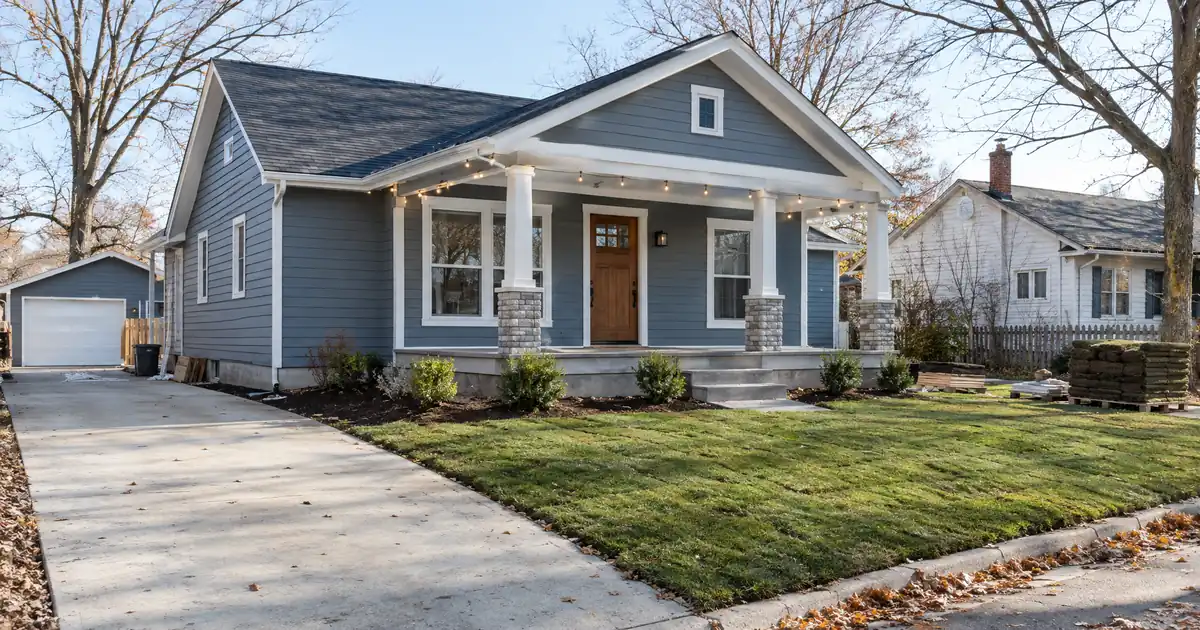
A bridge loan has a maturity date. The takeout loan has to be ready before it arrives.
The Quick Read: Lenders underwrite this refinance on two separate tests, collateral value from an appraisal and short-term rental income measured against the full new payment, then size the new loan at whichever test is lower and pay the bridge off first at closing. Anything left after payoff and costs is the cash-out. If nothing is left, the file is a payoff-only refinance.
- Short-term rental (STR) cash-out leverage tops out around 70% on STR collateral, while standard long-term rentals reach 75%. Both are subject to lender guidelines.
- Seasoning of about 6 months from title recording usually decides whether the loan is sized on appraised value or on cost basis.
- STR programs expect a 640+ score and about 12 months of hosting history, with a 1.00 coverage floor on the refinance.
- Coverage is tested against the new full payment, never the bridge payment.
- Which income method the lender uses can decide the file.
DSCR Cash-Out Calculator
Run the cash-out numbers in your market
Rate source: Freddie Mac 30-yr average via FRED® — Federal Reserve Bank of St. Louis · effective Oct 29, 2026
Prefilled with starting assumptions — enter your property’s value, balance, taxes, and insurance for a more accurate picture.
Program parameters update from Lendmire’s centralized guideline source. Taxes and insurance are editable estimates.
As of Oct 29, 2026 · General Freddie Mac market benchmark, not a Lendmire loan offer. Property value, balance, taxes, and insurance are editable estimates. Maximum loan-to-value varies by lender, program, property type, and seasoning. Not a Loan Estimate, approval, or commitment to lend. Program availability and eligibility are subject to lender guidelines, credit approval, property review, and underwriting.
What Is This Transaction, Exactly?
It is a business-purpose investor loan that retires a short-term bridge note and, if equity allows, returns cash. The property is a nightly or monthly rental, and the bridge usually financed the purchase or the rehab.
Two questions sit in one file. The bridge lender asked whether the deal could be finished. The takeout lender asks whether the finished property stands on its own: value, income, borrower, reserves.
DSCR loans qualify primarily on property-level rental income covering the payment, subject to lender guidelines. The complete DSCR loans guide covers the basics. This article covers the bridge-payoff version for STR collateral.
Key Terms Defined
Bridge loan: short-term, interest-only financing used to buy or rehab a property before long-term financing replaces it.
Seasoning: the ownership period a lender requires before it will size a cash-out on appraised value.
Payoff-only refinance: a refinance whose proceeds retire the bridge and closing costs, with no cash returned to the borrower.
Cash-out refinance: a refinance that returns cash after the old loan and costs are paid.
DSCR: rent used for lender review divided by the full housing payment (principal, interest, taxes, insurance, HOA). It is a coverage ratio, not a measure of profit.
Haircut: a reduction a lender applies to projected or short-history STR income before testing coverage.
How Do the Underwriting Gates Work, in Order?
Lenders test the file in a fixed sequence. A failure at any gate changes the loan, not just the pricing.
1. Ownership and seasoning. Across Lendmire’s wholesale network, about 6 months of ownership is the common expectation for a cash-out, measured from the recording of title on the bridge purchase. Before that point, lenders generally size on cost basis: purchase price plus documented rehab. After it, they size on appraised value. Seasoning is lender policy, not law, and policies differ. A few lenders in the network will work with shorter periods when the rehab is documented. Ask before the bridge closes.
2. Appraised value. The appraisal sets collateral value. Your after-repair estimate does not. The new lender orders its own appraisal and uses its own number.
3. Income and coverage. Rent used for lender review is tested against the full new payment. The coverage floor on an STR refinance is 1.00. Select lenders in the network will go below 1.00 with leverage and terms adjusted, and that path is a separate program, not a lower floor on the same one. Clearing 1.00 is not positive cash flow. Repairs, vacancy, management, utilities, and capex all sit outside the ratio.
4. Borrower profile. STR programs typically want a 640+ score. Higher tiers unlock better leverage. Parts of the network accept lower scores on long-term rental files, but STR collateral is stricter.
5. Reserves. Reserves commonly run about 6 months of PITIA, stepping up to about 9 months above $1,500,000. They vary by lender, leverage, loan size, and transaction type.
6. Documents. The file needs the bridge note, a payoff letter, entity documents if the property sits in an LLC (subject to lender program eligibility), insurance, and the income evidence covered next.
How Is Short-Term Rental Income Turned Into a Coverage figure?
Programs use one of three methods, and the method matters more than most investors expect. Which one applies is confirmed in underwriting.
- Documented operating history. Platform statements, bank deposits, and property-manager statements. STR programs typically look for about 12 months of hosting history. Vacant months generally count as zero when the history is averaged.
- Market projection. A third-party STR data report, or an appraiser’s STR analysis with the data source and calculation shown. Lenders often reduce projections when history is short.
- Fallback to long-term rent. Some conservative programs ignore STR income and test the property on the long-term rent estimate.
That last route is where strong STR properties lose ground. The standard appraisal rent forms are built around long-term leases. Fannie Mae’s appraiser forms page names Form 1007, the Single-Family Comparable Rent Schedule, and Form 1025, the Small Residential Income Property Appraisal Report. Those forms are named here only so you recognize them in an appraisal package. They do not govern DSCR files.
One appraisal-industry firm argues that Form 1007 cannot support STR appraisals because it measures long-term lease assumptions. That is practitioner opinion, not a rule. The practical point holds, though. A lender that falls back to a long-term rent schedule can understate a strong STR. The same property can pass on documented history and fail on a fallback.
Short-term rental rules can vary by city, county, HOA, and property type, so investors should confirm local rules before relying on projected rental income.
Payoff-Only or Cash-Out: How Does the Lender Classify It?
If proceeds only retire the bridge and closing costs, the loan is typically a payoff-only refinance. If any cash comes back, it is a cash-out. The classification drives leverage, seasoning, and documents.
On STR collateral, cash-out leverage tops out at 70%. A standard long-term rental can reach 75% on a cash-out. A payoff-only refinance on STR collateral runs around 70% on STR programs. Leverage figures vary by lender, property, and borrower.
Some lenders also look at how the bridge was used and how recently the property was acquired. A bridge-financed purchase that is still unseasoned may be treated as payoff-only even when equity looks strong on paper.
What Does the Money Waterfall Look Like?
Run the closing in order. Title pays the bridge off first, out of the new loan. Then come the closing costs and any required reserves, and only then any remaining proceeds. That remainder is the cash-out.
Here is the sizing logic without dollar inputs. The new loan is the lower of two numbers:
- Equity test: appraised value (or cost basis before seasoning) times the leverage cap, 70% for STR cash-out.
- Coverage test: the largest loan the rent used for lender review supports at the 1.00 floor.
Say the equity test lands above the bridge payoff but the coverage test lands below it. Coverage controls, and the gap becomes cash the investor must bring. Say instead that the appraisal comes in light. Then the equity test controls, and proceeds may not cover payoff plus costs. A cash-out turns into a payoff-only loan with trapped equity.
Check the bridge note for exit fees, accrued interest, and extension terms. Bridge terms commonly run 6 to 18 months, interest-only, and vary by lender, property, and experience. Also check the new loan’s prepayment terms, because a new loan usually restarts that clock.
Where Does the General Rule Break?
Unmet seasoning with a maturing bridge. The usual answers are an extension or a lender with a shorter seasoning policy. Some investors do a two-step: a payoff-only refinance now to stop the bridge clock, then a cash-out after seasoning. The cost is two sets of closing expenses and possible prepayment terms on the first loan. Run that math before choosing it.
Delayed financing does not rescue this. The agency delayed-financing rule is a narrow exception for true cash purchases. A bridge-financed purchase generally does not qualify, and it is not a DSCR benchmark anyway.
Low appraisal. Options are bringing cash to close, switching to payoff-only, extending the bridge, disputing the comps through an appraisal reconsideration, or waiting and reappraising. A reconsideration packet with recent in-neighborhood sales and condition support is a routine step, not an emergency one.
Short or messy hosting history. Thin history pushes the lender toward projections with haircuts or toward the long-term rent fallback. Clean platform statements matched to bank deposits keep the file simple.
Unfinished rehab. An unfinished property can fail appraisal conditions and income support at once. Finish the work, or extend the bridge.
Ineligible property types. Manufactured homes (single- and double-wide), log homes, and barndominiums are not offered in the network’s DSCR programs.
What Should the Investor Decide?
Start with the exit, not the bridge. Count backward from maturity. Rehab, hosting ramp, seasoning, appraisal, and underwriting all have to fit inside the bridge term. Running out of runway is the most common way these plans fail.
Then compare four paths.
| Path | Fits when | Main cost |
|---|---|---|
| Cash-out refinance | Seasoned, value strong, coverage clears | Leverage cap and reserves |
| Payoff-only refinance | Value light or seasoning unmet | Equity stays locked up |
| Two-step refinance | Bridge near maturity, seasoning short | Two closings |
| Bridge extension | Rehab or history incomplete | Extension fees |
Test coverage against the new full payment, not the bridge payment. A bridge payment is interest-only, so it hides the real carry.
One more judgment call. A stabilized rental that could go straight to a DSCR cash-out avoids the bridge costs entirely. The bridge-then-refinance route is for properties that are not yet financeable.
What Is the Next Step?
Many investors move out of hard money into long-term DSCR financing once the property is stabilized, and Lendmire brokers that path through its hard money exit refinance program. Lendmire is a mortgage broker, not a lender. It arranges DSCR investor loans through select lenders in its wholesale network across 41 markets, including Washington, D.C. The best program for your situation depends on property type, credit profile, hosting history, and leverage need. Lenders review eligibility, and nothing here is a commitment to lend.
If you are refinancing an investment property out of a bridge on a short timeline and want to see how the numbers work, Lendmire can help you compare options based on the project, the exit plan, leverage, and your goals. Call 828-256-2183.
Frequently Asked Questions
Can a bridge loan on an Airbnb property be paid off with cash back?
Yes, when seasoning is met, the appraisal supports value, and the property clears coverage. STR cash-out leverage tops out around 70%, and about 6 months of ownership is the common expectation. If equity or seasoning falls short, the loan usually becomes a payoff-only refinance.
Does the lender use the bridge payoff or my after-repair value to size the loan?
Neither one directly. Before seasoning, the loan is generally sized on cost basis. After seasoning, it is sized on the lender’s own appraised value. The bridge payoff is a use of proceeds, not a sizing input.
What if my short-term rental has less than 12 months of history?
Programs typically expect about 12 months of hosting history. With less, some lenders accept a projection, often reduced, and others fall back to long-term rent.
Does a coverage ratio above 1.00 mean the property cash flows?
No. DSCR compares rent to the full payment only. Repairs, vacancy, management, utilities, and capex sit outside the ratio. A ratio near 1.00 leaves almost no margin for a slow season.
Can I refinance below 1.00 coverage?
Select lenders in the network offer sub-1.00 programs with leverage and terms adjusted. That is a different path from the standard 1.00 floor, and it is reviewed file by file.
About Lendmire
As a non-QM mortgage broker (NMLS# 2371349), Lendmire facilitates DSCR investor loans across 41 markets, including Washington, D.C. DSCR eligibility is generally reviewed around property-level rental income instead of personal income documentation, subject to lender guidelines, serving LLC-structured portfolios and self-employed borrowers who don’t fit conventional boxes. A two-time Scotsman Guide Top Mortgage Workplace (2025, 2026).
Get Started
Ready to find the right loan for you?
See your offer in seconds. No credit pull, no obligation.
Informational only. Not a Loan Estimate, approval, or commitment to lend. Program availability and eligibility are subject to lender guidelines, credit approval, property review, and underwriting.
References
1. Fannie Mae – Appraiser forms
2. Class Valuation – Form 1007 and short-term rentals
This article is part of Lendmire’s hard money loan program — full qualification details, guidelines, and scenarios live on the program page.
Related reading: How to Qualify and Apply for a Short-Term Rental Cash-Out Refinance With 740 Credit · How Lenders Underwrite a Super Jumbo DSCR Cash-Out Refinance to Pay Off a Bridge Loan · How to Show Reserves for a Short-Term Rental Cash-Out Refinance
Brandon Miller
Founder & CEO, Mortgage Loan Originator, Lendmire LLC
- Mortgage Loan Originator · NMLS# 1129696 · Verify on NMLS Consumer Access
- North Carolina Real Estate Broker · License# 343312 · Verify on NCREC
- North Carolina Insurance Producer · License# 19053198 · Property, Casualty, Life, Health · Verify on NAIC SBS
- Lendmire LLC · Firm NMLS# 2371349 · Verify firm licensure
Required disclosures. Lendmire (NMLS# 2371349) operates as a licensed mortgage broker, not a direct lender or depository. The discussion in this article is general in nature and should not be relied upon as financial, legal, or tax advice — every investment scenario is unique and should be reviewed by a qualified professional. Any loan inquiry is subject to lender underwriting, and this article is not a commitment to lend or a guarantee of approval. Mortgage rates, loan terms, and program guidelines vary by borrower, property, and state, and may change without notice. Equal Housing Opportunity. Verify licensure at NMLS Consumer Access.