
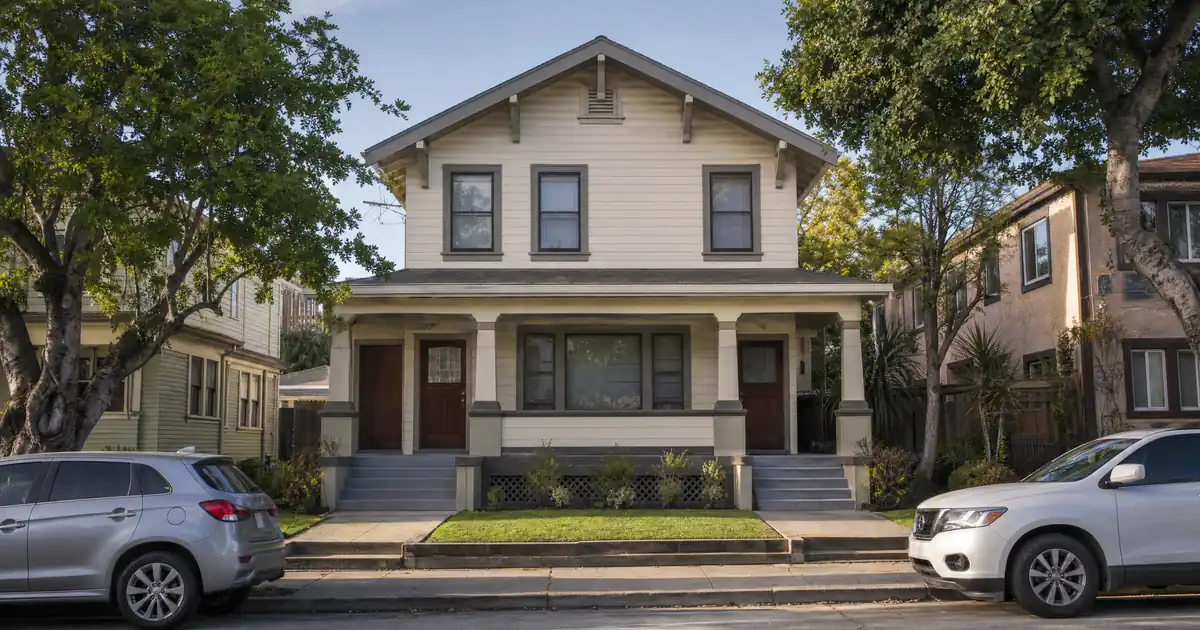
The Quick Read: There’s no federal or regulator-imposed cap on the number of DSCR loans an investor can hold. That’s a direct consequence of how these loans are classified — as business-purpose credit, exempt from the Ability-to-Repay/Qualified Mortgage rule that governs consumer mortgages. Conventional financing works differently: Fannie Mae and Freddie Mac cap the number of financed 1-4 unit properties an investor can carry on agency paper, which is the wall that pushes growth-stage investors toward DSCR programs in the first place. The absence of a government-set number doesn’t mean zero limits exist, though — individual lenders set their own exposure policies, and those vary.
DSCR Calculator
Run the numbers in your market
Rate source: Freddie Mac 30-yr average via FRED® — Federal Reserve Bank of St. Louis · effective Jul 30, 2026
Prefilled with local estimates — enter your own rent or nightly figures, taxes, insurance, and HOA for a more accurate picture.
Program parameters update from Lendmire’s centralized guideline source. Taxes and insurance are editable estimates.
As of Jul 30, 2026 · General Freddie Mac market benchmark, not a Lendmire loan offer. Rent, nightly rate, occupancy, taxes, and insurance are editable estimates. Short-term rental figures are estimates only and vary significantly by season, property type, management approach, and local short-term-rental rules — confirm local regulations before relying on them. Qualifying income for short-term rentals varies by program — some use appraisal market rent, others use documented STR history or projections — and is confirmed in underwriting. Not a Loan Estimate, approval, or commitment to lend. Program availability and eligibility are subject to lender guidelines, credit approval, property review, and underwriting.
Is There Actually a Legal Limit on DSCR Loans?
No. There is no statute, agency rule, or regulator guideline capping the number of DSCR loans a single investor or entity can hold. The limit that trips people up — the familiar “ten financed properties” number — belongs to a completely different lending framework and doesn’t apply here.
That distinction starts with the Consumer Financial Protection Bureau’s Ability-to-Repay/Qualified Mortgage rule, which requires a creditor to make a reasonable, good-faith determination of a consumer’s ability to repay a mortgage according to its terms. That rule lives inside Regulation Z, and Regulation Z is explicit about its own boundaries: Section 1026.43 does not apply to an extension of credit primarily for a business, commercial, or agricultural purpose, even when that credit is secured by a dwelling. A separate exempt-transactions provision in Regulation Z reinforces the same point — an extension of credit primarily for a business, commercial, or agricultural purpose sits outside the regulation entirely.
DSCR loans finance non-owner-occupied rental property, frequently titled to an LLC, and lenders document them at origination as business-purpose transactions. This isn’t just a talking point brokers use — it shows up in the loan-level compliance fields lenders file with the SEC. In actual asset-backed securities filings covering non-QM/DSCR loan pools, the QM/ATR designation field is populated with language stating that DSCR loans are exempt from ATR/QM, with some records reading that investment transactions are not subject to QM/ATR requirements. Because that federal ability-to-repay framework never attaches, there’s no debt-to-income mechanism sitting underneath DSCR lending that could cap the count of loans a borrower carries the way it does for conforming financing.
Why Does Conventional Financing Have a Property-Count Wall and DSCR Doesn’t?
Conventional lending has a ceiling because Fannie Mae and Freddie Mac built one into their own underwriting engines. DSCR lending has no equivalent ceiling because non-QM loans aren’t sold into those same agency pools — each lender sets its own exposure appetite instead of following a shared GSE rulebook.
Fannie Mae’s Selling Guide lays out reserve requirements that step up as an investor’s financed-property count rises, with the guide’s own tiering running through the case of seven to ten financed properties underwritten through Desktop Underwriter — confirming that DU tops out its financed-property count at ten. Freddie Mac’s Seller/Servicer Guide runs a parallel framework: its investment-property mortgage page notes that additional requirements in Guide Section 4201.13 apply to borrowers who own or are obligated on multiple 1- to 4-unit financed properties, including the subject property and the borrower’s primary residence. Terms vary by lender guidelines, property type, leverage, credit profile, and full file review.
That’s the wall. Once an investor’s financed-property count climbs into that range, Fannie and Freddie’s automated underwriting systems apply escalating credit-score minimums and reserve requirements — reserves calculated as a percentage of aggregate unpaid principal balance across the whole portfolio, not just the subject property. It’s a real constraint, and it’s the exact constraint DSCR programs are marketed to work around, because DSCR underwriting evaluates the rent coverage on the subject property rather than aggregating a borrower’s total financed-property count against a fixed agency ceiling.
None of that means DSCR lending is limitless in practice. Since these loans aren’t headed for GSE pools, each non-QM lender, warehouse funder, or private-label securitizer sets its own aggregate exposure policy — a cap on the number of loans, or the total dollar exposure, it’s willing to carry per borrower or per entity. Those internal caps aren’t published anywhere centralized, and they differ from lender to lender, which is a good reason to ask directly before assuming an open runway. Lendmire (NMLS# 2371349), a mortgage broker arranging DSCR financing through select lenders across 41 markets including Washington, D.C., works through those variations on a file-by-file basis rather than quoting a single number that would apply to every investor.
What Actually Governs Underwriting on Each DSCR Loan?
DSCR underwriting evaluates the property, not the borrower’s aggregate debt load — a structural difference that’s the real reason property count stops functioning as a ceiling. Here’s how a file typically moves.
First, the lender documents loan purpose at application, establishing that the credit is for a non-owner-occupied investment property. That documentation is what triggers the Regulation Z business-purpose exemption discussed above, and it’s not a formality — it’s the legal basis for the whole framework.
Second, underwriting shifts from a borrower-level debt-to-income calculation to a property-level rent-to-payment test. The lender divides the subject property’s gross rents by its full monthly obligation — principal, interest, taxes, insurance, and any association dues (PITIA) — to produce a coverage ratio. Requirements vary by lender and by file. On select programs within the wholesale network Lendmire works with, a ratio floor around 1.00 applies; other programs within the same network accept different thresholds depending on leverage, credit profile, and reserves, and none of that is uniform across the network. What is a DSCR loan? covers how that ratio gets calculated in more depth.
Third, because a large share of DSCR borrowers close in an LLC, the file includes entity documentation — formation papers, an operating agreement, often a personal guaranty — mechanics that don’t exist on a standard conforming loan. This is one area where LLC-titled properties get treated very differently than they would under conventional guidelines, a point worth returning to below.
Fourth, there’s no GSE-style aggregation step. Desktop Underwriter and Loan Product Advisor automatically tally a conventional borrower’s financed 1-4 unit properties nationwide, pulling from the credit report and REO section, then apply escalating requirements as that count rises. DSCR underwriting has no centralized counting mechanism of that kind. Each loan gets reviewed largely on its own merits, subject to whatever internal exposure policy the individual lender chooses to apply.
Fifth, tax reporting runs on a completely separate track and isn’t a qualification gate at all. Investors report rental income and loss on Schedule E of Form 1040, and the form itself carries a structural quirk worth knowing: taxpayers can enter up to three properties or income sources on a single Schedule E, and anyone with more than three needs to file additional Schedule E forms. That’s a paperwork mechanic for the IRS, not a lending limit — a common point of confusion worth clearing up early.
The LLC Structuring Detail Most Investors Miss
Titling a property in an LLC can remove it entirely from Fannie Mae’s financed-property count — a mechanic that matters for conventional eligibility even though it has zero bearing on DSCR eligibility. Fannie’s guide states this directly: a borrower who owns investment properties financed in the name of an LLC in which they hold partial ownership is not included in the property count, because the borrower isn’t personally obligated on the mortgages securing those investment properties.
That’s a meaningful lever for investors straddling both financing lanes — someone with a few conventional mortgages personally and a growing LLC-held portfolio on the side might find their personal financed-property count stays lower than expected, buying more runway on agency paper before DSCR becomes a practical path when conventional options are a poor fit. It cuts the other way too: Fannie’s property count is broader than most borrowers assume. It applies to the total number of properties financed, not the number of mortgages on a property, and it includes a financed primary residence and the cumulative total across all co-borrowers (though a jointly financed property only counts once). A spouse, a co-borrower, or even a financed second home can push someone toward the ten-property ceiling faster than they’d guess. High-LTV refinances get their own carve-out from this policy entirely, and Fannie’s affordable HomeReady program applies a separate, more restrictive rule for non-occupant co-borrowers’ financed properties — a reminder that even inside conventional lending, “how many loans can I have” isn’t one uniform number. It varies by program.
Who Actually Runs Into the Ceiling?
Federal housing data suggest most landlords never come close to any property-count limit, GSE or otherwise. A Congressional Research Service brief drawing on the HUD/Census Rental Housing Finance Survey found that individual investors owned 70.2% of rental properties as of 2020. HUD’s own release of that survey put the small-property figure at 70 percent, or 15.9 million properties, owned by individual investors. Pew Research Center’s read of the same Census data was blunt about typical scale: most rental properties — about seven in ten — are owned by individuals, who typically own just one or two properties.
That’s exactly why the GSE ceiling is close to irrelevant for the one- or two-property landlord and becomes the binding constraint for a completely different investor profile — the one trying to move from a handful of properties into double digits without getting boxed in by DU or LPA’s escalating credit-score and reserve requirements as the financed-property count climbs. That’s the population DSCR programs are actually built for. An investor holding two rentals personally, both cash-flowing comfortably under a traditional employment income profile, may find conventional financing carries a lower cost and cleaner underwriting — DSCR’s business-purpose framework and property-level reserve requirements add friction that doesn’t buy much for a small, simple portfolio. The calculus flips somewhere around the fourth or fifth financed property, or earlier if traditional personal-income documentation doesn’t cleanly support rental income add-backs, which is often the point where DSCR structuring starts to earn its keep.
Lendmire’s experience arranging DSCR files across a wholesale lender network shows a consistent pattern here: the investors who hit friction aren’t usually the ones with three or four rentals — they’re the ones scaling past eight or nine, where conventional lenders start asking for portfolio schedules, increased reserves, and higher credit tiers just to originate the next deal. Shifting that growth phase onto DSCR paper, evaluated property-by-property rather than against an aggregate count, is often less about avoiding a hard limit and more about avoiding the escalating friction that builds well before any limit is technically reached.
What Could Still Cap an Investor’s DSCR Portfolio?
Nothing at the regulatory level — but plenty at the lender level. Every non-QM originator sets its own internal exposure policy, and those policies are the real practical ceiling most growth-stage investors eventually meet.
Because DSCR loans typically get sold into private-label securitizations rather than GSE pools, the entities buying those loans — warehouse lenders, aggregators, securitizers — each decide how much exposure they’re willing to carry against a single borrower or entity. That could mean a maximum loan count, a maximum aggregate dollar exposure, or both. None of this is published in one authoritative source the way Fannie’s Selling Guide is, so it’s worth confirming directly with whichever lender is reviewing a file rather than assuming an unlimited runway just because no regulator sets a number.
Credit and reserve profile also matter more as portfolio size grows. On most files in the network Lendmire works with, credit tiers commonly referenced run from around 620 up through 700-plus, with stronger scores generally supporting better leverage. Typical purchase LTV runs 75%-80%, with cash-out refinances capped lower, around 75%. Reserve requirements commonly run near six months of PITIA, stepping up toward nine months on larger loan balances above roughly $1.5 million. None of these are guarantees — they’re program guidelines that vary by lender, credit profile, and property, and every scenario remains subject to underwriting and lender approval. DSCR loan requirements for investment properties walks through how those pieces typically fit together on a file.
There’s also a documentation risk worth flagging: if a loan isn’t, in substance, primarily for a business purpose — say, financing that’s really tied to a natural person’s personal use of the property rather than a rental operation — the business-purpose exemption can fail, and full Regulation Z and ability-to-repay obligations could attach after the fact. That’s an intent-and-documentation issue, not a headcount issue, but it’s the main mechanism by which a “DSCR” loan could unexpectedly get pulled back under the consumer framework it was structured to sit outside of.
Loan approval is never guaranteed, and nothing here is a commitment to lend. Every scenario described here is subject to lender approval and to borrower, property, and program guidelines that vary by file. This article is general information only and isn’t financial, legal, or tax advice.
DSCR vs. conventional financing
Two common ways to finance an investment property in this market. They qualify you differently — here’s how investors weigh them.
Why investors choose it
- Qualifies on the property’s rental income — no personal tax returns, W-2s, or pay stubs needed to document income.
- No personal debt-to-income ceiling to clear, so existing mortgages and obligations don’t cap your borrowing the same way.
- Can be closed in an LLC, keeping the property inside a business entity.
- Built for scaling — not held to the limit on number of financed properties that conventional financing applies.
- Underwriting centers on the deal: generally qualifies when the rent covers the payment, a 1.00x coverage ratio being a common baseline (confirmed in underwriting).
- Designed specifically for investment property, including long-term and, where the program allows, short-term rentals.
Where it’s strong
- Often the lowest ongoing financing cost for a buyer who fully qualifies on personal income — a fit for a first property or a cost-first purchase.
Trade-offs for investors
- Requires full personal income documentation and must fit within a debt-to-income limit — salary, existing debts, and other mortgages all count.
- Typically held in your personal name rather than a business entity.
- Caps how many financed properties you can carry, which can become a ceiling as a portfolio grows.
- Evaluates you as a borrower as much as the property, which usually means more paperwork.
How investors usually choose: a first or single property often optimizes for the lowest financing cost; portfolio builders often optimize for leverage, vesting in an LLC, and scaling past conventional caps. The right answer depends on your goals, the property, and current guidelines — both paths run through select lenders in Lendmire’s wholesale network, with eligibility and terms confirmed in underwriting.
Frequently Asked Questions
Does having multiple DSCR loans hurt my credit score the way multiple conventional mortgages might?
Not in the same structural way. Because DSCR lenders don’t run a borrower-level debt-to-income calculation, additional DSCR loans don’t feed into the escalating GSE reserve and credit-score tiers tied to financed-property count. Credit history and score still matter for each individual file’s approval and pricing eligibility, but there’s no centralized “financed properties” tally the way Desktop Underwriter or Loan Product Advisor run for conventional borrowers.
Can I hold DSCR loans in multiple different LLCs to avoid a lender’s exposure cap?
Some investors structure portfolios this way, but it depends entirely on how a given lender defines its exposure policy. If a lender’s internal cap is set at the borrower level (tracking the individual guarantor across entities) rather than strictly at the entity level, spreading properties across multiple LLCs may not change the outcome. This is a question to raise directly with the lender reviewing the file rather than assume a workaround.
Does refinancing an existing DSCR loan count against a property-count limit?
There’s no regulatory property-count limit for DSCR loans to begin with, so refinancing doesn’t interact with one. What does matter is the lender’s own exposure policy at the time of refinance — a lender revisits the file (updated rent coverage, reserves, credit profile) independent of how many other DSCR loans are already on the books elsewhere.
If I already have several conventional mortgages, does that count against DSCR eligibility?
Generally not in the way it would on another conventional application. DSCR underwriting centers on the subject property’s own rent-to-payment coverage rather than the borrower’s aggregate financed-property count under GSE rules. A borrower’s overall credit profile, reserves, and liabilities are still reviewed as part of the file, but there’s no direct carryover of Fannie or Freddie’s financed-property ceiling into DSCR underwriting.
How do you qualify for a DSCR loan in Washington, D.C. If you already hold several rental properties there?
Qualification still runs property-by-property rather than against a citywide or portfolio-wide count. A lender in Lendmire’s network reviews the subject D.C. Property’s rent-to-payment coverage, the borrower’s credit profile, entity documentation if the property is LLC-held, and reserves, largely independent of how many other financed properties — DSCR or conventional — that borrower already carries elsewhere in the market.
What documentation does a growing D.C.-area investor need to add another DSCR-financed property to their portfolio?
Typically the same core file each time: entity formation documents if closing in an LLC, a lease or market-rent estimate to establish the coverage ratio, proof of reserves, and a credit review. Because there’s no GSE-style aggregation step in DSCR underwriting, each additional property in Washington, D.C. Or any other market gets evaluated on its own file rather than against a running tally of prior DSCR loans.
Is there a minimum number of properties before DSCR financing makes sense over conventional?
It depends more on income documentation and entity structure than on a specific property count. A self-employed investor whose traditional personal-income documentation doesn’t cleanly support rental income add-backs, or one buying through an LLC, may find DSCR the cleaner path even on a first or second property. A W-2 borrower with straightforward income and a small personal portfolio often finds conventional financing carries lower cost and less friction until the GSE financed-property ceiling starts to bind, typically later in a portfolio’s growth.
About Lendmire
Lendmire (NMLS# 2371349) is a mortgage brokerage that arranges non-QM DSCR financing for investment property purchases and refinances through a network of lenders, serving 41 markets. Lendmire does not fund loans directly; it connects borrowers to lenders in its network whose guidelines, pricing, and program terms vary by property, credit profile, leverage, and file. Every scenario described here is general information, not a guarantee of approval or a specific offer of credit, and all lending remains subject to lender underwriting. Scotsman Guide named Lendmire a Top Mortgage Workplace in both 2025 and 2026.
Get Started
Ready to find the right loan for you?
In about 30 seconds you can review financing options available for your home or investment property. No commitment required.
Informational only. Not a Loan Estimate, approval, or commitment to lend. Program availability and eligibility are subject to lender guidelines, credit approval, property review, and underwriting.
References
1. Consumer Financial Protection Bureau’s Ability-to-Repay/Qualified Mortgage rule
2. exempt-transactions provision in Regulation Z
4. Freddie Mac’s Seller/Servicer Guide
6. Congressional Research Service brief
This article is part of Lendmire’s DSCR loan program — full qualification details, guidelines, and scenarios live on the program page.
Related reading: DSCR Loans and the 10-Financed-Property Limit · Interest-only DSCR Loan How Many You Can Have · How To Move Past The Ten-property Limit With A Portfolio DSCR Loan
Brandon Miller
Founder & CEO, Mortgage Loan Originator, Lendmire LLC
- Mortgage Loan Originator · NMLS# 1129696 · Verify on NMLS Consumer Access
- North Carolina Real Estate Broker · License# 343312 · Verify on NCREC
- North Carolina Insurance Producer · License# 19053198 · Property, Casualty, Life, Health · Verify on NAIC SBS
- Lendmire LLC · Firm NMLS# 2371349 · Verify firm licensure
Legal disclosures. Lendmire (NMLS# 2371349) is a state-licensed mortgage brokerage that arranges financing through wholesale lender relationships. Lendmire is not a direct lender, depository institution, or registered financial advisor. The discussion above is general informational content about real estate financing — it is not financial, legal, or tax advice, and readers should consult licensed professionals for guidance on their individual circumstances. Loan inquiries are subject to lender underwriting; this article does not represent a commitment to lend. Loan terms, rates, and qualification standards vary by borrower, property, and state, and are subject to change at any time. Equal Housing Opportunity. NMLS Consumer Access: nmlsconsumeraccess.org.