
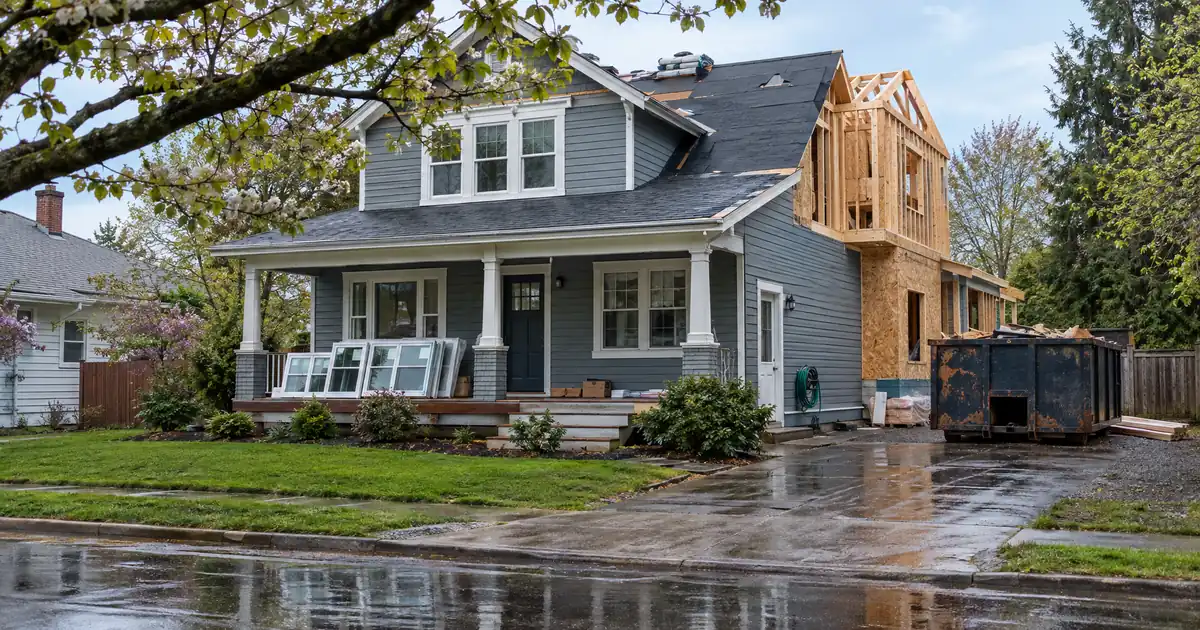
The Quick Read: A hard money lender sizes a loan on a paid-off property by applying its cash-out ceiling to the appraised value, and because nothing is owed there is no payoff to subtract, so across the wholesale network that ceiling is typically up to 65% of value, varying by lender, property, and experience. Owning the property outright does not raise that percentage. It only means the full loan amount comes back to you as cash, less costs.
- The ceiling is a percentage of appraised value, not a share of your equity.
- On a cash-out or rate-and-term refinance of a non-owner-occupied 1-4 unit property, the typical ceiling is up to 65% of value.
- Bridge purchases without a rehab can reach up to 80% of purchase price. That is a purchase figure, not a refinance figure.
- No true 100% purchase program exists, and a paid-off status does not create one.
- Hard money is short-term and interest-only, so most investors plan a longer-term exit before they apply.
How Do Lenders Size a Loan When There Is No Mortgage?
Lenders multiply the value they accept by their percentage ceiling, then subtract any liens. On a paid-off property the lien balance is zero, so the ceiling alone sets the loan. Everything else on the file only moves the number down from that ceiling.
What this loan actually costs to carry.
Hard money is sized against the project and priced by time. Enter the deal and see how much the program will lend, the cash required at closing, the carry while you hold it, and what is left at the exit.
Leverage tiers on the current program: 85% with fewer than 2, 90% with 2 or more, 93% with 5 or more completed projects — every tier capped at 75% of after-repair value. Loan amounts up to $5,000,000, larger by exception; terms of 6 to 18 months, interest-only, no prepayment penalty. The rehab portion funds in draws against completed work, not at closing.
Program parameters shown update from Lendmire’s centralized guideline source. Rate, points, and months are editable assumptions, not quoted terms.
Cost cap sets the loan · positive spread
Illustrative estimate only — not a quote, Loan Estimate, approval, or commitment to lend. Rate, points, and months are editable assumptions. Hard money is business-purpose financing for real estate investors, not a consumer mortgage. Leverage on the current program tops out at 93% of project cost for investors with a documented track record, capped at 75% of after-repair value, with rehab funding up to 100% of the documented budget released in draws; actual terms vary by lender, borrower experience, property, and exit. Lendmire is a mortgage broker, not a lender.
The steps run in a fixed order.
1. Value basis. The lender picks a value. On a stabilized paid-off rental, that is the current as-is value. If a rehab is involved, the lender may also look at after-repair value (ARV), which is the projected value once the work is done.
2. Valuation. The lender orders an appraisal or a broker price opinion. That figure controls the loan, not your own estimate of what the property is worth.
3. Formula. Maximum loan equals value times the ceiling, minus existing liens.
4. Net proceeds. What reaches you is the loan less fees and closing costs.
5. Review. The lender checks title, insurance, the property’s condition, and your exit plan.
Business.com describes hard money as collateral-driven, with each private lender setting its own underwriting and the loan coming back to the property’s value as a loan-to-value percentage. That matches what the network shows. Underwriting stays asset-based, meaning it centers on the property, the plan, and the exit rather than on your personal income. Credit still counts. Most programs want a 620 minimum score, with additional conditions below 660.
One practical point trips people up. When a lender advertises a percentage, ask which value it refers to: as-is, purchase price, total project cost, or after-repair. The same headline number can mean very different loan sizes depending on the answer.
Does Paid-Off Mean You Can Borrow 100%?
No. A paid-off property gives you a clean lien position, which is useful, but the lender still caps the loan at a share of value. The remainder stays in the property as a cushion that protects the lender if the value drops or the exit slips.
Experian makes the same point from the consumer side, noting that even a homeowner with full equity cannot access all of it. The same logic is stricter in hard money, where the lender is funding a short-term loan against a single asset.
There is no true 100% purchase program in this lane either. Some hard money structures advertise high leverage, but those are cost-based. They measure a share of project cost, and they come with a separate cap on after-repair value. A paid-off rental with no project attached does not fit that structure at all.
So the gap between 65% and 100% is not a missed opportunity. It is how the product is built. An investor who needs more than the ceiling returns usually has one of three options: bring other capital, split the need across more than one property, or reconsider the plan.
A Worked Example
Use an index instead of dollars to see the mechanics. These numbers are modeled assumptions, not market data.
- Appraised value: 100 units.
- Typical cash-out ceiling: up to 65% of value, so the maximum loan is 65 units.
- Existing liens: zero, because the property is paid off.
- Gross loan: 65 units.
- Net proceeds: 65 units less fees and closing costs.
Now see what happens if the appraisal comes in lower than expected. Say you assumed a value of 100 but the appraiser lands at 90. The ceiling now applies to 90, so the maximum loan falls to 58.5 units. Nothing about your equity changed, but the cash you can pull dropped by 6.5 units. If your plan needed the full 65, you now have a gap to fill.
This is why appraisal risk matters more than most investors expect. A single low comp or a condition note can shrink the loan, and a plan built on the maximum leaves no room for it. A sounder habit is to size the plan on a conservative value and treat anything above that as a bonus.
What Each Scenario Looks Like
The ceiling depends on what the loan is for. This table summarizes typical leverage across the network. Every figure varies by lender, property, and experience, and none is a commitment to lend.
| Scenario | Typical ceiling | Measured against |
|---|---|---|
| Cash-out refinance | Up to 65% | Property value |
| Rate-and-term refinance | Up to 65% | Property value |
| Bridge purchase, no rehab | Up to 80% | Purchase price |
| Fix-and-flip, fewer than 2 projects | 85% | Project cost, capped at 75% of ARV |
| Fix-and-flip, 2+ projects | 90% | Project cost, capped at 75% of ARV |
| Fix-and-flip, 5+ projects | 93% | Project cost, capped at 75% of ARV |
| Ground-up, 3+ projects | Up to 90% | Cost, capped at 75% of completed value |
Two things stand out. First, only the first two rows describe a paid-off property, and both sit at the lowest ceiling on the sheet. Second, the high percentages belong to cost-based structures and reward documented experience. A first-time investor qualifies at the lower tiers, and the top tier is reserved for experienced investors.
A rehab budget can fund up to 100% in draws against completed work. That is a rehab-budget figure released as work is finished, not a share of the property’s value.
A rate-and-term refinance sounds like a different product, but it rarely applies here. That structure pays off an existing loan, and a paid-off property has none. Any new loan on it returns cash, so the practical lane is cash-out.
What Moves the Number Down?
Several factors reduce the loan below the ceiling, and some matter more than the percentage itself.
Valuation. Dated comps, hard-to-comp locations, and condition notes all pull the appraised value down. Since every other step multiplies off that figure, valuation is the biggest swing factor.
Recent acquisition. A property bought for cash not long ago may be sized on cost basis rather than a fresh appraised value until enough time has passed. If you paid cash recently and plan to pull funds out, ask how the lender treats the purchase price versus the current value.
Vesting. Moving a paid-off property into an LLC just before applying can change how a lender views how long you have owned it. Settle the ownership structure first, then apply. Entity-held loans are available subject to lender program eligibility.
Property type. Eligible collateral is non-owner-occupied residential property with 1-4 units. Multi-unit properties can sit lower on the leverage scale than single-family homes, so confirm the tier for your unit count. Commercial, industrial, land or lots, hospitality, and owner-occupied properties are not offered.
Title and insurance. Unresolved liens, unpermitted work, or a gap in coverage can stall or shrink a file. Clean title evidence and a current insurance binder are baseline items.
Borrower profile. Credit and track record affect which tier you land in. On a cash-out of a paid-off rental, experience matters less than it does on a flip, but a score near the floor can still limit options.
Who Can Use This Product?
Hard money in this lane is designed for non-owner-occupied investment properties. Because these are business-purpose loans, they are reviewed differently from a standard owner-occupied mortgage. That means a paid-off primary residence is not the target here.
If the property you own outright is your own home, the options look different. Home equity products exist for owner-occupants, but they are personal-credit products and sit outside this program. Lendmire works with investors on the business-purpose side.
Loan size is rarely the constraint. Amounts run up to $5,000,000, larger by exception, and smaller balances vary by lender. Terms run 6 to 18 months, interest-only, with no prepayment penalty. There are no multi-year options on the current program, so the loan is a bridge, not a place to stay.
Costs That Reduce What You Receive
The approved loan and the cash in hand are two different numbers. The gap is fees, closing costs, and any prepaid items. Lenders price these differently, and the network does not publish one schedule, so ask for an itemized estimate before you rely on the net.
Plan around the net, not the gross. If your purpose needs a fixed amount of cash, work backward from that figure, add a cushion for costs, and test whether the ceiling can deliver it. If it cannot, the plan needs changing, not the loan.
The interest-only structure also means the balance does not shrink during the term. The entire principal comes due at the end, which makes the exit the most important part of the file. Tax treatment varies; consult a qualified tax professional before relying on any deduction.
How Do You Exit Hard Money on a Rental?
Most investors repay hard money by refinancing into longer-term rental financing once the property is stabilized. On a rental that has operated well, that usually means a DSCR loan, which qualifies primarily on property-level rental income covering the payment, subject to lender guidelines.
The takeout has to clear two tests. The value test sizes the new loan off appraised value. On most standard rentals, DSCR cash-out refinances top out around 75% of value, and about six months of seasoning is the common expectation. The rent test then checks coverage, which compares rent to the full monthly obligation of principal, interest, taxes, insurance, and any HOA dues. A 1.00 ratio is where many select programs start, and stronger ratios open better terms. A separate select-lender path takes coverage below 1.00, with leverage and terms adjusted. The lower of the two results wins, so a property with ample equity can still be capped by thin rent.
Here is a break-even test using the same index. Say your payoff plus exit costs total 70 units, and the takeout ceiling is 75% of value on a standard rental. The appraisal has to reach at least 70 divided by 0.75, or about 93.3 units, for the new loan to retire the old one. If the appraisal falls short of that, you must bring cash or extend. It is far better to run that test before you take the bridge than after.
Clearing 1.00 is not the same as positive cash flow. The ratio compares rent to the monthly obligation only. Repairs, vacancy, management, utilities, and capital expenses sit outside it. For the broader mechanics, the complete DSCR loans guide walks through leverage, credit, and reserve tiers.
Longer-term options are not limited to rentals held for years. Investors who own a different kind of property sometimes ask how a similar cash-out works elsewhere, and Lendmire’s piece How Much a Cash-Out Refinance Lends on a Paid-Off Second Home covers that separate case.
When Does Hard Money Beat the Alternatives?
Hard money is a good fit in a narrow set of situations, and it is the wrong tool in many others.
It tends to make sense when:
- You need a short bridge with a defined, credible exit.
- The property needs work before it qualifies for long-term financing.
- Cash is needed for an acquisition that cannot wait on a longer approval process.
It tends to be the wrong choice when:
- You plan to hold for years and the property already supports long-term financing, since a DSCR cash-out on a stabilized rental is usually the better carrying structure.
- Your exit depends on an appraisal that you have not stress-tested.
- The cash is for something other than a business-purpose need tied to the property.
The decision flips on the exit. If you can name how and when the loan gets repaid, and the math works at a conservative value, the bridge makes sense. If the exit is a hope, go with the longer-term option from the start.
Key Terms Defined
Loan-to-value (LTV): The loan amount divided by the property’s appraised value, expressed as a percentage.
Loan-to-cost: The loan amount divided by total project cost, used for purchases and rehabs instead of value.
After-repair value (ARV): The estimated value of a property once planned renovations are complete.
Cash-out refinance: A new loan that returns cash because the loan exceeds any balance owed, which on a paid-off property means every dollar borrowed comes back to you.
Interest-only: A payment structure where you pay only the interest during the term and owe the full principal at the end.
Seasoning: The length of time you have owned the property before a lender will size a loan on its appraised value rather than your purchase cost.
What Should You Have Ready Before You Ask?
A short list speeds the review, without changing the numbers.
- Title evidence showing clear ownership and vesting.
- A current insurance binder.
- A realistic value estimate, built on conservative comps.
- A written purpose for the funds and a specific exit plan.
- A rehab scope and budget if work is involved.
No income documents are typical. Because underwriting is asset-based, the file centers on the property, the plan, and the exit.
Frequently Asked Questions
How much can I borrow on a property I own outright?
Typically up to 65% of appraised value on a cash-out or rate-and-term refinance of a non-owner-occupied 1-4 unit property, varying by lender, property, and experience. Because there is no payoff, the whole loan returns as cash, less fees and costs. The final figure depends on the appraisal and the file.
Is the maximum the same as what I will be offered?
Not necessarily. The ceiling is the most a program allows, and the offer can land lower because of valuation, property type, title issues, or credit. Plan around a conservative value and the net proceeds, not the headline percentage.
Does credit matter if the loan is asset-based?
Yes, though it is not the main driver. Underwriting stays centered on the property, the plan, and the exit, but a score near the floor can narrow the options. Nothing here is a promise of approval.
How is the property’s value determined?
The lender orders an appraisal or a broker price opinion, and that figure sets the loan, not your estimate. Dated comps, hard-to-comp locations, and condition can pull it down. Asking which value basis the lender uses, as-is or after-repair, prevents the most common surprise.
Can I borrow against more than one paid-off property?
Each property is underwritten on its own value, so a portfolio of paid-off rentals can be reviewed property by property. Total exposure, credit, and exit plan for each loan all factor into the lender’s decision. Eligibility varies by lender, so confirm how a multi-property request would be handled.
Next Steps
If you are buying, rehabbing, or refinancing an investment property on a short timeline and want to see how the numbers work, Lendmire can help you compare hard money options based on the project, the exit plan, leverage, and your goals. Lendmire is a broker arranging financing through select lenders in its wholesale network across 41 markets, including Washington, D.C. Reach the team at 828-256-2183. Every file is underwritten individually, and none of this is a commitment to lend.
Paid-off properties tempt investors to think of equity as a single pool, but lenders see it as a cushion, and the investors who plan around that cushion rather than the ceiling tend to arrive at the exit with room to spare.
About Lendmire
Lendmire, NMLS# 2371349, is a non-QM mortgage broker serving real estate investors in 41 markets, including Washington, D.C., through DSCR investor loan programs. Qualification is generally reviewed around the subject property’s rental income, not the borrower’s W-2 history — a practical fit for LLC-titled portfolios and self-employed investors. All scenarios remain subject to lender review and program guidelines. Two consecutive Scotsman Guide Top Mortgage Workplace recognitions (2025, 2026).
Get Started
Ready to find the right loan for you?
In about 30 seconds you can review financing options available for your investment property. No commitment required.
Informational only. Not a Loan Estimate, approval, or commitment to lend. Program availability and eligibility are subject to lender guidelines, credit approval, property review, and underwriting.
References
1. Business.com — Hard money loans and private lenders
2. Experian — How to get equity out of a paid-off house
This article is part of Lendmire’s hard money loan program — full qualification details, guidelines, and scenarios live on the program page.
Related reading: First-Position HELOC vs DSCR Cash-Out on a Paid-Off Rental · How Much DSCR Loan a Non-Warrantable Condo Supports With High HOA Dues · How to Refinance Out of Hard Money With a DSCR Loan Before the Payoff
Brandon Miller
Founder & CEO, Mortgage Loan Originator, Lendmire LLC
- Mortgage Loan Originator · NMLS# 1129696 · Verify on NMLS Consumer Access
- North Carolina Real Estate Broker · License# 343312 · Verify on NCREC
- North Carolina Insurance Producer · License# 19053198 · Property, Casualty, Life, Health · Verify on NAIC SBS
- Lendmire LLC · Firm NMLS# 2371349 · Verify firm licensure
Compliance and disclosures. Lendmire (NMLS# 2371349) is a licensed mortgage broker and is not a direct lender, depository institution, financial advisor, or tax professional. Content in this article is general market analysis and educational information — not financial, legal, or tax advice for any specific situation. Lendmire does not guarantee loan approval; every transaction is subject to underwriting by the funding lender. Mortgage pricing and loan program guidelines are subject to change at any time without notice and vary by borrower characteristics, property type, and state regulations. Lendmire complies with Equal Housing Opportunity. Licensure verification: NMLS Consumer Access.