
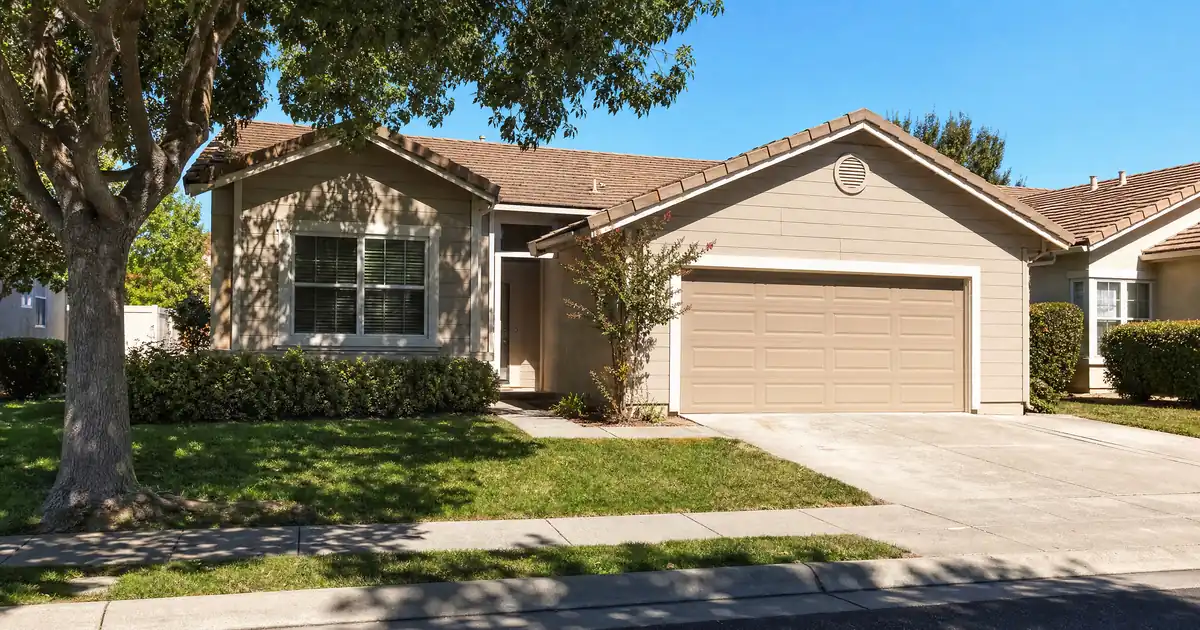
The Quick Read: DSCR moves in exactly two directions — raise the income figure a lender will actually credit, or shrink the PITIA figure it’s measured against. On the income side, that means documented lease rates, the right rent-support form, and knowing how vacancy haircuts apply. On the expense side, it means shopping insurance, checking a tax appeal, and verifying HOA dues before they surprise the file. Neither move changes the property’s actual cash flow overnight — both change what the number looks like on paper, which is what the lender is actually underwriting. (This overview is educational only and is not legal or tax advice — see the note below.)
DSCR Calculator
Run the numbers in your market
Rate source: Freddie Mac 30-yr average via FRED® — Federal Reserve Bank of St. Louis · effective Jul 30, 2026
Prefilled with local estimates — enter your own rent or nightly figures, taxes, insurance, and HOA for a more accurate picture.
Program parameters update from Lendmire’s centralized guideline source. Taxes and insurance are editable estimates.
As of Jul 30, 2026 · General Freddie Mac market benchmark, not a Lendmire loan offer. Rent, nightly rate, occupancy, taxes, and insurance are editable estimates. Short-term rental figures are estimates only and vary significantly by season, property type, management approach, and local short-term-rental rules — confirm local regulations before relying on them. Qualifying income for short-term rentals varies by program — some use appraisal market rent, others use documented STR history or projections — and is confirmed in underwriting. Not a Loan Estimate, approval, or commitment to lend. Program availability and eligibility are subject to lender guidelines, credit approval, property review, and underwriting.
DSCR isn’t a credit score. It’s not something an investor “builds” over months of on-time payments. It’s a ratio calculated at the moment of application from two inputs: monthly rental income and PITIA (principal, interest, taxes, insurance, and association dues). Move either input before the file goes to underwriting, and the ratio moves with it. That’s the entire game — and it’s a game most investors play badly because they don’t understand which levers are documentation levers and which are real economic levers.
What Actually Moves a DSCR Number?
Two things, and only two things: the income the lender is willing to count, and the debt obligation it’s divided against. Everything an investor does before applying — shopping insurance, appealing taxes, getting a lease signed, choosing which appraisal form supports the file — is really just an attempt to influence one of those two numbers before a lender locks them in.
That’s a narrower list than most investors assume. There’s no “DSCR credit repair” the way there’s credit repair for a FICO score. The ratio isn’t a trailing history — it’s a snapshot built from current lease terms, current market rent, and current PITIA. Which means the improvements available to an investor are almost all things that have to happen before the application, not during underwriting.
Lendmire’s DSCR programs run on a floor around 1.00 for most standard files, meaning rent needs to cover the full monthly obligation to clear a conventional non-QM structure. Some select lenders in the network review sub-1.00 scenarios, but usually with tradeoffs — lower leverage, stronger credit, or additional reserves. Understanding what a DSCR loan is and how that ratio gets built is the starting point for knowing what’s actually adjustable.
How Does the Rent Figure Actually Get Calculated?
The rent figure a lender uses is rarely the number on the lease. It’s the number the lender is willing to credit, and that number depends entirely on which document is supporting it — a signed lease, an appraiser’s market-rent estimate, or two years of traditional personal-income documentation.
If there’s rental history, Fannie Mae’s guidance points lenders toward IRS Form 1040 Schedule E or Form 8825 for partnership-held property, per the Fannie Mae Selling Guide. That’s a backward-looking number, built off what was actually collected — and underwriters typically add back non-cash items like depreciation and one-time mortgage interest already reflected in PITIA before recalculating. An investor sitting on two years of Schedule E showing thin net income because of heavy depreciation write-offs may actually be underselling their own rental performance to a lender that hasn’t added those items back yet. Requesting that add-back calculation explicitly, rather than assuming underwriting will catch it, is a real (if underused) lever.
If it’s a new acquisition with no tax-return history, the lender leans on either a signed lease or an appraiser-produced market-rent estimate — Form 1007 for single-family, Form 1025 for two-to-four unit properties. Here’s where the lease-versus-appraisal choice matters more than most investors realize: a signed lease at a rate below the neighborhood’s comparable rents locks in a lower number than what the appraiser might otherwise support. Getting the lease signed at a rate that actually reflects market — rather than a discount to fill a vacancy fast — directly raises the numerator on the DSCR calculation.
And regardless of which document supports the number, lease-sourced rent typically gets discounted before it’s usable. Market tracking published methodology applies a factor of 75% of the gross monthly rent or gross monthly market rent before that figure enters the calculation (a market source Guide). FHA applies the same logic on its self-sufficiency test — reducing effective rental income by 25% per HUD Handbook 4000.1. Non-QM DSCR programs frequently mirror this convention when a lease is the sole support. An investor quoting the full gross lease amount to a broker, without accounting for the haircut, is going to be disappointed when the preliminary DSCR comes back lower than expected.
Can Insurance and Tax Shopping Really Move the Ratio?
Yes — and it’s one of the few levers an investor controls entirely on their own timeline, with no lease renegotiation or appraisal ordering required. PITIA is the denominator of the DSCR calculation, and every dollar shaved off it improves the ratio by the same math that adding a dollar of rent would.
Property taxes and insurance premiums are baked directly into PITIA, alongside principal, interest, and HOA dues where applicable. None of those components can be omitted from the calculation — which is exactly why a jurisdiction’s tax reassessment cycle or a shifting insurance market can move a DSCR number without the investor touching the property or the lease at all. This is a case where shopping around genuinely pays off on paper, not just in cash flow. Getting a second or third insurance quote before submitting a file, or checking whether a jurisdiction allows a tax appeal on a recent reassessment, are two of the most direct — and most overlooked — ways to lower the denominator before underwriting locks it in.
HOA dues deserve their own look, too. Condo and townhome files sometimes carry outdated dues figures pulled from an old HOA statement. Confirming the current dues amount, and confirming whether any special assessment is pending, prevents a mid-file surprise that pushes the ratio the wrong direction after a preliminary approval has already been floated.
None of this changes the property’s actual rent roll or its market value. It changes what the lender sees when dividing rent by PITIA — which, for qualification purposes, is the only thing that matters.
What About Short-Term Rentals?
STR income sits in a gray zone on the agency side, and that gap is exactly why STR investors gravitate toward non-QM DSCR products in the first place. Fannie Mae has publicly acknowledged that its own guide is silent on how to categorize STR income, noting in a 2024 appraiser update that “it may make the most sense to think of an STR as a going concern and the income as business income rather than rental income” — but under current policy, the categorization decision is left to the individual lender (Fannie Mae Appraiser Update).
More practically: Form 1007, the standard comparable-rent appraisal form, was never built for nightly-rate properties. Fannie Mae’s own guidance is explicit that it would be incorrect for an appraiser to take an STR nightly rate and multiply by 30 to manufacture a monthly figure. Market tracking guide draws the same line, confirming that Form 1000 “may not be used to estimate market rent for short term rentals,” and that STR income pulled from Schedule E “must be annualized for qualification purposes” (a market source Guide FAQ).
Non-QM DSCR programs, by contrast, commonly accept STR income directly — platform statements, booking history, or projected nightly averages from a market-data source — rather than forcing it through a form built for long-term leases. For an investor with a strong STR track record on a platform like a booking-management dashboard, pulling twelve months of trailing income data ahead of application is often the single highest-leverage move available: it replaces a conservative long-term-rent estimate with the property’s actual, higher-performing income pattern.
An investor holding a strong STR occupancy history but weak long-term-rent comparables in the same market is a common file shape in this space — the long-term projection alone might land the ratio in the high-0.90s, borderline-to-just-below the standard floor, while the trailing STR income comfortably clears 1.20x or better. Whether a given lender in the network will use the STR figure, the long-term figure, or a blend depends on the specific program and the strength of the documentation — but it’s exactly the kind of file where knowing to bring both numbers to the table, rather than defaulting to the conservative one, changes the outcome.
Do ADUs and Multi-Unit Properties Change the Math?
ADU income helps, but it’s capped — and multi-unit structuring changes which document a lender pulls, not just how much rent counts. Recent Fannie Mae policy limits ADU-derived qualifying income to 30% of a borrower’s total qualifying income, per Selling Guide Announcement SEL-2025-08 (Fannie Mae). That’s an agency-side rule most relevant to conventional DTI qualification, but it signals the general caution lenders apply to secondary-unit income across products — it’s rarely treated as dollar-for-dollar equivalent to the primary unit’s rent.
For two-to-four unit properties financed on a property-only DSCR basis, the appraisal form itself changes: Form 1025 rather than Form 1007. That distinction matters less for the math and more for the documentation trail — a multi-unit file needs every unit’s rent roll supported, not just the largest one, and a vacant unit at application time can pull the blended number down even if the occupied units are strong. Getting units re-leased, or at minimum getting a market-rent estimate on any vacancy, before applying keeps the blended DSCR from being dragged down by a single soft data point.
What Happens With LLC-Held or Recently Converted Properties?
Entity structure and property history both have documented workarounds, but each requires the right paperwork lined up before the file goes to underwriting — not after a preliminary denial. Market tracking guide directly addresses the disregarded-entity scenario: a borrower reporting rental income on Schedule E for a property actually titled to their own single-member LLC has a defined path using market tracking own net-rental-income form (a market source Guide FAQ). Investors who’ve moved a property into an LLC for liability reasons, but still file the income personally, don’t need to unwind that structure — they need the right form pulled, subject to lender program eligibility on the specific DSCR product.
Properties recently pulled out of service — a renovation, an owner-occupancy period, a long vacancy between tenants — get an adjusted-period calculation rather than a full-year average that would otherwise understate performance. Fannie Mae permits using two years of the most recent traditional personal-income documentation to establish that a property was in service for a full prior year, and allows a current signed lease to supplement a return where the property was out of service for part of the prior year, provided Schedule E reflects the reduced days in use and related repair costs. Anyone financing a property with a recent renovation gap should pull that documentation together before applying rather than letting a thin, single-year return understate what the property earns in a normal year.
Where Do “No-Ratio” and Sub-1.00 Programs Fit?
They’re the fallback when the ratio genuinely can’t be improved before applying — not a shortcut, and not free. Because DSCR floors on non-QM loans are lender-set program parameters rather than published regulatory minimums, some select lenders in Lendmire’s network will review a property with a ratio below 1.00 — rent covering roughly 75% to 95% of PITIA — when offset by lower leverage or stronger reserves. “No-ratio” programs go further, skipping the rent-to-payment test entirely and underwriting purely on credit profile, down payment, and reserve strength.
DSCR vs. conventional financing
Two common ways to finance an investment property in this market. They qualify you differently — here’s how investors weigh them.
Why investors choose it
- Qualifies on the property’s rental income — no personal tax returns, W-2s, or pay stubs needed to document income.
- No personal debt-to-income ceiling to clear, so existing mortgages and obligations don’t cap your borrowing the same way.
- Can be closed in an LLC, keeping the property inside a business entity.
- Built for scaling — not held to the limit on number of financed properties that conventional financing applies.
- Underwriting centers on the deal: generally qualifies when the rent covers the payment, a 1.00x coverage ratio being a common baseline (confirmed in underwriting).
- Designed specifically for investment property, including long-term and, where the program allows, short-term rentals.
Where it’s strong
- Often the lowest ongoing financing cost for a buyer who fully qualifies on personal income — a fit for a first property or a cost-first purchase.
Trade-offs for investors
- Requires full personal income documentation and must fit within a debt-to-income limit — salary, existing debts, and other mortgages all count.
- Typically held in your personal name rather than a business entity.
- Caps how many financed properties you can carry, which can become a ceiling as a portfolio grows.
- Evaluates you as a borrower as much as the property, which usually means more paperwork.
How investors usually choose: a first or single property often optimizes for the lowest financing cost; portfolio builders often optimize for leverage, vesting in an LLC, and scaling past conventional caps. The right answer depends on your goals, the property, and current guidelines — both paths run through select lenders in Lendmire’s wholesale network, with eligibility and terms confirmed in underwriting.
That flexibility comes at a cost most investors underestimate going in: reduced leverage compared to a standard purchase LTV that typically runs in the 75% to 80% range on most files (cash-out refinances cap lower, generally at 75% or less), a credit-score floor that skews higher on the credit tiers used across the network — commonly clustered around 620, 660, 680, and 700 — and reserve requirements that run heavier, often around six months of PITIA on standard files and closer to nine months above the $1,500,000 loan-amount range. None of these figures are guaranteed on any individual file; they’re typical ranges from select wholesale-network guidelines, confirmed at the program level and subject to lender approval.
The honest framing here: a sub-1.00 file isn’t a workaround for a weak deal, it’s a different risk profile the lender is pricing and structuring around. An investor whose property genuinely can’t clear 1.00x on any documentable rent figure — after the lease is optimized, the appraisal form is right, and PITIA has been shopped down — has to decide whether a reduced-leverage, higher-reserve structure still meets their return target, or whether the deal itself needs to be revisited. That’s a math problem, not a paperwork problem, and no amount of documentation cleanup solves it. Reviewing DSCR loan requirements for investment properties before applying is the fastest way to see where a specific file might land on leverage and reserves given its actual ratio.
Who Does This Framework Help — and Who Doesn’t It?
This framework helps most: investors with a lease or rent figure that’s genuinely below market, a PITIA that hasn’t been re-shopped in a while, or a documentation gap (missing lease, no market-rent estimate, incomplete Schedule E add-backs) standing between a real cash-flowing property and a ratio that looks weak on paper. In those cases, the fixes above are largely mechanical — get the right document, get the right quote, get the right form — and the improvement shows up in the file without touching the property itself.
It helps less — or not at all — an investor whose property simply doesn’t generate enough rent to cover its actual carrying cost, full stop. No amount of lease renegotiation, insurance shopping, or form selection turns a property that’s genuinely underwater on cash flow into one that clears 1.00x. In that scenario, the honest paths are a sub-1.00 or no-ratio structure with the leverage and reserve tradeoffs described above, a larger down payment to shrink the loan amount and the PITIA tied to it, or reconsidering the property. Lendmire (NMLS# 2371349) arranges DSCR investor financing through select lenders across 41 markets, including Washington, D.C., and can walk through which of those paths, if any, fits a specific file — but no broker can manufacture rent a property doesn’t earn.
This article is general information only and is not legal or tax advice, and it is not financial or investment advice. It describes how DSCR calculations commonly work and is not a substitute for individualized guidance. Rules governing rental income documentation, entity structuring, and tax treatment vary by jurisdiction and by individual circumstance, and investors should consult a qualified attorney or CPA about their own situation before making any financing, tax, or structuring decisions. Nothing here is a commitment to lend; all loan scenarios described are subject to lender approval and to borrower, property, and program guidelines, which can change and which Lendmire does not control.
Frequently Asked Questions
Is there a minimum DSCR required to qualify for a loan?
There’s no federally published minimum DSCR for 1-4 unit non-QM investor loans — that’s a private lender program parameter, not a regulatory floor. Most standard files across Lendmire’s network run around a 1.00x benchmark, with some select lenders reviewing lower ratios given stronger credit, lower leverage, or added reserves. Institutional benchmarks like HUD’s 221(d)(4) multifamily minimums (1.20x for market-rate, 1.15x for affordable, 1.11x for rental-assistance properties) show the general logic of building in a cushion above 1.00x, but those apply to a different, larger loan product entirely. Terms vary by lender guidelines, property type, leverage, credit profile, and full file review.
Does raising the rent on my lease automatically raise my DSCR?
Only the portion of that increase a lender is willing to credit moves the ratio, and lease-sourced rent typically gets discounted before it counts. Market tracking published methodology applies roughly 75% of gross rent when a lease is the support document, and FHA applies a similar 25% haircut. Raising rent to match actual market value still helps, but the number that reaches the DSCR calculation will be lower than the lease’s face amount.
Can I use Airbnb or short-term rental income to qualify?
It depends on the lender and the program, since agency guidance leaves STR categorization up to individual lenders and standard rent-comparison forms weren’t built for nightly-rate properties. Non-QM DSCR programs more commonly accept STR income directly through platform statements or trailing income history, which is part of why STR-focused investors often use this loan category rather than conventional financing.
Will paying off other debt improve my DSCR?
Not directly — DSCR is a property-level calculation of rent against that specific property’s PITIA, not a personal debt-to-income ratio. Paying down unrelated debt can matter for credit profile and overall borrower risk, which may affect pricing tier or program eligibility, but it doesn’t change the rent or PITIA figures that make up the DSCR ratio itself.
What if my property’s DSCR comes in below 1.00 no matter what I do?
A handful of structures exist for that scenario, including sub-1.00 programs reviewed by select lenders and no-ratio options that skip the rent test entirely — both typically require lower leverage, stronger credit, or larger reserves. These are program-specific paths subject to lender approval, not automatic outcomes, and they generally come with tradeoffs on loan amount and pricing tier that should be weighed against the property’s actual return profile.
Program availability, loan terms, and eligibility are subject to lender guidelines, credit approval, property review, and full underwriting. This article is educational, is not legal or tax advice, and is not a loan offer or commitment to lend.
For current guidelines and terms, see Lendmire’s DSCR loan programs page.
About Lendmire
Lendmire is a DSCR-focused mortgage brokerage, NMLS# 2371349, placing investor loans across 41 markets, including Washington, D.C. DSCR eligibility is generally reviewed by the lender around a property’s rental income rather than personal income documentation, which fits LLC-held rentals, self-employed investors, and portfolios scaling past conventional financed-property limits. Scotsman Guide named Lendmire a Top Mortgage Workplace in both 2025 and 2026.
Get Started
Ready to find the right loan for you?
In about 30 seconds you can review financing options available for your home or investment property. No commitment required.
Informational only. Not a Loan Estimate, approval, or commitment to lend. Program availability and eligibility are subject to lender guidelines, credit approval, property review, and underwriting.
References
1. IRS Instructions for Schedule E (Form 1040)
2. Fannie Mae Selling Guide – B3-3.1-08 Rental Income
4. Fannie Mae Appraiser Update, June 2024
5. a market source Single-Family Seller/Servicer Guide FAQ
6. Fannie Mae Selling Guide Announcement SEL-2025-08
This article is part of Lendmire’s DSCR loan program — full qualification details, guidelines, and scenarios live on the program page.
Related reading: How Income Is Calculated For A DSCR Loan? · Does An Existing Lease Set The Rent On A DSCR Loan After A Liquidity Event? · How A DSCR Lender Reads Rent On A Recently Converted Rental Property?
Brandon Miller
Founder & CEO, Mortgage Loan Originator, Lendmire LLC
- Mortgage Loan Originator · NMLS# 1129696 · Verify on NMLS Consumer Access
- North Carolina Real Estate Broker · License# 343312 · Verify on NCREC
- North Carolina Insurance Producer · License# 19053198 · Property, Casualty, Life, Health · Verify on NAIC SBS
- Lendmire LLC · Firm NMLS# 2371349 · Verify firm licensure
Important disclosures. Lendmire (NMLS# 2371349) is a licensed mortgage brokerage. Lendmire is not a direct lender, depository institution, or financial advisor. All loan inquiries are subject to lender underwriting; this article does not constitute a commitment to lend. Rates, terms, and program guidelines are subject to change without notice and vary by borrower profile, property type, and state. Information in this article is general in nature and is not financial, legal, or tax advice. Equal Housing Opportunity. NMLS Consumer Access: nmlsconsumeraccess.org.