
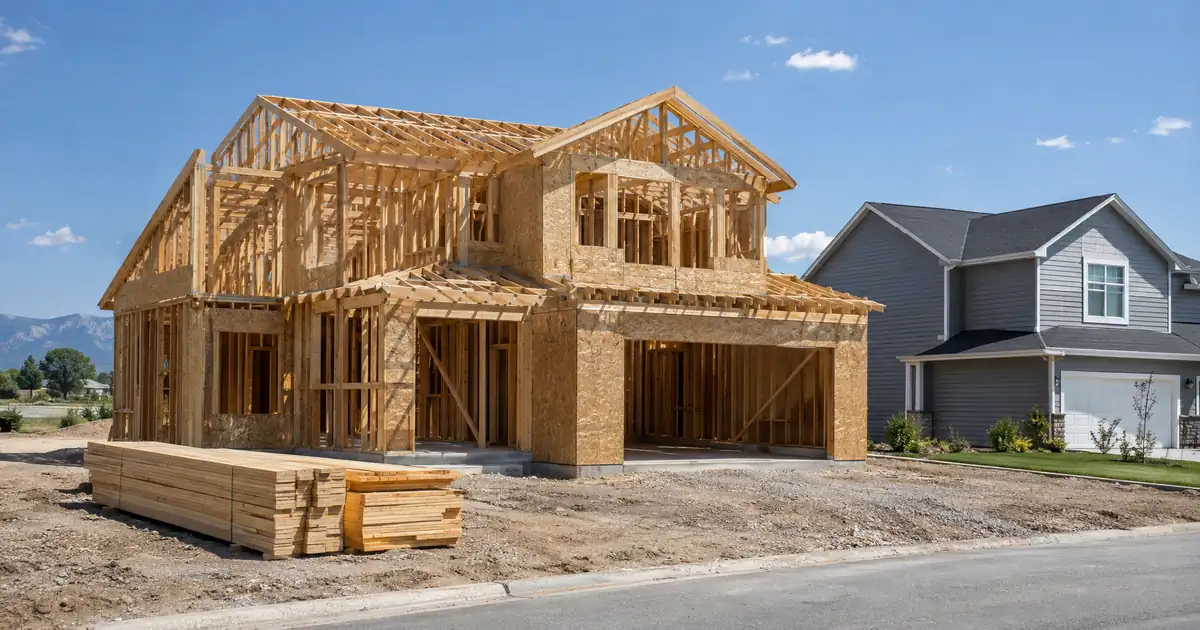
The Quick Read: As of September 28, 2026, buyers have more room to negotiate than they did a year ago. Supply is up, sales are soft, and builders are cutting prices and adding incentives. Mortgage rates have also risen four straight weeks, so waiting has a cost. That makes your agent the most important hire in the deal. Pick the one who negotiates terms, not just price.
Key takeaways
- NAR’s August report, published September 10, showed sales slipping and supply at 4.9 months, up from 4.6 a year earlier.
- Freddie Mac’s survey for the week ending September 24 showed the 30-year fixed up for a fourth straight week.
- Your negotiating room is real but uneven. It shows up mostly in concessions, credits and builder incentives, less in list price.
- Interview at least three agents. Ask about recent closings in your price band and how they negotiate when rates are rising.
- An agent can’t move the market rate. A good one can help you offset some of the higher cost.
What changed this month
Start with the housing data. NAR’s August existing-home sales report, published September 10, showed sales down 2.0% from July to a 3.98 million annual pace. Inventory reached 1.62 million homes, and supply stood at 4.9 months. A year earlier, supply was 4.6 months. The median existing-home price was $429,100, up 1.6% from a year ago. NAR said the ample supply is giving buyers better chances to negotiate.
New construction tells a similar story. A published report put new-home supply at 8.5 months, well above the resale figure. The NAHB’s September builder survey, released September 16, found 66% of builders using incentives. Another 38% cut prices, and the average cut held at 6%. Builder confidence fell three points to 32, a 12-month low.
Then there’s timing. Realtor.com’s “Best Time to Buy” report, released September 10, names September 27 through October 3 as the best week of 2026 to buy. Active listings are up 31.9% from the start of the year, and listing prices sit about 3.5% below their seasonal peak.
Now the other side of the ledger. Freddie Mac’s weekly survey put the 30-year fixed at 7.03% for the week ending September 24, up from 6.95% the week before. That was the fourth straight weekly increase. The survey stood at 6.66% on August 27, so the run adds up to roughly 37 basis points. A year earlier it averaged 6.30%.
The Federal Reserve’s September 16 statement added to the pressure. The FOMC voted 12–0 to raise the fed funds target by a quarter point, to 3¾–4%. Mortgage rates track longer-term yields, not the fed funds rate directly. Still, the direction is clear.
Buyers are responding. A published survey released September 23 showed purchase applications 11% below the same week a year earlier, unadjusted. Refinance applications were 62% below a year ago.
Why does your agent matter more now?
Your agent matters more now because the leverage has moved from speed to terms. In a hot market, a good agent finds the house first and writes the cleanest offer. In this market, a good agent earns the fee at the negotiating table.
Here’s the catch. The buyer’s edge is not uniform. NAR’s median price is still higher than a year ago. Realtor.com says listings remain below pre-pandemic levels. So don’t expect every seller to blink. In my read, the room shows up in concessions, repair credits, closing-cost help and builder incentives. It shows up less in the headline price.
Two clocks are running at once. The inventory clock favors you: more listings, more choice, more patience from the other side. The rate clock works against you: four straight weekly increases, with the Fed now moving up. Spending an extra month on a slow agent search is not free.
Run a plain hypothetical. If a market rate moves from 6.5% to 7.5%, that’s a full point. On a long loan, a full point is a big change in what a house costs you each month. That is why seller concessions and builder buydowns matter so much this fall. They are the one tool a buyer controls.
I’ve spent eighteen years in lending, and I’ve watched buyers fixate on list price while the terms did the real work. The tilt toward buyers this month makes that mistake more expensive.
Seller’s-market agent vs. buyer’s-market agent
Many agents learned their habits when buyers had to bid fast and waive everything. Those habits can cost you now. Here is how the priorities shift.
| Factor | Tight market | Softer market |
|---|---|---|
| Main value | Speed and access | Negotiation and terms |
| Offer style | Clean, quick, few asks | Credits, concessions asked |
| Price strategy | Meet or beat list | Anchor to recent sold comps |
| New builds | Often overlooked | Incentives worth pursuing |
Ask which column your agent works from. Their answer tells you a lot.
What should you look for in a buyer’s agent?
Look for four things: recent local closings in your price band, real negotiating habits, fluency with builder incentives, and a good network. Everything else is packaging. Skip the agent with the best postcard.
Local closings. Ask for the deals they closed in the past year, in your neighborhood and your price band. Career totals mean little. Total volume in another city means less. A buyer’s agent who has closed in your area knows which sellers are sitting on stale listings. That knowledge is the whole game when inventory is rising.
Negotiating habits. Ask for examples where they won something other than price: a repair credit, a closing-cost contribution, a longer decision window. If the agent only talks about “winning on price,” keep looking. Price cuts are possible this month. They are not the only prize.
Builder fluency. If you’re open to new construction, this matters a lot. The NAHB found most builders now use incentives. HousingWire reports they lean on rate buydowns and closing-cost help. Those offers often come with conditions. They might require a particular lender, or apply only to certain homes in the community. An agent who has worked builder deals knows where the soft spots are. An agent who hasn’t may leave value on the table.
Network. A good agent has inspectors, contractors and lenders they trust. That matters most when you are negotiating repairs. You need an inspector whose report holds up, and a contractor who can price a fix before you ask for a credit.
Questions to ask in the interview
Bring a short list. Good agents welcome it. Weak agents get vague.
1. In my price range, where do you see more room right now: price, repairs or incentives? 2. Walk me through your last three closed deals. Where did your buyer win something? 3. How are you advising clients on timing, given that rates have risen four weeks in a row? 4. How do you read a seller’s motivation when listings are piling up? 5. Have you negotiated a builder incentive? What conditions came with it? 6. Do you ever represent both sides of a deal? How do you handle that? 7. How do you prepare a comparative market analysis before an offer? 8. Which lenders and inspectors do your clients use, and why? 9. How quickly will you answer me when an offer is on the table?
Listen to how they answer question three. A strong agent will say they can’t predict rates, then lay out a plan. A weak one will promise to “wait for the bottom.” Nobody knows where the bottom is. Sources even disagree on the Fed’s next move: some see another hike in December, others see odds of one as soon as October.
Question six deserves its own note. Dual agency means one agent works for both sides. Rules differ by state. In a market where your job is to extract concessions, I’d want an agent whose only client in the deal is me.
Red flags this fall
Some agents are still coaching as if it’s 2021. Watch for these signs.
- They tell you to waive the inspection automatically, even when the listing has been sitting and there is no sign of competing offers.
- They have no view on concessions or credits.
- They push every offer at or above list.
- They don’t know the local supply picture and can’t name recent sold comps.
- They can’t explain how an incentive from a builder differs from a price cut.
- They dismiss your questions about rates as “not my department.”
That last one bothers me most. Your agent isn’t your lender. But the best agents understand how financing and negotiating fit together. A concession is only useful if your loan program allows it, and the limits differ by program. A good agent will ask you to talk to a loan professional before the offer, not after.
Where does financing fit into the agent search?
Financing fits in before you pick an offer strategy. Concessions only help if your program allows them, and the rules differ by loan type and are subject to lender guidelines. So talk to a loan professional early, even while you interview agents.
Different borrowers need different structures. Freddie Mac’s survey covers conventional, conforming loans for strong borrowers. It’s not a quote for everyone. Self-employed buyers, investors and anyone using a non-QM product may see different pricing. I explain the options on our loan options page, which carries the current guidelines. As a broker, I compare programs and arrange the loan through the lenders we work with. I don’t approve or fund anything myself.
Investors face the same choice, with a twist. A rental purchase is judged largely on the property’s income, so the agent needs to know rents, not just prices. If you’re buying to rent, our DSCR loans guide explains the basics. Ask any agent about their experience with investor buyers before you sign on.
Here’s another practical point. Rate quotes gathered on different days are not comparable. A quote from Tuesday and one from Friday can differ simply because the market moved. If you compare lenders, compare them the same day. And if you like a rate that fits your budget, lock it. A lock protects you from a further rise. Floating bets on a drop that this month’s data doesn’t promise.
My take
My read: this is a good market to be a patient, prepared buyer, and a bad one to be a passive buyer. The data shows more supply, softer sales and builders working harder for each contract. It also shows rates that keep climbing and purchase applications that are weak. Both are true.
Some buyers will hear “buyer’s market” and decide to wait until spring. That is a bet on rates falling, and this month’s data doesn’t support it. Realtor.com’s economist frames the current window as a chance to offset high rates with price savings and negotiating room. I think that framing is right. I’d add one more point: the offset only happens if somebody asks for it.
Also, don’t confuse a price cut with a rate break. The NAHB’s 6% average cut and a builder’s buydown are different things. A price cut lowers what you borrow. A buydown lowers the rate for a set period, and conditions often apply. Have your agent and your loan professional read the fine print together.
I’m not saying buy now. That depends on your budget, your job and your plans. I’m saying that if you’re already buying, the quality of your representation matters more this fall than it did a year ago.
What I’d do now
Here’s the plan I’d follow if I were buying this week.
1. Get your financing view first. Know what you’re comfortable carrying before you tour. It makes every negotiation cleaner.
2. Interview three agents. Use the list above. Compare answers side by side, not from memory.
3. Ask each agent for sold data. Request the last year of closings in your price band and area. Look at the gap between list and sale price.
4. Decide your trade-offs. Is a repair credit worth more to you than a small price cut? Is a builder buydown worth the strings attached? Write it down before you tour.
5. Time your decision. Don’t rush, but don’t drift. NAR’s September report is due October 13, and Freddie Mac’s survey comes out every week. Neither will make the choice for you.
6. Lock when you’re ready. If the numbers work for your budget, lock. Don’t try to outguess a market that just added 37 basis points in a month.
If you’re weighing a purchase or a refinance this fall, Lendmire can walk you through how the current programs fit your file. You can reach us at 828-256-2183 or request a quote.
Frequently Asked Questions
Is it really a buyer’s market right now?
It’s tilting that way, but not everywhere and not on every house. NAR’s August report showed supply at 4.9 months, up from 4.6 a year earlier, and sales slipping. Prices were still up 1.6% from a year ago. So the room to negotiate is mostly in terms and concessions. Local conditions matter more than the national average.
Can a good agent really offset higher rates?
A good agent can’t change the market rate, but may help you offset some of the cost. That might mean a seller credit toward closing costs, a repair concession, or a builder buydown. None of these is guaranteed, and each has conditions. Loan programs also limit what a seller can contribute, subject to lender guidelines. Talk to your loan professional before you write the offer.
Should I wait for rates to come down?
I can’t tell you where rates go. Freddie Mac’s survey rose four weeks in a row, ending at 7.03% for the week of September 24, and the Fed raised its target on September 16. Sources disagree on whether another hike comes in October or December. Waiting is a bet. If a home fits your budget and you have negotiating room now, that room may not last.
How do I check an agent’s local track record?
Ask for their closed transactions in your area and price band over the past year. Compare list prices and sale prices, and ask what they won beyond price. Total career volume tells you little, and neither do portal star ratings. Local closings are the signal.
Is new construction a better deal right now?
It can be. The NAHB found 66% of builders using incentives in September, and Census data shows new-home supply well above resale supply. But incentives often come with conditions, such as a required lender or limits on which homes qualify. Compare the full package, not just the headline offer, and bring an agent who has handled builder deals.
About Lendmire
As a mortgage broker (NMLS# 2371349), Lendmire arranges DSCR investor loans in 40 states plus Washington, D.C. — 41 markets — and, on its consumer platform, bank statement, home equity and down payment assistance financing in 16 states, through wholesale lenders. Lendmire never underwrites or funds a loan itself. Scotsman Guide named Lendmire a Top Mortgage Workplace in both 2025 and 2026.
Get Started
Ready to find the right loan for you?
In about 30 seconds you can review financing options available for your home or investment property. No commitment required.
Informational only. Not a Loan Estimate, approval, or commitment to lend. Program availability and eligibility are subject to lender guidelines, credit approval, property review, and underwriting.
References
1. NAR August existing-home sales report, September 10, 2026
2. NAHB builder sentiment release, September 16, 2026
3. Freddie Mac Primary Mortgage Market Survey
4. Federal Reserve FOMC statement, September 16, 2026
This article is part of Lendmire’s Mortgage News series — every loan program’s qualification details, guidelines, and scenarios live on the loan options page.
Related reading: Why A Local Real Estate Broker Matters As Buyers Gain Leverage, September 2026? · September 2026: Buyers Need A Real Estate Agent As Supply Grows, Rates Climb · Listing Your Home For Sale This Fall As Inventory Climbs And Rates Rise
Brandon Miller
Founder & CEO, Mortgage Loan Originator, Lendmire LLC
- Mortgage Loan Originator · NMLS# 1129696 · Verify on NMLS Consumer Access
- North Carolina Real Estate Broker · License# 343312 · Verify on NCREC
- North Carolina Insurance Producer · License# 19053198 · Property, Casualty, Life, Health · Verify on NAIC SBS
- Lendmire LLC · Firm NMLS# 2371349 · Verify firm licensure
Disclosure information. Lendmire is a state-licensed mortgage brokerage under NMLS# 2371349. Lendmire is not a depository institution, direct lender, or financial advisor — all loans referenced are placed through wholesale lender partners and are subject to each lender's underwriting standards. This article is provided for general informational purposes and is not a commitment to lend, nor does it constitute financial, legal, or tax advice. Loan programs, terms, rates, and qualification standards change without notice and depend on borrower profile, property type, and the state in which the subject property is located. Equal Housing Opportunity provider. NMLS Consumer Access: nmlsconsumeraccess.org.