
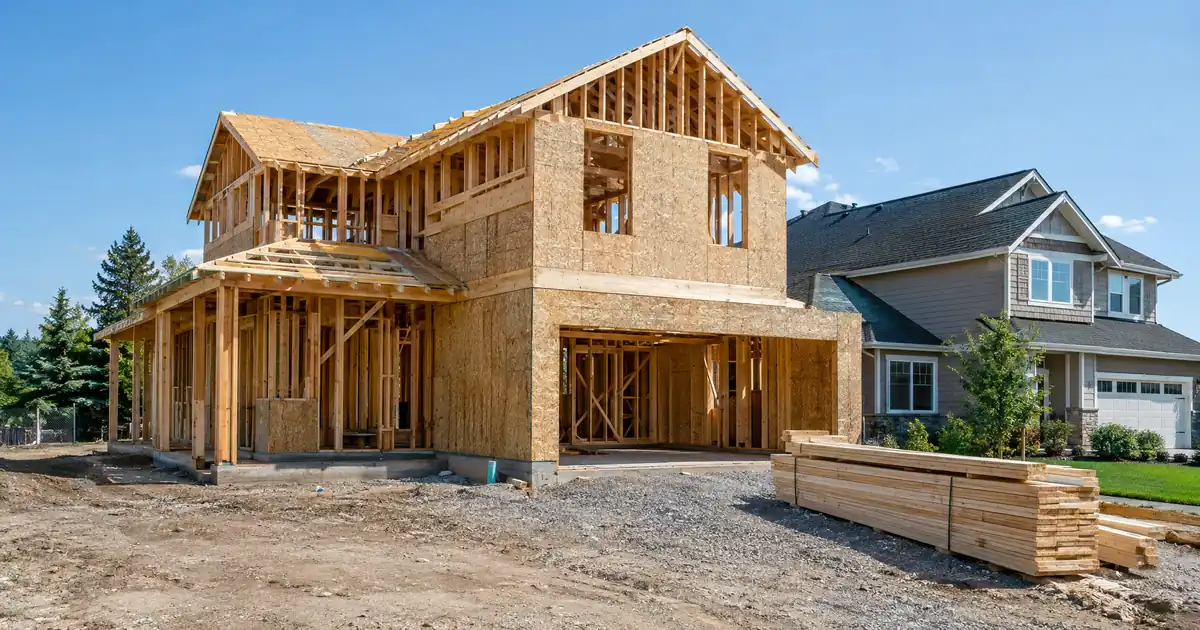
The Quick Read: As of September 28, 2026, the summer rush is over. Freddie Mac’s 30-year average has climbed for at least four straight weeks, and NAR says existing-home sales slipped in August while supply hit a decade high. Builders are cutting prices and dangling incentives. Buyers who stay disciplined have more leverage than they’ve had in years, but the same rate climb squeezes the qualifying math.
Key Takeaways
- Freddie Mac’s survey put the 30-year fixed at 7.03% for the week of September 24, 2026, up from 6.95% the week before.
- NAR’s August report, released September 10, showed existing-home sales down 2.0% from July, with supply at 4.9 months.
- Builders are using price cuts and incentives heavily, per the NAHB survey reported September 25.
- Leverage is real, but it only helps if you know your true monthly budget before you walk into a negotiation.
- Quotes gathered on different days are not comparable. Rates have moved too fast for that.
What Changed This Month
The short answer: rates rose, sales fell, and supply grew. All three moved in the same direction at the same time, and that is why the season feels over.
Start with rates. Freddie Mac’s weekly survey ran 6.71% on September 3, 6.95% on September 17 and 7.03% on September 24. That is 32 basis points in three weeks. A basis point is one-hundredth of a percentage point. A year earlier, the same survey stood at 6.30%. As recently as February 19, it was 6.01%, so the average has climbed roughly a full point since then.
Here is a caveat worth knowing. Freddie Mac’s survey covers conventional, conforming purchase loans for borrowers putting 20% down with excellent credit. It is a benchmark, not a quote for any one borrower. These specifics are subject to lender guidelines and a full review of property, leverage, and credit.
The other gauges run higher. The Mortgage Bankers Association reported its 30-year conforming contract rate at 7.12% for the week ending September 18, up from 6.97%. MBA’s Mike Fratantoni called that the highest since May 2024, per MBA NewsLink. Mortgage News Daily’s index showed its top-tier 30-year fixed at 7.50% on September 28.
Three numbers, three methods, three timing windows. Don’t treat them as one figure.
Why the climb? MBA’s chart of the week, published around September 25, points to energy prices tied to the Iran war, inflation, expectations of tighter policy and federal debt. It puts the 10-year Treasury near 5.2%, versus about 4% in February.
The Fed did more than watch. On September 16, the FOMC voted 12–0 to raise its target range by 25 basis points, to 3.75%–4.00%, and said inflation remains elevated. At the July meeting, the range had been held at 3.50%–3.75%, per the minutes released August 19.
The Fed doesn’t set mortgage rates. Treasury yields, oil and inflation matter at least as much. But a hike in the middle of a rate climb is not a tailwind.
What Did the Sales and Inventory Data Show?
Existing-home sales fell, supply rose, and prices held up. That mix is unusual, and it is why the headlines disagree.
NAR’s existing-home sales data, released September 10, showed August sales at a seasonally adjusted annual pace of 3.98 million. That is down 2.0% from July and 1.2% from a year earlier. HousingWire noted it was the first pace below 4 million since June 2025. July had already fallen 1.7%, per NAR’s August 11 report.
Inventory rose to 1.62 million units, or 4.9 months of supply, the highest in more than ten years. The median existing-home price was $429,100, up 1.6% from a year earlier.
Read that last number twice. Sales are down. Supply is up. The median sold price is still higher than a year ago. Anyone telling you prices are crashing is reading a different chart than I am.
Pending sales offer a small counterpoint. NAR’s September data showed contract signings up 0.3%, though Lawrence Yun said they still run roughly 30% below pre-pandemic years.
Applications tell the same story from the front end. For the week ending September 18, MBA’s seasonally adjusted Purchase Index fell 1%. The unadjusted index was 11% below a year earlier. The Refinance Index fell 3% and sat 62% below a year earlier, the slowest refinance pace since February 2025. The adjustable-rate share of applications hit 9.8%, which tells me some buyers are hunting for any way to make the monthly number work.
Are Builders Doing the Heavy Lifting?
Yes. Builders are the most aggressive sellers in this market. New homes carry far more supply than resale homes, and builders are paying to move them.
The Census Bureau reported August new single-family sales at 684,000 annualized, up 6.4% from July and 2.0% below August 2025. Both changes sit within the margin of error, so I wouldn’t read a rebound into them. The median new-home price was $393,700, down 5.8% from a year earlier, though that decline isn’t statistically significant either. Inventory stood at 483,000 homes, or 8.5 months of supply.
The builder survey is clearer. Per Inman’s report on the NAHB’s September builder survey, 38% of builders cut prices, up from 35% in August. Some 66% used incentives, the highest since December. The average cut was 6%.
HousingWire reported on September 24 that builders have spent much of 2026 adjusting prices and buying down rates, without producing a broader demand recovery. That matches the sales data.
A word on the 8.8% drop in average new-home prices you may have seen. It is an average across a shifting mix of homes. It does not mean every new home got 8.8% cheaper.
What It Means for Home Buyers
You have more leverage, but less purchasing power. Both are true at once, and the second can swallow the first if you aren’t careful.
Realtor.com’s Best Time to Buy report, published September 10, names September 27 through October 3 the best week to buy in 2026. In that week, it says, active listings run up to 31.9% above the start of the year, prices sit about 3.5% below the seasonal peak and competition is about 30.1% below its peak. Listings remain about 11% below pre-pandemic levels. Senior economist Hannah Jones said prepared buyers can offset high rates with price savings and room to negotiate.
That last phrase is the one to hold onto: prepared buyers.
Here is the trade. More listings and softer competition mean you can ask for repairs, credits or a price reduction. Higher rates mean the same price costs more each month than it did in the spring. Leverage helps only if it closes the gap.
If a rate moves from 6.75% to 7.00%, that’s a quarter point. A quarter point doesn’t sound like much. On a large balance held for decades, it is real money. That is a plain hypothetical, not a quote. The point is that price concessions and rate moves should be weighed against each other, in the same units.
Who feels it most? HousingWire says first-time and payment-sensitive buyers carry the heaviest pressure. Builder buydowns are their main relief. Refinancers have mostly left the field; MBA says rates at these levels have removed the benefit of refinancing for many borrowers.
Supply is also uneven. One secondary write-up says the South has more supply while the Northeast stays tighter. I’d treat regional detail as a reason to look at your own market’s data, not the national average.
My Take
This is a real negotiating window, not a buying signal. I’d keep those two ideas separate.
The sources don’t fully reconcile. Realtor.com stresses leverage and more listings. NAR shows sold prices still rising. Listing prices and sold prices tell different stories, and I don’t think anyone can say yet which one wins.
The new-home rebound may be noise. Supply is at a decade high for existing homes, yet still below pre-pandemic levels overall. The market is loosening from a very tight base, which is not the same as being loose.
On rates, I’d be humble. Markets priced another Fed move after September 16. MBA’s own forecast has mortgage rates easing toward 6.8% in coming quarters, which is below today’s levels. Oil, the war and Treasury supply can’t be forecast by anyone. “Wait for rates to fall” is a bet. So is “buy now.” I don’t think either is advice.
The misreadings I’d push back on:
- “Sales fell, so prices are crashing.” NAR’s median rose 1.6%.
- “Builder incentives are free money.” They are trades against price. Compare total cost, not the headline.
- “7% is the rate I’ll get.” The benchmark assumes a large down payment and excellent credit. Your file may price differently, better or worse.
What I’d Do Now
Know your real monthly budget first, then negotiate. That order matters.
Decide what monthly number you can carry at today’s rates, with taxes, insurance and a cushion for repairs. Do it before you tour. Then the discount on a listing is a tool, not a temptation.
Next, compare offers on total cost. A builder who offers a rate buydown and a builder who offers a price cut may land you in different places. Ask for both in writing and run each one.
Then get a written quote for your own file, and get your comparison quotes on the same day. Rates have moved enough this month that two quotes a week apart aren’t comparable. If you like a quote and the deal works, lock it. A rate lock is an agreement that holds a quoted rate for a set period. Floating is the alternative, where you leave the rate open and accept whatever the market does. Floating has been a losing bet for five weeks, though no one can promise the next five.
If a conventional loan doesn’t fit your file, there are other structures worth understanding. Self-employed borrowers and investors often look at non-QM paths, which can qualify a borrower on something other than a standard pay-stub. You can see how those fit in our loan options, which carry the current guidelines; subject to lender guidelines, what works depends on your file.
One honest gap. I could not source current, dated non-QM origination volume for the past 45 days. A June headline put the 2026 forecast for that market in the tens of billions, but I couldn’t verify its body, and it falls outside this column’s window. I won’t lean on it.
For investors weighing a rental purchase, the same rate pressure applies to coverage math. Our complete DSCR loans guide walks through how the rent-versus-payment test works.
If you’re weighing a purchase or a refinance this fall, Lendmire can walk you through how the current programs fit your file.
The window Realtor.com describes narrows as October ends, and the next NAR report lands October 13. That report is the one to watch.
Frequently Asked Questions
Is now a good time to buy a home?
It’s a good time to negotiate, not automatically a good time to buy. Realtor.com’s September 10 report calls September 27 through October 3 the best week of 2026 for leverage. Rates are higher than in any Freddie Mac print I collected this year, so the monthly math is tougher. Buy when the budget works.
Why are mortgage rates rising if home sales are falling?
Mortgage rates follow Treasury yields more than they follow home sales. MBA’s September chart of the week ties the move to energy prices, inflation, expectations of tighter policy and federal debt. Falling sales are a result of higher rates, not a brake on them. NAR’s Lawrence Yun said rates and sales move in opposite directions.
Did the Fed raise mortgage rates on September 16?
No. The Fed raised its target range by 25 basis points to 3.75%–4.00% that day. Mortgage rates are set by the market. The Fed’s move came alongside the rise in rates, not as its only cause.
Are home prices falling?
Not for existing homes. NAR’s median price was $429,100 in August, up 1.6% from a year earlier. New-home prices are softer, with a median of $393,700, though that decline isn’t statistically significant. Listing prices and sold prices are telling different stories right now.
Should I wait for rates to fall?
Waiting is a bet, not a plan. MBA expects rates near 6.8% in coming quarters, but markets also priced another Fed hike after September 16. If the deal works at today’s numbers and you like the home, waiting for a better rate can cost you the leverage you have now.
About Lendmire
As a mortgage broker (NMLS# 2371349), Lendmire arranges DSCR investor loans in 40 states plus Washington, D.C. — 41 markets — and, on its consumer platform, bank statement, home equity and down payment assistance financing in 16 states, through wholesale lenders. Lendmire never underwrites or funds a loan itself. Scotsman Guide named Lendmire a Top Mortgage Workplace in both 2025 and 2026.
Get Started
Ready to find the right loan for you?
In about 30 seconds you can review financing options available for your home or investment property. No commitment required.
Informational only. Not a Loan Estimate, approval, or commitment to lend. Program availability and eligibility are subject to lender guidelines, credit approval, property review, and underwriting.
References
1. Freddie Mac Primary Mortgage Market Survey
2. MBA Weekly Applications Survey, September 23, 2026
3. MBA NewsLink, September 23, 2026
4. Federal Reserve FOMC statement, September 16, 2026
6. Inman, new-home sales, September 25, 2026
This article is part of Lendmire’s Mortgage News series — every loan program’s qualification details, guidelines, and scenarios live on the loan options page.
Related reading: Why A Local Real Estate Broker Matters As Buyers Gain Leverage, September 2026? · September 2026: Buyers Need A Real Estate Agent As Supply Grows, Rates Climb · Listing Your Home For Sale This Fall As Inventory Climbs And Rates Rise
Brandon Miller
Founder & CEO, Mortgage Loan Originator, Lendmire LLC
- Mortgage Loan Originator · NMLS# 1129696 · Verify on NMLS Consumer Access
- North Carolina Real Estate Broker · License# 343312 · Verify on NCREC
- North Carolina Insurance Producer · License# 19053198 · Property, Casualty, Life, Health · Verify on NAIC SBS
- Lendmire LLC · Firm NMLS# 2371349 · Verify firm licensure
Legal disclosures. Lendmire (NMLS# 2371349) is a state-licensed mortgage brokerage that arranges financing through wholesale lender relationships. Lendmire is not a direct lender, depository institution, or registered financial advisor. The discussion above is general informational content about real estate financing — it is not financial, legal, or tax advice, and readers should consult licensed professionals for guidance on their individual circumstances. Loan inquiries are subject to lender underwriting; this article does not represent a commitment to lend. Loan terms, rates, and qualification standards vary by borrower, property, and state, and are subject to change at any time. Equal Housing Opportunity. NMLS Consumer Access: nmlsconsumeraccess.org.