
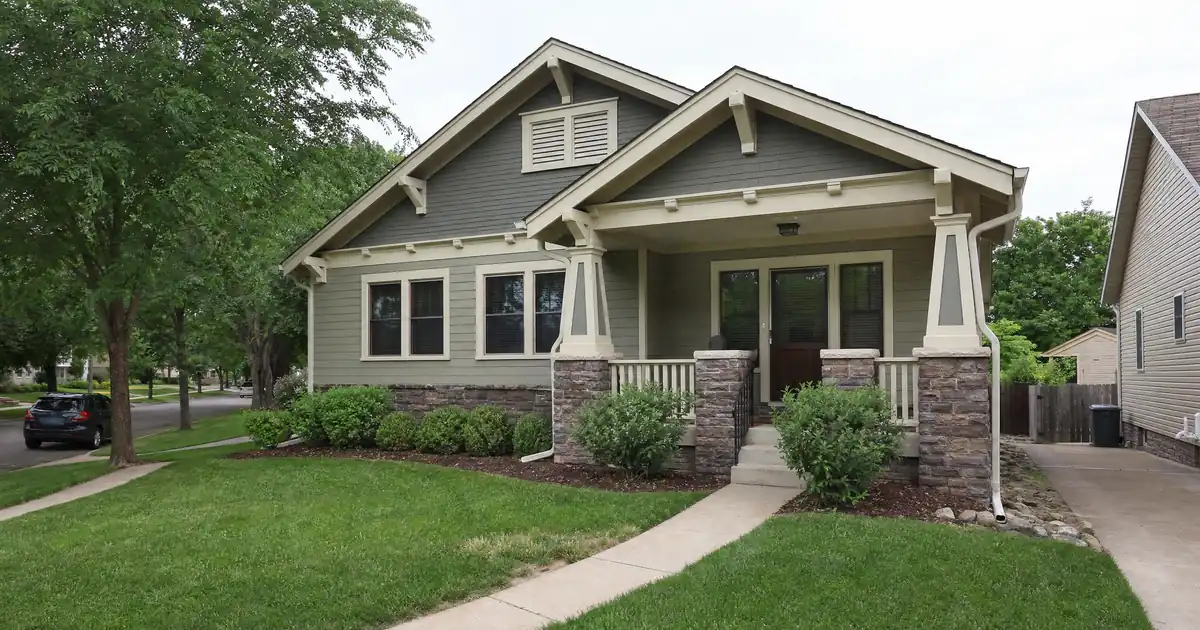
The Quick Read: Underwriting a DSCR loan means comparing a rental property’s income to its full monthly obligation. The lender doesn’t dig through the borrower’s traditional personal-income documentation. Instead, the lender pulls credit, orders an appraisal with a rent schedule, and calculates the ratio. Then the lender checks reserves and leverage and decides how those pieces fit together. A strong ratio in one column can offset a weaker one somewhere else. This is a system, not a single test.
DSCR Calculator
Run the numbers in your market
Rate source: Freddie Mac 30-yr average via FRED® — Federal Reserve Bank of St. Louis · effective Jul 30, 2026
Prefilled with starting assumptions — enter your own rent or nightly figures, taxes, insurance, and HOA for a more accurate picture.
Program parameters update from Lendmire’s centralized guideline source. Taxes and insurance are editable estimates.
As of Jul 30, 2026 · General Freddie Mac market benchmark, not a Lendmire loan offer. Rent, nightly rate, occupancy, taxes, and insurance are editable estimates. Short-term rental figures are estimates only and vary significantly by season, property type, management approach, and local short-term-rental rules — confirm local regulations before relying on them. Qualifying income for short-term rentals varies by program — some use appraisal market rent, others use documented STR history or projections — and is confirmed in underwriting. Not a Loan Estimate, approval, or commitment to lend. Program availability and eligibility are subject to lender guidelines, credit approval, property review, and underwriting.
DSCR loans are built for non-owner-occupied investment properties. They’re business-purpose investor loans, so they get reviewed differently than a standard owner-occupied mortgage. The underwriter grades the deal, not the borrower’s paycheck.
Key Terms Defined
DSCR (debt-service coverage ratio): the property’s monthly rent divided by its full monthly housing payment. This is the core number underwriters use to judge whether the property carries itself.
PITIA: principal, interest, taxes, insurance, and association dues. This is the true full monthly carrying cost of the property, not just the mortgage payment.
Non-QM (non-qualified mortgage): a loan category that sits outside the standard owner-occupied mortgage rulebook. That’s why DSCR programs can qualify a borrower on property income instead of personal income.
Seasoning: the amount of time a borrower must own a property before a lender will let them refinance or pull cash out against it.
Reserves: liquid funds in the bank, measured in months of PITIA. Lenders want this cushion sitting untouched after closing.
Entity vesting: taking title to the property in the name of an LLC or corporation instead of an individual. This is common on DSCR files, subject to lender program eligibility.
The DSCR Formula, and What the Ratio Actually Means
Divide the property’s monthly rent by its full monthly PITIA. The result is the coverage ratio underwriters use to size the loan. A ratio of 1.00 means the rent exactly matches the payment. Nothing left, nothing short. Above 1.00, the rent covers the payment with room to spare. Below 1.00, the rent falls short of the payment on paper.
Picture two versions of the same rental. In the first, the appraiser’s market-rent schedule supports rent that clears the full payment with real room to spare. Call it roughly 1.25x coverage. In the second, the buyer puts less down. The payment rises, and the same lease produces a coverage ratio closer to 1.05x. That’s still above breakeven, but with far less cushion. Same property, same lease, different leverage. The ratio moves along with it. That’s the lever an investor actually controls: a bigger down payment lowers the payment side of the equation and lifts the ratio. But it never overrides a leverage cap, a credit floor, or a reserve requirement on its own. The strongest files clear both the equity test and the coverage test at the same time. Terms vary by lender guidelines, property type, leverage, credit profile, and full file review.
One thing worth saying plainly: clearing 1.00 is not the same as positive cash flow. The ratio only weighs rent against PITIA. Repairs, vacancy, property management, utilities, and capital expenses all sit outside that calculation. A file that clears 1.20x on paper can still run tight once real operating costs hit the ledger. The ratio measures loan coverage, not a full pro forma.
Step by Step: How the File Actually Moves
1. Scenario sizing. Before anything gets submitted, the loan officer sizes the deal against target leverage, credit tier, and rough coverage. This is where an investor learns early whether the deal needs more down payment or a different structure.
2. Credit pull. A tri-merge credit report establishes the tier. Across our wholesale network, a 620 floor exists on parts of the network. Most programs want something closer to 660. A 700+ score is what unlocks the strongest leverage tiers, including the select 85% LTV purchase programs.
3. Appraisal and rent schedule. The lender orders an appraisal alongside a comparable-rent form. For a single-unit property, that’s the industry-standard Single-Family Comparable Rent Schedule. Fannie Mae’s own form documentation describes this as the way an appraiser reports market rent for a conventional investment property. Non-QM lenders borrowed this exact form even though the loan itself never touches an agency investor. Two-to-four unit properties route through the small-income-property version of that same form instead, per Fannie Mae’s Selling Guide.
4. The DSCR calculation. The underwriter takes the lower of two numbers: the existing lease amount or the appraiser’s market rent. Then the underwriter divides that number by PITIA. Scotsman Guide’s coverage of investor-purpose non-QM lending describes this exact “lower of” convention as the standard conservatism check built into virtually every DSCR program.
5. Conditions. Once the ratio clears whatever the program requires, the deal works into conditions. That means reserve verification, entity documents if the property is vesting into an LLC, an insurance binder, and any state-specific overlay checks.
6. Clear to close. The underwriter signs off once every condition clears. From there the deal works to funding through the lender. Lendmire, as the broker on the file, never funds or approves the loan itself. It arranges the match between borrower and lender.
Document Checklist, by Category
A DSCR file asks for a narrower set of documents than a standard owner-occupied mortgage. That’s because personal income isn’t part of the file. What it does ask for tends to fall into five buckets:
| Category | What It Typically Covers |
|---|---|
| Property | Purchase contract or current mortgage statement, lease agreement or rent roll, insurance quote |
| Income | Existing lease, or 12 months of short-term rental host statements if applicable |
| Credit & Borrower | Tri-merge credit pull, government ID, bank statements supporting reserves |
| Entity (if vesting in an LLC) | Operating agreement, EIN letter, certificate of good standing, signer authorization |
| Supporting | Schedule of real estate owned, portfolio summary, letters of explanation for credit items |
Notice what’s missing. The lender reviews rental income instead of personal-income documentation, and there’s no employment verification. That’s the entire point of qualifying on the property’s income rather than the borrower’s.
How Compensating Factors Actually Trade Off
A weak coverage ratio doesn’t automatically sink a file. And a strong ratio doesn’t automatically buy maximum leverage. Reserves, credit tier, and leverage move together. A strength in one column often buys flexibility in another.
| Coverage Ratio | Typical Reserves Needed | Credit Tier Generally Needed | Leverage Ceiling |
|---|---|---|---|
| Below 1.00 | Higher, and only available through select lenders | 700+ typical | Reduced leverage on most files |
| 1.00–1.15 | Around 9 months PITIA on many files | 680–700+ | Often held below 80% |
| 1.15–1.25 | Around 6 months PITIA | 660–680 on most programs | Up to 80% on most files |
| 1.25 and above | 6 months, sometimes waived on modest-leverage rate-term deals | 620–660 possible | Up to 85% on select high-leverage programs |
These are typical ranges pulled from what select lenders in our wholesale network generally look for. They’re not a universal rulebook, and they’re never a guarantee of approval. Every file still runs through its own underwriting review. Reserves scale with loan size too. Files above roughly $1,500,000 commonly step up from 6 to about 9 months of PITIA. Meanwhile, conservative rate-term refinances at modest leverage under that threshold sometimes see reserves waived entirely. For a broader look at how these pieces fit together on a purchase file, Lendmire’s guide to DSCR loan requirements for investment properties breaks down the leverage and credit tiers in more depth.
Working files across a wide range of lender guidelines, rather than just one bank’s rulebook, exposes a pattern worth flagging. The single most common reason a marginal DSCR file gets declined isn’t the ratio itself. It’s reserves. Investors budget carefully for the down payment and forget the cushion behind it. A file with a 1.15x ratio but thin reserves often stalls where a 1.05x file with strong reserves sails through.
DSCR vs. conventional financing
Two common ways to finance an investment property in this market. They qualify you differently — here’s how investors weigh them.
Why investors choose it
- Qualifies on the property’s rental income — no personal tax returns, W-2s, or pay stubs needed to document income.
- No personal debt-to-income ceiling to clear, so existing mortgages and obligations don’t cap your borrowing the same way.
- Can be closed in an LLC, keeping the property inside a business entity.
- Built for scaling — not held to the limit on number of financed properties that conventional financing applies.
- Underwriting centers on the deal: generally qualifies when the rent covers the payment, a 1.00x coverage ratio being a common baseline (confirmed in underwriting).
- Designed specifically for investment property, including long-term and, where the program allows, short-term rentals.
Where it’s strong
- Often the lowest ongoing financing cost for a buyer who fully qualifies on personal income — a fit for a first property or a cost-first purchase.
Trade-offs for investors
- Requires full personal income documentation and must fit within a debt-to-income limit — salary, existing debts, and other mortgages all count.
- Typically held in your personal name rather than a business entity.
- Caps how many financed properties you can carry, which can become a ceiling as a portfolio grows.
- Evaluates you as a borrower as much as the property, which usually means more paperwork.
How investors usually choose: a first or single property often optimizes for the lowest financing cost; portfolio builders often optimize for leverage, vesting in an LLC, and scaling past conventional caps. The right answer depends on your goals, the property, and current guidelines — both paths run through select lenders in Lendmire’s wholesale network, with eligibility and terms confirmed in underwriting.
Where the Appraised Rent Comes From — and Where It Gets Complicated
The appraiser doesn’t set the DSCR. The appraiser only produces the market-rent number that feeds into it. The lender still applies the lower-of-lease-or-market-rent rule on top of whatever the appraiser reports, per Scotsman Guide’s description of the process.
Short-term rentals are where this gets genuinely different. The comparable-rent form used on standard leases wasn’t built for nightly-rate income. Appraisal-industry commentary is blunt about it: using Form 1007 for short-term rental analysis often produces an artificially low DSCR that doesn’t reflect real-world STR performance. Appraisers can’t just take a nightly rate and multiply it by 30. That mechanical shortcut isn’t how the form is designed to work. A compliant STR file instead relies on a narrative income analysis built specifically for nightly-rental properties, not the standard lease-based rent schedule.
Short-Term Rentals, Entity Files, and Cash-Out Refinances
Short-term rentals. Purchase leverage on STR properties in our network typically tops out around 75% LTV. Refinances and cash-out both cap closer to 70%. Programs generally want a 640+ credit score, roughly 12 months of hosting history to document, and a 1.00 coverage floor calculated off trailing income rather than a lease. An investor without that 12-month track record is usually better served waiting to refinance once the history exists. Lendmire’s overview of “What Is a DSCR Loan” covers how STR income gets treated differently from a standard lease from the ground up.
Entity-vested files. Closing in an LLC or corporation is routine on DSCR loans and doesn’t inherently change the ratio math, subject to lender program eligibility. It does add a documentation step: operating agreement, EIN, good-standing certificate. That’s one reason DSCR programs treat entity vesting as a standard option rather than an exception the way a conventional mortgage would.
Cash-out refinances. Cash-out leverage across most of our network tops out around 75% LTV. Roughly six months of seasoning, meaning time owned since purchase, is the common expectation before a lender will consider pulling equity.
Not every property type gets a file at all. Manufactured homes (single- or double-wide), log homes, and barndominiums fall outside our network’s DSCR programs entirely. They aren’t offered, full stop, regardless of how strong the rent or credit profile looks.
Common Reasons Files Stall or Get Declined
Most delays trace back to a small handful of repeat offenders. They show up the same way across file after file:
- Mixed deposits. Rental income deposited into the same account as personal funds makes it hard for an underwriter to verify a clean, consistent rent stream.
- Lease-to-market-rent mismatch. A below-market lease with no path to raising rent to the appraised market figure can pull the ratio down more than an investor expects.
- Thin reserves relative to loan size. As covered above, this is the single most overlooked line item on marginal files.
- Missing entity paperwork. A file vesting in an LLC without the operating agreement or EIN letter ready tends to sit in conditions longer than it needs to.
- STR income without a 12-month track record. Trying to underwrite a short-term rental on a few months of hosting data usually gets pushed back to a lease-based number instead.
- State overlay mismatches. Files in Connecticut, Florida, Illinois, and New Jersey generally cap purchase leverage nearer 75% LTV. Overlay-state deals commonly cap around $2,000,000 in loan amount. Sizing a file against standard-market leverage in one of these states is a common early miss.
- Ineligible property type. Submitting a manufactured home, log home, or barndominium wastes a cycle. These simply aren’t offered.
The Bigger Picture
Roughly 10.6 million Americans draw a meaningful share of their income from rental property, according to Scotsman Guide’s reporting on the non-QM investor segment. That population is exactly who DSCR underwriting was built to serve. Non-QM’s share of total mortgage originations grew from under 3% in 2020 to roughly 5% by the first half of a recent year. Delinquency data on that same vintage shows non-QM performing in line with standard owner-occupied loans, not as some riskier fringe product.
That growth matters for how an investor should think about scaling. Qualification runs on the property, not on a W-2 or a tax return showing depreciation-suppressed income. So an investor buying a fourth or fifth rental doesn’t hit the same wall a conventional-mortgage borrower does chasing a debt-to-income ceiling. The trade-off is real, though. These are business-purpose loans, which means they sit outside the consumer disclosure timelines that apply to an owner-occupied mortgage. There’s no Loan Estimate or three-day rescission period on a DSCR file the way there would be on a home purchase. For a business borrower scaling a portfolio, that’s usually a fair exchange for a program that gets reviewed on rent instead of pay stubs.
Term structure is worth a note too. The spine of the network is the standard 30-year fixed loan. Above roughly $2,500,000 in loan size, structures generally hold to that 30-year fixed format specifically. Below that, extended 40-year terms and interest-only periods are available through select lenders for investors who want to manage the payment side of the coverage ratio differently. Adjustable-rate structures exist in the network as well for those who prefer them. Standard loan sizes generally run up to about $3,000,000, with smaller-balance requests routed through the specific lenders in the network that handle them.
Lendmire (NMLS# 2371349) arranges DSCR investor loans through a wholesale network spanning 40 states plus Washington, D.C. — 41 markets total. Investors weighing a purchase, refinance, or cash-out on a rental can call 828-256-2183 or request a quote to see how a specific property’s rent and leverage line up against current program guidelines. For a fuller walk through how the whole product works end to end, Lendmire’s complete DSCR loans guide is the deeper resource.
Loan approval is never guaranteed, and nothing here is a commitment to lend. Every scenario described here is subject to lender approval and to the specific borrower, property, and program guidelines in place at the time of application. This article is general information only, not financial, legal, or tax advice. Tax treatment depends on how funds are used and how a property is held. Investors should keep clear records and talk to a qualified tax professional before relying on any deduction.
Frequently Asked Questions
Does a DSCR underwriter look at my personal income at all?
No. The file is built around the property’s rent, not traditional personal-income documentation. Credit score and reserves still get reviewed, but personal income documentation isn’t part of a standard DSCR file. That’s exactly why investors with multiple properties or self-employment income tend to gravitate toward this product.
Can I get a DSCR loan if the ratio comes in under 1.00?
Sub-1.00 coverage is available through select lenders in the network, but leverage and terms adjust to compensate. Typically that means lower LTV and stronger reserves or credit. A no-ratio option is available for DSCR below 1.00 with stronger credit or higher down payment; qualification on that path rests on credit and equity rather than a rent-coverage calculation.
Why does the appraiser’s rent number sometimes come in lower than my actual lease?
The appraiser estimates market rent independently of the lease. Then the underwriter uses whichever number is lower, lease or market rent, as a conservatism check. If the appraised figure comes in low, it’s worth reviewing recent comparable rentals with the loan officer before assuming the ratio is fixed.
Do reserve requirements change based on loan size?
Yes. Reserves generally run around 6 months of PITIA on standard files. Loans above roughly $1,500,000 typically step up to around 9 months. Modest-leverage rate-term refinances under that threshold sometimes see reserves waived.
Are short-term rental properties underwritten the same way as long-term leases?
No. STR files typically rely on 12 months of trailing host income rather than a lease-based rent schedule. Leverage also runs slightly lower across purchase, refinance, and cash-out compared with standard long-term rental files.
About Lendmire
Lendmire (NMLS# 2371349) is a DSCR-focused mortgage broker that helps arrange investor financing across 41 markets, including Washington, D.C., through wholesale and investor-lending channels. The lender generally reviews DSCR eligibility around the property’s rental income rather than personal income documentation, subject to lender guidelines. This works for self-employed investors, LLC operators, and portfolios above four financed properties. Scotsman Guide named Lendmire a Top Mortgage Workplace in both 2025 and 2026.
Get Started
Ready to find the right loan for you?
In about 30 seconds you can review financing options available for your investment property. No commitment required.
Informational only. Not a Loan Estimate, approval, or commitment to lend. Program availability and eligibility are subject to lender guidelines, credit approval, property review, and underwriting.
References
1. Fannie Mae – Form 1007 Documentation
2. Scotsman Guide – Invest in Your Future
3. Scotsman Guide – A Decade Later, Non-QM Loans Prove a Stable, Crucial Option
This article is part of Lendmire’s DSCR loan program — full qualification details, guidelines, and scenarios live on the program page.
Related reading: DSCR Portfolio Loan Documentation Checklist For Investors · Getting a DSCR Loan With a Low Credit Score · What Credit Score Do You Need for a DSCR Loan?
Brandon Miller
Founder & CEO, Mortgage Loan Originator, Lendmire LLC
- Mortgage Loan Originator · NMLS# 1129696 · Verify on NMLS Consumer Access
- North Carolina Real Estate Broker · License# 343312 · Verify on NCREC
- North Carolina Insurance Producer · License# 19053198 · Property, Casualty, Life, Health · Verify on NAIC SBS
- Lendmire LLC · Firm NMLS# 2371349 · Verify firm licensure
Important disclosures. Lendmire (NMLS# 2371349) is a licensed mortgage brokerage. Lendmire is not a direct lender, depository institution, or financial advisor. All loan inquiries are subject to lender underwriting; this article does not constitute a commitment to lend. Rates, terms, and program guidelines are subject to change without notice and vary by borrower profile, property type, and state. Information in this article is general in nature and is not financial, legal, or tax advice. Equal Housing Opportunity. NMLS Consumer Access: nmlsconsumeraccess.org.