
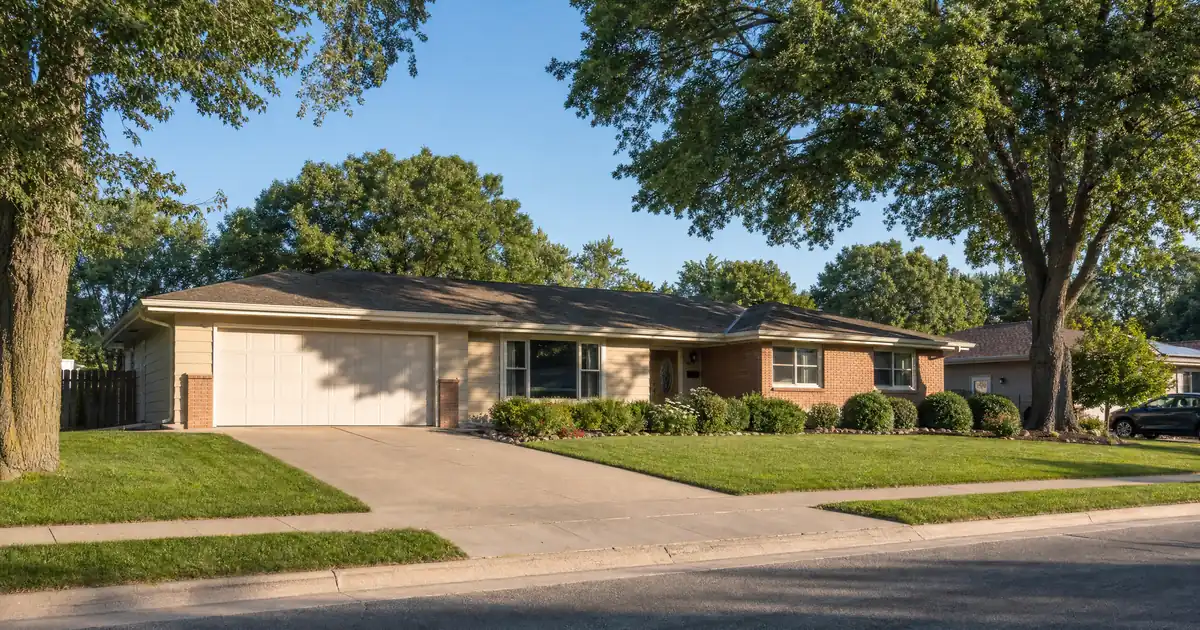
Investment Property HELOC Denied After Appraisal — The Quick Read: A denial tied to the valuation almost always comes down to one number: combined loan-to-value, or CLTV. Most lenders in Lendmire’s wholesale network cap this ratio at 70% on investment property. The appraisal that trips up the file is often an automated valuation model, not a walk-through appraiser. A traditional appraisal usually only shows up once the requested line climbs past $500,000. If the value comes back low, you have options. You can challenge the number with evidence. You can shrink the request. You can pay down the existing lien. Or you can move the deal to a DSCR loan sized around rental income instead of home equity.
Here’s what matters before getting into the mechanics:
How large a line the equity supports in your market.
An equity line is sized by combined loan-to-value, occupancy, and credit — not by rental coverage. Switch the occupancy or the credit band and the ceiling moves with it.
Investment-property lines require a 700 minimum credit score. Second-home tiers reach 640; primary-residence tiers reach 600.
A debt-to-income ratio above 45% requires 680+ credit. Profiles under 640 are limited to single-family homes. At least 75% of the approved line is drawn at closing. Ceilings, floors, and caps update from Lendmire’s centralized guideline source.
Line estimate
Illustrative estimate only — not a quote, Loan Estimate, approval, or commitment to lend. The rate is an editable assumption; equity-line pricing is variable through both the draw and repayment periods and never converts to fixed. Occupancy and credit drive the ceiling together: investment property runs to 70% combined LTV with a 700 credit floor and a $500,000 cap; a second home runs to 70% at a 640 floor with a $500,000 cap; a primary residence reaches up to 80% at a 600 floor, and its $750,000 maximum line applies only at 75% combined LTV or below with 720+ credit and a full appraisal. Lines above $500,000 require a full appraisal. Credit, debt-to-income, property type, and full underwriting review all affect the final line.
- Investment-property lines cap at 70% combined loan-to-value in Lendmire’s network. No credit score reaches higher.
- Most investment lines never see a traditional appraiser. An automated valuation model handles the work up to $500,000 in line size.
- A low value shrinks the gap between what’s owed and what the property is worth. That gap is the whole loan.
- Borrowers can request a full appraisal instead of relying on the automated number. A formal reconsideration process also exists for genuine valuation errors.
- When the equity math won’t clear, a DSCR loan sized to the property’s rent is usually the better alternative.
Why the Appraisal Controls the Decision
The valuation sets the ceiling on everything else in the file. Combined loan-to-value measures the existing mortgage balance plus the new line against the property’s value. On investment property, Lendmire’s network holds that ceiling at 70% no matter the credit score above the 700 minimum. Not even a 780 score buys an extra point of leverage. Same ceiling, every time.
This is tighter than what you’ll find in the broader home-equity market for owner-occupied homes, where combined ratios commonly run closer to 80%, per Bankrate’s reporting on general home-equity underwriting standards, citing non-QM lender commentary on why lenders keep CLTV conservative Bankrate. Investment property carries more risk for a second-lien lender than a primary residence does. A tighter ceiling is just the industry’s standard response to that risk. It’s not something unique to one program.
Key Terms Defined
CLTV (combined loan-to-value): the existing mortgage balance plus the new HELOC line, divided by the property’s value. This is the ratio that actually gets capped, not the HELOC amount by itself.
AVM (automated valuation model): a computer-generated property value built from recent sales and public records. It’s used in place of a walk-through appraisal on most investment lines up to $500,000.
ROV (reconsideration of value): a formal request asking an appraiser or valuation provider to review specific errors. Think wrong comparables, missed square footage, or outdated data. It’s not a general disagreement with the number.
Draw period: the stretch of the HELOC term, typically five years in this structure, when a borrower can pull funds and pay interest-only on what’s drawn.
Repayment period: the amortizing phase that follows the draw period. It runs 25 years in most states and 10 years in Tennessee. During this phase, the balance pays down in full.
Most Investment HELOCs Never See a Traditional Appraiser
Here’s the part almost nobody explains clearly: on an investment property, the value that decides the file is usually not a traditional appraisal at all. Lendmire’s investment-property lines top out at $500,000. A full appraisal only comes into play once a request climbs past that figure. So the vast majority of these files run through an automated valuation model from start to finish.
| Valuation Path | When It Applies | What Changes for the Borrower |
|---|---|---|
| Automated model (AVM) | Line requests up to $500,000 | Standard path; no walk-through appraiser involved |
| Full appraisal | Above $500,000, or borrower-requested | Adds appraiser judgment and formal dispute rights |
That distinction matters because an AVM behaves differently than a human appraiser. Automated models don’t often miss a real condition problem. But they also can’t credit a finished basement or a recent kitchen remodel the way a walk-through can. If you believe the automated number is wrong, the network lets you request a full, traditional appraisal instead. It’s a step worth taking before assuming the deal is dead. If your property has genuinely strong comparable sales, requesting that full appraisal upfront can sometimes be the smarter move. Waiting to see if the automated number comes in short first isn’t always the best plan.
The Math Behind a Denial
Run the numbers on a straightforward case. An investor owns a rental property with an existing mortgage balance and wants to pull a HELOC on top of it. At the network’s 70% CLTV ceiling, the math is simple. Take 70% of the property’s value. Subtract what’s already owed. Whatever’s left is the maximum new line available.
Say a property was expected to value out around $460,000. At 70% CLTV, that supports roughly $322,000 in combined debt against it. Now say the valuation — automated or traditional — comes back at $400,000 instead. Seventy percent of that lower figure supports only about $280,000 in combined debt. A $60,000 gap in value just closed the same gap, dollar for dollar, in what the borrower can actually draw. That’s the entire mechanism behind an appraisal-driven denial. The number moves, and the ceiling moves with it, one to one.
Credit, income, and payment history don’t change any of this. A borrower can clear every other box in the file and still watch the line shrink or disappear, simply because the property’s value came in below what the request assumed.
Can the Value Be Challenged?
Yes — but a challenge needs evidence, not an opinion. It’s not a re-negotiation. The federal government pushed the mortgage industry toward a standardized process after Fannie Mae and Freddie Mac published new Reconsideration of Value policies. The Federal Housing Finance Agency describes this as a formal request asking a valuation provider to re-examine potential appraisal reporting deficiencies or inappropriate selection of comparable properties FHFA. That framework has become the industry’s shared template even outside agency-backed lending. It applies just as well to disputing an AVM output as a traditional appraisal.
A useful ROV points to specific errors: an outdated comparable sale, a wrong property size, or a nearby sale the model or appraiser missed entirely. It does not point to current listing prices or a general sense that the market is heating up. Borrowers also have a right to see the valuation used in a credit decision on dwelling-secured debt under the Consumer Financial Protection Bureau’s disclosure rules in Regulation B CFPB. That said, this automatic-copy trigger is written around first-lien dwelling credit, and most investment HELOCs sit in second position. It’s simplest to just ask the lender directly for the valuation used rather than assume it arrives automatically.
If the number still won’t move, requesting a traditional appraisal in place of the automated model is often the more productive next step than filing a second dispute against the same underlying data.
It’s Rarely Only the Appraisal
A low value is the most common single reason an investment HELOC stalls. But it’s almost never the only issue sitting in the file. Debt-to-income above the network’s ceilings can sink a deal even with a strong value. See why DTI denies investment-property HELOC files for how that math runs separately from CLTV. A property sitting vacant at the time of underwriting raises its own flags, covered in why a vacant property gets an investment HELOC denied. Title matters more than most investors expect going in, too. This program requires the property to be held by an individual borrower or a revocable living trust, not an LLC, corporation, or irrevocable trust. That rule is detailed in why LLC-titled properties get denied for this program. This vesting rule is the sharpest structural difference between this program and a DSCR loan, where LLC titling is routinely accommodated, subject to program eligibility.
Reserve requirements, credit-report age, and tradeline seasoning also factor in. A 600 credit floor exists on the program generally, but investment property sits at a 700 minimum specifically. So marginal-credit files rarely even make it to the valuation stage before something else disqualifies them first.
Where a DSCR Loan Fits When the HELOC Doesn’t
When the equity math won’t clear — or the property is titled to an LLC, or the borrower needs more than the $500,000 ceiling this program allows — a DSCR loan built around the property’s rent is usually the more workable path. DSCR stands for debt-service coverage ratio. It compares the property’s monthly rent to its full mortgage payment. It qualifies primarily on that property-level rental income covering the payment, subject to lender guidelines, rather than a home-equity line layered onto an existing mortgage. Lendmire’s complete DSCR loans guide walks through how that qualification runs from start to finish.
DSCR loans are business-purpose investor loans, reviewed differently from an owner-occupied mortgage since they’re built for non-owner-occupied property from the ground up. Purchase leverage on most files in Lendmire’s network runs 75% to 80% loan-to-value, with select high-leverage programs reaching 85% for borrowers around a 700+ credit profile. Cash-out refinances top out closer to 75% loan-to-value, with roughly six months of seasoning expected on most files. That timeline is worth reviewing alongside how soon an investment property can be refinanced after purchase. A 1.00 coverage ratio is where select programs set their floor, not a universal minimum. Coverage below that is available through select lenders in the network, with leverage and terms adjusted accordingly. Loan sizes across the network generally run up to around $3,000,000 on standard programs, with smaller balances available through select lenders. LLC titling is routinely accepted on these files, subject to program eligibility. That’s a real advantage for investors who hold property in an entity for liability reasons.
DSCR loans are also business-purpose loans. They fall outside the standard consumer disclosure timing rules built for owner-occupied lending, since they’re underwritten as investment transactions rather than personal-use credit.
Tax treatment can depend on how the funds are used and how the property is held. Investors should keep clear records and speak with a qualified tax professional before relying on any deduction.
Lendmire arranges these investment-property HELOC lines through select wholesale partners across 16 full-service states. That’s a narrower footprint than its 40-market DSCR reach spanning 39 states plus the District of Columbia. Every figure above is subject to lender guidelines and full underwriting review. None of it is a guarantee of approval.
Frequently Asked Questions
What credit score do I need for an investment property HELOC?
Most files in Lendmire’s network want a 700 minimum for investment property specifically, even though the program’s general floor runs lower for other occupancy types. Above 700, extra credit strength buys little additional leverage on investment property, since both the 700 and 720 tiers land at the same 70% CLTV ceiling.
Why would my file get denied if my credit and income both looked fine?
The valuation controls the ceiling on its own, separate from credit and debt-to-income. If the automated value or a traditional appraisal comes back lower than expected, the combined loan-to-value math can push past the network’s cap even when every other qualification box is checked.
Can I request a full appraisal instead of the automated valuation?
Yes. Investment lines up to $500,000 are ordinarily valued using an automated model. But a borrower can request a traditional appraisal at any point in the process, and it may produce a different value than the model did.
Does the property need to be titled in my personal name?
For this program, yes. Fee simple or leasehold title must sit with an individual borrower or a revocable living trust. LLCs, corporations, partnerships, and irrevocable trusts don’t qualify for this specific structure. That’s one reason investors holding property in an entity often move to a DSCR loan instead.
What if the reconsideration of value doesn’t change the number?
At that point, you have a few practical options: shrink the requested line, pay down the existing mortgage balance to improve the ratio, or shift the transaction to a DSCR loan sized around the property’s rental income rather than its equity position.
About Lendmire
Lendmire is a non-QM DSCR mortgage broker, NMLS# 2371349, arranging loans through wholesale lending partners across 40 markets rather than funding loans directly. On investment-property HELOC files, Lendmire works within each partner lender’s own valuation, CLTV, and title requirements. On DSCR loans, that same broker relationship gives investors access to rental-income-based qualification and, where eligible, LLC titling. All program parameters — leverage, coverage ratios, loan sizes, and state availability — are set by the underlying wholesale lenders, are subject to change, and are never a guarantee of approval. Scotsman Guide named Lendmire a Top Mortgage Workplace in both 2025 and 2026.
Get Started
Ready to find the right loan for you?
In about 30 seconds you can review financing options available for your home or investment property. No commitment required.
Informational only. Not a Loan Estimate, approval, or commitment to lend. Program availability and eligibility are subject to lender guidelines, credit approval, property review, and underwriting.
References
1. Bankrate — What to Do If You’re Denied a HELOC
2. Federal Housing Finance Agency — FHFA Announces Enterprise Reconsideration of Value Policies
3. Consumer Financial Protection Bureau — Disclosure and Delivery Requirements for Copies of Appraisals
Brandon Miller
Founder & CEO, Mortgage Loan Originator, Lendmire LLC
- Mortgage Loan Originator · NMLS# 1129696 · Verify on NMLS Consumer Access
- North Carolina Real Estate Broker · License# 343312 · Verify on NCREC
- North Carolina Insurance Producer · License# 19053198 · Property, Casualty, Life, Health · Verify on NAIC SBS
- Lendmire LLC · Firm NMLS# 2371349 · Verify firm licensure
Legal disclosures. Lendmire (NMLS# 2371349) is a state-licensed mortgage brokerage that arranges financing through wholesale lender relationships. Lendmire is not a direct lender, depository institution, or registered financial advisor. The discussion above is general informational content about real estate financing — it is not financial, legal, or tax advice, and readers should consult licensed professionals for guidance on their individual circumstances. Loan inquiries are subject to lender underwriting; this article does not represent a commitment to lend. Loan terms, rates, and qualification standards vary by borrower, property, and state, and are subject to change at any time. Equal Housing Opportunity. NMLS Consumer Access: nmlsconsumeraccess.org.


