
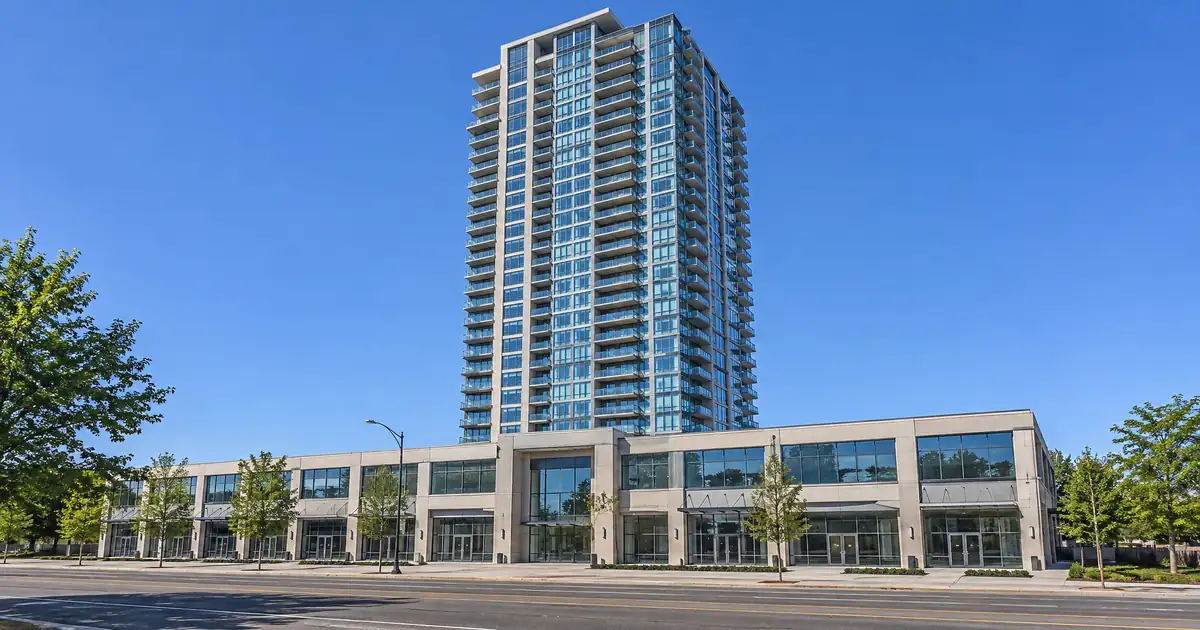
The Quick Read: A residential condo unit in a tower with a commercial floor can qualify for an investment-property HELOC, but it has to pass two screens: a borrower screen and a building screen. The commercial floor changes the building review, not the unit’s property type. Lenders set their own project standards, so no single commercial-space cap applies across the board.
- On an investment property, the network ceiling is 70% CLTV, with a 700 minimum credit score and a $500,000 maximum line.
- Title must sit with the individual borrower or a revocable living trust. An LLC cannot hold title on this product.
- Non-warrantable condos are eligible. Condotels, co-ops, commercial and mixed-use property types are not.
- The line is underwritten on credit, DTI and equity, not on rent.
- The line is available only in Lendmire’s 16 full-service states, subject to lender guidelines and full file review.
How Does Underwriting Treat a Tower With a Commercial Floor?
A HELOC is underwritten on the borrower. The unit secures the line, but the file clears on credit, debt-to-income, equity and the building’s eligibility. Rent is not the test. That is the sharpest contrast with a DSCR loan, which qualifies primarily on property-level rental income covering the payment, subject to lender guidelines.
How large a line the equity supports.
An equity line is sized by combined loan-to-value, occupancy, and credit — not by rental coverage. Switch the occupancy or the credit band and the ceiling moves with it.
Investment-property lines require a 700 minimum credit score; second-home lines start at a 640 minimum and primary-residence lines at 600, and the combined-LTV ceiling steps down as the credit band drops on primary-residence and second-home lines and holds on investment-property lines; the line cap steps down on primary-residence lines and holds at every tier on investment-property and second-home lines.
A debt-to-income ratio above 45% requires 680+ credit. Profiles under 640 are limited to single-family homes. At least 75% of the approved line is drawn at closing. Ceilings, floors, and caps update from Lendmire’s centralized guideline source.
Line estimate
Illustrative estimate only — not a quote, Loan Estimate, approval, or commitment to lend. The rate is an editable assumption; equity-line pricing is variable through both the draw and repayment periods and never converts to fixed. Occupancy and credit drive the ceiling together: an investment property tops out at 70% combined LTV (minimum credit 700, line cap $500,000); a second home tops out at 90% combined LTV (minimum credit 640, line cap $500,000), with the ceiling stepping down as the credit band drops (the cap holds at every tier); a primary residence tops out at 90% combined LTV (minimum credit 600), and its $750,000 maximum line is available only at 75% combined LTV or below with a 700-or-better credit profile (720 on the longer-runway program) and a full appraisal. Lines above $500,000 require a full appraisal. Credit, debt-to-income, property type, and full underwriting review all affect the final line.
Here is how the review runs, step by step.
1. Borrower and title gate. Credit, DTI and vesting are checked first. A property already deeded to an LLC needs a vesting change, or a different product.
2. Property-type gate. The collateral must be a residential condo unit. A storefront unit, a condotel unit or a live-work unit is a different property type.
3. Project review. The lender looks at the building: how much of it is commercial, who owns the commercial space, investor concentration, litigation, reserves, delinquent dues and insurance.
4. Valuation. Investment lines cap at $500,000, so valuation ordinarily runs on an automated model with no traditional appraisal. A borrower can still request a full appraisal. NerdWallet notes that investment-property lenders may require multiple appraisals to confirm value, which is one reason this product is harder to get than a primary-home line.
5. Line sizing and DTI. The file is qualified on the interest-only payment calculated on the maximum draw. Maximum DTI is 50%, and a ratio above 45% requires a 680 minimum score. Investment files already floor at 700, so that step rarely binds.
6. Combined leverage test. The first lien plus the new line must fit under 70% CLTV on an investment property.
Why Does “Mixed-Use: Not Offered” Not Rule Out the Unit?
Mixed-use is a property classification. A residential condo unit inside a high-rise tower that happens to have a commercial floor is reviewed as a condo. The unit is the collateral. The project review looks at the building around it.
That distinction matters. Owning the retail space itself is a commercial property and falls outside this product. Owning a 2-4 unit building with a shop on the ground floor is also a mixed-use property type, which is a separate category. Owning unit 2204 in a 40-story residential tower with retail on floors one and two is a condo file.
Does the building still have to be reviewed? Yes. The commercial share is a project characteristic, and it is one of several the lender weighs.
What Counts as Commercial Space, and What Is the Limit?
No published rule sets one commercial-space cap for investment-property HELOCs. Each lender or program sets its own project standards, and the brokerage will not state a percentage as if it were universal.
The only widely cited benchmark is the 35% test used in agency lending, where excessive commercial space is one trigger for non-warrantable status. That is an agency reference point and not a rule for this product. It is useful for one reason: it shows how the share is measured. Commercial floor area is divided by total project floor area. In most mixed-use residential buildings, a condo-inspection resource says the commercial share sits in the single digits or low teens.
| Space type | Typical treatment in review |
|---|---|
| Retail podium | Counts toward commercial share |
| Lobby retail or cafe | Counts toward commercial share |
| Office floors | Counts toward commercial share |
| Commercial parking | Some calculations exclude it |
| Association-owned amenities | Usually reviewed as common elements |
Treatment of garages and amenities varies by lender, so ask early. A large commercial share can also raise insurance questions on the master policy.
Warrantable vs. Non-Warrantable: What It Means Here
Non-warrantable is a financing category. It does not say anything about the quality of the building. The term comes from agency selling rules, and a building can miss those rules for several reasons: heavy commercial space, high investor or single-entity ownership, pending litigation, thin reserves, delinquent dues, or hotel-style operation.
On this product, non-warrantable condos are eligible. That is the key point for a tower with a commercial floor. The lender still reviews the project, but a miss on agency rules is not an automatic decline.
Two cautions. First, stacking matters. A commercial floor combined with heavy investor concentration or litigation compounds the review, even if each item alone is tolerable. Second, status can change. A project that was financeable can become non-warrantable as litigation or ownership concentration shifts, and old rules of thumb go stale. Agency investor-concentration limits have been revised, so any article quoting a fixed 50% rule is worth treating with suspicion.
The hard stops are different. A tower that operates like a hotel, with a rental pool or front-desk-run short stays, is a condotel. Condotels are not offered, regardless of commercial percentage.
What Does the Lender Ask the Association For?
Expect a condo questionnaire and supporting documents. The common snags are predictable.
| Item requested | Common snag |
|---|---|
| Completed condo questionnaire | Management is slow to return it |
| Annual budget | Reserve funding looks thin |
| Master insurance certificate | Coverage gaps on commercial areas |
| Litigation disclosure | Open suits against the developer or board |
| Investor and owner-concentration data | One entity holds many units |
| Commercial space ownership and use | Unclear who owns the retail floors |
Order the questionnaire before anything else. Management companies in large towers can be slow, and the file stalls without it.
How Big a Line Can You Get?
Sizing works as a simple formula. Take the unit’s value, multiply by the 70% investment-property CLTV ceiling, then subtract the existing first lien. The result is the most the combined leverage test allows. The line then cannot exceed the $500,000 investment-line maximum, and the minimum line is $25,000 (Michigan’s floor is $10,000).
Run the numbers this way, using modeled assumptions. Say a unit values at $600,000 and carries a first lien equal to 40% of value. The 70% ceiling leaves room for a line equal to 30% of value. That is a leverage answer. The calculator on this page can convert it to dollars as an illustrative estimate, and lenders confirm the final figure.
Structure on an investment line is one setup: a 5-year interest-only draw followed by a 25-year fully amortizing repayment. At least 75% of the line is drawn at closing. Pricing floats and does not convert to fixed. The minimum subsequent draw after closing is $1,000, except in Texas, where it is $4,000.
Credit above 700 does not buy more leverage here. Both the 720 and 700 tiers reach 70% CLTV on an investment property, so a higher score adds eligibility cushion, not a higher ceiling. Credit-profile history also counts: housing history is reviewed across all financed properties, and a bankruptcy needs 4 years of seasoning. Foreclosure history follows a 7-year path, and deed-in-lieu, pre-foreclosure or short-sale history follows a 4-year path.
Exposure caps apply too. A borrower is limited to three lines, and an investor owning more than 15 financed properties is not eligible.
Where Files Get Declined (and the Fix)
- LLC title. The fix is a vesting change into the individual or a revocable trust, or a different product. A DSCR cash-out refinance can close in an entity, subject to program eligibility.
- Credit below 700. Investment lines have no tier beneath 700. A 640 or 680 score may work on a primary residence but not here.
- Unit under renovation. Automated valuation will not capture a recent rehab, and a rental mid-rehab is usually a poor fit for the line.
- Building stacking. Commercial space plus heavy litigation or investor concentration. Ask the association for current figures before applying.
- Listed property. In NC, PA, TN, TX and WA, a property listed for sale, or listed within the past 60 days, is ineligible.
- Too much combined leverage. The first lien plus the line exceeds 70% CLTV. Lower the line request.
Fewer lenders write non-owner HELOCs at all. A BiggerPockets thread discusses big banks declining them. A condo in a commercial-floor tower narrows the field further, which is why a broker comparing wholesale options helps.
HELOC, DSCR Cash-Out, or Commercial Financing?
The right product depends on who owns what in the building.
| Situation | Likely fit |
|---|---|
| Unit in individual or trust name, credit 700+ | HELOC |
| Unit in an LLC | DSCR cash-out refinance |
| Credit under 700 | DSCR cash-out refinance |
| Owner of the commercial space itself | Commercial financing |
| Revolving access preferred | HELOC |
A DSCR file qualifies primarily on rental income covering the payment, subject to lender guidelines. Select programs start at 1.00 coverage. A separate select-lender path takes coverage below 1.00, with leverage and terms adjusted. Cash-out leverage and seasoning requirements differ by lender, so confirm them before choosing that route. The complete DSCR loans guide covers the full structure. For the head-to-head comparison, see Lendmire’s piece on HELOC versus cash-out refinance in a high-rise with a commercial floor.
Clearing 1.00 is not positive cash flow. Repairs, vacancy and management sit outside the calculation.
Pre-Application Checklist
- Title is in your name or a revocable living trust.
- Credit profile is 700 or better.
- The unit is a residential condo, not a commercial or live-work unit.
- The building is not a condotel or co-op.
- Combined first lien and new line fit under 70% CLTV.
- DTI is at or under 50%, qualified on the interest-only payment at max draw.
- The condo questionnaire and master insurance certificate are requested.
- Your state is one of the 16 full-service states.
Tax treatment follows how the funds are used. Per IRS Publication 936, home-equity interest is deductible only when the funds buy, build or substantially improve the home securing the loan, and Intuit’s TurboTax FAQ says the same. Tax treatment varies; consult a qualified professional.
Key Terms Defined
CLTV: Combined loan-to-value, the first lien plus the new line, divided by the property’s value.
Non-warrantable: A condo project that misses agency financing rules, which is a financing category and not a verdict on the building.
Mixed-use: A property type that combines residential and commercial use in one property, not the same as a residential unit in a tower with retail below.
Commercial floor: Retail or office space within a residential tower, measured as a share of total building area.
Project review: The lender’s check of the building itself, separate from the borrower’s credit and equity.
Frequently Asked Questions
Can I get a HELOC on a rental condo in a high-rise with retail on the lower floors?
Often yes, if the unit is a residential condo, title is in your name or a revocable trust, and the building passes project review. The commercial floor triggers a building review, not an automatic decline. Eligibility depends on lender guidelines and a full file review.
Does a commercial floor make the building non-warrantable?
It can, especially when commercial space is large, but non-warrantable condos are eligible on this product. The agency 35% benchmark is a reference point, not a cap for this line. Stacked issues like litigation or heavy investor ownership matter more than any one item.
Can my LLC hold title and still get the line?
No. LLCs, corporations, partnerships and irrevocable, blind or land trusts cannot hold title on this product. A vesting change into your name or a revocable living trust is the fix, or a DSCR cash-out refinance can work in an entity, subject to program terms.
How much can I borrow against an investment condo?
The ceiling is 70% CLTV with a $500,000 maximum line on an investment property, and minimum credit is 700. The first lien counts toward the 70%. A line above $500,000 is for primary residences only.
Is the interest tax-deductible on a rental unit?
It depends on how the funds are used and how the property is held. Rental interest is generally treated differently from home mortgage interest, so confirm with a CPA before relying on any deduction.
If you are considering a home equity line and want to see how the numbers work, Lendmire can help you compare HELOC options based on the property, the equity available, credit profile, combined leverage, and your goals. Call 828-256-2183 or request a quote.
About Lendmire
Lendmire is a mortgage brokerage (NMLS# 2371349) arranging home equity lines of credit — primary-residence, second-home and investment-property lines — through a wholesale lending network in its 16 full-service states. Eligibility is determined by the lender on each file. Scotsman Guide named Lendmire a Top Mortgage Workplace in both 2025 and 2026.
Get Started
Ready to find the right loan for you?
See your offer in seconds. No credit pull, no obligation.
Informational only. Not a Loan Estimate, approval, or commitment to lend. Program availability and eligibility are subject to lender guidelines, credit approval, property review, and underwriting.
References
1. NerdWallet — Can You Get a HELOC on an Investment Property
2. National Condo Inspections — Commercial Space Ratio
3. BiggerPockets — HELOC on Rental Properties
5. Intuit TurboTax FAQ — Deducting Mortgage Interest
This article is part of Lendmire’s investment property HELOC program — full qualification details, guidelines, and scenarios live on the program page.
Related reading: Is an Investment Property HELOC Possible If You Stay There Part of the Year? · Can You Get an Investment Property HELOC on a Parent’s Duplex in Probate? · Will an Unsourced Cash Deposit Stall Your Investment Property HELOC?
Brandon Miller
Founder & CEO, Mortgage Loan Originator, Lendmire LLC
- Mortgage Loan Originator · NMLS# 1129696 · Verify on NMLS Consumer Access
- North Carolina Real Estate Broker · License# 343312 · Verify on NCREC
- North Carolina Insurance Producer · License# 19053198 · Property, Casualty, Life, Health · Verify on NAIC SBS
- Lendmire LLC · Firm NMLS# 2371349 · Verify firm licensure
Compliance and disclosures. Lendmire (NMLS# 2371349) is a licensed mortgage broker and is not a direct lender, depository institution, financial advisor, or tax professional. Content in this article is general market analysis and educational information — not financial, legal, or tax advice for any specific situation. Lendmire does not guarantee loan approval; every transaction is subject to underwriting by the funding lender. Mortgage pricing and loan program guidelines are subject to change at any time without notice and vary by borrower characteristics, property type, and state regulations. Lendmire complies with Equal Housing Opportunity. Licensure verification: NMLS Consumer Access.