
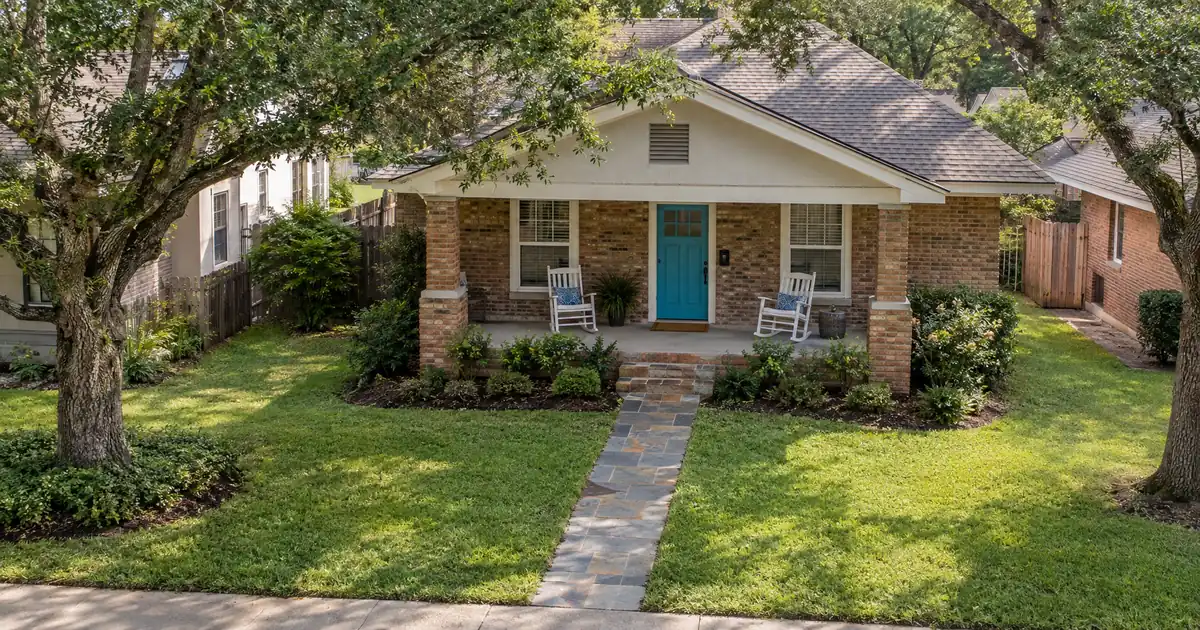
The Quick Read: A Texas Airbnb that is not your homestead sits outside the state’s strict home-equity rules, so a line of credit on it follows a lender’s investment-property program instead, and across Lendmire’s wholesale network that means up to 70% combined loan-to-value, a 700 credit minimum, and a $500,000 line cap. Every figure is subject to lender guidelines and full file review. This is not a commitment to lend.
- Texas’s 80% cap, 12-day wait, and one-loan-at-a-time rule bind your primary residence, not a rental.
- On an investment property, the network ceiling is 70% combined loan-to-value (CLTV), and the line tops out at $500,000.
- A home equity line judges you, not the bookings. Your credit, debt load, and equity decide the file.
- An LLC cannot hold title on an equity line. A property deeded to an LLC usually needs a DSCR cash-out refinance instead.
- Airbnb income helps the file, but the line’s size is driven by leverage and credit, not by how busy the listing is.
Do Texas Homestead Rules Apply to a Rental Airbnb?
No. Texas’ well-known home-equity rules protect the home you live in. An Airbnb you do not occupy is non-homestead property, so the lender’s own investment-property program sets the terms. That is why you can read one page saying Texas bans home-equity loans on rentals and another saying you can get one. Both are describing different things.
How large a line the equity supports in Texas.
An equity line is sized by combined loan-to-value, occupancy, and credit — not by rental coverage. Switch the occupancy or the credit band and the ceiling moves with it.
Investment-property lines require a 700 minimum credit score; second-home lines start at a 640 minimum and primary-residence lines at 600, and the combined-LTV ceiling steps down as the credit band drops on primary-residence and second-home lines and holds on investment-property lines; the line cap steps down on primary-residence lines and holds at every tier on investment-property and second-home lines.
A debt-to-income ratio above 45% requires 680+ credit. Profiles under 640 are limited to single-family homes. At least 75% of the approved line is drawn at closing. Ceilings, floors, and caps update from Lendmire’s centralized guideline source.
Line estimate
Illustrative estimate only — not a quote, Loan Estimate, approval, or commitment to lend. The rate is an editable assumption; equity-line pricing is variable through both the draw and repayment periods and never converts to fixed. Occupancy and credit drive the ceiling together: an investment property tops out at 70% combined LTV (minimum credit 700, line cap $500,000); a second home tops out at 90% combined LTV (minimum credit 640, line cap $500,000), with the ceiling stepping down as the credit band drops (the cap holds at every tier); a primary residence tops out at 80% combined LTV (minimum credit 600), and its $750,000 maximum line is available only at 75% combined LTV or below with a 700-or-better credit profile (720 on the longer-runway program) and a full appraisal. Lines above $500,000 require a full appraisal. Credit, debt-to-income, property type, and full underwriting review all affect the final line.
The Texas home-equity framework sorts its covered loans into three types: a cash-out refinance, a home equity loan, and a home equity line of credit, according to the Texas A&M Real Estate Research Center. The same source notes the borrower must keep at least 20 percent equity in the home. Those are rules for borrowing against your homestead. The constitutional text adds a waiting period that runs to the 12th day after application or notice, plus a required notice that only one of these loans can sit on the home at a time, per the Texas Constitution text on FindLaw.
What gets lost in translation is simple. The phrase “cannot be taken on a rental” means one specific loan type is off the table. It does not mean no lender can lend against a rental. Plenty can, under their own terms.
| Factor | Texas homestead line | Non-homestead Airbnb line |
|---|---|---|
| What governs it | State home-equity rules | The lender’s investment program |
| Waiting period | 12-day wait applies | Does not apply |
| One-lien-at-a-time | Applies | Does not apply |
| Leverage ceiling | 80% CLTV on a primary | 70% CLTV on this network |
| Who sets credit rules | Lender, within state limits | Lender, with a 700 floor here |
Notice the trade. You escape the homestead process. You accept a tighter leverage ceiling in return.
Key Terms Defined
HELOC: A home equity line of credit, a revolving line secured by the equity in a property, where you draw what you need up to a limit.
CLTV: Combined loan-to-value, meaning your first mortgage plus the new line, divided by the property’s value.
Homestead: The Texas home you occupy as your primary residence, which carries special state protections.
Non-homestead: Any Texas property you do not live in, including a rental.
Vesting: How title is held, such as in your own name, a revocable trust, or an LLC.
DSCR: Debt service coverage ratio, which compares a property’s rent to its full monthly payment of principal, interest, taxes, insurance, and any HOA dues (PITIA).
Automated valuation: A computer-generated value estimate used in place of a full appraisal.
How Underwriting Treats an Airbnb Line, Step by Step
An equity line underwrites the borrower first and the property second. That is the opposite of a DSCR loan, which looks mainly at what the property earns. Here is the sequence a file usually follows.
Step 1: Classify the collateral. The lender asks whether this is your homestead or a rental. If it is a rental, the investment table applies. If you once lived there and later converted it, get a title review before you assume the homestead history is gone. A past home-equity lien can complicate payoff and refinancing.
Step 2: Check how title is held. On this network, the property must be held by you as an individual or by your revocable living trust. LLCs, corporations, partnerships, and irrevocable, blind, or land trusts cannot hold title on an equity line. Many Airbnb owners hold in an LLC for liability reasons, so this is where files stall.
Step 3: Check property eligibility. Single-family homes, 2-4 unit properties, PUDs, townhomes, and condos (including non-warrantable ones) are eligible. Manufactured homes, co-ops, condotels, log homes, commercial, mixed-use, and agriculturally zoned properties are not offered. In Texas the property must be 10 acres or less. A property listed for sale, or listed within the past 60 days, is ineligible.
Step 4: Run the borrower numbers. Credit must reach 700 on an investment line. Debt-to-income can reach 50%, and the lender reviews your file on the interest-only payment calculated on the maximum draw. That is stricter than it sounds, because the test assumes you use the whole line. NerdWallet lists debt load, equity, credit, and reserves as the main factors across the broader market, and that matches what we see.
Step 5: Document the Airbnb income. Expect to show tax returns with rental income, platform payout reports, bank deposits, and proof of insurance on the rental. Lenders tend to count income after expenses. They also tend to treat short-term income with more caution than a signed lease, because it swings more. How much credit the Airbnb earns varies by lender and file, so treat any promised percentage with suspicion.
Step 6: Value the property. A line on an investment property is capped at $500,000, and full appraisals begin only above $500,000. So an investment line typically runs on an automated valuation with no traditional appraisal, though you can request a full appraisal in any case. A higher CLTV may call for a second valuation.
Step 7: Sort out lien position. The line can sit in first or second position. If a first mortgage exists, your CLTV counts both loans together.
What the Network Allows on an Investment Line
Here is the full picture for a non-homestead Texas Airbnb. These are guidelines from select wholesale lenders in the network, and each file is reviewed individually.
- Ceiling: 70% CLTV on an investment property. No tier sits above it.
- Credit: 700 minimum. Scores of 720 and 700 both reach the same 70% ceiling, so a higher score buys eligibility, not extra leverage.
- Line size: from $25,000 up to $500,000. Lines above $500,000 are for primary residences only.
- Structure: a 5-year draw period followed by a 25-year repayment period. At least 75% of the line is drawn at closing. Pricing floats through both periods and never converts to fixed.
- Exposure: up to three lines per borrower, and a borrower with more than 15 financed properties is not eligible.
- Availability: Lendmire arranges equity lines in its 16 full-service states, Texas included. That is narrower than its 41-market DSCR footprint.
The same NerdWallet guide reports a 90% figure for the broader market. Treat that as a market-wide number. On this network, an investment line stops at 70% CLTV.
A quick CLTV picture
Run the numbers on a Texas Airbnb where the existing first mortgage equals 45% of the property’s value. A 70% CLTV ceiling leaves room for a line of up to 25% of value. If the first mortgage is 60% of value, the room shrinks to 10%. Paid off? The whole 70% is theoretically open, though the $500,000 cap and your debt ratio still limit you.
Because 75% of the line draws at closing, you cannot park a big line unused for a rainy day. Size it to what you plan to use.
Where the General Rule Breaks
The headline rule says a non-homestead Airbnb escapes the Texas homestead regime. These are the edge cases where that stops being the whole story.
An LLC owns the Airbnb. This is the biggest one. An equity line cannot be written to the LLC. You would need to move title into your name or a revocable trust, which has its own legal and insurance consequences. For many owners, the better route is a DSCR cash-out refinance, which accepts entity ownership, subject to lender program eligibility.
The Airbnb was once your home. A former homestead can carry old lien history that pulls payoff and refinance back toward homestead treatment. Have title reviewed before you build a plan around the 70% table.
You use it yourself a lot. Some lenders restrict investment lines based on whether the home is rented year-round, NerdWallet notes. If you stay there for large parts of the year, a lender may question whether it is a true investment property or a second home. Occupancy is stated on the application, and the ceiling follows the occupancy actually being financed.
The listing is brand new. A HELOC leans on your tax returns, and a new listing has little to show on them. The short version: a thin hosting history leans the file on your personal profile, not the property.
Local rules limit the income. Short-term rental rules can vary by city, county, HOA, and property type, so investors should confirm local rules before relying on projected rental income. Lenders care too, because income the property cannot legally earn is income they will not count.
The property is on the market. A for-sale listing, or one within the past 60 days, makes a Texas property ineligible. This is about a sale listing, not your Airbnb listing.
You are using your own home’s line instead. Borrowing against your homestead to fund the Airbnb is a different loan with different rules. It brings the 12-day wait, the one-lien limit, and the 80% combined cap on a Texas primary residence. It also puts your home on the line, not the rental.
Why Airbnb Income Does Not Set the Line
Here is a point that trips up owners with great booking numbers. Strong Airbnb revenue supports your file, but it does not push the line past the CLTV ceiling. The ceiling is 70% whether the listing nets a little or a lot. Income helps with the debt-ratio test. It does not raise leverage.
Appraisals add another wrinkle if you go the cash-out route. The 1007 rent schedule documents monthly market rent for single-family homes. It was not built to capture nightly rates, as McKissock explains. Fannie Mae policy leaders have said the same, and HousingWire reports that short-term income needs a separate narrative addendum. That is a contrast point only, since DSCR loans are not agency products.
HELOC or DSCR Cash-Out: How to Choose
The honest answer is a toss-up until you look at how the property is held and what you plan to do with the money. An equity line and a DSCR cash-out answer different questions. Our complete DSCR loans guide covers the second product in full. Briefly: a DSCR loan is a business-purpose investor loan. It qualifies primarily on property-level rental income covering the payment, subject to lender guidelines.
| Factor | Investment HELOC | DSCR cash-out |
|---|---|---|
| What is underwritten | You: credit, debt, equity | Property income vs. payment |
| Title | Individual or revocable trust | Entity ownership may be accepted |
| Ceiling | 70% CLTV on an investment property | About 75% on standard rentals, about 70% on short-term-rental collateral |
| Structure | Floating line, draw then repay | Term loan, 30-year fixed spine |
| Hosting history | Less central | About 12 months expected on short-term-rental files |
Choose the equity line if you hold title personally, have strong credit and low personal debt, and want flexible access to a sum you may draw in steps. Choose a DSCR cash-out if an LLC holds the Airbnb, your personal debt is already high, or you want a fixed term structure. DSCR short-term-rental files generally expect a 640+ score and about 12 months of hosting history.
One caution on DSCR math. Clearing a 1.00 coverage ratio is where many select programs start, and stronger ratios open better pricing and leverage. A separate select-lender path takes coverage below 1.00, with leverage and terms adjusted. But the ratio compares rent to the payment only. Repairs, vacancy, management, utilities, and capital expenses sit outside it, so a 1.00 is not the same as positive cash flow.
An experience note from the desk: Airbnb owners who come in asking for a line often discover their LLC title is the real obstacle, not their credit. Checking vesting before anything else saves a lot of wasted effort. Fix that first, then compare products.
Tax treatment can depend on how the funds are used and how the property is held; borrowers should keep clear records and speak with a qualified tax professional before relying on any deduction.
Mistakes That Sink These Files
- Assuming the Texas 80% cap applies. It binds a primary residence. On a rental, the investment table sets the ceiling.
- Assuming no HELOC exists on rentals. One loan type is excluded, not all equity lending.
- Showing up with an LLC deed. Equity lines cannot be written to entities. Sort title before you apply.
- Counting on bookings to raise the limit. Income helps the debt ratio. It does not lift the 70% ceiling.
- Forgetting the draw rule. At least 75% of the line is drawn at closing, so size it to the actual need.
- Overlooking a recent for-sale listing. A listing in the past 60 days makes the property ineligible.
- Mixing up lines. A line on your home and a line on the rental put different assets at risk.
Frequently Asked Questions
Does Texas law ban a HELOC on a rental?
No. Texas’ home-equity rules cover loans secured by your homestead. A rental you do not live in is non-homestead, and any line on it follows a lender’s investment-property program. Many large retail lenders do not offer these lines at all, though, so availability is the real limit.
Do homestead rules apply to my Airbnb?
Not if you do not occupy it as your primary residence. The 12-day wait, the one-loan-at-a-time limit, and the 80% cap on a Texas primary stay with the homestead. If the property was once your home, have title reviewed first.
Can my LLC take the line?
No. On this network, an equity line must be held by you personally or by an inter vivos revocable living trust. LLCs, corporations, partnerships, and irrevocable, blind, or land trusts cannot hold title. A DSCR cash-out refinance is the usual route for an LLC-held Airbnb, subject to program terms.
Does Airbnb income count?
It supports the file, mainly through your tax returns and documented deposits. It does not raise the 70% CLTV ceiling.
Can I use the line to buy another property?
Often yes, since the funds are yours to use. Keep in mind that at least 75% of the line is drawn at closing and that pricing floats and never converts to fixed. Lenders also look at your total exposure, including a cap of three lines.
Next Steps
If you are considering a home equity line and want to see how the numbers work, Lendmire can help you compare HELOC options based on the property, the equity available, credit profile, combined leverage, and your goals. Where an LLC holds the Airbnb or the line does not fit, the same team can walk you through a DSCR cash-out on the property. An illustrative calculator on this page can give you a rough sense of the leverage math, though it is an estimate, not a quote.
Texas rewards the investor who knows the homestead line from the rental line, and the Airbnb owner who sorts out title and equity first usually has the cleanest path.
About Lendmire
Lendmire (NMLS# 2371349) is a mortgage brokerage serving homeowners and real estate investors in its 16 full-service states. Home equity lines of credit are arranged through wholesale lending channels; Lendmire brokers the line and the lender underwrites each application under its occupancy-based guidelines. Scotsman Guide named Lendmire a Top Mortgage Workplace in both 2025 and 2026.
Get Started
Ready to find the right loan for you?
See your offer in seconds. No credit pull, no obligation.
Informational only. Not a Loan Estimate, approval, or commitment to lend. Program availability and eligibility are subject to lender guidelines, credit approval, property review, and underwriting.
References
1. Texas A&M Real Estate Research Center: What to Know About Home Equity Loans in Texas
2. Texas Constitution, Article XVI, Section 50
3. NerdWallet
4. McKissock Learning: Form 1007 and Short-Term Rental Appraisals
5. HousingWire: Short-Term Rentals Are Breaking the Appraisal Playbook
This article is part of Lendmire’s investment property HELOC program — full qualification details, guidelines, and scenarios live on the program page.
Related reading: How to Qualify for an Investment Property HELOC on Their Rental · How to Qualify for an Investment Property HELOC Subordinated for a Refinance
Guides: Investment Property HELOC in Texas
Brandon Miller
Founder & CEO, Mortgage Loan Originator, Lendmire LLC
- Mortgage Loan Originator · NMLS# 1129696 · Verify on NMLS Consumer Access
- North Carolina Real Estate Broker · License# 343312 · Verify on NCREC
- North Carolina Insurance Producer · License# 19053198 · Property, Casualty, Life, Health · Verify on NAIC SBS
- Lendmire LLC · Firm NMLS# 2371349 · Verify firm licensure
Compliance and disclosures. Lendmire (NMLS# 2371349) is a licensed mortgage broker and is not a direct lender, depository institution, financial advisor, or tax professional. Content in this article is general market analysis and educational information — not financial, legal, or tax advice for any specific situation. Lendmire does not guarantee loan approval; every transaction is subject to underwriting by the funding lender. Mortgage pricing and loan program guidelines are subject to change at any time without notice and vary by borrower characteristics, property type, and state regulations. Lendmire complies with Equal Housing Opportunity. Licensure verification: NMLS Consumer Access.