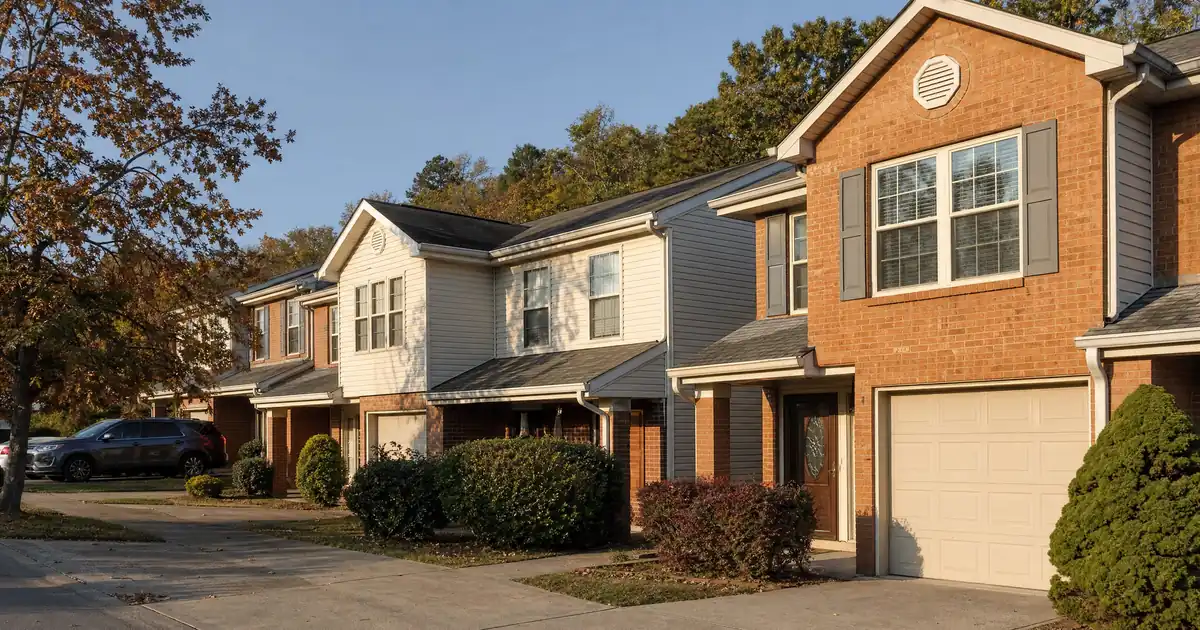
Two Branson listings could sit five miles apart and tell completely different investment stories. A lake-view home in Hollister lists near that neighborhood’s reported median of $434,000, according to Showtime Properties. A workforce rental five minutes from Branson Landing runs closer to the city’s median sale price of $245,000, per Redfin. One is priced for a view. The other is priced for a tenant. For an investor underwriting a debt coverage ratio rather than a photo, the flip point between those two purchases is worth understanding before an offer goes in.
TL;DR: An investment property loan in Branson, Missouri is underwritten primarily on the property’s rental income measured against its full monthly obligation, rather than the borrower’s traditional personal-income documentation or W-2s, subject to lender guidelines and program eligibility.
DSCR Calculator
Run the numbers in Branson, MO
Rate source: Freddie Mac 30-yr average via FRED® — Federal Reserve Bank of St. Louis · effective Jul 2, 2026
Prefilled with local estimates — enter your own rent or nightly figures, taxes, insurance, and HOA for a more accurate picture.
As of Jul 2, 2026 · General Freddie Mac market benchmark, not a Lendmire loan offer. Rent, nightly rate, occupancy, taxes, and insurance are editable estimates. Short-term rental figures are estimates only and vary significantly by season, property type, management approach, and local short-term-rental rules — confirm local regulations before relying on them. Qualifying income for short-term rentals varies by program — some use appraisal market rent, others use documented STR history or projections — and is confirmed in underwriting. Not a Loan Estimate, approval, or commitment to lend. Program availability and eligibility are subject to lender guidelines, credit approval, property review, and underwriting.
- Core Branson’s median sale price sits at $245,000 versus Hollister’s reported $434,000 median list (Redfin, Showtime Properties)
- A 4-bedroom workforce rental near ApartmentFinder’s $1,482 asking rent clears close to 1.00x at standard leverage on the citywide median price
- Small multifamily makes up over 10% of Branson’s housing stock, well above typical Ozarks towns (NeighborhoodScout)
- Branson Southwest and Branson West carry elevated seasonal vacancy near 45.2% and 28.7%
- A near-$900 million development pipeline (Silver Dollar City plus Branson Meadows) is adding jobs faster than nearby workforce housing
Branson Market Snapshot
A quick read on the Branson investor landscape — figures come from the cited sources below. Confirm current property-level numbers before underwriting.
| Metric | Detail |
|---|---|
| Home prices | $248,689 average home value (Zillow) |
| Typical rents | $1,213 average monthly (RentCafe) |
| Population | Referenced 12,817 population figure (via acs) (U.S. Census Bureau QuickFacts) |
| Employment | 12,000+ employees (Silver Dollar City) |
Why 13,000 Residents Support a Rental Market Built for Millions
Branson’s official population is 12,817, per U.S. Census Bureau estimates, yet the city functions like a market many times that size. Daytime population swells by 85.6% due to commuting and tourism, according to city-data.com — meaning the workforce actually moving through Branson on a given day outnumbers the resident base by a wide margin. That’s the structural fact an investor needs to internalize before touring a single property here: rental demand isn’t driven by the 13,000 people who live in Branson full time, it’s driven by the workforce that shows up to serve millions of annual visitors.
That workforce clusters in a handful of industries. Data USA reports Accommodation & Food Services employing 956 Branson residents, Retail Trade 773, and Arts, Entertainment & Recreation 713 — together the backbone of the local economy. Silver Dollar City alone runs a 100-acre park with 1,500 employees, and its parent company, Silver Dollar City, Herschend Enterprises, has grown from its Branson roots into a company with more than 12,000 employees entertaining 15 million guests a year across North America. On the healthcare side, CoxHealth operates Cox Medical Center Branson as part of a system serving more than 900,000 people across a 25-county region with five hospitals and over 84 clinics — a stable, non-tourist anchor that keeps a base of year-round healthcare-worker tenants in the mix alongside the seasonal hospitality crowd.
Then there’s College of the Ozarks in neighboring Point Lookout, an unusual institution nationally: it charges no tuition to its 1,454 undergraduates (a regional college & World Report) because students work their way through, a model the school markets as “Hard Work U.” That work-college structure creates a small but steady campus-adjacent rental need, distinct from the boom-bust rhythm of the theater district a few miles north.
Branson’s income figures reflect this tourism-heavy, service-industry economy. Per capita income across the broader micro area is $31,637, about two-thirds of the national figure of $44,673. That’s not a knock on the market — it’s a signal that Branson’s rental base is workforce-oriented, not high-income, which shapes which property types and price points actually clear a coverage test.
The $900 Million Reason Core Branson’s Rental Demand Isn’t Slowing Down
Run the numbers on what’s actually under construction right now, and Branson’s tightest housing story comes into focus. Silver Dollar City is building a six-story, 262-room resort slated to open in late 2026, part of $500 million in planned investment over the coming decade, while a separate Branson Meadows project spanning 136 acres carries a $400 million multiphase price tag that includes multifamily residential units, according to the Springfield Business Journal. That’s close to a billion dollars of committed development in a city of under 13,000 residents.
Local economic development voices are already flagging the obvious follow-on problem: hundreds of new construction and hospitality jobs are coming, and nobody has fully answered where those workers will live. A workforce-housing operator marketing itself around this exact gap notes that Branson’s tourism growth has pushed rents up faster than affordable supply, and that peak-season demand often pushes workers further from their jobs than they’d like — a pattern documented at The Mill on 76. This is the strongest argument in the entire research picture for a long-term-rental DSCR thesis centered on core Branson rather than the lakefront: employers themselves are on record saying they don’t have enough nearby housing for their own growth plans.
Working DSCR brokers see a recurring pattern in tourism-anchored markets like this one: files built around long-term rent assumptions come in tight on paper while the property’s actual demand story — a hospital system, a theme-park expansion, a stable seasonal workforce — is stronger than the numbers alone suggest. The stronger files in markets like Branson usually pair a conservative long-term rent comp with a clear explanation of who the tenant actually is and why turnover stays low, rather than leaning on projected appreciation from tourism growth.
Where the Math Actually Clears — 76 Country Boulevard and Branson Landing
Core Branson, running from a comparable property theater strip down toward Branson Landing, is where standard DSCR math has the best shot at clearing on this city’s current pricing. The workforce demand is real, the entry price is at or below the citywide median and rents for larger units sit close to what full mortgage obligations require at typical leverage.
Run a modeled scenario on a single-family rental priced at Branson’s median of $245,000, financed at 75% loan-to-value (25% down). Using ApartmentFinder’s reported four-bedroom asking rent of $1,482 as the modeled rent input, and building a full monthly obligation that includes principal and interest, an assumed property-tax load near 0.97% of price and an assumed insurance load near 0.45% of price — both approximate Missouri averages, not this specific parcel’s actual bill — the coverage ratio lands almost exactly at the 1.00x benchmark most standard DSCR programs are built around. That’s a genuinely tight number, not a comfortable cushion, but it’s a real clear on paper at full leverage. Terms vary by lender guidelines, property type, leverage, credit profile, and full file review.
Drop down to a three-bedroom unit at ApartmentFinder’s reported $1,111 asking rent, same price and same leverage, and coverage falls to roughly 0.75x — a meaningful gap below breakeven. That’s the honest range core Branson single-family purchases occupy right now: a four-bedroom near the top of the local rent stack can clear standard lender review at typical leverage, while a smaller unit at the same price point generally can’t without some adjustment.
For files landing below 1.00x on long-term rent alone, a few structural paths are worth reviewing with a lender rather than walking away from the deal. A sub-1.00 program may be available on some files, generally paired with reduced leverage or stronger credit. Interest-only structuring can lower the monthly obligation enough to close a modest gap. And where the property has documented short-term-rental potential, blended STR income is sometimes reviewed alongside long-term comps. None of these are guaranteed outcomes — they’re options a lender evaluates case by case, subject to credit, reserves and full property review.
Small Multifamily Is Branson’s Structural Advantage
Branson carries an unusually high share of small multifamily housing for a city its size — 10.44% of its stock is duplexes or small converted apartment buildings, against 28.52% detached single-family, according to NeighborhoodScout. That double-digit share is well above what most comparably sized Ozarks towns carry, and it means a 2-4 unit acquisition strategy here isn’t a rare unicorn find — it’s a genuinely available property type.
Consider a duplex currently listed near downtown Branson within five minutes of Hollister and Branson Landing, generating a documented $7,215 in combined monthly income with an additional $1,250 to $3,120 of upside once the upper level is leased, per Redfin’s multifamily listings. That’s not a market average — it’s one illustrative listing — but it demonstrates the mechanism plainly: stacking two units on one parcel pushes combined rent into a range that clears a full monthly obligation with real room to spare, in a way single-family alone at comparable price points in this city typically can’t.
This is where the flip point between property types gets interesting. A single-family workforce rental near the median price runs close to breakeven only at the top of the local rent range, as shown above. A duplex or triplex on a similar footprint doesn’t need to find a premium tenant — it needs two or three ordinary ones. That’s a materially easier underwriting position, and it’s part of why how DSCR lender review works matters more here than in markets where single-family dominates the stock.
Condo and townhome product in resort-adjacent developments like Branson Cove, built as lodge-style units beside Table Rock Lake, sits in a different category entirely. Those properties are generally better reviewed under a short-term-rental income framework than as standard long-term-rental DSCR files, since their design, HOA structure and seasonal occupancy pattern don’t match a 12-month tenant model.
Hollister’s Lake-View Premium: Skip It For Cash Flow
Hollister is an appreciation market, not a cash-flow market, and the math makes that plain. Run the same modeled exercise on a $434,000 Hollister purchase at 75% LTV — the neighborhood’s reported median list price, per Showtime Properties — using even the highest quoted rent tier anywhere in Branson (ApartmentFinder’s $1,482 four-bedroom figure) as a generous stand-in, since no Hollister-specific long-term rent data exists in this review. Coverage lands around 0.56x. That’s not a rounding error. That’s a property priced almost double the citywide median against rents that don’t come close to double. Exact leverage, credit thresholds, and program terms are subject to lender guidelines and full file review.
Hollister isn’t a bad market — it’s a different kind of market. The Tudor-style architecture along Downing Street, the golf-course and lakeview communities, the resort-adjacent premium buyers are paying for: none of that is priced for a standard long-term rental tenant. This is a genuine toss-up worth naming honestly. If the investor’s thesis is long-term appreciation on a scarce lake-view asset, or a short-term-rental play with nightly rates far above monthly LTR comps, Hollister can make sense. If the thesis is coverage-driven cash flow on day one, the math says look toward core Branson instead.
Two Neighborhoods Worth a Harder Look Before Committing
Not every submarket here rewards the workforce-housing thesis. Branson Southwest carries a real estate vacancy rate of 45.2%, higher than 98.3% of all U.S. neighborhoods, and Branson West runs a similarly elevated 28.7%, according to NeighborhoodScout. Both figures likely reflect seasonal and second-home occupancy patterns common in resort geography rather than pure market failure — but for a buyer underwriting 12-month tenancy, that distinction matters less than the vacancy number itself.
A property in either of these zones competes for tenants against a large share of homes and condos that sit empty for stretches of the year. That’s structurally different from the 76 Corridor or downtown, where workforce demand tied to Silver Dollar City, CoxHealth and the theater district runs closer to year-round. An investor buying in Branson Southwest or Branson West purely for a low entry price should factor a longer lease-up assumption and a more conservative rent comp into the file — not treat the citywide averages as automatically applicable to that specific pocket.
What Actually Qualifies This Purchase
A DSCR purchase in Branson is evaluated primarily on what the property earns, not what the borrower reports on a tax return — see the comparison against a conventional loan for how that shifts the underwriting conversation. Standard program leverage typically runs 75% to 80% loan-to-value, meaning 20% to 25% down on most files, with a high-leverage tier up to 85% available on the strongest applications where guidelines allow. Minimum DSCR is generally set at 1.00x, credit tiers on file today run from a 620 floor up through 700 for high-leverage scenarios, and reserve requirements typically land around six months of the full monthly obligation, rising toward nine months on loans above $1.5 million — none of this an outlier price point in Branson, where the median purchase is well under $300,000.
Unlike lenders whose condo-warrantability rules exclude most investor files outright, a broker working across a wider wholesale network can often route a Branson Cove-style condo or a small multifamily parcel to a lender whose guidelines actually fit that property type. For LLC-titled purchases — common among repeat Branson investors building a small portfolio — closings are supported subject to program guidelines, and investors holding four or more financed properties generally have an easier path here than through a conventional conforming lender, where that threshold often ends the conversation.
Lendmire, founded by CEO Brandon Miller, arranges DSCR investor loans through wholesale lending channels across 39 states plus Washington, D.C. (NMLS# 2371349), and works Missouri files through its Missouri DSCR investor loans program specifically. Investors weighing a core-Branson purchase against a Hollister listing can call 828-256-2183 or see what the numbers look like before writing an offer.
Frequently Asked Questions
How do you qualify for a DSCR loan in Branson, Missouri?
Qualification centers on the property’s projected or in-place rent measured against its full monthly obligation, rather than personal income documentation. A lender will typically want a credit score in an acceptable tier, a down payment in the 20-25% range on most files, and reserves covering roughly six months of the obligation — all subject to lender guidelines and property review.
DSCR vs. conventional financing
Two common ways to finance an investment property in Branson, MO. They qualify you differently — here’s how investors weigh them.
Why investors choose it
- Qualifies on the property’s rental income — no personal tax returns, W-2s, or pay stubs needed to document income.
- No personal debt-to-income ceiling to clear, so existing mortgages and obligations don’t cap your borrowing the same way.
- Can be closed in an LLC, keeping the property inside a business entity.
- Built for scaling — not held to the limit on number of financed properties that conventional financing applies.
- Underwriting centers on the deal: generally qualifies when the rent covers the payment, a 1.00x coverage ratio being a common baseline (confirmed in underwriting).
- Designed specifically for investment property, including long-term and, where the program allows, short-term rentals.
Where it’s strong
- Often the lowest ongoing financing cost for a buyer who fully qualifies on personal income — a fit for a first property or a cost-first purchase.
Trade-offs for investors
- Requires full personal income documentation and must fit within a debt-to-income limit — salary, existing debts, and other mortgages all count.
- Typically held in your personal name rather than a business entity.
- Caps how many financed properties you can carry, which can become a ceiling as a portfolio grows.
- Evaluates you as a borrower as much as the property, which usually means more paperwork.
How investors usually choose: a first or single property often optimizes for the lowest financing cost; portfolio builders often optimize for leverage, vesting in an LLC, and scaling past conventional caps. The right answer depends on your goals, the property, and current guidelines — both paths run through select lenders in Lendmire’s wholesale network, with eligibility and terms confirmed in underwriting.
What are the requirements for an investment property loan in Branson, Missouri?
Requirements generally include a minimum coverage ratio around 1.00x, an acceptable credit tier (often starting near 620 on standard programs), sufficient reserves, and a property that appraises and rents in line with local comps. Small multifamily and single-family workforce rentals near the theater district or downtown corridor tend to have an easier time clearing these thresholds than lake-view condos priced for a view premium.
What can limit DSCR cash-out proceeds in Branson?
Cash-out leverage is generally capped lower than purchase leverage, and a property’s rent-to-value ratio drives how much equity a lender will let an investor pull. Lendmire arranges DSCR financing, and works within program guidelines that weigh reserves, credit tier and the subject property’s coverage ratio before setting a maximum draw.
Is Hollister or core Branson the better DSCR purchase?
Core Branson generally wins on coverage math; Hollister generally wins on appreciation potential. At Hollister’s reported $434,000 median list price, even the city’s highest quoted rent tier produces coverage well under 1.00x, while core Branson properties near the $245,000 citywide median can clear closer to breakeven on the right unit size and rent.
Why do some Branson neighborhoods show unusually high vacancy?
Branson Southwest and Branson West both post elevated vacancy — 45.2% and 28.7% respectively — largely tied to seasonal and second-home occupancy patterns typical of resort geography rather than a simple oversupply problem. That still matters for a 12-month-tenant underwriting model, since a higher share of nearby units sitting empty part of the year can lengthen lease-up expectations.
Can a duplex near Branson Landing qualify for DSCR financing?
Small multifamily properties are common in Branson’s housing stock and often clear coverage tests more easily than single-family homes at comparable price points, since combined rent from two or more units typically pushes total income well above what a single unit generates. Qualification still depends on credit, reserves, appraisal and lender program guidelines.
The Broker Behind the Numbers
Lendmire is a mortgage brokerage focused on DSCR investor financing, helping arrange programs through wholesale and investor-lending channels DSCR loans are evaluated by the lender on property cash flow rather than personal income, subject to lender guidelines, and the platform supports LLC closings while accommodating investors already holding four or more financed properties. The firm was recognized as a top-ranked workplace in 2025 by Scotsman Guide and again recognized as a 2026 Top Workplace.
For an investor comparing a workforce rental near a comparable property against a lake-view listing in Hollister, the file itself usually tells the story before the loan does. If you only take one thing from this piece, it’s this: in Branson, the citywide median price is where DSCR math has a fighting chance, and the lakefront premium is where it usually doesn’t — know which story you’re buying into before the offer goes in.
About Lendmire
Lendmire (NMLS# 2371349) is a mortgage brokerage focused on DSCR investor financing, helping arrange programs through wholesale and investor-lending channels in 40 markets, including Washington, D.C. DSCR loans are evaluated by the lender on property cash flow rather than personal income, subject to lender guidelines, supporting LLC closings and accommodating investors with four or more financed properties. Scotsman Guide Top Mortgage Workplace in both 2025 and 2026.
Investment property review
See how the DSCR math works for Branson, Missouri
Lendmire can review rent, leverage, property type, and DSCR fit before you get too far into the deal.
Informational only. Not a Loan Estimate, approval, or commitment to lend. Program availability and eligibility are subject to lender guidelines, credit approval, property review, and underwriting.
References
1. Showtime Properties – Branson and Hollister Housing Market
2. Redfin – Branson MO Housing Market
3. NeighborhoodScout – Branson Real Estate
4. Zillow
5. RentCafe
6. U.S. Census Bureau QuickFacts – Branson city
7. Silver Dollar City – Press Room
8. CoxHealth – Cox Medical Center Branson
10. Springfield Business Journal – Nearly $1B in Development Could Transform Branson Area
11. The Mill on 76 – Workforce Housing in Branson
12. Redfin – Branson Multi-Family Homes
13. NeighborhoodScout – Branson Southwest
14. a top-ranked workplace in 2025
15. recognized as a 2026 Top Workplace
Brandon Miller
Founder & CEO, Mortgage Loan Originator, Lendmire LLC
- Mortgage Loan Originator · NMLS# 1129696 · Verify on NMLS Consumer Access
- North Carolina Real Estate Broker · License# 343312 · Verify on NCREC
- North Carolina Insurance Producer · License# 19053198 · Property, Casualty, Life, Health · Verify on NAIC SBS
- Lendmire LLC · Firm NMLS# 2371349 · Verify firm licensure
Important disclosures. Lendmire (NMLS# 2371349) is a licensed mortgage brokerage. Lendmire is not a direct lender, depository institution, or financial advisor. All loan inquiries are subject to lender underwriting; this article does not constitute a commitment to lend. Rates, terms, and program guidelines are subject to change without notice and vary by borrower profile, property type, and state. Information in this article is general in nature and is not financial, legal, or tax advice. Equal Housing Opportunity. NMLS Consumer Access: nmlsconsumeraccess.org.