
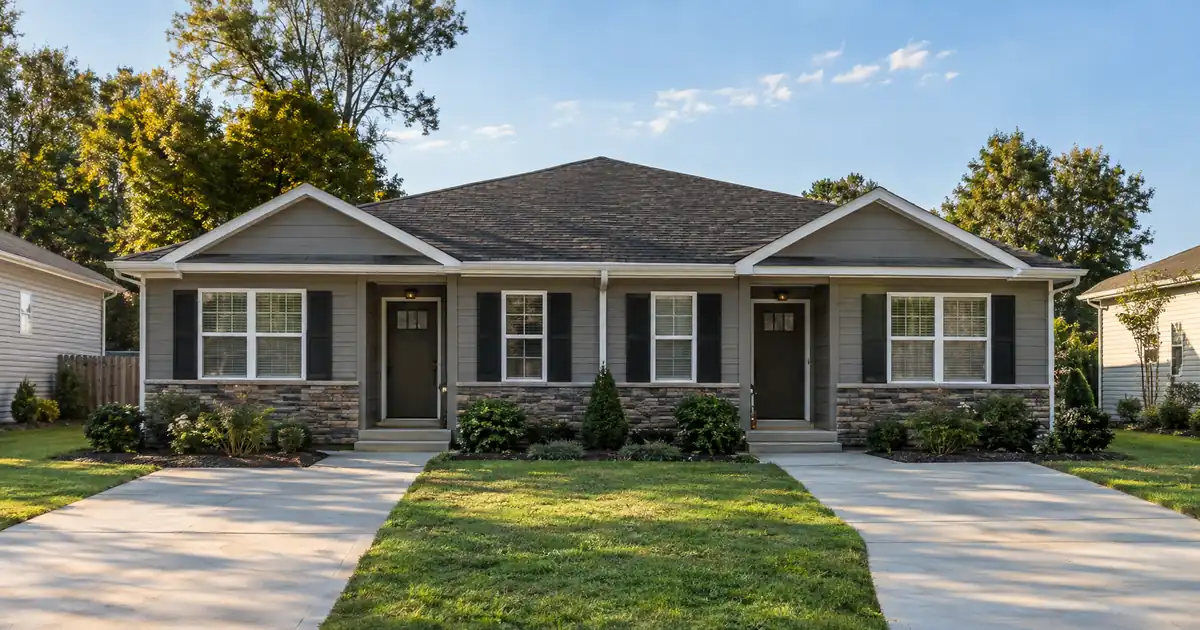
Investment property loans in Detroit draw a double take from investors scrolling listings in Chicago or Charlotte. A brick colonial on the northwest side is priced in the low six figures, often well under what would pass for entry-level pricing in most coastal metros. Rent rolls that would be laughable in most metros are suddenly producing strong, double-digit yields. The instinct is to run the numbers twice, because they don’t look like anything else in the Midwest.
The instinct is correct. Detroit’s median sale price sits well below national norms and has continued trending upward over the past year, with price per square foot climbing at a similar pace, according to Redfin. That’s not a distressed-only market anymore — the city has continued adding residents in the most recent Census-reported year, moving it up into the nation’s top tier of largest cities and past peer cities like Portland, Oregon, according to the City of Detroit. What the out-of-state buyer usually misses is that “Detroit” isn’t one market. It’s dozens of them, stacked block by block, and the DSCR math that clears comfortably in one zip code falls apart two neighborhoods over.
DSCR Calculator
Run the numbers in your market
Rate source: Freddie Mac 30-yr average via FRED® — Federal Reserve Bank of St. Louis · effective Jul 30, 2026
Prefilled with starting assumptions — enter your own rent or nightly figures, taxes, insurance, and HOA for a more accurate picture.
Program parameters update from Lendmire’s centralized guideline source. Taxes and insurance are editable estimates.
As of Jul 30, 2026 · General Freddie Mac market benchmark, not a Lendmire loan offer. Rent, nightly rate, occupancy, taxes, and insurance are editable estimates. Short-term rental figures are estimates only and vary significantly by season, property type, management approach, and local short-term-rental rules — confirm local regulations before relying on them. Qualifying income for short-term rentals varies by program — some use appraisal market rent, others use documented STR history or projections — and is confirmed in underwriting. Not a Loan Estimate, approval, or commitment to lend. Program availability and eligibility are subject to lender guidelines, credit approval, property review, and underwriting.
The Short Version: Investment property loans in Detroit, Michigan are underwritten primarily on a property’s rental income measured against its full monthly obligation rather than the borrower’s personal income — a structure suited to a market where citywide values sit well below national norms while rents hold firm relative to purchase price, per Redfin and RentCafe data.
- Duplex acquisitions in Grandmont Rosedale, Bagley, and Warrendale often carry modest entry costs, with combined rents that comfortably support debt-service coverage.
- East English Village and stabilized B-class zips post strong gross rental yields relative to their modest entry prices.
- Corktown’s sale prices run notably higher and continue trending upward, skewing the submarket toward appreciation rather than day-one cash-flow coverage.
- Metro-wide vacancy remains at a manageable level, but comp density — not vacancy — drives Detroit’s real appraisal risk.
- Michigan DSCR programs route through Michigan DSCR investor loans for entity-held portfolios.
Detroit Market Snapshot
A quick read on the Detroit investor landscape — figures come from the cited sources below. Confirm current property-level numbers before underwriting.
| Metric | Detail |
|---|---|
| Home prices | $100K median sale price (Redfin Housing Market Data) |
| Typical rents | $1,337 average (RentCafe (Yardi Matrix)) |
| Recent appreciation | $82/sq-ft median, up 5.1% yoy (Redfin Housing Market Data) |
| Cap rates | 11-14% cap rate (Deal Run) |
| University enrollment | ~24,000 students (Wayne State University) |
| Population | 645,705 population (City of Detroit Mayor’s Office) |
Grandmont Rosedale, Bagley, and the Duplex Math That Clears 1.0
Detroit’s strongest DSCR mechanism isn’t a neighborhood — it’s a property type. Two-unit and three-unit buildings in Grandmont Rosedale, Bagley, and Warrendale routinely trade at price points well below the metro’s coastal-market comparables, with combined monthly rents that stack up favorably against those modest acquisition costs. A typical duplex deal in this band — a two-bed, one-bath layout per unit — pairs a low entry price with combined rent that clears a healthy operating yield, per Deal Run’s analysis of duplex investing markets.
Run the numbers on that scenario. A modeled duplex acquisition near the $90,000 typical basis for that profile, financed at a standard 75 percent loan-to-value, with combined rents near $1,400 — in line with the figures cited above — produces a coverage ratio — rent measured against full principal, interest, taxes, and insurance using typical financing-cost assumptions — comfortably above breakeven, often landing around 1.8x. That’s not a marginal file. That’s a rent roll clearing its debt obligation nearly twice over.
Here’s the catch. A DSCR that strong doesn’t mean the operating economics are that generous — cap rates on these deals still sit in a range that reflects real expense loads: older housing stock, deferred maintenance risk, and turnover costs that a debt-coverage ratio doesn’t capture. The gap between a strong coverage ratio and a healthy-but-unspectacular cap rate is the gap between “the loan is reviewed” and “the property is a good investment.” Both questions matter, and Detroit is one of the few markets where they can diverge this sharply because acquisition prices are so low relative to rent.
Bagley sits near University of Detroit Mercy, and its brick colonial and craftsman housing stock draws a workforce and student tenant base that keeps turnover reasonable. Grandmont Rosedale — technically five historic neighborhoods bundled together — is anchored by one of the city’s most active community development organizations and has become a go-to first-time-investor pick for exactly this reason: accessible price points, tree-lined streets, and rent that clears the number without stretching leverage.
Why Detroit’s Headline Yield Numbers Lie
The city-proper gross yield figure that circulates in investor content is real, and it’s also a trap. That headline number blends everything, including homes acquired at rock-bottom prices renting for correspondingly modest rents, properties with thin insurance availability, and tenant credit profiles that most institutional DSCR underwriting won’t touch. The reviewable tier is a different, narrower slice of the market.
That reviewable tier has a name, or rather five names: East English Village, Boston-Edison, Indian Village, Sherwood Forest, and Palmer Woods. These historic neighborhoods have cleared most of the distressed-inventory cycle and now function as stable B-class rental markets. One notch below them — Grandmont Rosedale, West Village, North End, and parts of Bagley — prices sit at accessible levels with rents that produce solid gross yields relative to purchase cost. That’s the real range an investor should be underwriting to, not the citywide headline.
East English Village deserves particular attention. It borders affluent Grosse Pointe, offers relatively affordable single-family homes, and draws working professionals and long-term tenants — the kind of stability that keeps vacancy risk down, which is the single most important lever for a cash-flow investor. Listing prices there have continued climbing in the most recent year, a sign the stabilized tier isn’t standing still even while it stays accessible.
Working DSCR brokers see a recurring pattern in fragmented, block-by-block markets like Detroit’s: files from the stabilized tier — East English Village and the Boston-Edison corridor — come in clean, with rent schedules that match appraiser comps without much friction, while files from transitional or land-bank-adjacent blocks often stall on the same step, not because the rent isn’t real, but because there simply aren’t enough recent comparable sales for an appraiser to support the number confidently.
Corktown, Midtown, and the Appreciation Trade-Off
Corktown is the neighborhood that photographs well and underwrites thin. Detroit’s oldest neighborhood sits adjacent to the Ford Michigan Central Station redevelopment and the downtown arena district, and it has the appreciation trend to match: sale prices there sit well above the citywide median and have continued climbing sharply over the past year, per Own It Detroit. That’s a different market entirely from the accessible duplex stock found just a couple of miles away.
Model that math out. A property priced at Corktown’s premium levels, financed at a standard leverage level, with rent in line with comparable downtown two-bedroom units — RentCafe pegs downtown Detroit’s average two-bedroom rent well above the citywide norm — produces a coverage ratio well under 1.0, landing meaningfully below breakeven using typical financing-cost assumptions. That’s not a disqualifying number on its own, but it does mean the file needs a different conversation: a sub-1.00 DSCR structure, an interest-only payment restructuring, or a materially lower leverage point are the paths a lender would typically review here — never a guarantee, and always subject to credit profile, reserves, and program guidelines. The honest read is that Corktown is an appreciation trade dressed up as a rental purchase; the investor buying there is underwriting a future refinance off equity growth, not day-one cash flow.
Midtown and New Center run a middle path. Anchored by Wayne State University — a large student population spread across numerous schools and classified as an R1 research institution — and by Henry Ford Health’s medical corridor, the area draws students, young professionals, and hospital staff in roughly equal measure. That demand base is about to get a multi-year reinforcement: Henry Ford Health is midway through a large-scale expansion of its Detroit campus, a major new hospital facility projected to support a substantial number of jobs — a mix of current positions, construction jobs, and new permanent roles once the facility opens in the coming years. That’s a named, dated employment catalyst sitting directly on top of the Midtown/New Center rental submarket, not a generic “healthcare is big here” claim.
Model a small multifamily purchase near that corridor at price levels typical for the submarket, financed at a standard leverage level, against rent in line with the area’s $1,497 two-bedroom comparables — the coverage ratio lands in a moderate, workable range, often in the 1.4x-to-1.5x neighborhood using typical financing-cost assumptions. That’s a workable middle ground: thinner than the Bagley duplex, considerably safer than Corktown, and backed by an employment anchor that isn’t going anywhere for years.
| Neighborhood Tier | Price Level | Rent Level | DSCR Profile |
|---|---|---|---|
| Cash-flow tier (Grandmont Rosedale, Bagley, EEV) | Accessible, well below coastal-market norms | Modest but comfortably outpaces the purchase price | Clears 1.0 comfortably |
| Mid-tier (Midtown/New Center) | Moderate, mid-range for the metro | Solid, tracks with mid-range pricing | Moderate, roughly 1.1x-1.5x |
| Appreciation tier (Corktown) | Premium, well above citywide norms and still climbing (per Own It Detroit) | Comparable to downtown two-bedroom rates (per RentCafe) | Thin, often sub-1.0 |
The Comp Problem Out-of-State Buyers Miss
Vacancy isn’t Detroit’s real risk right now. HUD’s market area estimate puts vacancy at a manageable level, and new apartment construction has slowed — a combination that reads as tight supply, not oversupply. The actual risk sits one layer down: the widening spread between well-maintained assets and older, deferred-capex properties. Owners who’ve skipped capital improvements are now competing in a different rental market than owners of renovated comparable units in the same zip code, and that spread in vacancy and rent growth is wider than it’s been in a decade, according to Friedman Real Estate’s mid-year multifamily analysis.
Appraisals compound this. In transitional blocks and land-bank-adjacent neighborhoods, recent comparable sales can be scarce, and appraisers tend to lean conservative when comps thin out — a real constraint for an investor planning to renovate and refinance later, since achievable value depends on comp depth in that specific block, not just the work done to the property. This is the single biggest gap between what a spreadsheet says a Detroit rehab is worth and what an appraisal will actually support.
This is also where the divergence between pricing sources tells its own story. Redfin’s transaction-based median sits notably higher than Zillow’s model-based home value index, which trends lower and has continued declining over the past year, according to Zillow. Neither number is wrong — they’re measuring different things, transaction medians versus modeled averages — but the gap itself reflects exactly the block-by-block dispersion an out-of-state buyer needs to internalize before assuming a citywide number applies to any specific address.
Multi-Unit Versus Single-Family: Which One Clears the Number
The math favors multi-unit almost every time at comparable price points. Metro-wide, duplexes and triplexes suited to house-hacking strategies price at levels well within reach for a first-time investor, and while a single-family rental can sometimes command higher per-door rent relative to its purchase price, the combined cash flow from a four-unit building will almost always outpace what one house produces, per Rondo Investment’s comparison of the two structures.
The reason is aggregation. A single-family DSCR file lives or dies on one rent figure against one full payment obligation. A duplex or fourplex file blends multiple rent rolls under one loan, and even when individual unit rents run modest — the kind of rents common in older Detroit multifamily stock — the combined total often pushes the coverage ratio meaningfully above 1.0 in a way a single unit at the same acquisition price can’t match. Single-family still dominates Detroit’s overall inventory by a wide margin over multifamily product, so the volume of available product still favors houses. But for an investor optimizing specifically for coverage ratio, the math points toward doors, not square footage. Coverage across DSCR loan programs varies by lender, and Michigan-specific eligibility should be confirmed directly rather than assumed.
Investors weighing whether DSCR versus conventional financing makes more sense for a Detroit acquisition should think about entity structure first. A single rental held personally by a W-2 borrower with clean traditional personal-income documentation may still cash flow better on a conventional loan. DSCR becomes the more practical lane once the portfolio scales past a handful of financed properties, once the title sits in an LLC, or once the borrower is self-employed and personal income documentation gets messy — all common profiles among investors targeting Detroit’s duplex and triplex stock specifically because the entry price makes portfolio-building realistic sooner than in almost any other major metro.
What Detroit’s Numbers Add Up To
Wayne County overall posted the largest price gain of Michigan’s three metro counties, but that figure includes Livonia, Canton, and Northville, suburbs that trade in an entirely different, higher price tier than the city itself. Detroit proper is where the DSCR math gets interesting precisely because it hasn’t caught up to its suburbs.
The employment base backing that rental demand is broader than automotive alone. Rocket Companies, Stellantis, the City of Detroit, and Henry Ford Health together account for a substantial share of full-time jobs within city limits, according to the Detroit Regional Chamber, with Rocket Companies repeatedly cited as the city’s single largest employer — a mortgage and fintech giant anchoring downtown, layered on top of the traditional manufacturing base that General Motors and Ford still represent at the metro level. Henry Ford Health alone employs a large workforce across numerous sites statewide, per Bridge Michigan, running a network of acute-care hospitals with its flagship Detroit campus training a substantial number of residents and fellows annually. That’s a durable tenant base for the neighborhoods surrounding the medical corridor, not a seasonal or cyclical one.
For entity-held acquisitions, financing typically runs 75 to 80 percent loan-to-value on standard purchase files — occasionally up to 85 percent on the strongest files where guidelines allow — with qualifying DSCR thresholds that vary by lender and program: some select programs allow coverage down to a 1.00 floor, while most standard files are underwritten to a stronger cushion above that. Reserve requirements generally sit in the range of six months of payments, and credit-tier thresholds vary by leverage point. LLC-titled acquisitions are common in this market given how many investors here scale past a single property quickly, subject to lender program eligibility, and review details remain subject to lender overlays that can shift by credit profile and property type. Investors weighing how DSCR lender review works against a conventional purchase should factor entity structure and portfolio size into that decision from the start.
DSCR vs. conventional financing
Two common ways to finance an investment property in Detroit, MI. They qualify you differently — here’s how investors weigh them.
Why investors choose it
- Qualifies on the property’s rental income — no personal tax returns, W-2s, or pay stubs needed to document income.
- No personal debt-to-income ceiling to clear, so existing mortgages and obligations don’t cap your borrowing the same way.
- Can be closed in an LLC, keeping the property inside a business entity.
- Built for scaling — not held to the limit on number of financed properties that conventional financing applies.
- Underwriting centers on the deal: generally qualifies when the rent covers the payment, a 1.00x coverage ratio being a common baseline (confirmed in underwriting).
- Designed specifically for investment property, including long-term and, where the program allows, short-term rentals.
Where it’s strong
- Often the lowest ongoing financing cost for a buyer who fully qualifies on personal income — a fit for a first property or a cost-first purchase.
Trade-offs for investors
- Requires full personal income documentation and must fit within a debt-to-income limit — salary, existing debts, and other mortgages all count.
- Typically held in your personal name rather than a business entity.
- Caps how many financed properties you can carry, which can become a ceiling as a portfolio grows.
- Evaluates you as a borrower as much as the property, which usually means more paperwork.
How investors usually choose: a first or single property often optimizes for the lowest financing cost; portfolio builders often optimize for leverage, vesting in an LLC, and scaling past conventional caps. The right answer depends on your goals, the property, and current guidelines — both paths run through select lenders in Lendmire’s wholesale network, with eligibility and terms confirmed in underwriting.
Frequently Asked Questions
Does the “1 percent rule” actually apply in Detroit?
It applies more easily here than almost anywhere else. With sale prices that sit well below national norms and average rents that hold up firmly by comparison, per Redfin and RentCafe data, rent-to-price ratios in many Detroit submarkets run well above the benchmark investors chase in most metros. The caveat is that this applies to the reviewable tier, not the headline citywide yield figures that include unfinanceable distressed inventory.
How do you qualify for a DSCR loan in Detroit?
Qualification centers on the property’s rental income measured against its full monthly obligation, not the borrower’s personal income. Lenders typically look for a coverage ratio in a workable range, adequate reserves on hand, an acceptable leverage level, and a credit profile that clears the program’s minimum tier — all of which vary by lender and are confirmed at the loan level rather than assumed citywide.
Is Corktown a good DSCR purchase?
For cash flow alone, usually not at current pricing. Corktown’s sale prices sit well above the citywide median and have continued climbing sharply, per Own It Detroit, which tends to produce thin or sub-1.00 coverage at standard leverage against realistic rent levels. It’s a better fit for an investor underwriting appreciation and a future refinance than one prioritizing day-one rental income.
Why do duplexes clear the DSCR number more easily than single-family homes here?
Aggregation. A duplex or triplex combines multiple rent rolls against one loan payment, so even modest per-unit rents often push the combined total comfortably above the qualifying threshold — a structural advantage single-family files in the same price range can’t replicate.
How reliable are Detroit appraisals for a renovate-and-refinance strategy?
It depends entirely on the block. Neighborhoods with steady recent sales activity — East English Village, Boston-Edison, Grandmont Rosedale — support straightforward rent and value comps. Land-bank-adjacent or transitional blocks can have thin comparable sales data, which pushes appraisers toward conservative valuations regardless of the actual renovation work completed.
What credit score do you need to qualify for a DSCR loan in Detroit, Michigan?
Programs generally set tiered minimums, often starting near 620, with stronger pricing and leverage available at higher tiers, subject to lender guidelines and property type. Exact eligibility depends on the specific program, reserves on hand, and the property’s coverage ratio.
Does Detroit’s population growth actually matter for rental demand?
It’s a meaningful signal. Detroit has continued adding residents in the latest Census-reported period and led all of Michigan in growth rate, according to the City of Detroit — the first sustained multi-year growth reversal after decades of decline. That trend supports the case for long-term tenant demand in stabilized neighborhoods, though it’s a citywide average and doesn’t guarantee demand in every individual submarket.
An investor weighing Detroit for the first time is usually deciding between two different theses at once — the accessible duplex that clears its coverage ratio with room to spare, or the Corktown-style bet on appreciation that requires patience and a different financing conversation entirely.
About Lendmire
Lendmire, NMLS# 2371349, is a mortgage brokerage focused on investor financing, arranging DSCR loans across 40 states plus Washington, D.C. — 41 markets total, with qualification built around a property’s rental income rather than personal income documentation, subject to lender guidelines, which fits LLC-held rentals and scaling portfolios particularly well. Investors sorting out which Detroit submarket fits their DSCR file can reach Lendmire at 828-256-2183 or compare DSCR options directly.
Which Detroit tier are you actually underwriting to — the duplex that clears its coverage ratio on day one, or the appreciation bet that asks for patience before the equity shows up?
The firm has been recognized by Scotsman Guide as a 2025 Top Mortgage Workplace and a 2026 Top Mortgage Workplace.
Get Started
Ready to find the right loan for you?
In about 30 seconds you can review financing options available for your investment property. No commitment required.
Informational only. Not a Loan Estimate, approval, or commitment to lend. Program availability and eligibility are subject to lender guidelines, credit approval, property review, and underwriting.
References
2. City of Detroit Mayor’s Office
5. Deal Run
10. Rondo Investment
12. Bridge Michigan
This article is part of Lendmire’s DSCR loan program — full qualification details, guidelines, and scenarios live on the program page.
Related reading: DSCR Cash Out Refinance in St Charles, Missouri: How Much Equity Investors Can Pull in St Charles · DSCR Loans in Detroit, Michigan: Investor Financing for Midtown, Corktown, Hamtramck & Real Estate Investors · Cash Out Refinance Investment Property in Ballwin, Missouri: The 2026 DSCR Financing Guide to Manchester Road
Guides: DSCR Loans in Detroit, MI · DSCR Loans in Michigan
Brandon Miller
Founder & CEO, Mortgage Loan Originator, Lendmire LLC
- Mortgage Loan Originator · NMLS# 1129696 · Verify on NMLS Consumer Access
- North Carolina Real Estate Broker · License# 343312 · Verify on NCREC
- North Carolina Insurance Producer · License# 19053198 · Property, Casualty, Life, Health · Verify on NAIC SBS
- Lendmire LLC · Firm NMLS# 2371349 · Verify firm licensure
Disclosure information. Lendmire is a state-licensed mortgage brokerage under NMLS# 2371349. Lendmire is not a depository institution, direct lender, or financial advisor — all loans referenced are placed through wholesale lender partners and are subject to each lender's underwriting standards. This article is provided for general informational purposes and is not a commitment to lend, nor does it constitute financial, legal, or tax advice. Loan programs, terms, rates, and qualification standards change without notice and depend on borrower profile, property type, and the state in which the subject property is located. Equal Housing Opportunity provider. NMLS Consumer Access: nmlsconsumeraccess.org.