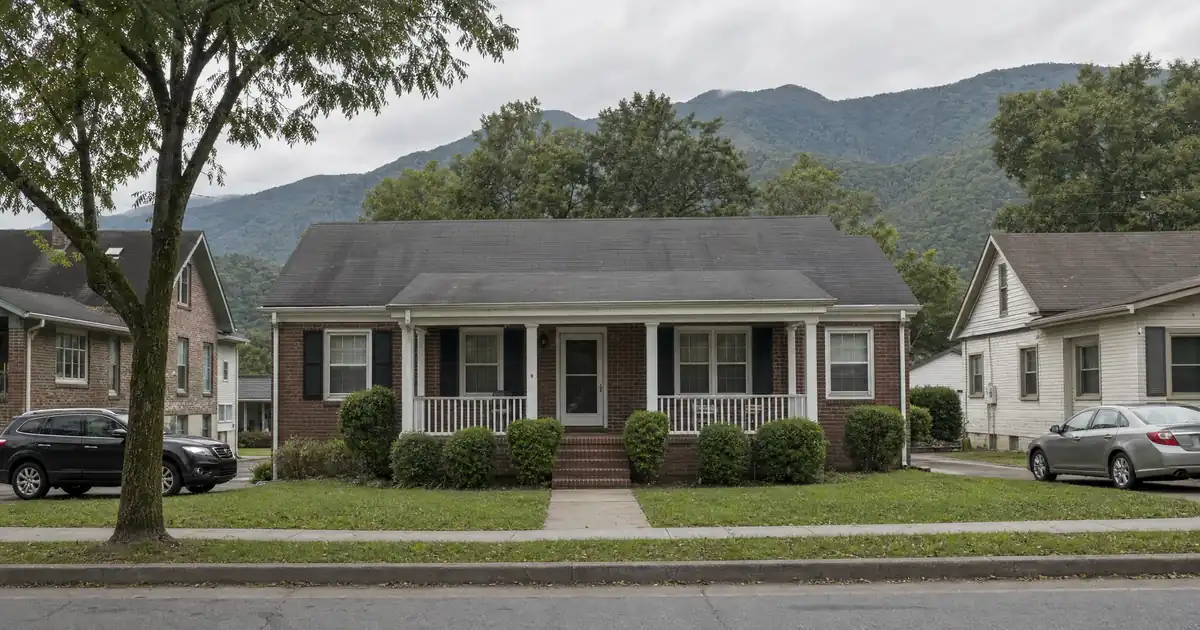
If you’re pricing a Gatlinburg property purely on projected Airbnb income, there’s a good chance you’re solving the wrong problem. A town of 3,663 full-time residents generating nearly $3.93 billion in annual visitor spending across Sevier County is unusual enough on its own (Sevier County Government). What’s stranger: this same tourist-saturated market has a documented, structural shortage of long-term rental housing. Lendmire (NMLS# 2371349), founded by CEO Brandon Miller, arranges investment property loans in Gatlinburg, Tennessee, and across 39 states plus Washington, D.C. — 40 markets total — through DSCR financing that qualifies primarily on a property’s rental income rather than a borrower’s traditional personal-income documentation.
At a Glance: A Gatlinburg investment property loan is qualified primarily against the property’s projected rental income compared to its full monthly housing obligation, with condo and small multifamily deals typically clearing stronger coverage ratios than single-family cabins purchased near the segment’s current $818,328 average sale price (Gatlinburg Real Estate For Sale).
DSCR Calculator
Run the numbers in Gatlinburg, TN
Rate source: Freddie Mac 30-yr average via FRED® — Federal Reserve Bank of St. Louis · effective Jul 2, 2026
Prefilled with local estimates — enter your own rent or nightly figures, taxes, insurance, and HOA for a more accurate picture.
As of Jul 2, 2026 · General Freddie Mac market benchmark, not a Lendmire loan offer. Rent, nightly rate, occupancy, taxes, and insurance are editable estimates. Short-term rental figures are estimates only and vary significantly by season, property type, management approach, and local short-term-rental rules — confirm local regulations before relying on them. Qualifying income for short-term rentals varies by program — some use appraisal market rent, others use documented STR history or projections — and is confirmed in underwriting. Not a Loan Estimate, approval, or commitment to lend. Program availability and eligibility are subject to lender guidelines, credit approval, property review, and underwriting.
- Single-family average sale price: $818,328, up 22 percent year-over-year.
- Condo average price fell to $212,333, down 43 percent, with days on market down 59 percent.
- Citywide median rent: $2,500, with single-family units ranging $1,895 to $3,200.
- Two-bedroom condos outside the tourist core rent for roughly $1,200 to $1,500 monthly.
- A regional housing study found Sevier County needed up to 2,000 additional rental units.
Gatlinburg Market Snapshot
A quick read on the Gatlinburg investor landscape — figures come from the cited sources below. Confirm current property-level numbers before underwriting.
| Metric | Detail |
|---|---|
| Home prices | $600K median sale price (Redfin Gatlinburg Housing Market) |
| Typical rents | $2,500 median (Zillow Rental Manager Market) |
| Population | 3,663 population (Census Reporter) |
| Employment | 1.67K employees in 2024 (Data USA) |
A Town of 3,663 People With a $3.9 Billion Problem
Gatlinburg’s economy is not diversified — it is tourism, full stop. Local officials put it plainly: “You don’t see smokestacks. The only industry we have is tourism,” per the President of the Gatlinburg Convention and Visitors Bureau. The Census Reporter puts the resident population at 3,663 across 10.4 square miles, with a median age of 42, median household income of $53,475, and per capita income of $30,425 (Census Reporter).
That tiny resident base swells enormously on any given day. City-data.com reports a daytime population swing of +5,457 people (+148.2 percent) as tourism workers commute in, with only 75.9 percent of workers actually living where they work. Meanwhile, the employer base itself is thinning — employment fell 2.73 percent from 1.72k to 1.67k jobs, per Data USA, concentrated in food service, retail, and management roles tied directly to the visitor trade.
What Gatlinburg does have — and no comparably sized Tennessee city can claim it — is the operational headquarters of the nation’s single most-visited national park sitting inside city limits. The Great Smoky Mountains National Park headquarters employs roughly 320 people directly (Knoxville Chamber of Commerce), and the park drew around 12.2 million recreational visitors last year (Statista, citing NPS data) — with no entrance fee at all, a rarity among major national parks (Tennessee insisted on that clause when the state deeded over the road that made the park possible). Ripley’s in the Smokies adds roughly 450 more jobs along the Parkway. No university sits inside city limits, and no hospital does either — the nearest is Covenant Health’s LeConte Medical Center in neighboring Sevierville, with 140 physicians and 550 employees serving the county under a system that employs more than 11,000 people region-wide (Covenant Health LeConte).
None of that reads like a conventional rental market. That’s the point.
Which Property Type Actually Clears the Coverage Ratio?
Single-family cabins are the appreciation story in Gatlinburg; condos are the cash-flow story — and right now those two segments are moving in opposite directions. Single-family homes sold at an average of $818,328, up 22 percent, while condos averaged $212,333, down 43 percent, with days on market falling 59 percent (Gatlinburg Real Estate For Sale).
Run the modeled math on both. A single-family cabin financed near 75 percent loan-to-value at the segment’s $818,328 average price, against the citywide median rent of $2,500, produces a debt-coverage ratio of roughly 0.50x to 0.55x once property tax and insurance are folded into the full monthly obligation — well below the 1.00x benchmark most standard DSCR programs are built around. That gap is exactly why so many Gatlinburg cabin deals lean on short-term platform income rather than a long-term lease to make the file work.
Condos tell a different story. Modeling a two-bedroom unit near the segment’s $212,333 average price, financed at 75 percent LTV, against a rent assumption of $1,350 — the midpoint of the $1,200 to $1,500 range local realtors report for units outside the tourist core — lands the coverage ratio in the neighborhood of 1.05x to 1.10x. Not a wide margin. But it clears the number on a conventional long-term lease, which the single-family segment can’t do at the same leverage.
A named comp reinforces the condo/small-multifamily case: Dudley Creek Apartments, a six-unit building near the Gatlinburg Parkway, is being marketed by Marcus & Millichap as a workforce-housing value-add asset — not a vacation rental — citing “direct access to the area’s primary employment base” and “a limited supply of workforce housing in a market dominated by short-term rentals” (Marcus & Millichap). Recent per-unit asking rents at that address ranged from roughly $992 to $2,900 depending on unit size, according to Zumper listing data. Stack four or five sub-$1,400 units in a small multifamily building and the aggregate rent roll can clear $5,000 to $7,000 a month against a purchase basis that’s likely a fraction of a comparable single, oversized cabin. That’s the income-stacking math a DSCR file actually wants to see — not one $2,500 lease carrying the entire debt-coverage argument alone.
Working DSCR brokers see a recurring pattern in tourist-economy markets like this one: files built entirely around trailing short-term-rental platform income look strong in peak season and thin in the off months, while a comparable long-term-lease file holds a flat coverage number year-round. Lenders reviewing seasonal markets often want both scenarios modeled — the STR trailing income and a conservative long-term rent comp — before settling on which one anchors the file.
Where the Neighborhoods Split
Chalet Village, a roughly 2,000-lot resort-cabin community on Ski Mountain Road adjacent to Ober Gatlinburg and the national park boundary, reported a median sale price around $765,000 per one local brokerage’s market snapshot — treat that as directional given it’s a single-source figure in a market with thin transaction counts. This is the appreciation-and-visibility play: proximity to the ski resort, multiple owners’-club amenities, and premium nightly-rate positioning. It’s not where the debt-coverage math is easiest.
Downtown and the Parkway corridor carry the highest visitor foot traffic — Ripley’s Aquarium, the Space Needle, the Anakeesta chairlift are all here — which matters for booking visibility more than for long-term rent stability. Gatlinburg Summit sits higher in elevation, marketed as a middle ground between town visibility and privacy. The Arts & Crafts Community along the Glades Road/Buckhorn Road loop is the city’s most culturally distinct residential pocket — working artisan studios paired with cottages and converted barns — while Roaring Fork and Mynatt Park skew toward older, quieter, more secluded housing stock with less STR saturation.
Here’s the honest tension worth sitting with: the structural housing gap is real and well documented. An East Tennessee Economic Development Agency study found Sevier County needed up to 2,000 additional rental units, that twenty existing apartment complexes all carried waiting lists, and that a minimum-wage worker would need 74 hours a week to afford a two-bedroom unit (East Tennessee Economic Development Agency). Gatlinburg’s own Watson Glade project added just 80 units against that gap. That’s a multi-year structural deficit, not a cyclical vacancy blip — the kind of dynamic that supports durable absorption for well-positioned small multifamily, even in a town this small.
When STR Income Undermines the File
One recurring, anecdotal warning from owner-operators in this market: local property managers on short-term rentals can charge 30 to 40 percent of gross revenue, a fee drag steep enough to flip a seemingly profitable cabin into a cash-flow negative asset, according to accounts on investor forums like BiggerPockets. That’s a single-source, anecdotal data point — not a citywide statistic — but it lines up with the broader thesis here: a stabilized long-term lease with no PM cut and no seasonal booking swings is a cleaner underwriting basis than a gross STR number that hasn’t been stress-tested against management costs and off-season occupancy.
This is where the appreciation-versus-cash-flow tension gets real. Comp data is diverging hard right now — Zillow’s ZHVI shows the average Gatlinburg home value at $506,638, down 6.9 percent over the past year, while Redfin’s transaction-based median sale price sits at $600,000, up 6.0 percent, with homes averaging 1 offer and 62 days on market (Zillow; Redfin). In a market with this few transactions, a single luxury cabin closing can swing a median significantly. Buyers underwriting on the headline “median sale price” narrative without checking the broader index risk overpaying against the comp set an appraiser is more likely to lean on. Roughly 9 percent of properties carry meaningful flood exposure and 52 percent carry some wildfire risk over a 30-year window per Redfin’s hazard data — worth a fresh insurance quote at the property level rather than assuming a citywide number, and worth verifying current zoning, permit, and rental-registration rules with Sevier County officials before closing on anything.
Conventional Financing Still Has a Lane Here
For a W-2 borrower buying one condo personally, with clean documented income and no plans to scale, conventional financing may still price and qualify more simply than a non-QM structure — the program-to-program comparison breaks down where that math tends to flip. DSCR becomes the more practical lane once an investor is holding property inside an LLC, working with self-employed income that doesn’t cleanly show up on traditional personal-income documentation, subject to lender program eligibility, or trying to qualify a Gatlinburg cabin whose income is genuinely built around nightly bookings rather than a lease. Lendmire’s DSCR guide covers how that qualification works in more depth.
On typical purchase files in this market, expect financing structured around 75 to 80 percent loan-to-value, with a minimum debt-coverage threshold generally set at 1.00x, credit profiles reviewed across tiers starting near 620, and reserves commonly running about six months of the full monthly obligation — all subject to lender overlays and confirmed at application, not guaranteed by any of the figures above. Review details subject to lender overlays and property-level underwriting. Lendmire’s DSCR platform, recognized as a top-ranked workplace in 2026 by Scotsman Guide, extends rental income–based financing including D.C., and investors working a Gatlinburg deal can run the numbers with Lendmire or call 828-256-2183 to talk through a specific property. Investors evaluating options across the broader state should also review Tennessee DSCR financing to compare how Gatlinburg’s structural quirks stack up against Nashville, Knoxville, or Chattanooga deal flow.
Frequently Asked Questions
How do you qualify for a DSCR loan in Gatlinburg, Tennessee?
Qualification centers on the property’s rental income measured against its full monthly obligation rather than the borrower’s personal income. Lenders typically want a debt-coverage ratio at or near 1.00x, a credit profile in the 620-and-up range depending on the program, roughly 20 to 25 percent down, and several months of reserves — all subject to lender guidelines and property review.
What are the requirements for an investment property loan in Gatlinburg, Tennessee?
Requirements vary by program, but standard DSCR purchase files generally look for 75 to 80 percent loan-to-value, a qualifying coverage ratio near 1.00x or better, and reserves around six months of the monthly obligation. Entity-owned purchases are common here given the number of LLC-held cabins, subject to lender program eligibility.
DSCR vs. conventional financing
Two common ways to finance an investment property in Gatlinburg, TN. They qualify you differently — here’s how investors weigh them.
Why investors choose it
- Qualifies on the property’s rental income — no personal tax returns, W-2s, or pay stubs needed to document income.
- No personal debt-to-income ceiling to clear, so existing mortgages and obligations don’t cap your borrowing the same way.
- Can be closed in an LLC, keeping the property inside a business entity.
- Built for scaling — not held to the limit on number of financed properties that conventional financing applies.
- Underwriting centers on the deal: generally qualifies when the rent covers the payment, a 1.00x coverage ratio being a common baseline (confirmed in underwriting).
- Designed specifically for investment property, including long-term and, where the program allows, short-term rentals.
Where it’s strong
- Often the lowest ongoing financing cost for a buyer who fully qualifies on personal income — a fit for a first property or a cost-first purchase.
Trade-offs for investors
- Requires full personal income documentation and must fit within a debt-to-income limit — salary, existing debts, and other mortgages all count.
- Typically held in your personal name rather than a business entity.
- Caps how many financed properties you can carry, which can become a ceiling as a portfolio grows.
- Evaluates you as a borrower as much as the property, which usually means more paperwork.
How investors usually choose: a first or single property often optimizes for the lowest financing cost; portfolio builders often optimize for leverage, vesting in an LLC, and scaling past conventional caps. The right answer depends on your goals, the property, and current guidelines — both paths run through select lenders in Lendmire’s wholesale network, with eligibility and terms confirmed in underwriting.
What property types work best for DSCR loans in Gatlinburg?
Condos and small multifamily buildings currently show stronger coverage math than single-family cabins purchased near the segment’s $818,328 average price. Lendmire arranges DSCR financing and can model a file using either long-term lease income or short-term platform income, subject to lender review.
Why do single-family cabins and condos show such different price trends here?
Single-family homes are appreciating on thin transaction volume — up 22 percent in average price with sales volume up sharply — while the condo segment is falling in price and moving faster once listed, down 43 percent in average price with days on market down 59 percent. That split makes condos the more accessible entry point for coverage-focused buyers.
Is there long-term rental demand in Gatlinburg outside of tourism?
Yes — a regional housing study found Sevier County needed up to 2,000 additional rental units, with waiting lists reported at existing complexes. That workforce-housing gap is the structural demand argument behind long-term-lease deals in a market otherwise built around nightly stays.
Should a Gatlinburg rental be underwritten on short-term or long-term income?
It depends on the property and the investor’s tolerance for seasonal swings. A cabin with strong trailing platform income may support a short-term-rental-based DSCR file, while a condo or small multifamily unit closer to town often qualifies more cleanly on a conservative long-term lease comp — lenders may ask to see both scenarios modeled before finalizing the file.
A non-QM mortgage broker, Lendmire arranges DSCR financing for real estate investors. Files are underwritten primarily on property cash flow rather than personal income documentation, which tends to suit self-employed buyers and entity-owned holdings well. Lendmire places loans through wholesale investor lenders rather than funding them directly.
Gatlinburg’s real question isn’t whether the tourism economy is durable — 12.2 million park visitors a year and a fee-free national park entrance answer that on their own. It’s whether an investor is underwriting the property in front of them, or underwriting the assumption that every Gatlinburg address is automatically a short-term rental. Which one is this property actually built to be?
About Lendmire
A non-QM mortgage broker (NMLS# 2371349), Lendmire arranges DSCR financing for real estate investors in 40 markets — 39 states plus Washington, D.C. Because deals are underwritten primarily on property cash flow rather than personal income documentation, the structure suits self-employed buyers and entity-owned portfolios. Lendmire places loans through wholesale investor lenders; it is not a direct lender.
Investment property review
See how the DSCR math works for Gatlinburg, Tennessee
Lendmire can review rent, leverage, property type, and DSCR fit before you get too far into the deal.
Informational only. Not a Loan Estimate, approval, or commitment to lend. Program availability and eligibility are subject to lender guidelines, credit approval, property review, and underwriting.
References
1. Sevier County Government — Tourism Spending Release
2. Gatlinburg Real Estate For Sale — Local Market Statistics
3. Redfin — Gatlinburg Housing Market
4. Zillow Rental Manager Market
6. Data USA — Gatlinburg, TN Profile
7. Knoxville Chamber of Commerce — Major Employers List
8. Statista — Great Smoky Mountains National Park Visitation
10. Marcus & Millichap — Dudley Creek Apartments
11. East Tennessee Economic Development Agency — Sevier County Affordable Housing
12. Zillow Home Values — Gatlinburg, TN
13. a top-ranked workplace in 2026
Brandon Miller
Founder & CEO, Mortgage Loan Originator, Lendmire LLC
- Mortgage Loan Originator · NMLS# 1129696 · Verify on NMLS Consumer Access
- North Carolina Real Estate Broker · License# 343312 · Verify on NCREC
- North Carolina Insurance Producer · License# 19053198 · Property, Casualty, Life, Health · Verify on NAIC SBS
- Lendmire LLC · Firm NMLS# 2371349 · Verify firm licensure
Important disclosures. Lendmire (NMLS# 2371349) is a licensed mortgage brokerage. Lendmire is not a direct lender, depository institution, or financial advisor. All loan inquiries are subject to lender underwriting; this article does not constitute a commitment to lend. Rates, terms, and program guidelines are subject to change without notice and vary by borrower profile, property type, and state. Information in this article is general in nature and is not financial, legal, or tax advice. Equal Housing Opportunity. NMLS Consumer Access: nmlsconsumeraccess.org.