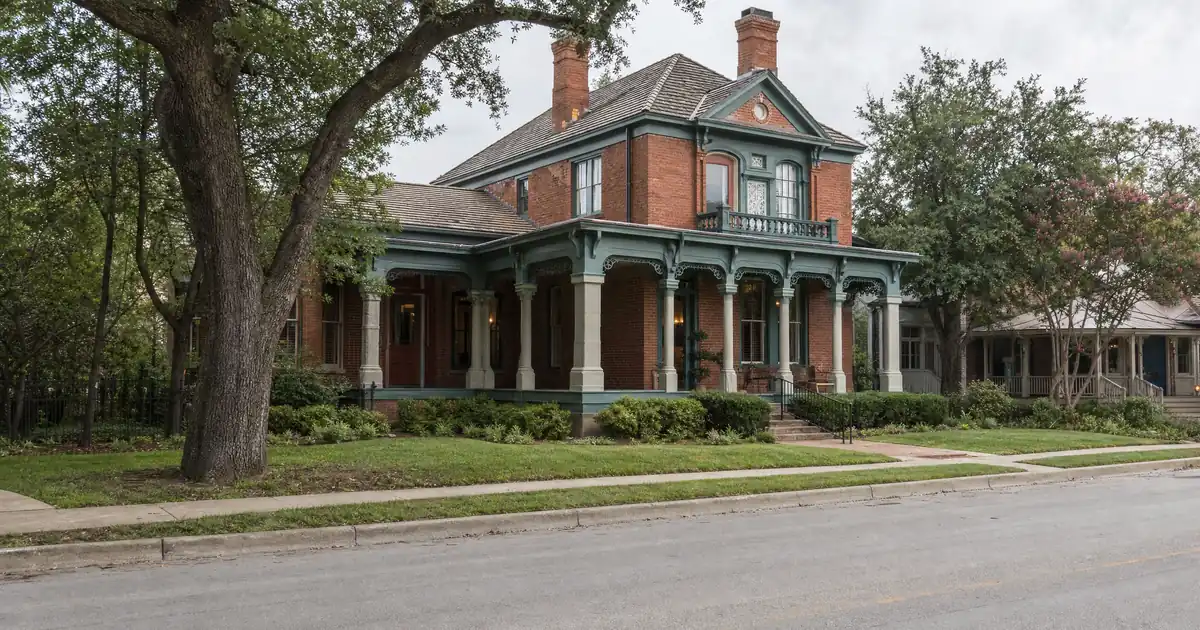
McKinney is entering a stretch where the story and the spreadsheet are pulling in different directions. Home values have eased back from a year ago even as Redfin shows sales activity actually picking up compared with the same period last year. Rents, meanwhile, are softening too: Zillow shows the citywide median easing modestly year over year. Add in a wave of new apartment supply concentrated in the Allen/McKinney submarket, per CBRE-sourced reporting, and the next 12 to 18 months look like a market correcting toward equilibrium rather than one still chasing 2021-era appreciation. That’s actually good news for DSCR investors. Softening prices paired with rents that are holding up reasonably well is the exact combination that improves coverage ratios on new acquisitions.
Key Takeaways: A McKinney DSCR purchase is underwritten primarily on the subject property’s rent measured against its full monthly housing obligation, not the borrower’s personal income, and the strongest submarkets for that math sit outside the master-planned showcase communities.
DSCR Calculator
Run the numbers in your market
Rate source: Freddie Mac 30-yr average via FRED® — Federal Reserve Bank of St. Louis · effective Jul 30, 2026
Prefilled with local estimates — enter your own rent or nightly figures, taxes, insurance, and HOA for a more accurate picture.
Program parameters update from Lendmire’s centralized guideline source. Taxes and insurance are editable estimates.
As of Jul 30, 2026 · General Freddie Mac market benchmark, not a Lendmire loan offer. Rent, nightly rate, occupancy, taxes, and insurance are editable estimates. Short-term rental figures are estimates only and vary significantly by season, property type, management approach, and local short-term-rental rules — confirm local regulations before relying on them. Qualifying income for short-term rentals varies by program — some use appraisal market rent, others use documented STR history or projections — and is confirmed in underwriting. Not a Loan Estimate, approval, or commitment to lend. Program availability and eligibility are subject to lender guidelines, credit approval, property review, and underwriting.
- East McKinney’s lower-priced housing stock produces the city’s most consistent day-one coverage.
- Stonebridge Ranch and Craig Ranch carry premium pricing that often runs below 1.00x on fresh purchase money.
- Stabilized rental vacancy runs meaningfully tighter than the broader DFW-metro stabilized average.
- Collin County’s typical gross rent comfortably outpaces the statewide Texas figure.
- True 2-4 unit stock is scarce; a single-family-plus-ADU structure is the realistic multi-unit play.
McKinney Market Snapshot
A quick read on the McKinney investor landscape — figures come from the cited sources below. Confirm current property-level numbers before underwriting.
| Metric | Detail |
|---|---|
| Home prices | $505K median (Redfin) |
| Typical rents | $2,500 median (Zillow Rental Manager) |
| Employment | 105K→111K employees (5% growth) (Data USA) |
What’s Actually Driving Rental Demand Here
McKinney’s tenant base is more diverse than the typical DFW bedroom suburb, and that matters for DSCR underwriting because it means demand doesn’t hinge on one employer or one industry cycle. Employment has trended solidly upward over the past year, according to Data USA, with the three largest sectors being Professional, Scientific & Technical Services, Health Care & Social Assistance, and Finance & Insurance. That mix skews toward salaried, credit-qualified renters rather than hourly or seasonal labor, which is the tenant profile DSCR lenders like to see behind a file.
The employer roster backs it up. McKinney Economic Development Corporation lists Globe Life (Torchmark Corporation), Encore Wire, SRS Distribution, Raytheon Intelligence & Space, Amazon, and Simpson Strong-Tie as notable employers headquartered or operating in the city — Globe Life’s headquarters sits inside Stonebridge Ranch itself, a rare Fortune-1000 corporate address for a suburb this size. On the healthcare side, Baylor Scott & White Medical Center – McKinney is the city’s flagship hospital, a 192-bed facility that opened in 2012 offering the area’s only Level III Neonatal ICU. Collin College’s McKinney Campus houses the district’s nationally recognized nursing and health sciences programs in the Cary A. Israel Health Sciences Center — a steady source of healthcare-worker renters near the medical corridor, even without a precise enrollment figure to cite.
Population growth underpins all of it. McKinney has expanded rapidly over the past two decades and continues to add residents year over year, according to a Community Impact report drawing on city data.
The Cash-Flow Zones: East and South McKinney
East McKinney and the Highway 5 corridor south of Eldorado Parkway are where DSCR purchase math actually clears comfortably at closing — not the master-planned communities that dominate the marketing. East McKinney’s older housing stock, priced well below the city’s overall median, and South McKinney’s 1980s-90s inventory, priced moderately below that median as well, give investors an acquisition basis low enough that rent covers the payment without needing appreciation to bail out the deal.
Run the numbers on a single-story, four-bedroom SFR near 1,800 square feet — the profile local investor guides consistently flag as the winning configuration in this market — priced near $375,000 — well below the $505,000 citywide median — in East McKinney. At 75 percent leverage and applying the citywide $2,890 four-bedroom rent average per Rentcast-sourced data, modeled coverage (using a standard 30-year amortization and Texas-average tax and insurance assumptions layered onto the mortgage payment) lands right around 1.05x-1.10x. That’s day-one coverage — if without the huge cushion the raw price-to-rent gap suggests — and it’s still the file profile that clears review most consistently in this market.
South McKinney’s older three-bedroom stock tells a similar story at a slightly tighter margin. A purchase near $400,000 — moderately above the East McKinney comp set — at 75 percent LTV, paired against the citywide $2,510 three-bedroom rent median, models to roughly 0.90x: just under the line, and a file that leans on a modest extra down payment or stronger credit rather than raw coverage, especially if rents soften further. This is workhorse rental country: not glamorous, but the spreadsheet works.
There’s a durable tailwind behind both zones. Section 8 penetration in the 75069 zip code sits at just 6.5 percent of homes, and HUD payment standards there run above prevailing market rent across every tracked unit size, per prop-metrics.com. An investor willing to accept a voucher tenant in that zip can lock in rent above comps — a military housing allowance income floor that most McKinney market write-ups skip past entirely.
Working DSCR brokers see a recurring pattern in fast-growing DFW-ring suburbs like McKinney: the headline vacancy number scares off buyers who never dig into the fine print. The citywide multifamily vacancy figure that shows up in most market reports includes new lease-up properties still filling their first units — stabilized vacancy, once that distortion is stripped out, runs meaningfully tighter than the broader DFW-metro stabilized average. That distinction changes rent-achievability assumptions materially on an existing single-family or small multifamily file, and it’s the kind of detail that separates a file that has actually been underwritten against this market from one built on a headline.
Craig Ranch and Stonebridge Ranch: Buy the Story, Not the Day-One Number
Skip these two for fresh purchase-money coverage — the price-to-rent math doesn’t clear 1.00x at current pricing, and investors buying here are underwriting appreciation, not cash flow. Stonebridge Ranch’s sale prices have pulled back roughly 9 percent from year-ago levels to a $549,000 trailing-twelve-month median, per Homes.com, while Movoto shows current list prices still sitting well above the East and South McKinney comp sets. Against typical Stonebridge Ranch rents, modeled coverage at 75 percent leverage comes in well under 1.00x — closer to 0.70x-0.75x territory using standard tax and insurance assumptions.
Craig Ranch runs the same problem at a lower price point. Homes there span a wide range from entry-level to well above the city’s luxury tier, and a mid-tier purchase near $500,000 against Craig Ranch’s typical $2,675 rent, per Redfin’s rental tracker, models to roughly 0.75x-0.80x — well sub-1.00 on long-term rent alone. That doesn’t make the deal dead. Sub-1.00 files can sometimes still move forward through a sub-1.00 or no-ratio structure, an interest-only setup that lowers the qualifying payment, or a larger down payment that improves leverage — each subject to lender guidelines, credit profile, and property review. But an investor walking into Craig Ranch expecting day-one coverage like East McKinney’s is going to be disappointed. This community is a refinance-and-appreciate play, not a buy-and-cash-flow play, and it should be underwritten that way from the start.
Downtown’s ADU Angle — the Real Multi-Unit Workaround
Here’s the honest read on multifamily in McKinney: there isn’t much of it. Stonebridge Ranch’s own for-sale listings show zero multifamily units in a recent month, and true duplex/triplex/fourplex stock is genuinely scarce citywide. The realistic multi-unit income play instead is a single-family home with an accessory dwelling unit — and Historic Downtown’s older housing stock is where that combination shows up most often.
The historic district itself is a legitimate draw, described by a local Realtor as “the second-largest historic district in the state of Texas,” per a Homes.com neighborhood guide, and dating to the city’s 1848 founding. Pre-1950s homes near the courthouse square trade at a meaningful discount in distressed condition, with after-repair values landing well above acquisition cost once renovated with a historically sympathetic finish — a real spread for an investor buying at the lower end and rehabbing correctly. But that ceiling deserves a caution flag: the fully-renovated comp set in the same district, per Homes.com, now sits well above what most flip-and-hold ARVs assume — meaning appraisal risk is real if an investor underwrites to the top of that comp range rather than the flipper-quoted ceiling.
Run the ADU math on a distressed-to-renovated purchase near the square: a primary three-bedroom unit renting at roughly the citywide $2,510 median, plus a self-contained ADU generating $1,200 to $1,500 a month, as documented in a downtown-adjacent Homes.com example. Combined rent against a 75 percent LTV purchase, once the full monthly housing payment — principal, interest, taxes, and insurance — is layered in using standard Texas tax and insurance assumptions, models to coverage in roughly the 1.10x-1.20x range. That’s a modest but genuine improvement over the primary unit alone, which would land closer to breakeven without the ADU income included, and it’s specific to this neighborhood’s housing stock in a way that doesn’t translate to the newer master-planned periphery. Investors who season into equity through a renovation like this one may eventually look at refi programs to pull cash back out once comps stabilize — a separate conversation from the purchase math above, but worth knowing the door is there.
Structuring the Purchase
DSCR mortgage broker review works by comparing the property’s rent to its full monthly housing obligation rather than the borrower’s traditional personal-income documentation — a mechanism explained in more depth on Lendmire’s page on how DSCR mortgage broker review works. For McKinney purchases, that typically means 75 to 80 percent LTV (20 to 25 percent down) on standard files, with higher leverage up to 85 percent available on the strongest borrower and property profiles when program guidelines allow. On many select programs a 1.00x coverage benchmark is the qualifying floor, though the exact threshold, credit tier, and reserve requirement — generally around six months of housing payment reserves — depend on lender guidelines, credit profile, and the property itself. Investors weighing McKinney against a straightforward conventional purchase can review how the two loan types differ before deciding which structure fits their portfolio strategy.
LLC-titled acquisitions are common in this investor pool, and DSCR programs generally accommodate entity-held title subject to lender program eligibility. Investors working through Texas-specific guidelines can also review Texas DSCR financing for state-level program context before running a specific McKinney address.
DSCR vs. conventional financing
Two common ways to finance an investment property in this market. They qualify you differently — here’s how investors weigh them.
Why investors choose it
- Qualifies on the property’s rental income — no personal tax returns, W-2s, or pay stubs needed to document income.
- No personal debt-to-income ceiling to clear, so existing mortgages and obligations don’t cap your borrowing the same way.
- Can be closed in an LLC, keeping the property inside a business entity.
- Built for scaling — not held to the limit on number of financed properties that conventional financing applies.
- Underwriting centers on the deal: generally qualifies when the rent covers the payment, a 1.00x coverage ratio being a common baseline (confirmed in underwriting).
- Designed specifically for investment property, including long-term and, where the program allows, short-term rentals.
Where it’s strong
- Often the lowest ongoing financing cost for a buyer who fully qualifies on personal income — a fit for a first property or a cost-first purchase.
Trade-offs for investors
- Requires full personal income documentation and must fit within a debt-to-income limit — salary, existing debts, and other mortgages all count.
- Typically held in your personal name rather than a business entity.
- Caps how many financed properties you can carry, which can become a ceiling as a portfolio grows.
- Evaluates you as a borrower as much as the property, which usually means more paperwork.
How investors usually choose: a first or single property often optimizes for the lowest financing cost; portfolio builders often optimize for leverage, vesting in an LLC, and scaling past conventional caps. The right answer depends on your goals, the property, and current guidelines — both paths run through select lenders in Lendmire’s wholesale network, with eligibility and terms confirmed in underwriting.
Frequently Asked Questions
How do you qualify for a DSCR loan in McKinney, Texas?
Qualification centers on the subject property’s rent relative to its monthly housing payment rather than personal income documentation. A McKinney SFR or SFR-plus-ADU with rent that covers or exceeds the payment at a given leverage point is the target profile; credit score, reserves, and the specific submarket’s rent-to-price ratio all factor into the final structure, subject to lender guidelines.
What are the requirements for an investment property loan in McKinney, Texas?
Most files run 75 to 80 percent LTV on purchase (20 to 25 percent down), with reserves generally around six months of the housing payment and credit tiers that widen or tighten leverage depending on the borrower’s profile. East and South McKinney’s lower price points make these requirements easier to satisfy at strong coverage than Stonebridge Ranch or Craig Ranch’s premium price bands.
Does an ADU add rental income for DSCR qualification in McKinney?
Yes, when the unit is legally permitted and produces documented or market-supported rent, an ADU’s income can be included in the property’s total rent used for lender review, subject to lender and appraisal review. In Historic Downtown, where true duplex and fourplex stock is scarce, an ADU generating meaningful additional monthly rent is often the difference between a file that barely clears 1.00x and one that clears comfortably above it.
How does McKinney’s new apartment supply affect single-family rental demand?
It mostly doesn’t — the new supply is concentrated in large-scale multifamily complexes, not the single-family and small-property stock DSCR investors target. New multifamily construction in McKinney has run meaningfully ahead of the broader Dallas metro’s pace in recent years, but that competition is between new Class-A complexes, not against an existing three- or four-bedroom rental house.
Where This Leaves an Investor
DSCR qualification runs primarily off the property’s income rather than personal income documentation, subject to lender guidelines, which is why it fits LLC-held rentals and investors scaling a portfolio rather than buying one house at a time. Lendmire can be reached at 828-256-2183 for investors weighing a McKinney file. Review details are subject to lender overlays and program eligibility, and terms vary by borrower, property, and loan scenario.
McKinney’s price correction is real, its rent base is holding up better than the headline vacancy number suggests, and the gap between what Stonebridge Ranch sells for and what it rents for isn’t closing anytime soon — so which side of that gap is your next purchase actually going to sit on?
About Lendmire
Lendmire, NMLS# 2371349, is a mortgage brokerage focused on investor financing, arranging DSCR loans in 39 states plus Washington, D.C. — 40 markets total. Qualification is based on the property’s income rather than personal income documentation, subject to lender guidelines, making it a fit for LLC-held rentals and scaling portfolios.
The firm has been recognized by Scotsman Guide as a 2025 Top Mortgage Workplace and a 2026 Top Mortgage Workplace.
Get Started
Ready to find the right loan for you?
In about 30 seconds you can review financing options available for your home or investment property. No commitment required.
Informational only. Not a Loan Estimate, approval, or commitment to lend. Program availability and eligibility are subject to lender guidelines, credit approval, property review, and underwriting.
References
1. Redfin – McKinney Housing Market
2. Zillow Rental Manager – McKinney Market Trends
3. Data USA – McKinney, TX Profile
4. McKinney Economic Development Corporation – Notable Employers
5. Baylor Scott & White Medical Center – McKinney
6. Collin College – McKinney Campus
7. Community Impact – McKinney Population Growth
10. Homes.com – Stonebridge Ranch Neighborhood
11. Movoto
12. Homes.com neighborhood guide
13. Homes.com
14. Scotsman Guide as a 2026 Top Workplace
Brandon Miller
Founder & CEO, Mortgage Loan Originator, Lendmire LLC
- Mortgage Loan Originator · NMLS# 1129696 · Verify on NMLS Consumer Access
- North Carolina Real Estate Broker · License# 343312 · Verify on NCREC
- North Carolina Insurance Producer · License# 19053198 · Property, Casualty, Life, Health · Verify on NAIC SBS
- Lendmire LLC · Firm NMLS# 2371349 · Verify firm licensure
Required disclosures. Lendmire (NMLS# 2371349) operates as a licensed mortgage broker, not a direct lender or depository. The discussion in this article is general in nature and should not be relied upon as financial, legal, or tax advice — every investment scenario is unique and should be reviewed by a qualified professional. Any loan inquiry is subject to lender underwriting, and this article is not a commitment to lend or a guarantee of approval. Mortgage rates, loan terms, and program guidelines vary by borrower, property, and state, and may change without notice. Equal Housing Opportunity. Verify licensure at NMLS Consumer Access.