
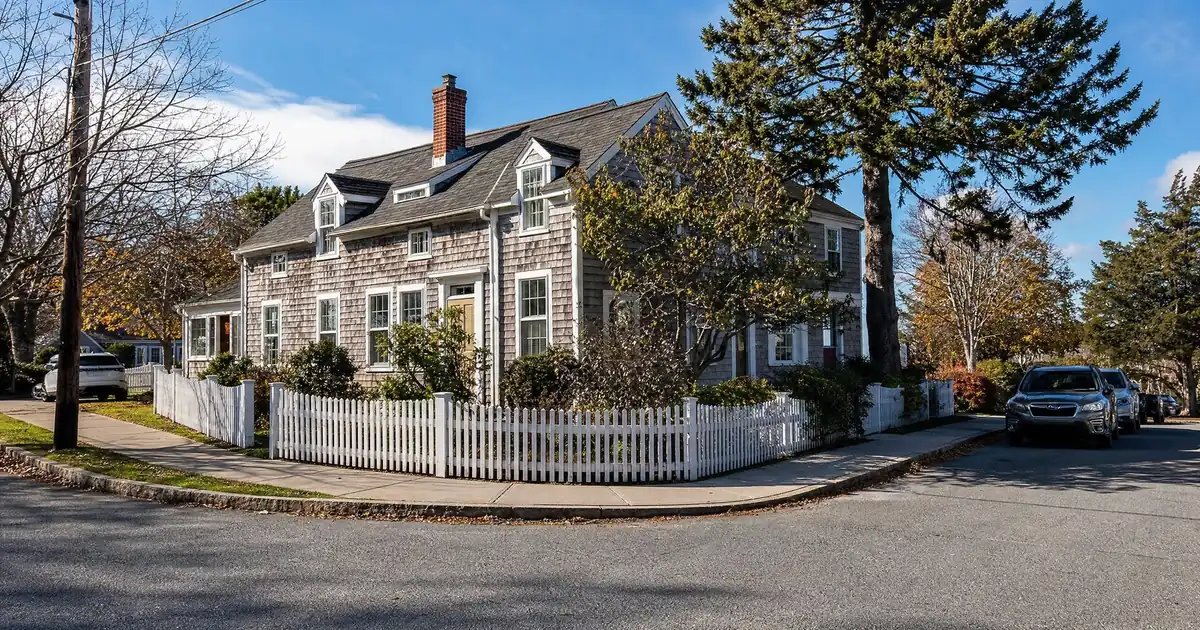
This article covers investment property loans in Ogunquit and explains what a DSCR loan is, which matters when median values far exceed the statewide norm. An out-of-state investor scrolling listings in Ogunquit sees the postcard first: Marginal Way cutting along the cliffs, Perkins Cove galleries, a 3.5-mile run of sand that Tripadvisor has ranked among the top 25 beaches in the country for four straight years. What that investor usually misses is the balance sheet underneath the postcard — a town of roughly 1,400 to 1,600 year-round residents where the average home value runs $924,685, according to Zillow’s home value index, against a Maine statewide median list price of $428,478 in the same reporting period. That’s a 2-3x premium over the rest of the state, and it changes how DSCR math has to be built here.
Key Takeaways: In Ogunquit, Maine, a rental property’s DSCR file gets underwritten primarily on the rent the property can document — a signed lease, a market rent schedule, or a combined multi-unit rent roll — measured against its full monthly obligation of principal, interest, taxes, and insurance, rather than the borrower’s personal income.
DSCR Calculator
Run the numbers in your market
Rate source: Freddie Mac 30-yr average via FRED® — Federal Reserve Bank of St. Louis · effective Jul 30, 2026
Prefilled with starting assumptions — enter your own rent or nightly figures, taxes, insurance, and HOA for a more accurate picture.
Program parameters update from Lendmire’s centralized guideline source. Taxes and insurance are editable estimates.
As of Jul 30, 2026 · General Freddie Mac market benchmark, not a Lendmire loan offer. Rent, nightly rate, occupancy, taxes, and insurance are editable estimates. Short-term rental figures are estimates only and vary significantly by season, property type, management approach, and local short-term-rental rules — confirm local regulations before relying on them. Qualifying income for short-term rentals varies by program — some use appraisal market rent, others use documented STR history or projections — and is confirmed in underwriting. Not a Loan Estimate, approval, or commitment to lend. Program availability and eligibility are subject to lender guidelines, credit approval, property review, and underwriting.
- Average home value sits at $924,685, roughly 2-3x Maine’s statewide median of $428,478.
- Actual Ogunquit rental listings run $2,000-$2,500 a month per unit, per live Zillow and Trulia data.
- 71.6 percent of Ogunquit’s housing stock reads as vacant off-season, per the town’s own comprehensive plan.
- Duplex and triplex rent-stacking is the primary lever to clear a 1.00 DSCR floor at current prices.
- Median days on market fell 31 percent year-over-year to 32 days, per Movoto — a good sign for appraisal comps in a thin-listing town.
Ogunquit Market Snapshot
A quick read on the Ogunquit investor landscape — figures come from the cited sources below. Confirm current property-level numbers before underwriting.
| Metric | Detail |
|---|---|
| Home prices | $1.27M median (Movoto Ogunquit Real Estate) |
| Employment | 20,000+ employees (Spectrum News) |
Why the Single-Family Math Breaks Down First
Run the numbers on the average Ogunquit home and a single long-term rental unit almost never clears a workable coverage ratio at today’s prices. That’s the starting fact any serious buyer needs to sit with before falling for the beach.
Actual live rental listings pulled from Zillow and Trulia show a four-bedroom house in the downtown core renting near $2,500 a month, and a smaller furnished two-bedroom unit near $2,000 a month. Those are real numbers, not proxies — rare for a town this small, since most rent trackers don’t publish Ogunquit-level data at all. Layer either figure against the town’s $924,685 average value, financed at 75 percent LTV with taxes and insurance folded into the payment, and the coverage ratio lands somewhere in the 0.4x-to-0.5x range. Not close. A single unit renting for $2,500 a month against a nearly million-dollar valuation covers less than half the monthly obligation once principal, interest, property tax, and insurance are all counted — the DSCR math simply doesn’t clear the 1.00 floor most programs use as a baseline.
That’s the entire reason multi-unit stacking dominates the conversation in this town. It isn’t a preference — it’s arithmetic.
The Downtown Core and the Moody Line
The Main Street mixed-use core is the strongest DSCR-purchase submarket in Ogunquit, and it isn’t close. Older two-to-four-unit buildings sit above or beside downtown retail, walkable to the beach, the trolley line, and the Ogunquit Playhouse — and this is where legal multi-unit inventory genuinely exists and trades, not just something zoning theoretically allows. Active listings on Homes.com’s York County multi-family page confirm the pattern directly: a legal three-unit property sitting east of Route 1 with easy access to Marginal Way, and a two-family ranch at the Wells-Ogunquit town line offering a three-bed/two-bath side alongside a one-bed/one-bath side built for exactly this kind of income-stacking play.
Run the numbers on a modeled three-unit building priced around $795,000 — below the town average, which is realistic for older stock away from the immediate waterfront. Assume combined monthly rent near $6,500 across three units (a modeled figure built from the real per-unit rents cited above, not a cited market average). At 75 percent LTV, once principal, interest, property tax, and insurance are all counted against that rent roll, the coverage ratio lands around 1.3x — solidly above the 1.00 floor most DSCR programs use as a baseline, with room to spare.
Compare that to a modeled two-unit property priced at $650,000 in the inland Moody corridor, closer to the Wells border, where housing stock skews more traditionally residential and further from resort pricing. Combined rent near $4,500 a month against 75 percent leverage lands the coverage ratio right around 1.1x. Push the same deal to 80 percent LTV — the higher end of Lendmire’s standard purchase range — and the ratio tightens to roughly 1.05x. Workable, but it shows exactly how sensitive this market is to leverage choice. A few points of down payment make the difference between a comfortable file and a marginal one.
The Moody corridor and the northern Ogunquit-Wells border carry more traditional duplex and triplex housing stock than the resort core, and they sit closer to Route 1 commercial services — a meaningfully different buyer profile than the galleries-and-cottages image most out-of-state investors bring with them.
Skip Perkins Cove for This Strategy
Perkins Cove looks like the obvious buy. It isn’t — not for a long-term rental strategy. This is the harbor-turned-gallery district, connected to downtown by the Marginal Way cliff walk, and it’s priced entirely on view and short-term rental potential rather than 12-month lease economics. Weekly rates in this micro-market run roughly $2,000 to $8,000-plus depending on season and unit — numbers that make sense for a nightly or weekly income model but have almost nothing to do with what a signed annual lease can support. Bald Head Cliff and Shore Road run the same playbook: luxury oceanfront estates priced for high-net-worth second-home buyers, not workforce tenants paying $2,000 to $2,500 a month.
The honest read: if a buyer is chasing appreciation and lifestyle use with occasional STR income layered in, the oceanfront corridor still makes sense on its own terms — just not as a DSCR long-term-rental purchase, which is the strategy this article is built around.
The Workforce Housing Paradox
Here’s the part most out-of-state buyers never see in a listing photo. Ogunquit’s own 2030 Comprehensive Plan reports that 71.6 percent of the town’s housing stock — 1,463 units — meets the Census definition of vacant, largely because owners are elsewhere off-season. A separate fiscal chapter of the same plan notes that only 14 percent of Ogunquit residents live in rented housing, far below Maine’s statewide average of 27 percent, per the town’s fiscal capacity chapter.
Read that pair of numbers together and the conclusion isn’t oversupply — it’s scarcity. Most of the housing stock is seasonally owned, not year-round occupied, which means the pool of homes actually delivering 12-month leases is a much smaller slice of the total than the headline vacancy number suggests. That scarcity shows up in a documented, on-the-ground way: reporting from the Portland Press Herald describes a downtown Ogunquit restaurant owner who moved out of his own house and rented it to four of his employees, calling it the only way to keep staff, since units that used to house seasonal workers “have all been renovated and turned into weekly rentals.”
That’s an employer-backed demand pool sitting right next to the strongest DSCR submarket — the downtown core. A buyer offering a legitimate 12-month lease near Main Street isn’t competing against a glut of empty units. They’re filling a documented gap that local business owners are already paying to solve themselves.
The seasonal swing behind all this is extreme even by Maine coastal-town standards. Ogunquit’s day-tripper and visitor population rises to roughly 20,000 people against a year-round base under 1,600, and 2022 retail sales data put sales per resident at $155,268 — a number that only makes sense once the visitor multiplier is factored in. No comparably sized Maine coastal town — not Kennebunkport, not Boothbay Harbor — runs that ratio at this scale.
Two Anchors Worth Watching
Ogunquit has no single large corporate employer inside town limits — the economy is small hospitality businesses that scale dramatically each summer. But two regional institutions shape long-term tenant demand.
The Ogunquit Playhouse generates an estimated $21.5 million annually for Maine’s economy and supports roughly 198 jobs, drawing more than 96,000 attendances a year. A $62 million total-reconstruction project is now moving through the town’s planning process — new event space, entry plaza, offices, accessibility upgrades, and on-site housing for performers and staff. No other Maine coastal town this size has a capital project of this scale tied to a single cultural institution, and it will drive multi-year construction-worker housing demand plus permanent seasonal-staff housing needs adjacent to the theater — exactly the kind of durable, employer-adjacent tenant base that supports a workforce-rental thesis in the downtown and Moody submarkets.
The second anchor sits just outside town limits: York Hospital, a 79-bed independent nonprofit serving the York-Ogunquit-Wells corridor since 1906. The hospital is currently working through a merger into MaineHealth, the state’s largest private employer with more than 20,000 employees, after a $10 million operating loss in a recent fiscal year. That’s worth watching rather than assuming — the deal still needs regulatory sign-off — but the framing from both sides is financial stabilization, not downsizing, and a deeper-pocketed system behind the York campus likely reinforces its role as a regional employment anchor rather than eroding it.
What Lendmire Sees on Files Like This
Deal desks that regularly underwrite small resort-town markets like Ogunquit tend to see the same friction point: comparable sales are thin, so appraisers lean hard on whatever recent closings exist, and a rent roll built from multiple units under one blanket loan needs each lease documented cleanly, not estimated. The cleaner files from a documentation standpoint tend to pair an actual signed lease or two with a conservative market-rent schedule for any vacant unit, rather than assuming top-of-range rent across the board — a habit that matters more in a thin market like this than in a deep metro where comps are abundant.
Purchase Parameters Worth Knowing Before Making an Offer
Ogunquit purchases typically run through standard DSCR purchase guidelines rather than anything market-specific: loan-to-value generally tops out in the 75 to 80 percent range, with select strong files eligible for up to 85 percent LTV where credit and reserves support it. The DSCR floor most programs are built around sits at 1.00, meaning documented rent needs to cover the full monthly obligation — principal, interest, taxes, and insurance — at that level or better, though some lenders will review lower-ratio files with stronger compensating factors, lower leverage, or additional reserves. Credit tiers commonly used across the network start around 620 and step up through 660, 680, and 700, with the 700 tier typically required for the higher-leverage options. Reserve requirements generally run about six months of PITIA, stepping up to roughly nine months on properties valued above $1,500,000 — a threshold that matters for buyers eyeing the higher end of Ogunquit’s oceanfront segment specifically.
DSCR financing for Ogunquit, Maine investors runs through wholesale lenders that Lendmire (NMLS# 2371349) works with across 41 markets, including D.C., and loan amounts on standard programs generally run up to $3,000,000, which covers the vast majority of Ogunquit’s price range without needing a jumbo or specialty carve-out. Buyers titling the purchase under an LLC should expect this to work within standard DSCR structures, depending on program guidelines, since rental-income underwriting is built around the property rather than the borrower’s traditional personal-income documentation.
For a fuller breakdown of the DSCR lender review mechanics and the guide “Where DSCR and Conventional Diverge”, both pillar pages walk through the underlying structure in more depth than a single city article can cover. Investors comparing Ogunquit against other Maine coastal markets can also review Lendmire’s Maine DSCR loan programs directly.
| Metric | Ogunquit | Maine (statewide) |
|---|---|---|
| Average home value | $924,685 | — |
| Median list price (May) | $1.27M | $428,478 |
| Median days on market | 32 (-31% YoY) | — |
One more data point worth sitting with: Ogunquit’s median list price actually fell 14 to 15 percent year-over-year even as the town’s average value stayed roughly flat, up just 0.7 percent. That divergence — a cooling top end pulling the median down while the broader value index barely moves — suggests the post-pandemic appreciation run here is losing steam, especially at the waterfront. That’s arguably good news for a cash-flow-first buyer: less pressure to chase appreciation, more reason to focus on the rent-stacking math that actually clears a coverage ratio.
Frequently Asked Questions
What credit score do I need for an investment property loan in Ogunquit, Maine?
Credit tiers across Lendmire’s DSCR network commonly start at a 620 floor, with better pricing and leverage available at 660, 680, and 700, subject to lender guidelines. The 700 tier is generally required for the higher-leverage purchase options up to 85 percent LTV. Exact eligibility depends on the full file — credit, reserves, and the property’s documented rent.
DSCR vs. conventional financing
Two common ways to finance an investment property in Ogunquit, ME. They qualify you differently — here’s how investors weigh them.
Why investors choose it
- Qualifies on the property’s rental income — no personal tax returns, W-2s, or pay stubs needed to document income.
- No personal debt-to-income ceiling to clear, so existing mortgages and obligations don’t cap your borrowing the same way.
- Can be closed in an LLC, keeping the property inside a business entity.
- Built for scaling — not held to the limit on number of financed properties that conventional financing applies.
- Underwriting centers on the deal: generally qualifies when the rent covers the payment, a 1.00x coverage ratio being a common baseline (confirmed in underwriting).
- Designed specifically for investment property, including long-term and, where the program allows, short-term rentals.
Where it’s strong
- Often the lowest ongoing financing cost for a buyer who fully qualifies on personal income — a fit for a first property or a cost-first purchase.
Trade-offs for investors
- Requires full personal income documentation and must fit within a debt-to-income limit — salary, existing debts, and other mortgages all count.
- Typically held in your personal name rather than a business entity.
- Caps how many financed properties you can carry, which can become a ceiling as a portfolio grows.
- Evaluates you as a borrower as much as the property, which usually means more paperwork.
How investors usually choose: a first or single property often optimizes for the lowest financing cost; portfolio builders often optimize for leverage, vesting in an LLC, and scaling past conventional caps. The right answer depends on your goals, the property, and current guidelines — both paths run through select lenders in Lendmire’s wholesale network, with eligibility and terms confirmed in underwriting.
How do you qualify for a DSCR loan on a small multifamily property in Ogunquit?
Qualification centers on the combined rent roll across all units measured against the full monthly obligation, rather than any single unit’s rent. A duplex or triplex with two or three documented leases (or a conservative market-rent schedule for vacant units) generally has a much easier path to a 1.00-or-better coverage ratio in this town than a single-family rental priced near the town average.
Why don’t single-family rentals pencil well in Ogunquit compared to Wells or Kittery?
Ogunquit’s average home value of $924,685 sits roughly double to triple what comparable single-family homes command in most inland York County towns, while actual Ogunquit rents documented on live listings run $2,000 to $2,500 a month. That price-to-rent gap is wider here than in surrounding towns, which is why multi-unit stacking carries more weight in Ogunquit specifically.
Does the Ogunquit Playhouse reconstruction change the investment case here?
It adds a durable, multi-year demand driver for workforce and staff housing near the downtown core. A $62 million rebuild project of that scale is unusual for a town this size, and it’s likely to reinforce rental demand in the Main Street and Moody submarkets over the life of the construction and staffing ramp-up.
Is Perkins Cove a good fit for a DSCR long-term rental purchase?
Generally, no. Perkins Cove pricing is built around view premium and weekly short-term rental income, not 12-month lease economics — weekly rates there commonly run $2,000 to $8,000-plus depending on season. Investors focused on annual-lease DSCR purchases typically find better coverage ratios in the downtown core or the inland corridor.
How does rental income affect DSCR refinance eligibility in Ogunquit?
Lendmire arranges DSCR financing and the underlying structure treats a property’s documented rent — not the borrower’s traditional personal-income documentation — as the primary qualifying factor, subject to lender guidelines. That structure applies whether the transaction is a purchase or a refinance, and it’s part of why LLC-titled and self-employed investors gravitate toward DSCR programs in resort towns like this one.
Investors weighing Ogunquit against other coastal Maine towns can reach Lendmire at 828-256-2183 or talk through the file directly with the team.
Lendmire is a DSCR-focused mortgage broker that helps arrange investor financing through wholesale and investor-lending channels. DSCR eligibility is generally reviewed by the lender on the property’s rental income rather than personal income documentation, subject to lender guidelines — a structure that tends to work well for self-employed investors, LLC operators, and portfolios above four financed properties.
The number that ought to stick with any out-of-state buyer isn’t the $924,685 average home value or the $1.27 million median list price. It’s the 71.6 percent — the share of Ogunquit’s housing stock that the town’s own comprehensive plan classifies as vacant off-season. In a town that small, that’s not a warning sign. It’s the size of the opportunity nobody else is underwriting for yet.
About Lendmire
Lendmire (NMLS# 2371349) is a DSCR-focused mortgage broker that helps arrange investor financing across 41 markets, including Washington, D.C., through wholesale and investor-lending channels. DSCR eligibility is generally reviewed by the lender on the property’s rental income rather than personal income documentation, subject to lender guidelines — which works for self-employed investors, LLC operators, and portfolios above four financed properties. Scotsman Guide named Lendmire a Top Mortgage Workplace in both 2025 and 2026.
Get Started
Ready to find the right loan for you?
In about 30 seconds you can review financing options available for your investment property. No commitment required.
Informational only. Not a Loan Estimate, approval, or commitment to lend. Program availability and eligibility are subject to lender guidelines, credit approval, property review, and underwriting.
References
1. Zillow Ogunquit Home Values
2. Ogunquit 2030 Comprehensive Plan, Chapter 8: Housing
3. Movoto Ogunquit Real Estate
6. Homes.com York County Multi-Family Listings
7. Ogunquit 2030 Comprehensive Plan, Chapter 12: Fiscal Capacity
8. Portland Press Herald — Maine seasonal businesses housing workers
9. Maine Public — York Hospital/MaineHealth merger
10. a 2025 Scotsman Guide Top Workplace
11. Scotsman Guide — Top Workplaces 2026
This article is part of Lendmire’s DSCR loan program — full qualification details, guidelines, and scenarios live on the program page.
Related reading: Blanket DSCR Loans In Maine: How Multi-property Investors Qualify · DSCR Investment Property Loans in Kennebunkport, ME: How Buyers Qualify When the Median Runs $850K · DSCR Cash Out Refinance Maine
Guides: DSCR Loans in Maine
Brandon Miller
Founder & CEO, Mortgage Loan Originator, Lendmire LLC
- Mortgage Loan Originator · NMLS# 1129696 · Verify on NMLS Consumer Access
- North Carolina Real Estate Broker · License# 343312 · Verify on NCREC
- North Carolina Insurance Producer · License# 19053198 · Property, Casualty, Life, Health · Verify on NAIC SBS
- Lendmire LLC · Firm NMLS# 2371349 · Verify firm licensure
Legal disclosures. Lendmire (NMLS# 2371349) is a state-licensed mortgage brokerage that arranges financing through wholesale lender relationships. Lendmire is not a direct lender, depository institution, or registered financial advisor. The discussion above is general informational content about real estate financing — it is not financial, legal, or tax advice, and readers should consult licensed professionals for guidance on their individual circumstances. Loan inquiries are subject to lender underwriting; this article does not represent a commitment to lend. Loan terms, rates, and qualification standards vary by borrower, property, and state, and are subject to change at any time. Equal Housing Opportunity. NMLS Consumer Access: nmlsconsumeraccess.org.