
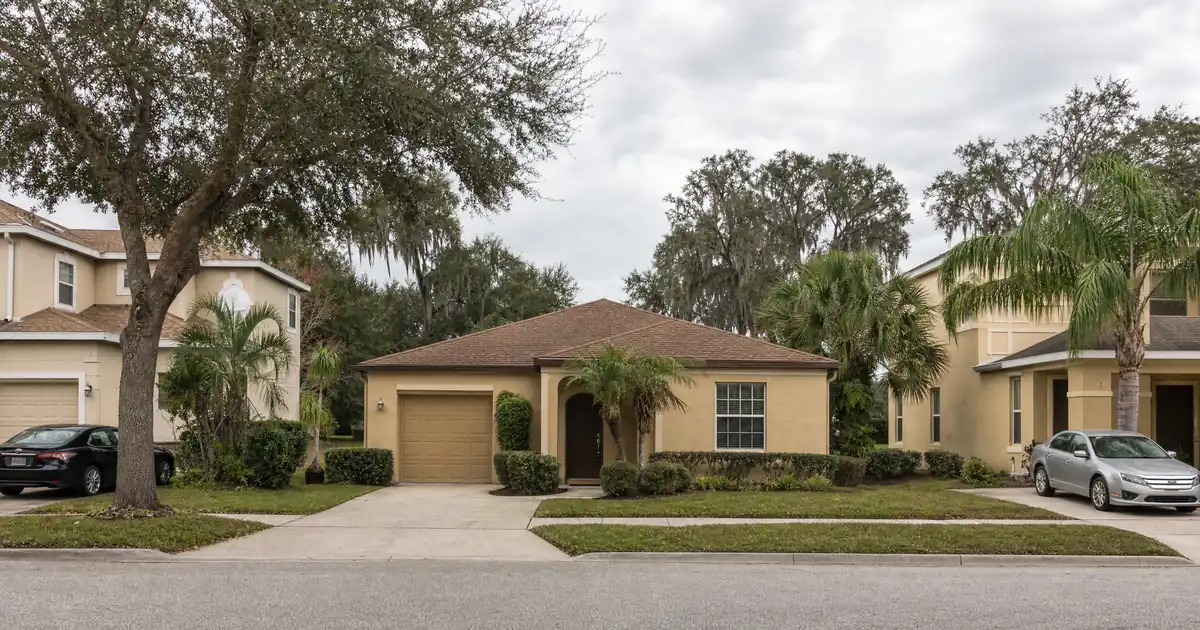
Investment property loans in Orlando are shaped by a rental market that is quietly resetting, and most of the headline price coverage misses it. The apartment construction pipeline has shrunk to its lowest point in years, absorption has turned positive, and metro-wide vacancy is pulling back from an 11 percent peak toward the high single digits, according to TrueNorth Managed Properties. For an investor deciding where to close a purchase over the next six to eighteen months, that shift matters more than the median price headline — it changes which Orlando submarkets are still underpriced relative to rent, and which have already caught up.
Home prices themselves depend heavily on which source is doing the measuring. Redfin’s MLS-based data puts the metro median sale price at $410,000 over the three months ending in the most recent reporting period, per Redfin. Zillow’s automated valuation model, which averages across a broader and often lower-priced stock, shows the typical home value closer to $376,216, down 2.8 percent over the past year. Neither figure is wrong — they’re measuring different things — but a purchase-minded buyer needs to know which one applies to the ZIP being underwritten, because Orlando’s price dispersion by ZIP code is extreme.
DSCR Calculator
Run the numbers in your market
Rate source: Freddie Mac 30-yr average via FRED® — Federal Reserve Bank of St. Louis · effective Jul 30, 2026
Prefilled with starting assumptions — enter your own rent or nightly figures, taxes, insurance, and HOA for a more accurate picture.
Program parameters update from Lendmire’s centralized guideline source. Taxes and insurance are editable estimates.
As of Jul 30, 2026 · General Freddie Mac market benchmark, not a Lendmire loan offer. Rent, nightly rate, occupancy, taxes, and insurance are editable estimates. Short-term rental figures are estimates only and vary significantly by season, property type, management approach, and local short-term-rental rules — confirm local regulations before relying on them. Qualifying income for short-term rentals varies by program — some use appraisal market rent, others use documented STR history or projections — and is confirmed in underwriting. Not a Loan Estimate, approval, or commitment to lend. Program availability and eligibility are subject to lender guidelines, credit approval, property review, and underwriting.
The Short Version: A DSCR investment property loan in Orlando, Florida is underwritten primarily on the property’s projected rent measured against its full monthly housing obligation rather than the borrower’s personal income or traditional personal-income documentation, and in a metro where the median sale price runs near $410,000 per Redfin, that structure decides which submarkets actually clear a lender’s coverage floor.
- Kissimmee’s rent-to-price ratio clears roughly 1.6x modeled coverage on median-priced single-family stock
- The 32811 and 32839 ZIPs are among the only submarkets where rent now sits above the modeled cost of ownership
- Lake Nona and Winter Park price for appreciation, not day-one coverage
- Metro apartment vacancy has pulled back from an 11 percent peak toward roughly 9.5 to 10 percent
- Florida purchase files carry no state overlay; leverage runs up to the standard 80 percent LTV (85 percent at most)
Orlando Market Snapshot
A quick read on the Orlando investor landscape — figures come from the cited sources below. Confirm current property-level numbers before underwriting.
| Metric | Detail |
|---|---|
| Home prices | $410K median (Redfin Housing Market – Orlando) |
| Typical rents | $1,792 avg apt (RentCafe/Yardi Matrix – Orlando) |
| University enrollment | 70,000+ students (UCF Facts 2025-2026) |
| Population | 2,957,672 mid-2025 population (Orlando Economic Partnership) |
| Employment | AdventHealth 37,672 regional employees (Orlando Economic Partnership) |
Kissimmee and the Southwest ZIPs Where Coverage Actually Clears
Kissimmee is the strongest cash-flow story in the Orlando metro right now, and it isn’t close. The submarket’s median home value sits at $224,821 against average market rent of $2,250 a month, per The Listing REM — a rent-to-price ratio roughly double what most Orlando ZIPs post. Modeling that purchase at a 75 percent purchase LTV (25 percent down) and running full PITIA — principal and interest, plus Florida-average property tax and insurance loads — produces a modeled coverage ratio around 1.6x. That’s not a marginal file. That’s a property that clears the standard 1.00x DSCR benchmark with real cushion, which matters because most standard DSCR programs are built around that 1.00x floor precisely because rent needs to cover the full payment at that level.
Two zip-level data points reinforce the same pattern a bit further north. In 32811, a median home value of $195,143 carries average rent of $1,574 a month, and in 32839, a median value of $229,886 pairs with rent around $1,519, according to a Zillow-sourced ZIP-level market breakdown. Running the same 75 percent LTV, full-PITIA model against those numbers puts 32811 around 1.28x modeled coverage and 32839 closer to 1.05x — thinner, but still above the floor. Compare that to the metro’s premium ZIPs (32836, 32814, 32827), where rent runs well behind the cost of ownership and the deal only works as an appreciation play, not a coverage play.
DSCR files in workforce-price submarkets like Kissimmee and the 32811/32839 corridor tend to follow a recognizable pattern in the file room: rent-to-price ratios above roughly 0.6 percent monthly clear the coverage floor, though the cushion can be thin, while anything priced above the metro median usually needs either a larger down payment or a rent figure pulled from a strong comparable rather than the listing agent’s optimistic pro forma. The lease or rent-roll documentation on these workforce files tends to be the cleanest part of the package — it’s the insurance quote that causes the most rework. A Citizens or FAIR Plan-adjacent binder that’s a few weeks stale by the time underwriting reviews the file can shift the coverage math enough to matter, so getting a current quote attached before submission is the single habit that keeps these files moving.
For investors weighing whether to structure entity-titled purchases through an LLC, that option remains available on many DSCR files, subject to lender program eligibility, and it doesn’t change the underlying rent-to-payment math described above.
The Southwest Orlando Squeeze
Southwest Orlando — Dr. Phillips, Windermere and the Horizon West growth corridor — is tightening faster than the rest of the metro, and that’s a signal worth weighing against price. Vacancy in that submarket runs two to three percentage points below the metro average, with rents commanding a 15 to 20 percent premium, per TrueNorth’s market update. That’s the kind of absorption signal that tends to precede rent growth into a future refinance, which is relevant even on a purchase-focused file because it affects how conservatively a lender’s appraiser and rent-comp reviewer treat the projected rent on day one.
The catch is entry price. New-construction stock in this corridor trades well above the metro’s workforce-ZIP pricing, so the coverage math here leans closer to Lake Nona’s appreciation thesis than to Kissimmee’s cash-flow thesis. This is a submarket where a buyer is paying up for occupancy strength and rent-growth momentum rather than for immediate DSCR cushion — a reasonable trade for a longer hold, less obviously a fit for an investor who needs the file to clear comfortably above 1.00x on day one.
Lake Nona’s Medical City — An Appreciation Bet, Not a Day-One Cash Flow Play
Lake Nona (ZIP 32827) is the single most interesting — and most overhyped — submarket in Orlando for a DSCR investor, and the numbers argue for caution before conviction. New-construction buy-in runs $450,000 to $700,000, with premium three-bedroom rents of $2,600 to $3,500 a month producing a gross yield of 5 to 7 percent, according to MaxLife Realty’s ZIP-level analysis. Modeling a mid-range purchase at 75 percent LTV with full PITIA — Florida-average tax and insurance included — puts that file below 1.00x modeled coverage, closer to the mid-0.80s. That’s not a disqualifying number, but it is a number that changes what the loan needs to lean on.
The demand anchor is real. Nemours Children’s Hospital, Florida is a freestanding, 130-bed pediatric acute care facility located in Lake Nona Medical City, per Nemours’ official site, and the district also houses an Orlando VA Medical Center campus, the University of Central Florida College of Medicine, and a new AdventHealth Lake Nona hospital that will bring on roughly 600 physicians, nurses and support staff at opening, per AdventHealth’s own construction update. That’s a genuinely unusual concentration of institutional employment for a single master-planned district — physicians, researchers, VA staff and hospital administrators, not seasonal hospitality workers. It supports a tenant-quality argument. It does not, on its own, turn a sub-1.00x coverage file into a 1.20x file.
For buyers set on this submarket, a sub-1.00x scenario doesn’t close the door — it changes the structuring conversation. Lender review may consider a sub-1.00 DSCR program, an interest-only structure to reduce the qualifying payment, or a larger down payment to bring leverage down and coverage up, all subject to lender guidelines, credit approval and property review. Lendmire (NMLS# 2371349) works with Orlando, Florida investors through a DSCR program footprint spanning 40 states plus Washington, D.C., and — for buyers weighing whether Lake Nona’s equity story is worth pulling forward later — refi programs are worth reviewing once a purchase has seasoned.
Winter Park and the Renter Base Nobody Talks About
Winter Park runs on a different math entirely, and it’s worth naming honestly: this is an appreciation submarket, not a coverage submarket. The area posts a monthly rent-to-price ratio around 0.49 percent — roughly 5.9 percent gross annually, per The Listing REM’s submarket comparison. More than one-third of Winter Park residents rent rather than own, per RentCafe’s Yardi Matrix-sourced data, which keeps vacancy structurally low even when the coverage math itself is unremarkable. The demand base leans on Rollins College and an AdventHealth flagship campus adjacent to the neighborhood — professional and institutional renters, not tourist-corridor turnover.
The honest read here: Winter Park is the neighborhood where a DSCR loan gets underwritten to roughly cash-flow-neutral today with the bet placed on multi-year appreciation and a low structural vacancy floor, not on first-year yield. That’s a legitimate strategy. It’s a different strategy than Kissimmee, and conflating the two is where investors talk themselves into a purchase that doesn’t clear coverage the way they assumed it would.
Small Multifamily in Thornton Park, the Milk District and College Park
Two-to-four-unit stacking is one of the more overlooked DSCR strategies in Orlando, mostly because true small multifamily inventory is scarce outside a handful of historic-core pockets. Active listings recently included a quadplex with four two-bedroom units in Thornton Park and a fully tenanted duplex in the Milk District, per Homes.com’s Orlando listings, and citywide, multifamily inventory runs thin — just 34 multifamily listings at a median price of $662,000, per Redfin’s multifamily search data. DSCR programs generally accept two-to-four-unit properties on the same rental-income basis as a single-family home, so a duplex or fourplex in one of these corridors can stack multiple rent rolls against a single loan — often the cleanest path to strong coverage without chasing the highest-rent ZIP in the metro.
The friction point on these files isn’t the loan structure — it’s the rent roll itself. Multi-unit purchases in these older neighborhoods frequently come with existing tenants on leases that predate the sale, and a lender’s rent-comp review wants current, verifiable lease documentation for each unit, not a seller’s stated rent. Buyers who pull tenant ledgers and signed leases before the file goes to underwriting avoid the back-and-forth that otherwise stalls these deals for weeks.
What Actually Qualifies — And What Trips Up Orlando Files
Qualification on an Orlando DSCR purchase runs on the property’s numbers first: DSCR lender review is a rent-versus-full-payment test rather than a personal income underwrite, which is the core mechanical difference from a conventional loan — see the guide “Where DSCR and Conventional Diverge” for the full comparison. On the parameters side, purchase leverage on Florida DSCR files runs up to the standard 80 percent LTV (85 percent at most) — no geographic underwriting overlay applies to the state — and the examples here are modeled conservatively at 75 percent, or roughly 25 percent down. Reserve requirements typically run around six months of PITIA, stepping up toward nine months on loan amounts above $1,500,000, and credit tiers generally run 620, 660, 680 and 700, with 620 as the program floor — though stronger credit and larger reserves tend to widen what a lender will accept on a thinner-coverage file like the Lake Nona scenario above.
None of these figures are guarantees. They’re program guidelines that shift by lender, credit profile, reserves and property type, and review details remain subject to lender overlays — worth confirming directly against Lendmire’s Florida DSCR loan programs before underwriting a specific purchase. Investors can reach Lendmire at 828-256-2183 or get a DSCR quote to walk through a specific submarket’s numbers.
Orlando’s institutional employment base is worth weighing against the tourism narrative that dominates most outside coverage of the metro. Walt Disney World Resort alone employs 80,000 people and Universal Orlando Resort another 32,084, per the Orlando Economic Partnership’s employer data (a dated 2022-vintage count, useful for relative scale rather than a precise current figure). AdventHealth separately employs 37,672 across the region and operates 17 hospitals, per the Orlando Economic Partnership’s healthcare page. The University of Central Florida enrolls more than 70,000 students and employs over 13,000 people on a $2 billion operating budget, per UCF’s official facts page — a labor and tenant pool distinct from, and largely independent of, the tourism sector. The region’s population reached 2,957,672 at the most recent mid-year count, adding roughly 37,690 residents in a single year — about 725 people a week, per the Orlando Economic Partnership citing Census Bureau data — a growth rate that keeps rental demand structurally supported even as short-term rent trends flatten. That scale is also why the metro remains one of the most liquid multifamily investment markets in the country, with more than $22.8 billion in sales volume over the trailing five years, per Colliers’ Q1 multifamily report — deep transaction volume that gives appraisers ample comparable sales to work from on both purchase and future refinance valuations.
Frequently Asked Questions
How do you qualify for a DSCR loan in Orlando, Florida?
Qualification centers on the property’s rent measured against its full monthly obligation rather than the borrower’s traditional personal-income documentation or W-2s. A lender reviews the projected rent (typically supported by a market rent schedule or existing lease), the purchase price, credit profile and reserves, and runs those against program guidelines that generally set a 1.00x DSCR benchmark, up to 80 percent purchase LTV in Florida (85 percent at most), and credit tiers starting around 620 — all subject to lender overlays.
What are the requirements for an investment property loan in Orlando, Florida?
Requirements generally include roughly 20 percent down at the standard 80 percent purchase LTV (the examples above model 25 percent), reserves around six months of PITIA (higher on larger loan amounts), a credit score in the low-to-mid 600s or better, and documentation supporting the property’s rental income. Entity-titled purchases through an LLC are often possible, subject to lender program eligibility, without changing the underlying rent-to-payment test.
Why does Lake Nona show a lower coverage ratio than Kissimmee?
Lake Nona’s new-construction pricing runs $450,000 to $700,000 against rents of $2,600 to $3,500, producing a gross yield in the 5 to 7 percent range — solid for a master-planned medical district but thin relative to purchase price. Kissimmee’s much lower entry price against comparable rent produces a far stronger rent-to-price ratio, which is why it clears standard DSCR coverage more easily on the same leverage.
DSCR vs. conventional financing
Two common ways to finance an investment property in Orlando, FL. They qualify you differently — here’s how investors weigh them.
Why investors choose it
- Qualifies on the property’s rental income — no personal tax returns, W-2s, or pay stubs needed to document income.
- No personal debt-to-income ceiling to clear, so existing mortgages and obligations don’t cap your borrowing the same way.
- Can be closed in an LLC, keeping the property inside a business entity.
- Built for scaling — not held to the limit on number of financed properties that conventional financing applies.
- Underwriting centers on the deal: generally qualifies when the rent covers the payment, a 1.00x coverage ratio being a common baseline (confirmed in underwriting).
- Designed specifically for investment property, including long-term and, where the program allows, short-term rentals.
Where it’s strong
- Often the lowest ongoing financing cost for a buyer who fully qualifies on personal income — a fit for a first property or a cost-first purchase.
Trade-offs for investors
- Requires full personal income documentation and must fit within a debt-to-income limit — salary, existing debts, and other mortgages all count.
- Typically held in your personal name rather than a business entity.
- Caps how many financed properties you can carry, which can become a ceiling as a portfolio grows.
- Evaluates you as a borrower as much as the property, which usually means more paperwork.
How investors usually choose: a first or single property often optimizes for the lowest financing cost; portfolio builders often optimize for leverage, vesting in an LLC, and scaling past conventional caps. The right answer depends on your goals, the property, and current guidelines — both paths run through select lenders in Lendmire’s wholesale network, with eligibility and terms confirmed in underwriting.
Is southwest Orlando a stronger buy than the tourist corridor near Disney?
It depends on the goal. Southwest Orlando (Dr. Phillips, Windermere, Horizon West) shows tighter vacancy and rent premiums of 15 to 20 percent over the metro average, which favors rent-growth momentum, but entry pricing runs high enough that day-one coverage often resembles Lake Nona more than Kissimmee. The tourist-corridor submarkets near the theme parks carry their own considerations around local rental permitting that investors should verify directly with the relevant county before assuming a particular use.
How does Orlando’s tourism economy affect long-term rental demand?
It creates an unusually large renter base tied to hourly hospitality employment — Disney alone employs roughly 80,000 people in the metro — layered on top of the region’s healthcare, defense and education employment. That combination supports steady long-term rental demand in workforce-priced submarkets even when tourism-adjacent short-term rental performance fluctuates.
Can Lendmire help investors explore DSCR financing for properties outside Florida?
Yes. Lendmire arranges DSCR investor loans through its multi-state program footprint, and its non-QM platform generally qualifies investment properties on projected rental income rather than personal income documentation, subject to lender guidelines and program terms in each state.
Where This Settles Over the Next Year
The next six to eighteen months in Orlando likely favor patience over urgency in the highest-priced submarkets and speed in the workforce ZIPs. If the construction pipeline keeps shrinking while population growth holds near its current pace, vacancy in submarkets like southwest Orlando and the urban core should keep tightening, which argues for locking in Kissimmee and 32811/32839-style coverage now before rent catches up to price and compresses that ratio advantage. Lake Nona and Winter Park, by contrast, look like slower burns — Medical City’s build-out and Winter Park’s structural low vacancy are multi-year theses, not next-year catalysts, and buyers chasing those neighborhoods for immediate cash flow will likely keep being disappointed by the math. The metro’s own recent history — a 26.4 percent price spike followed by a multi-year correction — is a reminder that Orlando’s appreciation story runs in cycles, while its rent-to-price arbitrage in the workforce ZIPs has been the more durable, less headline-driven trade all along.
About Lendmire
Lendmire (NMLS# 2371349) is a DSCR-focused mortgage broker that helps arrange investor financing across 41 markets, including Washington, D.C., through wholesale and investor-lending channels. DSCR eligibility is generally reviewed by the lender on the property’s rental income rather than personal income documentation, subject to lender guidelines — which works for self-employed investors, LLC operators, and portfolios above four financed properties. Scotsman Guide named Lendmire a Top Mortgage Workplace in both 2025 and 2026.
Get Started
Ready to find the right loan for you?
In about 30 seconds you can review financing options available for your investment property. No commitment required.
Informational only. Not a Loan Estimate, approval, or commitment to lend. Program availability and eligibility are subject to lender guidelines, credit approval, property review, and underwriting.
References
1. TrueNorth Managed Properties — Orlando Market Update
2. Redfin — Orlando Housing Market
3. per RentCafe’s Yardi Matrix-sourced data
5. Orlando Economic Partnership — Population Growth
6. Orlando Economic Partnership — Healthcare
8. MaxLife Realty’s ZIP-level analysis
9. Nemours Children’s Hospital, Florida
10. per The Listing REM’s submarket comparison
11. per Homes.com’s Orlando listings
12. Redfin — Orlando Multi Family Homes for Sale
13. per the Orlando Economic Partnership’s employer data
14. Colliers — Orlando Multifamily Market Report
15. 2025
16. 2026
This article is part of Lendmire’s DSCR loan program — full qualification details, guidelines, and scenarios live on the program page.
Related reading: Cash Out Refinance Investment Property in Lake Worth, Florida: Fourplex Equity Math · Investment Property Loans in Kissimmee, FL: The 2026 DSCR Financing Guide to NeoCity · Cash Out Refinance Investment Property in Opa Locka, Florida: How Much Equity Can You Pull?
Guides: DSCR Loans in Orlando, FL · DSCR Loans in Florida
Brandon Miller
Founder & CEO, Mortgage Loan Originator, Lendmire LLC
- Mortgage Loan Originator · NMLS# 1129696 · Verify on NMLS Consumer Access
- North Carolina Real Estate Broker · License# 343312 · Verify on NCREC
- North Carolina Insurance Producer · License# 19053198 · Property, Casualty, Life, Health · Verify on NAIC SBS
- Lendmire LLC · Firm NMLS# 2371349 · Verify firm licensure
Required disclosures. Lendmire (NMLS# 2371349) operates as a licensed mortgage broker, not a direct lender or depository. The discussion in this article is general in nature and should not be relied upon as financial, legal, or tax advice — every investment scenario is unique and should be reviewed by a qualified professional. Any loan inquiry is subject to lender underwriting, and this article is not a commitment to lend or a guarantee of approval. Mortgage rates, loan terms, and program guidelines vary by borrower, property, and state, and may change without notice. Equal Housing Opportunity. Verify licensure at NMLS Consumer Access.