
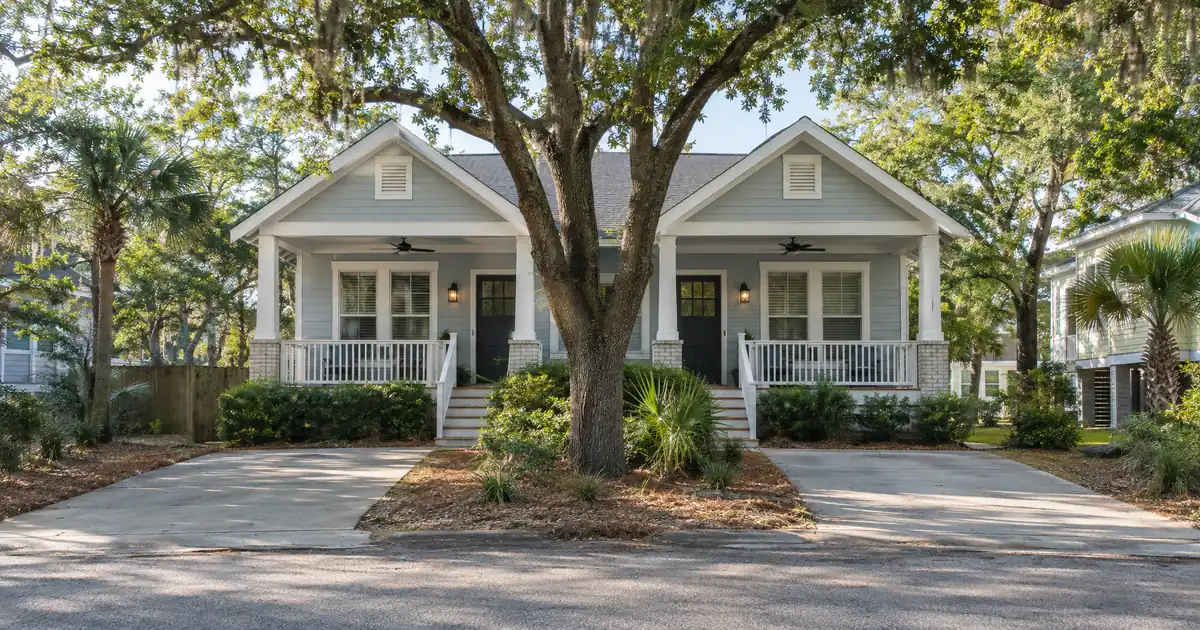
Picture an investor with a contract on a duplex in the South End, listed near $889,000. It has two family-sized units, and the plan is a 12-month lease on each. The first coverage run comes back under 1.00. Nobody made an error. The price is the problem.
At a Glance: An investment property loan on Tybee Island, Georgia is underwritten primarily on the property’s rental income measured against its full monthly obligation, and the island’s thin long-term rental stock means lease evidence and appraisal comps, not borrower income, decide most files. A 1.00 coverage baseline is common, subject to lender guidelines.
DSCR Calculator
Run the numbers in Tybee Island, GA
Rate source: Freddie Mac 30-yr average via FRED® — Federal Reserve Bank of St. Louis · effective Sep 24, 2026
Prefilled with starting assumptions — enter your own rent or nightly figures, taxes, insurance, and HOA for a more accurate picture.
Program parameters update from Lendmire’s centralized guideline source. Taxes and insurance are editable estimates.
As of Sep 24, 2026 · General Freddie Mac market benchmark, not a Lendmire loan offer. Rent, nightly rate, occupancy, taxes, and insurance are editable estimates. Short-term rental figures are estimates only and vary significantly by season, property type, management approach, and local short-term-rental rules — confirm local regulations before relying on them. Qualifying income for short-term rentals varies by program — some use appraisal market rent, others use documented STR history or projections — and is confirmed in underwriting. Not a Loan Estimate, approval, or commitment to lend. Program availability and eligibility are subject to lender guidelines, credit approval, property review, and underwriting.
- Median sale price near $730K (Redfin) leaves single-family long-term coverage thin.
- Two-door South End stock is where rent stacking has a chance.
- Only 7 multi-family listings are active (Homes.com), so appraisal comps run shallow.
- Purchase leverage typically runs 75%–80% (about 20%–25% down), subject to lender guidelines.
Tybee Island, Georgia rental property investors can tap DSCR programs that Lendmire arranges, available across 41 markets, including Washington, D.C. The broker, NMLS# 2371349, places these loans through wholesale investor lenders. The lender reviews the file. The broker shapes it before it gets there.
Here is the honest framing. Tybee is a resort island, not a workforce rental market. The math rarely works on a single-family purchase, and it works better on two-door stock. The rest of this article covers where.
Tybee Island Market Snapshot
A quick read on the Tybee Island investor landscape — figures come from the cited sources below. Confirm current property-level numbers before underwriting.
| Metric | Detail |
|---|---|
| Home prices | $611,200 median property value (Data USA) |
| Typical rents | $1,422/mo (Repit ZIP 31328 Snapshot) |
| Population | 3,123 population (Census Reporter) |
| Employment | 1.32K employees (Data USA) |
| Vacancy | 54.4% (Repit ZIP 31328 Snapshot) |
Who Actually Rents Here
Tybee has almost no institutional tenant base of its own, so long-term demand comes from Savannah commuters. The island’s resident population is 3,123, and Data USA puts local employment at about 1,320 jobs, up 9.17% in a year. No hospital. No university. No corporate campus.
The jobs are 18 miles west on US-80. St. Joseph’s/Candler runs a 714-bed system. The Savannah Area Chamber of Commerce describes the two Savannah hospital systems as the top private nonmanufacturing employers in the metro, with health care accounting for $2 billion, or 8%, of regional personal income. Add the port, Gulfstream, and the school system, and you have the wage base that a 12-month tenant on Tybee would draw from.
That is the long-term thesis: a Savannah-employed household that pays island prices for the commute. It is a real tenant, but a small pool.
The Vacancy Number Is Not Distress
Roughly 54.4% of homes in the 31328 ZIP sit vacant, per Repit’s ZIP snapshot. Second homes and seasonal use explain it. Still, it tells a DSCR file something: the year-round rental pool is much smaller than the housing count suggests. Underwriters and appraisers will not treat Tybee like an apartment market.
The same snapshot shows a price-to-rent ratio of 36.9, the kind of figure that analysts call hard to cash-flow. So the question is not whether the island is a yield market. It is not. The question is which product gets closest to 1.00.
Where the Coverage Math Gets Closest
Two-door South End duplexes come closest to a 1.00 baseline, and single-family cottages at the island median do not. Run it both ways. The inputs below are modeled assumptions, not cited market facts, and coverage is rent divided by full PITIA, including taxes and insurance.
Single-family at the median. Take a cottage at $730K, 75% LTV, with modeled rent at the $2,800 average that Zillow’s rental data shows. Coverage lands in the mid-0.6s. Swap in the $1,859 median gross rent from City-Data’s Census-based profile and it falls further. Not close. Exact terms depend on the lender’s guidelines, property type, leverage, and a full review of the borrower’s file.
South End duplex. Take the $889,000 duplex at 75% to 80% LTV and model both units at $2,800 each. Coverage lands right around 1.0x including taxes and insurance, slightly under at the higher leverage. That is borderline. One soft lease, one bad insurance quote, and the file slips below the line. Every figure here varies by lender and program — guidelines, property type, leverage, and credit profile all apply.
When a file falls under 1.00 on long-term rent alone, a few structures exist that a lender may review: a sub-1.00 DSCR program, an interest-only structure, or blended short-term income documentation. Each comes with its own leverage limits and pricing, and eligibility depends on lender guidelines, credit profile, reserves, and property review. None is a fix you can assume. Sometimes the cleaner answer is a lower loan amount, which means more cash down.
The broader baseline is covered in “What Is a DSCR Loan”, and the contrast with income-based underwriting sits in the program-to-program comparison.
Neighborhoods, Ranked by Usefulness to a Purchase File
South End: the only zone with real two-door stock
The South End, running roughly from 14th Street to the southern tip between Butler and Chatham Avenues, mixes mid-century cottages, historic homes, and denser lots. It is where legacy duplexes live. The Homes.com multi-family page shows 7 active multi-family listings priced between $600,000 and $5,785,000, averaging 128 days listed before selling. A commercial-zoned fourplex on the island, the Tybee Reserve, totals 22 bedrooms and is described as eligible for residential-style financing. That is an exception, and a lender will want to confirm the property type before anything else.
Seven listings is a small sample. Here is the catch: a thin duplex comp set caps appraised value, and a capped appraisal caps the loan. Budget the down payment for a lower appraisal, not the list price.
Fort Screven and Officer’s Row: appreciation, not coverage
The North End’s historic district was designated in 1982, and the Victorian and four-square houses near the lighthouse draw buyers chasing lifestyle demand. Single large homes. Entry above the island median. Nobody buys here for day-one coverage. A DSCR purchase in Officer’s Row works only with heavy down payment and a documented lease that supports the number. Otherwise skip it for this loan type.
North Beach and Mid Beach: standard cottage stock
North Beach sits beside the lighthouse with a quieter mix of guests and retirees. Mid Beach runs from the Curve at 1st Street to 14th Street and holds much of the ordinary cottage inventory. Both are single-family products. The coverage math on these looks like the single-family run above.
Back River and Chatham Avenue: quieter, more residential
Past South Beach off Tybee Creek, this corridor leans toward longer-stay and seasonal renters rather than peak beach traffic. Thinner data, so lease documentation carries more weight here than anywhere else on the island.
Condos: The Cheaper Door In
Townhouses and condos run around $400,000, per Homes.com’s local guide. That is the lowest entry on the island. The friction is the file, not the price. Condo files need the HOA questionnaire completed, the certification reviewed, and the master insurance confirmed. Incomplete questionnaires are the usual stall point. Order the questionnaire the day the contract is signed.
The Median Price Is Misleading
Redfin shows a median sale price of $730K over the last three months, up 16.7% year over year. Homes now take 125 days to sell, versus 66 days the year before. Zillow’s value index for the ZIP tells a different story, with an average value of $634,472, down 6.2% over the year. The methodologies differ. A few high-end sales can lift a median in a thinly traded market while the typical home drifts lower.
This is a genuine toss-up for buyers. The median says momentum; the index says soft. For a purchase file, the practical read is to underwrite to the lower number. The appraiser will.
What Working Brokers See in Resort Markets
Working DSCR brokers see a recurring pattern in resort-town markets: the borrower’s rent assumption comes from an aggregator average, and the lender’s number comes from a signed lease. Those two figures rarely match. On Tybee the gap can be wide, since published rent estimates range from about $1,400 to $2,800 depending on source, and a lender reviews the lease and the appraiser’s rent schedule, not the listing site. Files that arrive with executed leases and a clear rent schedule have fewer preventable gaps to review.
What the File Needs
Program guidance for purchases typically runs 75%–80% LTV, or about 20%–25% down. A high-leverage ceiling of up to 85% exists on the strongest files only, with a credit overlay at 700. Pricing and available terms vary by lender, borrower profile, property type, and full underwriting review. Reserves typically run about six months of PITIA, more on balances above $1,500,000. Loan amounts go up to $3,000,000 on standard programs. These are guidelines, not commitments. Final eligibility depends on the lender, the borrower, and the property.
Entity-owned purchases are common, and LLC-titled deals are available subject to lender program eligibility. Have the operating agreement, EIN letter, and certificate of good standing ready before the file goes in.
Verify local rental rules, taxes, and insurance requirements with qualified local professionals before underwriting. Those items sit outside the loan itself but move the coverage number.
DSCR vs. conventional financing
There are two common ways to finance an investment property in Tybee Island, GA, and they qualify you differently — here’s how investors weigh them.
Why investors choose it
- Qualifies on the property’s rental income — no personal tax returns, W-2s, or pay stubs needed to document income.
- No personal debt-to-income ceiling to clear, so existing mortgages and obligations don’t cap your borrowing the same way.
- Can be closed in an LLC, keeping the property inside a business entity.
- Built for scaling — not held to the limit on number of financed properties that conventional financing applies.
- Underwriting centers on the deal: generally qualifies when the rent covers the payment, a 1.00x coverage ratio being a common baseline (confirmed in underwriting).
- Designed specifically for investment property, including long-term and, where the program allows, short-term rentals.
Where it’s strong
- Often the lowest ongoing financing cost for a buyer who fully qualifies on personal income — a fit for a first property or a cost-first purchase.
Trade-offs for investors
- Requires full personal income documentation and must fit within a debt-to-income limit — salary, existing debts, and other mortgages all count.
- Typically held in your personal name rather than a business entity.
- Caps how many financed properties you can carry, which can become a ceiling as a portfolio grows.
- Evaluates you as a borrower as much as the property, which usually means more paperwork.
How investors usually choose: a first or single property often optimizes for the lowest financing cost; portfolio builders often optimize for leverage, vesting in an LLC, and scaling past conventional caps. The right answer depends on your goals, the property, and current guidelines — both paths run through select lenders in Lendmire’s wholesale network, with eligibility and terms confirmed in underwriting.
Investors who want to test a specific address against these inputs can talk through the numbers with the team at 828-256-2183, or review Lendmire’s Georgia DSCR platform first. For holders who already own on the island, the refinance side is a separate conversation.
Three Indicators Worth Tracking
1. Days on market. The move from 66 to 125 days is the clearest read on whether the market is cooling or just slow. A return toward the 60s would firm up appraisal comps.
2. Multi-family inventory. Seven active listings is the working comp set. More closed duplex sales means more appraisal support for South End purchases.
3. The gap between median price and the value index. If the $730K median and the $634,472 index converge, the market has settled. If they keep splitting, size down.
Frequently Asked Questions
How do you qualify for a DSCR loan in Tybee Island?
Qualification centers on the property’s rent against its full monthly obligation, with 1.00 as a common baseline. On Tybee that usually means a signed lease or a lender-ordered rent schedule. Credit typically starts at a 620 floor, and reserves run about six months of PITIA. All of it is subject to lender guidelines and property review.
What are the requirements for an investment property loan in Tybee Island, Georgia?
Expect 75%–80% LTV on most purchases, which means about 20%–25% down, and up to 85% only on the strongest files. Lenders will ask for entity documents if the property is LLC-owned, reserves documentation, and any HOA or condo materials. Manufactured homes, log homes, and barndominiums fall outside these programs.
Why do appraisals matter so much on Tybee Island?
The comp set is shallow. With only 7 active multi-family listings per Homes.com, an appraiser has few nearby duplex sales to lean on, and a low value reduces the loan available. A documented appraisal reconsideration request with recent island sales is a routine step, not an emergency one.
Can a condo on Tybee Island work as a DSCR purchase?
Yes, in many cases, since condos are the lowest entry point at around $400,000. The condition is a complete HOA questionnaire and condo certification. Missing pages and unclear master-policy information cause most of the delays on condo files.
How does rental income affect DSCR refinance eligibility in Tybee Island?
Rental income is the primary qualifying input, measured against the property’s full monthly obligation. Lendmire arranges DSCR investor loans and its programs qualify primarily on property cash flow rather than personal income documents. Program terms and eligibility are set by the wholesale lenders.
For current guidelines and terms, see Lendmire’s DSCR loan programs page.
About Lendmire
A non-QM mortgage broker (NMLS# 2371349), Lendmire arranges DSCR financing for real estate investors in 41 markets, which means 40 states plus Washington, D.C. Because deals are underwritten primarily on property cash flow rather than personal income documentation, the structure suits self-employed buyers and entity-owned portfolios. Lendmire places loans through wholesale investor lenders and is not a direct lender. The firm is recognized as a 2026 Scotsman Guide Top Mortgage Workplace and a 2025 Scotsman Guide Top Mortgage Workplace.
Get Started
Ready to find the right loan for you?
In about 30 seconds you can review financing options available for your investment property. No commitment required.
Informational only. Not a Loan Estimate, approval, or commitment to lend. Program availability and eligibility are subject to lender guidelines, credit approval, property review, and underwriting.
References
1. Redfin: Tybee Island Housing Market
2. Homes.com: Tybee Island Multi-Family Listings
6. St. Joseph’s/Candler Health System
7. Savannah Area Chamber of Commerce: Healthcare
10. Zillow Home Value Index: 31328
11. a 2026 Scotsman Guide Top Mortgage Workplace
12. a 2025 Scotsman Guide Top Mortgage Workplace
This article is part of Lendmire’s DSCR loan program — full qualification details, guidelines, and scenarios live on the program page.
Related reading: DSCR Cash Out Refinance in St Simons Island, Georgia · DSCR Cash Out Refinance in Jekyll Island, Georgia: The 2026 DSCR Refi Guide to Beach Village · DSCR Cash Out Refinance in South Fulton, Georgia: The 2026 DSCR Financing Guide to Old National Corridor
Guides: DSCR Loans in Tybee Island, GA · DSCR Loans in Georgia
Brandon Miller
Founder & CEO, Mortgage Loan Originator, Lendmire LLC
- Mortgage Loan Originator · NMLS# 1129696 · Verify on NMLS Consumer Access
- North Carolina Real Estate Broker · License# 343312 · Verify on NCREC
- North Carolina Insurance Producer · License# 19053198 · Property, Casualty, Life, Health · Verify on NAIC SBS
- Lendmire LLC · Firm NMLS# 2371349 · Verify firm licensure
Compliance and disclosures. Lendmire (NMLS# 2371349) is a licensed mortgage broker and is not a direct lender, depository institution, financial advisor, or tax professional. Content in this article is general market analysis and educational information — not financial, legal, or tax advice for any specific situation. Lendmire does not guarantee loan approval; every transaction is subject to underwriting by the funding lender. Mortgage pricing and loan program guidelines are subject to change at any time without notice and vary by borrower characteristics, property type, and state regulations. Lendmire complies with Equal Housing Opportunity. Licensure verification: NMLS Consumer Access.