
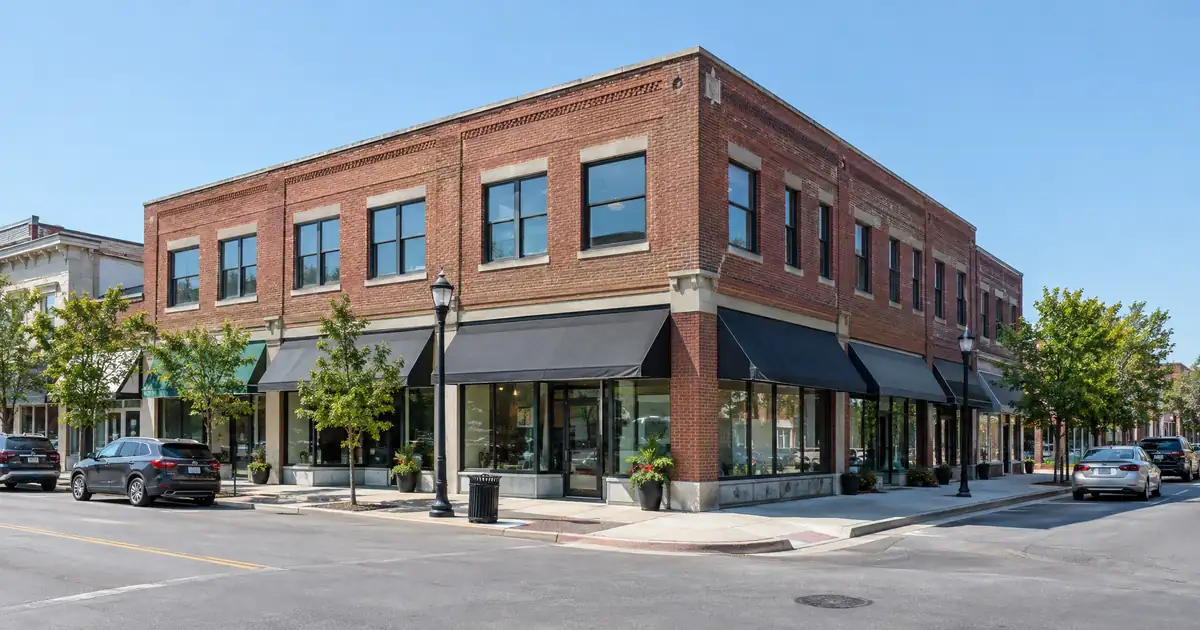
The Quick Read: On a jumbo cash-out, the cash an investor receives is the lowest of several ceilings, and a commercial floor in the tower can change which ceilings apply to the file.
- Cash-out on a standard rental tops out around 75% LTV across the network, with about 6 months of ownership typically expected first.
- Minimum coverage on most select programs starts at 1.00, and rent on the subject unit is the only income counted.
- Typical credit tiers run 620, 660, 680 and 700, with reserves of about 6 months PITIA, stepping up to about 9 months above $1,500,000.
- A commercial floor is a project-eligibility question, not extra income, and no national rule sets the limit.
A tower with ground-floor retail can look like any other high-rise condo on paper. Underwriting does not treat it that way. The lender asks two separate questions: does the loan work, and does the building work? Both must pass.
Key Terms Defined
Jumbo loan: A loan above the conforming limit for the county, which is reviewed under the lender’s own size-based rules.
Cash-out refinance: A new loan that pays off the old one and returns the extra equity to the owner as cash.
Warrantable condo: A condo project that meets the standard eligibility tests a lender sets for the building as a whole.
Non-warrantable condo: A project that trips one or more of those tests, such as heavy investor ownership, litigation, or a large commercial share.
Condo questionnaire: The form the HOA or management company completes to disclose the project’s finances, litigation, and use.
Commercial floor: Retail, office, or other non-residential space inside the same building or project.
Reserves: Liquid funds the borrower holds after closing, measured in months of PITIA.
What Makes a Cash-Out Jumbo, and Why the Building Matters Too
Two reviews run side by side on a tower file. The first is the loan review: size, leverage, credit, coverage, reserves. The second is the project review: what the building is and how it operates.
Most investors prepare only for the first. DSCR loans are designed for non-owner-occupied investment properties, and they qualify primarily on property-level rental income covering the payment, subject to lender guidelines. That covers the borrower side. The building still gets its own review, and a commercial floor is one of the things reviewers look for.
Across the wholesale network, loan sizes run up to $3,000,000 on standard programs. Above $2,500,000 the network generally holds to 30-year fixed structures. Smaller balances route through select lenders in the network. On a jumbo balance, the size ladder often sets the cash-out number before the condo label does.
How Lenders Judge a High-Rise With a Commercial Floor
Start with the questionnaire. The HOA or management company completes it, and reviewers use it to check investor concentration, litigation, reserves, delinquent dues, commercial space, insurance, and rental features. REI Prime’s high-rise glossary makes the same practical point: run the questionnaire before falling for a unit.
| Project factor | What the lender looks at | What can fail it |
|---|---|---|
| Commercial share | Non-residential space vs. total | Share above the lender’s limit |
| Investor concentration | Rented vs. owner-held units | Too many units held by investors |
| Single-owner exposure | One entity owning many units | Concentration in one holder |
| Litigation | Open suits against the HOA | Active construction or safety claims |
| Reserves and dues | Budget, reserve funding, arrears | Thin reserves, special assessments |
| Hotel-like use | Nightly rentals, front desk, resort services | Operation that resembles a hotel |
A commercial floor is one trigger among several. Stack two or three triggers and the file typically lands at a lower leverage tier, or outside a program entirely.
Use type matters as well as percentage. A quiet office suite and a restaurant below the residential floors are not the same risk. Restaurants can raise insurance and valuation questions. A tower with a hotel component plus retail is harder than a tower with only ground-floor retail.
How Commercial Share Gets Counted
Commercial share is usually a square-footage ratio: non-residential square footage divided by the total project or building square footage. The method matters more than most investors expect.
For contrast only, the agency benchmark is a 35% cap on commercial space. Fannie Mae’s Selling Guide says the calculation includes commercial space above and below grade, even when the residential and commercial owners are represented by separate associations. That matters in towers where a retail podium has its own association. This is an agency test for agency loans. DSCR files do not follow it.
Here is an illustration with made-up numbers. Say a tower has 400,000 square feet in total. The retail floor and a below-grade commercial garage together take 120,000 square feet. That is 30%. If the lender also counts a shared lobby and loading dock as commercial, the ratio could cross a different lender’s line. The same building can pass at one lender and fail at another, with no change to the building itself.
Non-QM lenders may count by square footage, income, or unit count. The practical move is to ask each lender two things: what is the limit, and how is it counted?
Why You See Different Commercial Limits Online
Three things explain the conflicting numbers. The first is rule source. An agency limit, a portfolio lender’s overlay, and a non-QM program’s own standard are different tests. The second is age. The agency limit was lower in the past, and some pages were never updated. The third is counting method, covered above.
HomeBuyer.com’s explainer repeats the agency number, which is accurate for agency loans. It does not describe what a non-agency lender will do. Across the network, no single national percentage applies, and any article offering one is describing a single program.
Some points to keep straight:
- A single condo unit with a retail floor below is still residential collateral. The commercial share is a project-eligibility factor.
- Buying the whole mixed-use building is a different product. That is a mixed-use or commercial loan, not a unit loan.
- Whether the HOA itself runs a business, such as a spa or restaurant, is a separate question from commercial tenants leasing space from a developer.
Stacking the Ceilings: How Much Cash You Actually Receive
Cash-out proceeds are generally limited by the lowest of several ceilings. Work them in order.
1. Leverage ceiling. Cash-out on a standard investment rental tops out around 75% LTV. That figure is a hard cap, not a target.
2. Property-type ceiling. If the project reads as non-warrantable, select lenders may lower leverage or add an overlay for that property type.
3. Size ladder. On jumbo balances, leverage tiers often step down as the loan grows.
4. Coverage. Rent on the subject unit must cover the full payment, including dues and any assessments. Most select programs start at 1.00, and stronger ratios open better terms.
Then subtract the payoff of the existing loan, closing costs, and the reserves requirement. What remains is the cash.
Run it conceptually. Say a unit’s value supports 75% LTV on paper, but the lender applies a lower tier because the commercial share sits near its limit. The lower ceiling wins. The same equity can release different cash from two buildings, even at identical values. Equity available is never a guaranteed figure. Each figure is subject to lender guidelines and a complete review of property type, leverage, and credit.
Coverage deserves a clear caution. Rent is compared to PITIA only, and dues feed that payment. Clearing 1.00 is not the same as positive cash flow. Repairs, vacancy, management, utilities, and capital costs sit outside the calculation. A tower with heavy dues can see the ratio shrink even when rent looks strong. Sub-1.00 coverage is available through select lenders in the network, with leverage and terms adjusted.
The commercial floor does not add to the ratio. For a unit loan, only the subject unit’s rent counts.
Reserves, Ratios, and Appraisals on a Tower File
Reserves are about 6 months of PITIA on most files and about 9 months above $1,500,000, though they vary by lender, leverage, and transaction type. Treat cash-out proceeds and reserves as two separate pools in planning. Whether proceeds can count toward reserves depends on the lender, so ask before assuming.
Credit tiers commonly run 620, 660, 680 and 700, with the strongest leverage reserved for the higher end. Mixed-use towers with stacked triggers tend to sit toward the upper tiers.
On appraisal, expect a condo project addendum. Where income is used, the appraiser provides a rent schedule (Form 1007) and an operating income statement. Comps are building-first: similar lines and elevations in the same tower, then neighboring towers with similar amenities and dues. Buildings with significant commercial space or hotel-like features can trigger a second review, so plan for added time at the document stage.
One more definition point. A high-rise is not a fixed legal category. REI Prime notes that definitions vary by lender, appraiser, and building code, with the International Building Code treating an occupied floor above 75 feet as the threshold. Ask the lender which definition it uses.
From Questionnaire to Closing: The Document Path
The order of operations saves the most trouble:
1. Get the condo questionnaire before ordering an appraisal. 2. Collect the budget, reserve study, insurance certificate, and litigation disclosure. 3. Get the commercial square footage and the lender’s counting method. 4. Confirm seasoning, which is about 6 months of ownership measured from title recording. 5. Order the appraisal and rent schedule.
The project review happens at the refinance. A cash-out does not inherit the building’s approval from the original purchase. HOA document collection is usually the slowest piece, so start it first.
If the Building Fails Review
A failed building is not always a dead end. Three paths exist.
- Cure the failing item. If the issue is a lawsuit, thin reserves, or an assessment, a later review after it resolves may pass.
- Move to a lender with a looser project standard. Select lenders in the network write different limits, and a building that fails at one may fit another.
- Take less leverage. A lower LTV can bring a non-warrantable file back into range.
The resale trade-off is real. Non-warrantable status narrows the buyer pool at exit to cash buyers and those who can access portfolio financing. Plan the exit before pulling equity.
Property type matters too. DSCR programs in the network do not offer loans on manufactured homes, log homes, or barndominiums. Those are not offered, which is a separate matter from a tower with a commercial floor.
Pre-Application Checklist
- Ask the association for the questionnaire and the commercial square footage.
- Ask whether the commercial component has its own association.
- Ask what share of units are rented and whether one owner holds many.
- Ask the lender how it counts commercial share and what limit applies.
- Confirm whether any commercial tenant operates a restaurant or hotel-like use.
- Check the building’s litigation and special-assessment history.
- Confirm reserves, seasoning, and credit tier against the program you are targeting.
Details are subject to lender guidelines, and every file is underwritten individually. For the full framework behind these programs, see Lendmire’s complete DSCR loans guide. For the investor-versus-owner-occupant view of large cash-outs, Lendmire’s piece Is a Jumbo Cash-Out Worth It for a High-Earning W-2 Homeowner? covers that side.
Tax treatment can depend on how the funds are used and how the property is held; investors should keep clear records and speak with a qualified tax professional before relying on any deduction.
Frequently Asked Questions
Does ground-floor retail make my building non-warrantable?
Not by itself. Commercial space is one trigger among several, and the question is how much of the project it represents and how it is counted. A modest retail footprint with strong reserves and low investor concentration often reads differently than a large podium paired with other triggers.
Can cash-out proceeds count as reserves?
It depends on the lender. Plan as if proceeds and reserves are separate pools, with reserves around 6 months of PITIA on most files and about 9 months above $1,500,000. Confirm treatment before relying on proceeds to satisfy the requirement.
Does the commercial floor add income to my coverage ratio?
No. On a unit loan, only the subject unit’s rent counts. The commercial floor affects project eligibility and review, not the ratio.
Can my building become eligible later?
Sometimes. If the failing item is a lawsuit, an assessment, or thin reserves, a fresh review after it clears may produce a different result. A commercial share fixed by the building’s design is harder to change.
How early should I contact a broker?
Before the appraisal. The questionnaire and the lender’s counting method can reshape leverage and lender choice, and both are cheaper to learn first.
If you are buying or refinancing a rental property and want to see how the numbers work, Lendmire can help you compare DSCR loan options based on the property income, credit profile, leverage, and investor goals. Reach the team at 828-256-2183 or request a quote.
For how equity extraction works on an investment property, see Lendmire’s guide to cash-out refinance on an investment property.
About Lendmire
Lendmire (NMLS# 2371349) is a mortgage brokerage focused on DSCR investor financing, helping arrange programs through wholesale and investor-lending channels in 41 markets, including Washington, D.C. DSCR loans are evaluated by the lender on property cash flow rather than personal income, subject to lender guidelines, supporting LLC closings and accommodating investors with four or more financed properties. Scotsman Guide Top Mortgage Workplace in both 2025 and 2026.
Get Started
Ready to find the right loan for you?
In about 30 seconds you can review financing options available for your investment property. No commitment required.
Informational only. Not a Loan Estimate, approval, or commitment to lend. Program availability and eligibility are subject to lender guidelines, credit approval, property review, and underwriting.
References
1. REI Prime glossary: High-Rise
2. Fannie Mae Selling Guide B4-2.1-03
3. HomeBuyer.com Fannie Mae ineligible projects explainer
This article is part of Lendmire’s investment property cash-out refinance program — full qualification details, guidelines, and scenarios live on the program page.
Related reading: How to Consolidate a HELOC Into an FHA Cash-Out With a High DTI · Cash-Out Refinance Requirements When You Already Have a HELOC · How to Compare a Jumbo Cash-Out That Pays Off Your HELOC
Brandon Miller
Founder & CEO, Mortgage Loan Originator, Lendmire LLC
- Mortgage Loan Originator · NMLS# 1129696 · Verify on NMLS Consumer Access
- North Carolina Real Estate Broker · License# 343312 · Verify on NCREC
- North Carolina Insurance Producer · License# 19053198 · Property, Casualty, Life, Health · Verify on NAIC SBS
- Lendmire LLC · Firm NMLS# 2371349 · Verify firm licensure
Required disclosures. Lendmire (NMLS# 2371349) operates as a licensed mortgage broker, not a direct lender or depository. The discussion in this article is general in nature and should not be relied upon as financial, legal, or tax advice — every investment scenario is unique and should be reviewed by a qualified professional. Any loan inquiry is subject to lender underwriting, and this article is not a commitment to lend or a guarantee of approval. Mortgage rates, loan terms, and program guidelines vary by borrower, property, and state, and may change without notice. Equal Housing Opportunity. Verify licensure at NMLS Consumer Access.