
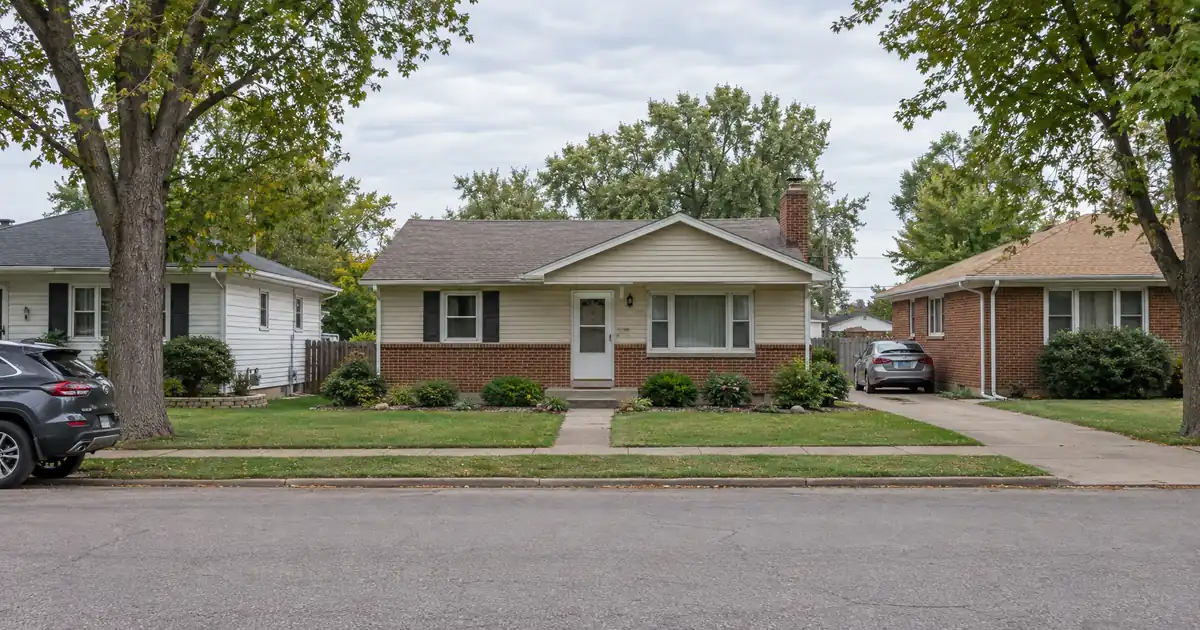
The Quick Read: Often yes, provided the hail damage is repaired, or is cosmetic only, by the time the file is reviewed. Unrepaired roof damage, active leaks, or a claim that is still open can stall the file until the work is done. Each case depends on the appraisal, the insurance policy, and lender guidelines.
- Repaired hail damage is usually underwritten like any other rental.
- Active leaks or a roof flagged as a soundness problem typically hold the file until repairs are complete.
- An open claim is the hardest case, because the existing lender may control the insurance money.
- A post-hail premium or a percentage wind/hail deductible changes the coverage ratio, because insurance sits in the payment.
- Cash-out on a standard rental tops out around 75% LTV, with about 6 months of seasoning.
Hail does not appear on any list of automatic disqualifiers. Across the wholesale network, the file turns on three questions: what does the appraiser see, what does the insurance policy now say, and does the rent still cover the new payment. This piece uses Kansas as the example because the storm exposure there is real, but the mechanics apply to any hail-prone market.
DSCR Cash-Out Calculator
Run the cash-out numbers in Kansas
Rate source: Freddie Mac 30-yr average via FRED® — Federal Reserve Bank of St. Louis · effective Oct 15, 2026
Prefilled with starting assumptions — enter your property’s value, balance, taxes, and insurance for a more accurate picture.
Program parameters update from Lendmire’s centralized guideline source. Taxes and insurance are editable estimates.
As of Oct 15, 2026 · General Freddie Mac market benchmark, not a Lendmire loan offer. Property value, balance, taxes, and insurance are editable estimates. Maximum loan-to-value varies by lender, program, property type, and seasoning. Not a Loan Estimate, approval, or commitment to lend. Program availability and eligibility are subject to lender guidelines, credit approval, property review, and underwriting.
Why Kansas Is the Example
Kansas landlords carry real storm exposure. The Kansas Insurance Department reported 82,498 storm claims in 2025, with about $879 million paid out. That is a 99% increase in paid amounts compared with 2023, when claims totaled $442 million. The data covers hail, wind, water, fire and other weather losses on homeowner and auto policies. It is not hail-only and not landlord-specific.
A roofing-industry database, The Roofing Brief, cites Verisk data showing Kansas leading the nation in 2025, with 51.8% of roofs hit by hail of 1 inch or larger. Treat that as a secondary figure. It shows exposure, not how any lender treats a file.
No published rule bars a DSCR cash-out because of hail. The treatment below comes from how these programs handle condition, insurance and appraisal.
How Hail Damage Moves Through the File
A refinance that puts cash in the borrower’s hands is a cash-out, and that label sets the leverage ceiling and starts the seasoning clock. Across most of the network, cash-out tops out around 75% LTV on a standard rental, with about 6 months of seasoning measured from title recording. Hail does not change that label. It changes what the appraiser and the insurance underwriter see. These specifics are subject to lender guidelines and a full review of property, leverage, and credit.
The appraisal
The appraiser documents visible condition, including the roof surface. Cosmetic hail marks on gutters or minor granule loss, with no leaks, usually land as a condition note. Safety or soundness problems are different. Those can lead to an appraisal made “subject to” repairs, meaning the work must be done and confirmed before funding.
Agency forms are a useful contrast here, not a DSCR rule. HUD’s appraisal data guide says that when an appraisal is subject to repairs, the condition rating must reflect the repairs as completed. DSCR programs are not agency products, and each lender sets its own condition standard. The practical read is the same, though: a roof with open damage invites a repairs condition.
There is a second cost. Unrepaired damage can lower the as-is value, and a lower value shrinks the cash-out amount under the 75% ceiling. DSCR rental appraisals also carry a rent schedule (the 1007 or 1025 form), which supports the rent used for lender review.
The insurance policy
Insurance sits inside PITIA (principal, interest, taxes, insurance and association dues). A higher premium lowers the coverage ratio on the same rent. Only the new loan’s payment counts. The old loan’s payment is irrelevant.
Post-hail renewals can raise premiums or add a percentage wind/hail deductible. The Kansas Insurance Department’s shopper’s guide notes that many homeowner policies carry a separate wind/hail deductible, generally 1% to 2% of the insured structure amount. Landlord forms can differ, so read the declarations page on the actual policy.
A Kansas City property manager gives one illustration: on a roughly $289,000 insured value, a 1% deductible is about $2,890 and a 2% deductible is about $5,780, per Alpine Kansas City. That is one manager’s example, not a market statistic. It shows why the deductible matters for reserves.
The policy form matters on older roofs. An actual-cash-value form deducts depreciation, so a claim check on an aging roof can fall short of the repair bill. The Kansas guide defines actual cash value as repair or replacement cost after depreciation. Replacement-cost coverage pays more, but not every landlord policy carries it.
The Open Claim Problem
An open claim is where these files stall. If a mortgage covers the property when the claim pays, the insurer usually names both owner and lender on the dwelling check. The existing servicer often runs a loss-draft process. That can mean an initial check for actual cash value, then recoverable depreciation after the work is verified. Larger claims are often held and released in stages as repairs progress. Thresholds vary by servicer.
Most consumer explanations of this process are written for owner-occupied homes. On an investor note, the loan documents control. Spending claim money on something other than repairs can also breach those documents.
So the collateral is damaged, the proceeds may be tied up, and the new lender wants a clean property. That is why sequencing matters.
Decision Table: Where Your File Sits
| Situation | Typical lender concern | Likely path |
|---|---|---|
| No damage, no claim | None specific to hail | Standard review |
| Cosmetic damage, no leaks | Condition note | Usually proceeds, per lender review |
| Claim open, repairs not started | Damage plus tied-up proceeds | Repairs likely come first |
| Claim paid, repairs complete | Proof of work | Documents and photos support the file |
| Claim paid, cash spent elsewhere | Damage still on the collateral | Repairs likely required before funding |
| Roof near end of life | Premium, deductible, value | Run the coverage math on a real quote |
Each row is a pattern, not a promise. Lender guidelines and property review decide the outcome.
Sequence It: Claim, Repair, Then Refinance
Closing the claim, finishing repairs, then refinancing is usually cleaner than refinancing mid-claim. The order that tends to keep files clean:
1. Settle the claim. Get the adjuster’s scope of loss and the payment ledger in writing.
2. Complete the repairs. Keep contractor invoices, photos and lien waivers. Proof of completion answers the appraiser’s first question.
3. Order a real insurance quote. Get it on the current roof, with the wind/hail deductible shown, before running the coverage math.
4. Check seasoning. Cash-out expects about 6 months of ownership from title recording. A recent purchase may not be ready.
5. Assemble the file. Payoff statement, lease and rent schedule, declarations page, and entity documents if the property sits in an LLC, subject to program eligibility.
6. Reconcile reserves. Reserves commonly run about 6 months of PITIA on cash-out, and about 9 months on loans above $1,500,000. They are shown after closing, and the deductible exposure should not be double-counted against them.
Worked Example: The Premium Moves the Number
Run the numbers on a Kansas rental that clears roughly 1.25x on its pre-storm insurance line. After the storm, the renewal quote jumps and adds a percentage wind/hail deductible. Rent has not changed. PITIA has, because the insurance line rose, so the ratio slides toward the low-1.1 range.
It is still above 1.00, which is where select programs start. A separate select-lender path takes coverage below 1.00, with leverage and terms adjusted. But the margin that looked comfortable is thinner, and thinner coverage can affect pricing and leverage tiers. These inputs are modeled assumptions, not market data.
Two cautions. Clearing 1.00 is not the same as positive cash flow. DSCR compares rent to PITIA only, so repairs, vacancy, management, utilities and capex sit outside it. And raising the deductible to cut the premium is a trade: the coverage ratio improves, and the out-of-pocket risk after the next storm grows.
Vacancy During Repairs
DSCR relies on rent. If the unit sits vacant during roof work, there is no in-place lease. Some programs can use market rent from the appraisal’s rent schedule. A no-ratio path is available only through select lenders, generally for borrowers who already own a primary residence. Loss-of-rents coverage, where the policy carries it, does not automatically count as rent used for lender review. Expect the lender to ask how the income is documented.
Pooled or blanket loans add another layer. If one house is damaged, release terms and cross-collateralization decide what happens to the others.
DSCR vs. conventional financing
There are two common ways to finance an investment property, and they qualify you differently — here’s how investors weigh them.
Why investors choose it
- Qualifies on the property’s rental income — no personal tax returns, W-2s, or pay stubs needed to document income.
- No personal debt-to-income ceiling to clear, so existing mortgages and obligations don’t cap your borrowing the same way.
- Can be closed in an LLC, keeping the property inside a business entity.
- Built for scaling — not held to the limit on number of financed properties that conventional financing applies.
- Underwriting centers on the deal: generally qualifies when the rent covers the payment, a 1.00x coverage ratio being a common baseline (confirmed in underwriting).
- Designed specifically for investment property, including long-term and, where the program allows, short-term rentals.
Where it’s strong
- Often the lowest ongoing financing cost for a buyer who fully qualifies on personal income — a fit for a first property or a cost-first purchase.
Trade-offs for investors
- Requires full personal income documentation and must fit within a debt-to-income limit — salary, existing debts, and other mortgages all count.
- Typically held in your personal name rather than a business entity.
- Caps how many financed properties you can carry, which can become a ceiling as a portfolio grows.
- Evaluates you as a borrower as much as the property, which usually means more paperwork.
How investors usually choose: a first or single property often optimizes for the lowest financing cost; portfolio builders often optimize for leverage, vesting in an LLC, and scaling past conventional caps. The right answer depends on your goals, the property, and current guidelines — both paths run through select lenders in Lendmire’s wholesale network, with eligibility and terms confirmed in underwriting.
Who Should Skip the Cash-Out
Wait if the roof is open and the claim is unresolved. Wait if the premium has jumped enough that the ratio no longer works at 75% LTV. Wait if seasoning is not met. Terms depend on the lender’s guidelines, the property type, the leverage, and a full review of the credit profile.
Short-term rentals run lower. Cash-out on a short-term rental is typically held to about 70% LTV, with about 12 months of hosting history expected. Short-term rental rules can vary by city, county, HOA, and property type, so investors should confirm local rules before relying on projected rental income.
Credit matters too. A 620 floor exists in parts of the network, most programs want around 660, and 700 or higher unlocks the strongest tiers. A larger equity cushion can help the payment and the ratio, but it does not erase leverage caps, reserve rules or property eligibility. The strongest files clear both tests: enough equity and enough rental coverage. For the full mechanics, see the complete DSCR loans guide.
A rule worth saying plainly: a property must also be an eligible type. Manufactured homes, log homes and barndominiums are not offered in the network’s DSCR programs, hail damage or not.
Landlords sometimes ask how cash-out structures work for owners using other loan types. Lendmire’s piece Can a Veteran Use a VA Cash-Out to Fund the Next Home After a PCS? covers that program on its own terms.
Key Terms Defined
Loss draft: the process where an existing lender holds and releases insurance proceeds as repairs are verified.
Actual cash value (ACV): the repair or replacement cost after depreciation is subtracted.
PITIA: principal, interest, taxes, insurance and association dues, the payment the rent is compared against.
Seasoning: the ownership period, measured from title recording, before cash-out is available.
Subject-to appraisal: a value that assumes repairs will be completed and verified.
Frequently Asked Questions
Does hail damage automatically disqualify a DSCR cash-out?
No. Repaired damage is generally underwritten like any other rental, and cosmetic damage with no leaks is usually a condition note. Active leaks or a roof flagged as a soundness problem are the real triggers, and each lender applies its own guidelines.
Can I spend the insurance check however I want?
Not on a financed property. The lender is usually a joint payee and may hold funds in a loss-draft process. Using proceeds for something other than repairs can breach the loan documents, so read them before the check arrives.
Does insurance count in the DSCR calculation?
Yes. The premium is part of PITIA, so a post-hail increase lowers the ratio on the same rent. Only the new loan’s payment counts, never the old one.
Is a cash-out smarter before or after repairs?
Usually after. Open damage can lower the as-is value, which shrinks proceeds under the 75% LTV ceiling, and an open claim can tie up funds with the existing lender. Finishing repairs first gives the file fewer gaps.
Will filing a claim hurt my insurance record?
Yes, it can. Roofing-industry advice cautions that filing without verified damage can mark your record, per Roofing America KC. Talk with your insurer before filing.
If you are buying or refinancing a rental property and want to see how the numbers work, Lendmire can help you compare DSCR loan options based on the property income, credit profile, leverage, and investor goals. Tax treatment varies; consult a qualified professional. Programs are subject to lender guidelines and are not a commitment to lend.
Kansas hail season will keep resetting insurance lines, so the landlords who refinance cleanly are the ones who fix the roof first and price the policy second.
Investors weighing their equity options can start with Lendmire’s guide to cash-out refinance on an investment property.
About Lendmire
A DSCR-focused mortgage broker, Lendmire (NMLS# 2371349) places investor financing across 41 markets — 40 states plus Washington, D.C. — with DSCR eligibility generally reviewed by the lender on property cash flow instead of tax returns, subject to lender guidelines. Scotsman Guide named Lendmire a Top Mortgage Workplace in 2025 and 2026.
Get Started
Ready to find the right loan for you?
In about 30 seconds you can review financing options available for your investment property. No commitment required.
Informational only. Not a Loan Estimate, approval, or commitment to lend. Program availability and eligibility are subject to lender guidelines, credit approval, property review, and underwriting.
References
1. Kansas Insurance Department news release
2. The Roofing Brief hail database
4. Alpine Kansas City landlord insurance commentary
5. Roofing America KC claim guide
This article is part of Lendmire’s investment property cash-out refinance program — full qualification details, guidelines, and scenarios live on the program page.
Related reading: How Much a DSCR Cash-Out Pays Toward a Divorce Buyout · How to Refinance the Home You Moved Out of With a DSCR Loan · Current Mortgage vs DSCR Refinance for a New Landlord: What Each Allows
Guides: Investment Property Cash-Out Refinance in Kansas
Brandon Miller
Founder & CEO, Mortgage Loan Originator, Lendmire LLC
- Mortgage Loan Originator · NMLS# 1129696 · Verify on NMLS Consumer Access
- North Carolina Real Estate Broker · License# 343312 · Verify on NCREC
- North Carolina Insurance Producer · License# 19053198 · Property, Casualty, Life, Health · Verify on NAIC SBS
- Lendmire LLC · Firm NMLS# 2371349 · Verify firm licensure
Disclosure information. Lendmire is a state-licensed mortgage brokerage under NMLS# 2371349. Lendmire is not a depository institution, direct lender, or financial advisor — all loans referenced are placed through wholesale lender partners and are subject to each lender's underwriting standards. This article is provided for general informational purposes and is not a commitment to lend, nor does it constitute financial, legal, or tax advice. Loan programs, terms, rates, and qualification standards change without notice and depend on borrower profile, property type, and the state in which the subject property is located. Equal Housing Opportunity provider. NMLS Consumer Access: nmlsconsumeraccess.org.