
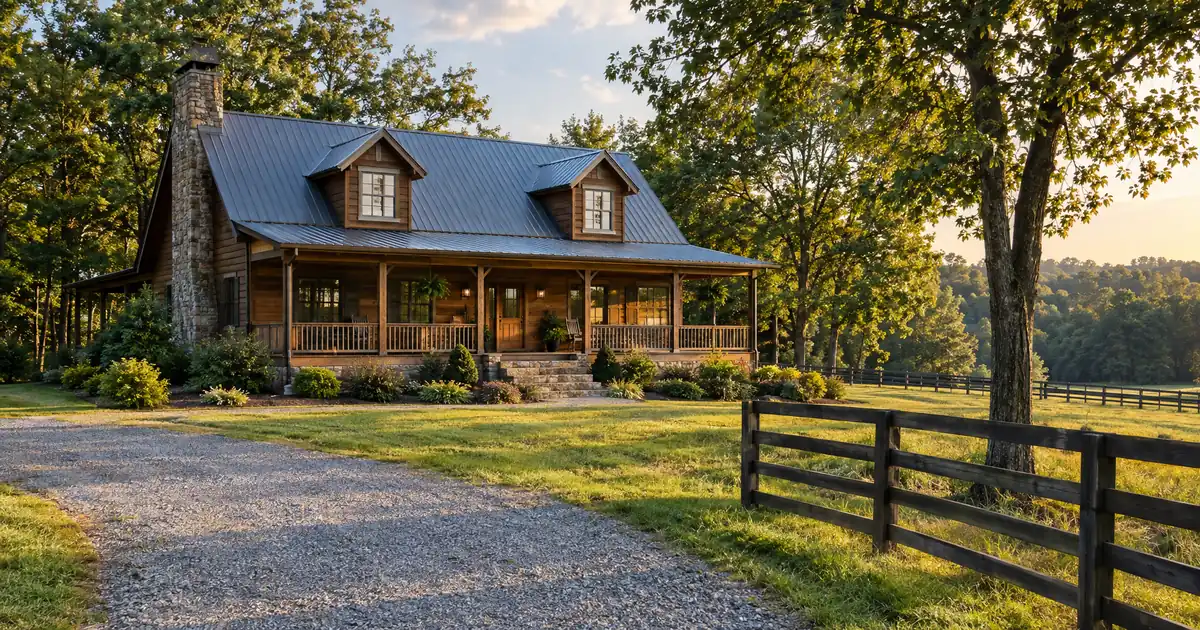
Lake House And Ski Cabin DSCR Loan Requirements — The Quick Read: These files qualify on the property’s rental income, not the borrower’s traditional personal-income documentation, but the underwriting has three extra layers a standard rental doesn’t: seasonal income averaging, occupancy classification, and a flood or condotel wrinkle more often than not. Coverage still needs to clear roughly 1.00 for full leverage on most files, income gets pulled from twelve months of platform history or the appraisal’s short-term-rent analysis, and the biggest mistake buyers make is underwriting off a peak-season brochure number instead of a full-year figure.
Key Terms Defined
DSCR (debt-service coverage ratio): gross monthly rent divided by the full monthly housing payment — principal, interest, taxes, insurance, and any association dues. A ratio of 1.00 means the rent covers the payment exactly.
DSCR Calculator
Run the numbers in your market
Rate source: Freddie Mac 30-yr average via FRED® — Federal Reserve Bank of St. Louis · effective Sep 17, 2026
Prefilled with local estimates — enter your own rent or nightly figures, taxes, insurance, and HOA for a more accurate picture.
Program parameters update from Lendmire’s centralized guideline source. Taxes and insurance are editable estimates.
As of Sep 17, 2026 · General Freddie Mac market benchmark, not a Lendmire loan offer. Rent, nightly rate, occupancy, taxes, and insurance are editable estimates. Short-term rental figures are estimates only and vary significantly by season, property type, management approach, and local short-term-rental rules — confirm local regulations before relying on them. Qualifying income for short-term rentals varies by program — some use appraisal market rent, others use documented STR history or projections — and is confirmed in underwriting. Not a Loan Estimate, approval, or commitment to lend. Program availability and eligibility are subject to lender guidelines, credit approval, property review, and underwriting.
Form 1007: the appraisal form used to estimate a property’s monthly market rent for a standard long-term-lease investment property. It was built around monthly leases and was never designed to convert nightly Airbnb income into a monthly figure — Fannie Mae’s own form page describes it as a tool for estimating market rent, not nightly platform revenue.
Condotel: a condo unit operated with hotel-style services — front-desk check-in, daily housekeeping, a rental-management desk in the lobby. Agency lenders generally won’t touch these; DSCR programs will, at reduced leverage.
Non-warrantable condo: a condo project that fails one or more Fannie Mae/Freddie Mac project standards (too many investor-owned units, short-term rentals allowed, litigation on the HOA, commercial space over a certain percentage). Common in ski towns, reviewable through DSCR.
Seasoning: the length of ownership or rental-operating history a lender wants to see before trusting a property’s income numbers, especially for short-term rental files.
Occupancy Classification Comes First
Before any DSCR math happens, the file has to be classified correctly, and this decision changes everything downstream. A property is either a genuine second home the borrower occupies part of the year, or it’s an investment property bought to generate rental cash flow. DSCR loans finance the second category only.
This distinction matters more than most buyers assume. A property purchased with the intent to rent it out — but titled or represented as a personal second home to chase better terms — creates a real misrepresentation problem down the line, separate from the loan itself. Lake houses and ski cabins get bought under both intentions constantly, and lenders in Lendmire’s wholesale network expect the file to say clearly which one this is.
If the plan is rental income covering the payment, this is an investment-property DSCR file from day one. That’s the framing that avoids conflict later, and it’s the framing this article assumes throughout.
How the Appraisal Actually Works Here
The appraisal does two jobs on these files: it sets the collateral value, and it produces the rent figure that feeds the coverage ratio. For a standard long-term-lease scenario, an appraiser uses Form 1007 to estimate market rent by pulling comparable long-term rental listings and adjusting for differences.
That process breaks down fast for a nightly-rental property, which describes most lake houses and ski cabins with any real income story. Appraisers can’t just take a nightly Airbnb rate, multiply by thirty, and call it monthly rent — that math ignores vacancy, seasonality, and the operating costs baked into a short-term rental that don’t exist in a monthly lease. Trade guidance on Form 1007 is blunt about this limitation, and appraisers with short-term-rental competency increasingly decline to force the form to do something it wasn’t built for.
So on a file with real short-term rental history, most lenders in the network route around the 1007 entirely and use the property’s actual operating income instead.
Where the Qualifying Income Actually Comes From
On a refinance with an operating track record, the coverage figure comes from twelve months of documented platform history — Airbnb, Vrbo, whatever the property actually earned, reported at 80% of gross. On a purchase with no track record, the file leans on the appraisal’s short-term-rent analysis instead. Either way, the income gets annualized, not cherry-picked from a strong month.
That annualizing step is the single most important mechanic for lake and ski properties specifically, because these markets earn unevenly by design. A ski cabin might carry three-quarters of its annual revenue in a five-month winter window. A lake property might do the reverse. Underwriting that treats a peak month as the baseline sets a buyer up to be surprised, and underwriting that averages the full year — the approach most programs Lendmire places files with actually use — gives a more honest coverage number.
Across the wholesale network, the strongest short-term-rental files show a full operating year, not just part of a season. The strictest overlays go further: they want to see that the borrower has owned an income property in the last three years before they’ll trust a seasonal number at face value.
The Leverage and Credit Numbers, Straight
Loan sizes on this program run from $150,000 to $10,000,000, though the standard DSCR shelf tops out at $3,000,000 — larger balances move onto a specialty ladder built for exactly this kind of file. Short-term-rental and no-ratio structures cap at $2,000,000.
Leverage steps down as the loan gets bigger, and it’s worth knowing the shape of that curve before shopping a property:
| Loan Size | Purchase / Rate-Term | Cash-Out | Credit Floor |
|---|---|---|---|
| $150K–$1M | 80% | 75% (standard rental) | 660+ |
| $1M–$1.5M | 75% | 70% (standard) / 70% cap on STR collateral | 700+ |
| $1.5M–$3M | 75% | 60% | 720+ |
| $3M–$4M | 65% | none | 700+ |
| $4M–$10M | 60%, reviewed case by case | none | 700+ |
Above $4,000,000, every request gets reviewed case by case before it’s even submitted, and it’s purchase or rate-and-term only — no cash-out at that size. Coverage of 1.00 or better earns the leverage shown above. Coverage between roughly 0.75 and 0.99 is a real path through select programs in the network up to $2,000,000, but LTV and terms adjust downward to compensate, subject to underwriting. No-ratio qualification is also available through a handful of lenders in the network, up to $2,000,000, generally requiring a seven-year clean housing payment history and no late payments in the past 24 months — that’s a select-program path with its own credit envelope, never a bare “available regardless of income.”
Reserves run six months of PITIA on the subject property for most borrowers, stretching to twelve months for first-time investors. Two appraisals are required above $2,000,000. Cash-out proceeds are unlimited at or below 60% LTV, capped at $1,500,000 above that line, and cash-out disappears entirely above $3,000,000.
Where Condotels and Non-Warrantable Condos Fit
Condotels and non-warrantable condos are common in ski markets. They’re not the exception — they’re closer to the norm. Agency financing often isn’t available at all for these units, no matter how good the borrower’s credit is. That’s because the projects fail standard condo rules on things like daily rentals, hotel-style front-desk operations, or too many investor-owned units.
DSCR programs step into that gap because they were never built around agency eligibility rules in the first place. Through the network, non-warrantable condos qualify up to 75% LTV and $1,500,000. Condotels qualify up to 75% on a purchase, 65% on a refinance, capped at $1,500,000, with $250,000 in cash-in-hand required as part of the file. That’s meaningfully more room than a buyer will find at a bank with agency overlays, but it’s still a reduced-leverage category compared to a standard warrantable condo or single-family rental. Terms vary by lender guidelines, property type, leverage, credit profile, and full file review.
Flood Zones and the Coverage Ratio
Lake properties sit on water by definition, which means flood zone exposure comes up constantly. Federal law requires flood insurance on any building in a Special Flood Hazard Area when the loan is federally backed or federally regulated, and lenders escrow that premium and enforce it for the life of the loan. Property-level status gets checked against FEMA’s Flood Map Service Center. Over a standard 30-year mortgage term, an SFHA property carries roughly a 26% cumulative chance of at least one flood event — a statistic flood-risk data sites use to explain why the requirement exists at all.
That mandatory premium is a real PITIA line item. It directly lowers the coverage ratio on a lake property compared to an identical inland rental. Buyers running their own numbers before talking to a lender should factor flood insurance into their total monthly obligation, not just principal and interest. Otherwise, the DSCR figure they worked out at home won’t match what underwriting produces.
Worth noting: the mandatory-purchase rule is enforced by the lender, not by FEMA directly. A property owned free and clear, with no federally backed loan, carries no legal insurance mandate. That said, skipping coverage on a genuine flood-zone property is a different kind of risk entirely.
HOA and Municipal Rental Restrictions
An HOA or a city rule can erase the income stream a lender was counting on, independent of what an appraisal or a rental-data platform says. This is one of the most overlooked variables in resort-town lending, and it deserves attention before an offer goes in, not after.
Short-term rental rules can vary by city, county, HOA, and property type. So investors should confirm local rules before relying on projected rental income. A property with strong historical Airbnb revenue can still get financed based on that history. But if the HOA has since tightened its rental policy, or the municipality has capped short-term permits, that income may not repeat going forward. That’s a business risk, separate from what the loan itself allows.
DSCR vs. conventional financing
Two common ways to finance an investment property in this market. They qualify you differently — here’s how investors weigh them.
Why investors choose it
- Qualifies on the property’s rental income — no personal tax returns, W-2s, or pay stubs needed to document income.
- No personal debt-to-income ceiling to clear, so existing mortgages and obligations don’t cap your borrowing the same way.
- Can be closed in an LLC, keeping the property inside a business entity.
- Built for scaling — not held to the limit on number of financed properties that conventional financing applies.
- Underwriting centers on the deal: generally qualifies when the rent covers the payment, a 1.00x coverage ratio being a common baseline (confirmed in underwriting).
- Designed specifically for investment property, including long-term and, where the program allows, short-term rentals.
Where it’s strong
- Often the lowest ongoing financing cost for a buyer who fully qualifies on personal income — a fit for a first property or a cost-first purchase.
Trade-offs for investors
- Requires full personal income documentation and must fit within a debt-to-income limit — salary, existing debts, and other mortgages all count.
- Typically held in your personal name rather than a business entity.
- Caps how many financed properties you can carry, which can become a ceiling as a portfolio grows.
- Evaluates you as a borrower as much as the property, which usually means more paperwork.
How investors usually choose: a first or single property often optimizes for the lowest financing cost; portfolio builders often optimize for leverage, vesting in an LLC, and scaling past conventional caps. The right answer depends on your goals, the property, and current guidelines — both paths run through select lenders in Lendmire’s wholesale network, with eligibility and terms confirmed in underwriting.
A Practitioner’s Read on These Files
Files on seasonal-income properties often arrive showing the borrower’s best month or best quarter. But the file has to get rebuilt around a full trailing-twelve-month number before it can go to underwriting. The properties that clear cleanly are the ones where the borrower already has a full year of platform statements pulled together — not just a screenshot of last February’s booking calendar. That one habit — a complete twelve-month operating history instead of a curated snapshot — is what separates a file that moves smoothly from one that stalls on income verification.
The Occupancy-Fraud Trap
Buying a rental property under second-home terms to get a lower down payment or better pricing is a real problem, not just a technicality. Investment-property mortgage terms cost more than second-home terms for a reason: lenders see rental income as riskier than owner-occupancy. Misrepresenting how you plan to use a property counts as mortgage fraud. Conventional second-home loans also often come with a rider that limits how you can rent the property out. DSCR investment-property loans skip this restriction from the start, since they’re built as business-purpose products from day one.
The practical takeaway: if the plan for a lake house or ski cabin is renting it out to cover the payment, buy it and finance it as an investment property. That’s the classification that matches the actual use, and it’s the one that keeps the file — and the borrower — clean.
Tax Treatment Affects the Property, Not the Loan
Personal use of a rental property changes fast under the tax code — occupying the home yourself, letting a family member stay, or renting below fair market price can all count as personal-use days under IRS Topic 415, and crossing certain thresholds shifts how the property gets taxed. University of Illinois Tax School’s guidance on rental and vacation-home rules walks through those personal-use thresholds in detail. Tax treatment can depend on how the funds are used and how the property is held; investors should keep clear records and speak with a qualified tax professional before relying on any deduction.
What a DSCR File Looks Like Start to Finish
The path most lake-and-ski files follow through the network:
1. Classify the property as investment, not second home, based on actual intended use.
2. Pull income documentation — twelve months of platform operating history on a refinance, or an appraisal short-term-rent analysis on a purchase.
3. Confirm flood zone status through FEMA’s map service and price the insurance escrow into the monthly obligation.
4. Check HOA and municipal rental rules at the specific property address, not the general market reputation.
5. Run the coverage ratio against the leverage ladder for the loan size in question.
6. Confirm reserves — typically six months of PITIA on the subject property, twelve for a first-time investor.
Business-purpose loans like these are also reviewed differently from a standard owner-occupied mortgage because they’re exempt from TRID — there’s no Loan Estimate or Closing Disclosure timeline governing the file the way there would be on a primary-residence purchase.
For the full mechanics of how coverage ratios, leverage, and property eligibility interact across programs, Lendmire’s complete DSCR loans guide walks through the broader framework this article builds on. Buyers weighing a mountain property against a waterfront one may also find the comparison in Lendmire’s ski cabin vs. beach house breakdown useful before narrowing down a market.
Frequently Asked Questions
Does a slow season wreck the DSCR number? Not on most files. Programs in the network annualize income across a full twelve-month operating history rather than qualifying off a single peak or off month, so one slow shoulder season doesn’t tank a ratio that’s healthy on a full-year basis.
Can a non-warrantable condo or condotel actually get financed? Yes, through DSCR — non-warrantable condos qualify to 75% LTV and $1,500,000, and condotels qualify to 75% on a purchase (65% on a refinance) with the same $1,500,000 cap and $250,000 cash-in-hand requirement. Agency lenders typically won’t touch either property type.
What credit score is actually needed? 660 is the general floor across most loan sizes, stepping up to 700+ above $1,000,000 and staying there through the larger balances, with 700+ and additional seasoning requirements above $3,000,000.
Is flood insurance mandatory on every lake property? Only if the building sits in a Special Flood Hazard Area and the loan is federally backed or federally regulated — that combination triggers a mandatory, escrowed premium. Ownership free and clear of a federally backed loan removes the legal mandate, though the underlying flood risk doesn’t disappear with it.
Can a property qualify below a 1.00 coverage ratio? Sub-1.00 coverage is a real path through select lenders in the network, generally up to $2,000,000, but leverage and terms adjust downward to offset the weaker ratio, subject to underwriting. No specific floor below 1.00 is published, and no-ratio qualification is a separate select-program structure with its own credit and reserve requirements.
If a lake house or ski cabin purchase or refinance is on the table, Lendmire can help compare DSCR loan options based on the property’s income, the credit profile, the leverage needed, and the investor’s broader goals.
For current guidelines and terms, see Lendmire’s super jumbo DSCR loan programs page.
Self-employed borrowers can compare both super jumbo programs on Lendmire’s self-employed mortgages page.
About Lendmire
As a non-QM mortgage broker (NMLS# 2371349), Lendmire facilitates DSCR investor loans across 40 markets, including Washington, D.C. DSCR eligibility is generally reviewed around property-level rental income instead of personal income documentation, subject to lender guidelines, serving LLC-structured portfolios and self-employed borrowers who don’t fit conventional boxes. A two-time Scotsman Guide Top Mortgage Workplace (2025, 2026).
Lendmire’s Top Mortgage Workplace recognition is documented by Scotsman Guide 2025 Top Mortgage Workplace and Scotsman Guide 2026 Top Mortgage Workplace.
Get Started
Ready to find the right loan for you?
In about 30 seconds you can review financing options available for your home or investment property. No commitment required.
Informational only. Not a Loan Estimate, approval, or commitment to lend. Program availability and eligibility are subject to lender guidelines, credit approval, property review, and underwriting.
References
1. Fannie Mae – Single-Family Comparable Rent Schedule (Form 1007)
3. University of Illinois Tax School – Tax Rules for Rentals and Vacation Homes
Brandon Miller
Founder & CEO, Mortgage Loan Originator, Lendmire LLC
- Mortgage Loan Originator · NMLS# 1129696 · Verify on NMLS Consumer Access
- North Carolina Real Estate Broker · License# 343312 · Verify on NCREC
- North Carolina Insurance Producer · License# 19053198 · Property, Casualty, Life, Health · Verify on NAIC SBS
- Lendmire LLC · Firm NMLS# 2371349 · Verify firm licensure
Required disclosures. Lendmire (NMLS# 2371349) operates as a licensed mortgage broker, not a direct lender or depository. The discussion in this article is general in nature and should not be relied upon as financial, legal, or tax advice — every investment scenario is unique and should be reviewed by a qualified professional. Any loan inquiry is subject to lender underwriting, and this article is not a commitment to lend or a guarantee of approval. Mortgage rates, loan terms, and program guidelines vary by borrower, property, and state, and may change without notice. Equal Housing Opportunity. Verify licensure at NMLS Consumer Access.


