
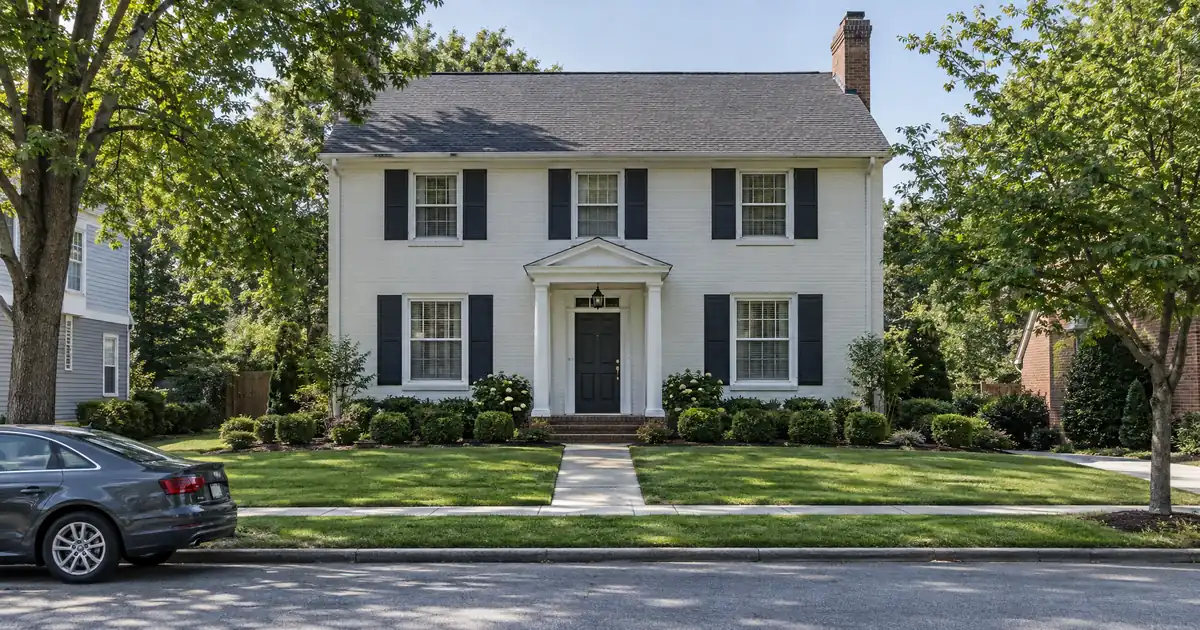
The Quick Read: Usually, a landlord should keep a low first mortgage in place and borrow against the equity separately, because a cash-out refinance reprices the entire balance at today’s cost while a home equity line prices only the new money, and the exceptions come down to availability, title, cash need, and rent coverage. A home equity line of credit (HELOC) is the “keep the first” tool. A DSCR cash-out refinance is the “replace the first” tool.
- Keeping the first holds your low payment on the old balance. The higher cost touches only what you borrow.
- A HELOC on a rental is not available everywhere, and it cannot be titled in an LLC.
- On this network, an investment-property HELOC tops out at 70% combined loan-to-value (CLTV) and a $500,000 line.
- A DSCR cash-out refinance reaches higher leverage, but it resets the rate on your whole balance.
- If your old rate sits near today’s market, the case flips toward replacing it.
Why Does Keeping the First Usually Win?
Keeping the first wins because the math is lopsided when your old loan is far cheaper than today’s market. A refinance replaces the whole debt. A HELOC adds a second loan behind it, so the high-cost money is only the slice you actually borrow.
How large a line the equity supports.
An equity line is sized by combined loan-to-value, occupancy, and credit — not by rental coverage. Switch the occupancy or the credit band and the ceiling moves with it.
Investment-property lines require a 700 minimum credit score; second-home lines start at a 640 minimum and primary-residence lines at 600, and the combined-LTV ceiling steps down as the credit band drops on primary-residence and second-home lines and holds on investment-property lines; the line cap steps down on primary-residence lines and holds at every tier on investment-property and second-home lines.
A debt-to-income ratio above 45% requires 680+ credit. Profiles under 640 are limited to single-family homes. At least 75% of the approved line is drawn at closing. Ceilings, floors, and caps update from Lendmire’s centralized guideline source.
Line estimate
Illustrative estimate only — not a quote, Loan Estimate, approval, or commitment to lend. The rate is an editable assumption; equity-line pricing is variable through both the draw and repayment periods and never converts to fixed. Occupancy and credit drive the ceiling together: an investment property tops out at 70% combined LTV (minimum credit 700, line cap $500,000); a second home tops out at 90% combined LTV (minimum credit 640, line cap $500,000), with the ceiling stepping down as the credit band drops (the cap holds at every tier); a primary residence tops out at 90% combined LTV (minimum credit 600), and its $750,000 maximum line is available only at 75% combined LTV or below with a 700-or-better credit profile (720 on the longer-runway program) and a full appraisal. Lines above $500,000 require a full appraisal. Credit, debt-to-income, property type, and full underwriting review all affect the final line.
Picture a landlord with a large, cheap first mortgage who needs a modest amount of cash. A cash-out refinance forces that entire large balance onto today’s pricing. That is the “blended cost” problem: you average the old loan and the new money by their balances and compare the result to one new loan. When the old balance is big and the draw is small, the old rate dominates the blend, and the low first is worth protecting.
This matters to many owners. Wolf Street’s analysis of FHFA mortgage data found that 49.9% of outstanding mortgages in the latest quarter carried a rate below 4%, down from over 65% at the peak. Mortgages at 6% or higher were 22.1% of the total. Half the market is still sitting on cheap debt.
How Do the Two Paths Compare for a Rental?
The paths differ in who gets underwritten, how title must be held, and how much leverage you can reach. A HELOC is judged mostly on you: credit, equity, and debt-to-income. A DSCR cash-out is judged on the property, meaning rent against the new full monthly obligation.
| Factor | Keep first + investment HELOC | Replace first with DSCR cash-out |
|---|---|---|
| Underwriting basis | Borrower credit, equity, DTI | Property rent vs. payment |
| Title | Individual or revocable trust | LLC possible, per program terms |
| Leverage | 70% CLTV on investment property | Around 75% LTV on standard rentals |
| Size | $25,000 to $500,000 line | up to $3,000,000 on standard programs (smaller balances available through select lenders) |
| Payment behavior | Floats, never converts to fixed | 30-year fixed is the usual spine |
| Your existing first | Left untouched | Paid off and repriced |
All figures are subject to lender guidelines and full file review. The 75% ceiling applies to standard long-term rentals. On short-term-rental collateral, a cash-out tops out at 70%.
The HELOC column carries more catches than it first appears. Across the wholesale network Lendmire works through, investment-property lines require a credit score of at least 700. Scoring above 700 buys eligibility, not extra leverage, because 700 and 720 both reach the same 70% CLTV. The line runs a 5-year interest-only draw followed by a 25-year repayment period. At least 75% of the line is drawn at closing, so this is not a standby account you leave untouched.
NerdWallet describes a typical market HELOC as a 10-year draw followed by repayment of up to 20 years. On this network, the investment structure is the 5-year draw and 25-year repayment described above.
Is a HELOC Even Available on Your Rental?
Often it is not, and that settles the question before any rate math. Availability is the first gate, and many investors discover it late.
On this network, the investment HELOC is offered only in Lendmire’s 16 full-service states, a narrower footprint than the DSCR loan footprint. Title is the next gate. Fee simple or leasehold title must sit with you personally or in a revocable living trust. LLCs, corporations, partnerships, and irrevocable or land trusts cannot hold title. A property already deeded to an LLC needs a vesting change, or it needs a DSCR cash-out instead.
Property type matters too. Manufactured homes, co-ops, condotels, log homes, and mixed-use or agricultural properties are not offered on the HELOC. Single-family homes, 2-4 units, townhomes, planned unit developments, and condos, including non-warrantable condos, are eligible.
Portfolio size can also block you. A borrower is limited to three lines, and anyone with more than 15 financed properties is not eligible.
Then there is your own paperwork. A personal debt-to-income ratio caps at 50%, and a ratio above 45% requires a 680 score. The line is qualified on the interest-only payment at the full line amount. A landlord with many properties and thin personal income can pass the property test easily and still fail this one. Exact terms depend on lender and investor guidelines, credit profile, reserves, and property review.
What Does the Replace Path Actually Cost You?
It costs you the old rate on every dollar of the existing balance. That is the hidden price of the cash you receive.
Say you own a rental where rent covers the current payment at around 1.5x. You do a cash-out refinance, and the larger balance now sits on today’s pricing. The rent has not changed, but the payment has. Coverage might land near 1.1x in this modeled example. That is still workable for many files, but your cushion is gone.
Remember what the ratio measures. DSCR is monthly rent divided by the monthly principal, interest, taxes, insurance, and any HOA dues (PITIA). Clearing 1.00 does not mean positive cash flow. Repairs, vacancy, management, utilities, and capital expenses all sit outside that calculation.
Coverage thresholds vary by program. 1.00 is where many select programs start. A separate select-lender path takes coverage below 1.00 with leverage and terms adjusted. Stronger ratios open better pricing and leverage.
Two more costs apply. Closing costs run higher on a refinance than on a HELOC, because the lender is re-underwriting a much larger loan. Credit also matters: most DSCR programs want around a 660 score, a 620 floor exists in parts of the network, and 700 and above unlocks the strongest leverage tiers. The cash-out refinance typically expects about six months of seasoning, and reserves commonly run around six months of PITIA. Reserves vary by lender, leverage, loan size, and transaction type.
Your existing loan may also carry a prepayment charge. Check that before you price the replace path.
How Do You Run the Break-Even Test?
Use three inputs: the gap between your old rate and today’s pricing, the size of your draw relative to your balance, and the closing costs on each path. Everything else is detail.
1. Gap. A wide gap favors keeping the first. A narrow or negative gap favors replacing it.
2. Draw size. A small draw against a big balance favors the HELOC. A draw that is a large share of the balance moves the blend toward the refinance.
3. Costs and hold period. Spread the refinance’s higher closing costs and the extra interest on the old balance over how long you will realistically hold. Then compare that to the HELOC’s higher cost per borrowed dollar.
Do the blend in plain steps. Weight your old rate by the old balance and the HELOC pricing by the new draw. Compare the result to one new loan on the whole amount. If the keep-the-first blend is meaningfully lower, keep the first. Lendmire’s own piece on how much a rental HELOC saves over replacing a low first mortgage walks through that comparison in more detail.
One caution applies to the HELOC side. Its pricing floats during the draw and the repayment period, and it never converts to fixed. Credit Karma notes that HELOCs are typically harder to qualify for than cash-out refinances, because the lender sits in second position behind the first. A thin-margin rental can lose its savings if the line’s cost climbs. A cheap first plus a pricey second can cost more than one new loan, so run the blend honestly.
When Does Replacing the First Make Sense?
Replacing makes sense when the HELOC route is closed, too small, or no longer cheaper. The exceptions are real, and a good broker will tell you so.
- No HELOC is available. If your state, title, property type, or credit profile blocks the line, a first-lien cash-out may be your only equity tool.
- The rental sits in an LLC. The HELOC cannot go on LLC title, so a DSCR cash-out, subject to lender program eligibility, becomes the practical route.
- You need a large amount. An investment line caps at $500,000 and 70% CLTV. A first-lien cash-out often reaches higher leverage, at around 75% on standard rentals.
- Your old rate is near market. If you would give up little by replacing it, the sacrifice disappears.
- A second lien already exists. Refinancing the first means the second-lien holder must agree to subordinate or be paid off, as Bills.com explains. That adds a step and sometimes fees. Refinancing both liens together is the other path.
- You want one fixed payment. A DSCR first can run as a 30-year fixed, and select lenders in the network also offer 40-year terms and interest-only periods.
This is a genuine toss-up for investors with a middling rate gap and a moderate cash need. The numbers can favor either path, so price both before choosing.
What Does the Portfolio Effect Look Like?
Each cash-out spends one cheap loan permanently. An investor with several low-rate notes who replaces them one at a time ends up with a portfolio priced at market. An investor who borrows behind them keeps the cheap debt in place.
That is why many experienced landlords treat the low first as an asset and the equity as a separate pool. For their next down payment, they borrow against the pool and leave the cheap debt alone. That only works if the line is available, and the section above shows how often it is not.
When Should You Wait or Walk Away?
Wait when the use of cash is undefined. At least 75% of an investment line is drawn at closing, so you start paying interest on money you may not need yet.
Walk away from the HELOC if your coverage is thin and the floating payment could squeeze the property. Walk away from the refinance if the larger payment pushes coverage toward the edge of what the program tolerates. A property that barely clears coverage today has no room for vacancy.
Both products also lean on valuation. On investment lines at or below $500,000, the network ordinarily runs an automated valuation with no traditional appraisal, though a higher CLTV may require a second valuation. A cash-out refinance uses a full appraisal, often with a rent schedule form, and a lower value shrinks your proceeds.
Lendmire’s article on whether an investment-property HELOC beats a cash-out that replaces a low first covers more of the side-by-side. For the full program picture, the complete DSCR loans guide is the place to start.
Tax treatment can depend on how the funds are used and how the property is held. Investors should keep clear records and speak with a qualified tax professional before relying on any deduction.
Key Terms Defined
HELOC: A revolving line of credit secured by the property, usually with floating pricing and interest-only payments during a draw period.
CLTV: Combined loan-to-value. All liens on the property added together, divided by its value.
DSCR: Debt service coverage ratio. Monthly rent divided by the monthly PITIA.
PITIA: The monthly principal, interest, taxes, insurance, and any association dues on the property.
Blended cost: The average cost of your old loan and your new borrowing, weighted by balance.
Subordination: An agreement in which an existing lienholder accepts a lower claim position so a new loan can sit ahead of it.
Seasoning: The waiting period a lender wants after you buy or refinance before the next cash-out.
Frequently Asked Questions
Can a HELOC go on an LLC-owned rental?
Not on this network. The title must be held by you individually or by a revocable living trust. LLCs, corporations, partnerships, and irrevocable or land trusts cannot hold title for the HELOC. If the property is already in an LLC, the options are a vesting change or a DSCR cash-out, subject to lender program eligibility.
How much can I borrow against a rental with a HELOC?
On an investment property, the network ceiling is 70% CLTV with a maximum line of $500,000. Credit of 700 or better is required, and scoring higher than 700 does not lift the ceiling. The CLTV counts your first mortgage plus the new line, so a larger existing balance leaves less room.
Does a cash-out refinance reset my loan term?
Yes. The new loan replaces the old one, so you start a fresh term on the entire balance. The 30-year fixed is the usual structure. Select lenders in the network also offer 40-year terms, interest-only periods, and adjustable structures.
What if the cost of my HELOC rises?
The payment rises with it. Pricing floats through both the draw and repayment periods and never converts to fixed. Your qualifying payment is figured on the interest-only amount at the full line, so build in cushion. The risk is largest on rentals with thin coverage.
Does DSCR count my rent on a HELOC?
Not the way a DSCR loan does. The HELOC is underwritten on your credit, equity, and personal debt-to-income. A DSCR cash-out qualifies primarily on property-level rental income covering the payment, subject to lender guidelines.
Where to Go From Here
If you are considering a home equity line and want to see how the numbers work, Lendmire can help you compare HELOC options based on the property, the equity available, credit profile, combined leverage, and your goals. As a broker, Lendmire arranges financing through select lenders in its wholesale network across 41 markets, including Washington, D.C. You can request a quote or call 828-256-2183 to talk through your own balance and rate gap.
About Lendmire
Lendmire (NMLS# 2371349) is a mortgage broker. Home equity lines of credit — on a primary residence, a second home or an investment property — are arranged through wholesale lenders in Lendmire’s 16 full-service states, and every line is underwritten by the lender under its program guidelines. Scotsman Guide named Lendmire a Top Mortgage Workplace in both 2025 and 2026.
Get Started
Ready to find the right loan for you?
In about 30 seconds you can review financing options available for your home or investment property. No commitment required.
Informational only. Not a Loan Estimate, approval, or commitment to lend. Program availability and eligibility are subject to lender guidelines, credit approval, property review, and underwriting.
References
1. Wolf Street – lock-in update using FHFA National Mortgage Database data
2. NerdWallet – HELOC on an investment property
3. Credit Karma – HELOC vs. cash-out refinance
4. Bills.com – Is a HELOC a subordinate lien?
This article is part of Lendmire’s investment property HELOC program — full qualification details, guidelines, and scenarios live on the program page.
Related reading: Investment Property HELOC Underwriting Behind a First Lien · DSCR Cash-Out vs HELOC vs Blanket Loan for Several Rentals · Can a DSCR Cash-Out Refinance Pay Off a Hard Money Loan in Full?
Brandon Miller
Founder & CEO, Mortgage Loan Originator, Lendmire LLC
- Mortgage Loan Originator · NMLS# 1129696 · Verify on NMLS Consumer Access
- North Carolina Real Estate Broker · License# 343312 · Verify on NCREC
- North Carolina Insurance Producer · License# 19053198 · Property, Casualty, Life, Health · Verify on NAIC SBS
- Lendmire LLC · Firm NMLS# 2371349 · Verify firm licensure
Required disclosures. Lendmire (NMLS# 2371349) operates as a licensed mortgage broker, not a direct lender or depository. The discussion in this article is general in nature and should not be relied upon as financial, legal, or tax advice — every investment scenario is unique and should be reviewed by a qualified professional. Any loan inquiry is subject to lender underwriting, and this article is not a commitment to lend or a guarantee of approval. Mortgage rates, loan terms, and program guidelines vary by borrower, property, and state, and may change without notice. Equal Housing Opportunity. Verify licensure at NMLS Consumer Access.