
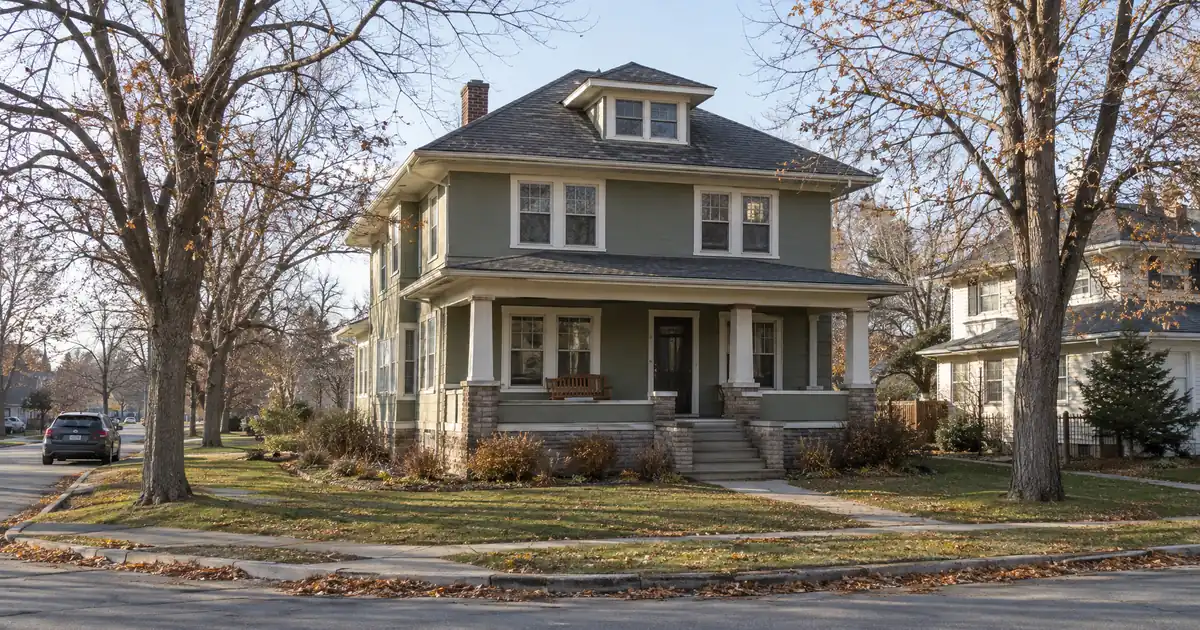
The Quick Read: A portfolio DSCR lender treats a bank-owned rental package as one pooled loan, tested on the combined rent against the combined payment across every property, while still checking each house’s own deed, appraisal, rent evidence, and title.
- Coverage is measured on the pool, so stronger rentals can offset weaker ones, subject to lender guidelines.
- Vacant bank-owned houses are counted at an appraiser’s market rent, since there is often no lease.
- Leverage on the 30-year portfolio structure goes up to 80% of value on a purchase, with 2 to 20 properties under one note.
- Cross-collateralization means every property backs the whole debt, so the release terms matter as much as the pooled ratio.
- Small packages of two or three houses sometimes fit separate loans better than one blanket.
“Bank-owned rental package” is not a standard industry term, so it helps to say what we mean. Two readers use it. One is buying a bundle of bank-owned houses (REO) to rent out. The other already owns a rental pool and wants to finance it as one loan. The mechanics below fit both, with the buyer’s case getting extra attention because the bank-owned origin changes the file.
Lendmire is a broker. It arranges these loans through select lenders in its wholesale network, across 41 markets including Washington, D.C. The lender reviews and approves. Program details change, and every file is underwritten individually.
Key Terms Defined
REO (real estate owned): A property a lender took back after it failed to sell at auction, or through a deed-in-lieu of foreclosure, per NerdWallet’s REO explainer.
Portfolio (blanket) loan: One loan that is secured by several properties at once.
DSCR (debt service coverage ratio): Monthly rent divided by the full monthly payment on the loan, meaning principal, interest, taxes, insurance, and association dues (PITIA).
Cross-collateralization: A structure where each property backs the whole loan, not just its own share.
Release clause: Loan language that lets one property leave the pool once stated conditions are met.
Allocated balance: The slice of the total loan assigned to each property, which sets the price of a later release.
What Is the Lender Actually Looking At?
The lender looks at the pool and at each property. It tests combined coverage, combined leverage, and the condition of the weakest houses. Then it reviews the borrower, the entity, and the release terms in the note.
This is where a bank-owned package differs from an investor-owned pool. A bank usually prefers not to hold REO, since it adds risk, as Corporate Finance Institute explains. That is part of why bulk sales appeal to sellers. Banks also tend to clear taxes and liens before transfer, which usually makes title simpler. Usually. A bank sale is not a guarantee of clean title, so the lender still reviews it.
Think of it as two layers. The pool layer asks, “Does this whole group carry its debt?” The property layer asks, “Is each house real, rentable, insurable, and properly titled?” A strong answer to the first never skips the second.
How Underwriting Works, Step by Step
Underwriting moves from the contract, to the single houses, to the pool, to one closing. Here is the sequence on a typical file.
1. Package intake. The seller is a bank or servicer, and the sale is usually as-is. You get limited disclosures and sometimes limited access for inspection.
2. Per-property diligence. Each house keeps its own deed, appraisal, and rent evidence. For a single-family home the appraiser’s market-rent opinion usually comes on Form 1007. A 2-4 unit property uses Form 1025.
3. Rent determination. Occupied houses use the lease. Vacant ones use the appraiser’s market rent. Typical practice credits the lower of the two when both exist.
4. Pooled coverage test. Total rent used for lender review is divided by total PITIA across the pool. On the 30-year portfolio structure the floor is 1.00 measured on the pool, subject to lender guidelines.
5. Aggregate leverage test. Total loan is compared with total appraised value. Lower the loan or add cash, and this number moves.
6. Title and insurance. One note is secured by a deed of trust or mortgage recorded against each property. Vacant properties often need different coverage than occupied ones.
7. Release terms. The note sets the release price, the conditions, and whether the remaining pool gets re-tested.
8. Closing. One closing, one servicer, one payment.
That pooled test is aggregation, not averaging. Add up all the rent, add up all the debt service, divide. A weak house rides with stronger ones. Some programs also add a per-property guardrail, so ask which one applies.
Which Rent Counts When the Houses Are Empty?
For vacant houses, the appraiser’s market-rent opinion counts, not a hoped-for number. This matters more on bank-owned packages than almost anywhere else, because banks often sell vacant.
| Property status | Evidence used | Rent that counts |
|---|---|---|
| Occupied, lease in place | Lease plus appraisal rent opinion | Typically the lower of the two |
| Vacant | Appraiser’s market-rent opinion | Market rent |
| Mid-repair | Appraisal, completion evidence | Depends on condition at review |
| Month-to-month | Lease history, appraisal opinion | Reviewed case by case |
Every property still needs a lease or an appraiser-supported market rent. No exceptions.
One more point on method. Some pages calculate coverage on net operating income. The structures described here compare rent to PITIA only. Clearing 1.00 does not mean positive cash flow. Repairs, vacancy, management, utilities, and capital expenses sit outside the calculation, and bank-owned houses tend to carry more of them.
Two Structures, Two Different Jobs
Lendmire’s network offers two portfolio structures, and they suit different packages. Pick by size and goal.
| Factor | 30-year portfolio loan | Rental portfolio term loan |
|---|---|---|
| Properties | 2 to 20 under one note | 5 or more properties or units |
| Loan size | $300,000 to $5,000,000 | $500,000 to $50,000,000 |
| Leverage | Up to 80% of value on purchase | Up to 75% of value |
| Terms | 30-year, fixed or adjustable | Fixed 3, 5, 7, 10 years, balloon |
| Recourse | Personal guarantee on recourse loans | Recourse or non-recourse |
| Pool test | 1.00 pooled coverage floor | Reviewed by underwriting |
The 30-year loan can include an interest-only period. Eligible types are single-family, 2-4 unit, condo, and townhome. The term loan adds small multifamily and allows properties across several markets under one loan. Non-recourse here means the loan looks to the real estate, with carve-outs such as fraud and bankruptcy. It is not a promise of no personal liability in every case. Larger balances are available on review, all figures are ceilings or floors, never quotes, and all are subject to lender guidelines.
Credit matters too. The pool credit floor is typically 640, with 680 or 720 on some structures. Some structures require a special-purpose entity, usually an LLC, subject to program terms.
When One House Fails Review
If one house fails appraisal, title, or condition review, the lender has four options: drop it, substitute another, re-size the pool, or split the deal into separate loans.
Picture a six-house bank package where five are rentable and one is badly damaged. As-is condition can make a house hard to finance. iBuyer notes that FHA and VA programs fail on heavily damaged REO because of minimum condition rules. DSCR is a different product, but the lesson holds: an unrentable house is a problem for any lender. You can carve it out and pay cash, cure it first, or finance it separately.
Dropping a house changes the pool math. Rent falls, but so does debt. Leverage shifts too. Underwriting retests everything, so a pool that cleared with six houses needs fresh numbers with five.
A rental below 1.00 coverage can still sit inside a pool. In that case the pooled coverage, the leverage, and the terms are what underwriting tests.
Cross-Collateralization and Release Terms
Cross-collateralization means the lender can look to every property if the loan goes bad. Nav describes the clause as giving the lender the right to seize collateral if you don’t pay on time, and advises securing a release clause up front. That clause lets individual properties come out of the blanket once conditions are met.
The release clause is private contract language. No federal rule gives a borrower a right to a partial release. Federal law does govern due-on-sale clauses, which are enforceable under 12 U.S.C. §1701j-3, but that statute creates no release right. Think of it as a general backdrop, not a protection.
Here is how releases work in practice:
- The note sets the release price. It runs above the property’s allocated balance.
- The note sets the conditions, including whether the remaining pool must still cover its debt service.
- Partial releases, substitutions, and the sale of one property all follow the loan documents and the lender’s release terms.
- Without a release clause, selling one house can put the whole debt in play. Adding one later needs lender consent.
This is why allocation matters. How the loan is spread across properties decides what each exit costs. A vacant house that is still in the pool can also block a release if the lender retests the remaining pool. Read these terms before signing, especially if you plan to sell houses off.
Where the Rule Breaks
Pooling is not always the right answer. These are the cases where it breaks down.
Small packages. Many blanket programs set minimums on property count and loan size. A two- or three-house package may fit separate DSCR loans better. Separate loans stand alone, with no cross-default and independent sales. On standard loans each property is tested alone, so none can share another’s cushion.
Cash-only sellers. Some bank sellers want cash or proof of funds. Financed offers can still win, but sellers may weigh certainty of closing. Banks can also be slow, with multiple approvers, per NerdWallet’s bank-owned homes page. Financing readiness, meaning appraisal timing, title, and entity paperwork, can decide whether your offer stands out.
Mixed entities. Separate LLCs generally mean separate loans, not one blanket. A personal guaranty typically stays after a property leaves the lien.
Ineligible property. Owner-occupied property, co-ops, mixed-use, and commercial property are not eligible in the pool. Manufactured and mobile homes are not reviewable on these programs. Log homes and barndominiums are not offered in the network’s DSCR programs at all.
Cash-out on the pool. Cash-out never goes above 75% of pooled value. Inside the first six months of ownership, the loan is also capped at 90% of total cost (purchase price plus documented improvements), and at 100% of total cost from six to twelve months. The leverage ceiling still applies, so the loan is the lower of the two. After twelve months the appraised value alone is the basis. A rate-and-term refinance is not subject to the cost-basis cap.
Pool or Separate Loans?
| Situation | Better fit |
|---|---|
| Many houses, one seller, one closing | Pooled loan |
| Weak houses next to strong ones | Pooled loan |
| Plan to sell houses soon | Separate loans, or strong release terms |
| Two or three houses | Separate loans |
| Houses held in different LLCs | Separate loans |
| Five or more units, long hold | Term loan structure |
Across the network, the strongest packages clear both tests: enough equity and enough rental coverage. A larger down payment lowers the payment and can lift the ratio. It never erases leverage caps, credit floors, reserve rules, or property eligibility. Reserves vary by lender, leverage, and loan size, and are commonly around 6 months of PITIA, stepping up to about 9 months above $1,500,000. On the term loan, reserves are held for taxes, insurance, and capital expenditures.
On files with several vacant houses, the stronger deals usually arrive with appraisals ordered early and entity paperwork already organized. That tends to matter more than the exact ratio, because a late appraisal on one house can stall the whole pool.
Lenders usually ask for a portfolio schedule. Prepare, for each property: address, unit count, use, occupancy, condition, rent evidence, debt, taxes and insurance, value, and renovation history. If you read the complete DSCR loans guide first, the pooled math will read as a natural extension of the single-property version.
Frequently Asked Questions
Can a strong house carry a weak one?
Yes, on the pooled test. Combined rent over combined debt is what the lender measures, so stronger properties can offset weaker ones. Underwriting still reviews each house for condition, title, and rentability, and leverage limits still apply.
Does each house need its own appraisal?
Yes. Each property keeps its own deed, appraisal, and rent evidence. The appraisal is also where market rent comes from on vacant houses, which is why it drives the pooled outcome.
What happens if I sell one house later?
It follows the release terms in your note. Expect a release price above the property’s allocated balance and possibly a retest of the remaining pool. If the note has no release clause, adding one later needs lender consent.
Is a batch of loans the same as a blanket loan?
No. Several notes closed together are still separate liens. Only a blanket or cross-collateral structure pools the properties under one note, with one payment.
Does the portfolio structure work for short-term rentals?
It can, but short-term rental collateral carries its own tiers, including lower leverage ceilings and hosting history requirements. Short-term rental rules can vary by city, county, HOA, and property type, so investors should confirm local rules before relying on projected rental income.
If you are buying or refinancing a rental property and want to see how the numbers work, Lendmire can help you compare DSCR loan options based on the property income, credit profile, leverage, and investor goals. Call 828-256-2183 or request a quote.
Tax treatment varies; consult a qualified professional.
About Lendmire
Lendmire is a DSCR-focused mortgage brokerage, NMLS# 2371349, placing investor loans across 41 markets, including Washington, D.C. DSCR eligibility is generally reviewed by the lender around a property’s rental income rather than personal income documentation, which fits LLC-held rentals, self-employed investors, and portfolios scaling past conventional financed-property limits. Scotsman Guide named Lendmire a Top Mortgage Workplace in both 2025 and 2026.
Get Started
Ready to find the right loan for you?
In about 30 seconds you can review financing options available for your investment property. No commitment required.
Informational only. Not a Loan Estimate, approval, or commitment to lend. Program availability and eligibility are subject to lender guidelines, credit approval, property review, and underwriting.
References
1. NerdWallet – REO Properties
2. Corporate Finance Institute – Real Estate Owned
3. iBuyer – Buying a Bank-Owned Property
4. Nav – Cross Collateralization
6. NerdWallet – Bank-Owned Homes
This article is part of Lendmire’s DSCR loan program — full qualification details, guidelines, and scenarios live on the program page.
Related reading: Can You Finance a Large Rental Portfolio in DSCR Stages? · How to Stage a Large Rental Portfolio Into DSCR Tranches · Portfolio DSCR Loan vs. a DSCR Loan on Every Rental
Brandon Miller
Founder & CEO, Mortgage Loan Originator, Lendmire LLC
- Mortgage Loan Originator · NMLS# 1129696 · Verify on NMLS Consumer Access
- North Carolina Real Estate Broker · License# 343312 · Verify on NCREC
- North Carolina Insurance Producer · License# 19053198 · Property, Casualty, Life, Health · Verify on NAIC SBS
- Lendmire LLC · Firm NMLS# 2371349 · Verify firm licensure
Compliance and disclosures. Lendmire (NMLS# 2371349) is a licensed mortgage broker and is not a direct lender, depository institution, financial advisor, or tax professional. Content in this article is general market analysis and educational information — not financial, legal, or tax advice for any specific situation. Lendmire does not guarantee loan approval; every transaction is subject to underwriting by the funding lender. Mortgage pricing and loan program guidelines are subject to change at any time without notice and vary by borrower characteristics, property type, and state regulations. Lendmire complies with Equal Housing Opportunity. Licensure verification: NMLS Consumer Access.