
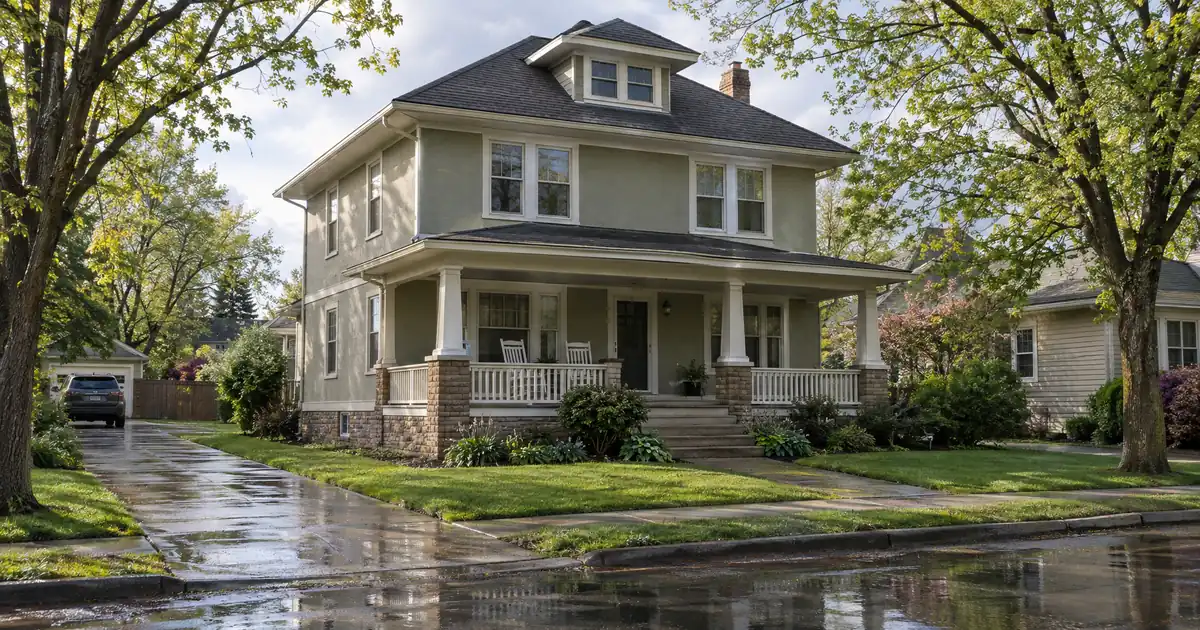
The Quick Read: The lender values a rehabbed rental from its own appraisal, built on closed sales of similar finished properties, and not from your after-repair value estimate or your rehab receipts. That appraised value, times the cash-out leverage cap, sets the maximum loan, while a separate rent-versus-payment test decides whether the file clears coverage.
- Your after-repair value (ARV) is a planning number. The appraiser’s number is the one that sizes the loan.
- Cash-out on a standard rental tops out at 75% LTV, with about 6 months of seasoning measured from title recording.
- Before seasoning is met, the loan is typically sized on cost (price plus documented rehab), not on appraised value.
- The same appraisal supplies market rent, so value and coverage are two separate gates.
- Cash to you equals the new loan minus the bridge payoff minus closing costs, so a modest appraisal miss shrinks proceeds by more than the miss.
BRRRR is a sequence of steps, not a loan product. AdviceOnly’s BRRRR glossary notes that the method has no issuing body or regulatory definition, and that step four is an ordinary cash-out refinance. Everything below describes how that refinance is underwritten across the wholesale network of DSCR lenders Lendmire places files with. Terms vary by lender, and every file is reviewed individually. For the broader product picture, the complete DSCR loans guide covers the basics.
DSCR Cash-Out Calculator
Run the cash-out numbers in your market
Rate source: Freddie Mac 30-yr average via FRED® — Federal Reserve Bank of St. Louis · effective Oct 22, 2026
Prefilled with starting assumptions — enter your property’s value, balance, taxes, and insurance for a more accurate picture.
Program parameters update from Lendmire’s centralized guideline source. Taxes and insurance are editable estimates.
As of Oct 22, 2026 · General Freddie Mac market benchmark, not a Lendmire loan offer. Property value, balance, taxes, and insurance are editable estimates. Maximum loan-to-value varies by lender, program, property type, and seasoning. Not a Loan Estimate, approval, or commitment to lend. Program availability and eligibility are subject to lender guidelines, credit approval, property review, and underwriting.
Key Terms Defined
- ARV (after-repair value): your own estimate of what the property will be worth once the work is done.
- Appraised value: the number the lender’s appraiser reaches from closed comparable sales.
- Cost basis: the purchase price plus documented rehab spending.
- Seasoning: the ownership period a lender requires before it sizes a loan on appraised value instead of cost.
- Value basis: whichever figure, cost or appraisal, the lender applies for sizing the loan.
- LTV (loan-to-value): the loan amount divided by the value basis.
- DSCR (debt service coverage ratio): monthly rent divided by the full monthly payment.
- PITIA: principal, interest, taxes, insurance, and association dues, the payment side of the DSCR test.
- Payoff-only refinance: a refinance that retires the bridge loan and returns no cash at closing.
- Break-even appraisal: the lowest value that still pays off the bridge loan and closing costs.
How Does a Lender Decide What a Rehabbed Rental Is Worth?
The lender orders its own appraisal, and the appraiser picks closed sales of comparable properties, then adjusts for condition, size, and upgrades. That adjusted figure is the appraised value. It feeds the LTV calculation, and it is the only value that matters at the refinance table.
Two outputs come from the same report. One is value. The other is market rent. For a one-unit property, the appraiser typically uses a comparable rent schedule, which Fannie Mae’s forms list identifies as Form 1007. For two-to-four-unit properties, the small residential income property report, Form 1025, gives value plus per-unit rent. Those are appraisal form names only. They do not set DSCR program rules, which come from the lenders in the network.
Why Isn’t Your ARV the Lender’s Number?
Your ARV is a forecast made before the work was finished. The lender’s number is a measurement made afterward by a third party who has no stake in your deal. A finished rehab supports a higher value only when the sold comps back it up.
Appraisers lean on closed sales. Asking prices, staging, and design choices carry little weight. A property that looks sharp but sits among weaker closed sales will appraise toward those sales. The reverse also happens: a modest finish in a strong pocket can appraise well.
Overestimating ARV from optimistic comps is a common error. American Homeland Title’s BRRRR explainer lists it among the usual mistakes. The practical fix is to build your ARV from closed sales only, then haircut it.
Rehab spending is evidence of cost, not proof of value. An improvement may support a higher appraised value, depending on comps and underwriter review. Dollar-for-dollar credit is never a given.
How Does the Appraiser Treat Finished Work?
The appraiser compares your property to closed sales and adjusts the difference. That makes the comp set the real engine of value.
| What the appraiser weighs | What it does not weigh |
|---|---|
| Closed sales of similar finished homes | Your total rehab receipts |
| Condition and quality rating | Your ARV spreadsheet |
| Size, layout, bed and bath count | Staging and design flair |
| Documented, visible improvements | Work the report never mentions |
One habit pays off. Hand the appraiser an itemized list of capital improvements, with permits where they apply. Completed work missing from the report’s description or condition rating is a common cause of a low number. Missing lease or deposit paperwork is another common stall point.
Which Value Does the Lender Apply, Cost or Appraisal?
It depends on seasoning. Seasoning is the ownership time a lender wants before sizing on appraised value. Across most programs in the network, cash-out refinances expect about 6 months of ownership, measured from title recording. That clock typically starts at deed recording, not at rehab completion or lease signing.
| Timing | Typical value basis |
|---|---|
| Inside the seasoning window | Cost basis (price plus documented rehab) |
| After seasoning is met | Appraised value |
There are really two clocks here. One is ownership time. The other is which value basis the lender applies once that time passes. Investors who blur them plan the exit wrong. AdviceOnly’s glossary names the appraisal and the seasoning rule as the two places the BRRRR loop breaks.
Lender policy varies, so confirm the seasoning rule and its start date before you buy, not after the rehab ends. A longer wait also means more bridge interest and carry, so budget the holding period.
How Does Rent Enter the Picture?
Rent is a second, separate gate. Value caps the loan at a percentage of appraised value. Rent must then cover the full payment on that loan. A property can appraise beautifully and still miss on coverage, because the bigger cash-out balance raises the payment side of the ratio.
Coverage is monthly rent divided by PITIA. On the network, 1.00 is where select programs start, a floor for specific programs and not a universal standard. Stronger ratios open better pricing and leverage. A separate select-lender path takes coverage below 1.00, with leverage and terms adjusted. No-ratio structures exist only through select lenders, generally for borrowers who already own a primary residence.
Lenders weigh the signed lease against the appraiser’s market rent, and the lower figure is commonly the safer assumption to underwrite. The Motley Fool’s BRRRR explainer notes that the refinance lender needs an updated appraisal and a copy of the tenant’s lease. Get written leases in place before the appraisal is ordered.
Clearing 1.00 is not the same as positive cash flow. DSCR compares rent to PITIA only. Repairs, vacancy, management, utilities, and capex sit outside the calculation.
For short-term rentals, the appraisal’s rent schedule captures monthly market rent, not nightly rates. STR files on the network run lower leverage than long-term rentals, with a 70% cash-out ceiling on short-term-rental collateral, roughly 12 months of hosting history, and a 640+ score expected. These specifics are subject to lender guidelines and a full review of property, leverage, and credit.
How Big a Loan, and How Much Cash Comes Out?
Run it in steps:
1. Pick the value basis (cost inside seasoning, appraisal after).
2. Multiply by the cash-out LTV cap: 75% on a standard rental cash-out.
3. Subtract the bridge or hard-money payoff.
4. Subtract closing costs.
5. What remains is your cash out.
Here is an indexed example. Set the appraised value at 100 units. At 75% LTV, the maximum loan is 75 units. Say the bridge payoff plus costs total 70 units. Cash out is about 5 units. Terms depend on the lender’s guidelines, the property type, the leverage, and a full review of the credit profile.
Now run a 10% appraisal miss. Value drops to 90 units, and the maximum loan falls to 67.5. The payoff and costs stay fixed at 70, so the loan no longer covers the bridge. A 10% value miss turned a small cash-out into a shortfall. That is the leverage effect inside every BRRRR exit.
Total equity is also not releasable equity. What you can pull is capped by the LTV ceiling, reduced by the payoff and costs, and gated by reserves (commonly around 6 months of PITIA, stepping up to about 9 above $1,500,000 in loan size). Credit matters too. A 620 floor exists in parts of the network, most programs want around 660, and 700+ unlocks the strongest leverage tiers.
On fees, Lendmire’s piece How to Tell Lender Fees From Prepaids on a Rental Cash-Out Refinance explains which closing line items reduce your net.
What Is the Break-Even Appraisal?
Work it backward before you buy. The lowest value that still retires the bridge and pays costs is:
Break-even value = (bridge payoff + closing costs) ÷ 0.75
If total debt and costs are 70 units, break-even is about 93.3 units. Any appraisal below that leaves you bringing cash to closing. The reverse view helps with purchase screening: keep your all-in cost low enough that a conservative appraisal still clears the cap.
The Motley Fool describes staying under 70% of ARV in total money in. Treat that as a purchase screen, not a lender figure. A thin cushion between all-in cost and the 75% cap leaves no room for a bad comp set.
What If the Appraisal Comes In Short?
Start by finding the cause. Then pick the fallback.
| Cause of the shortfall | Typical fallback |
|---|---|
| Documented error (missed upgrade, wrong square footage) | Ask for a reconsideration with evidence |
| Comps genuinely weaker than your ARV | Take a smaller loan or bring cash to closing |
| Value fine, rent too low for coverage | Lower the loan size, or look at select-lender paths with adjusted leverage |
| Inside seasoning, cost basis applies | Wait out the window, or extend the bridge |
| Numbers just do not work | Hold the property and refinance later |
Another option is a payoff-only refinance with no cash back. Rate-and-term refinances on the network reach up to 85% LTV, but they return no cash at closing. Lendmire’s piece Skip vs. Carry a No-Equity Rental in a Cash-Out Refinance After Values Fell covers the related decision when values slide. The exact numbers vary by lender and program and follow a full review of property, leverage, and credit.
Where the General Rule Breaks
Delayed financing. This is an agency exception for cash purchases. It lets a refinance run off an appraisal without the usual wait, but it typically returns only the purchase price, so rehab dollars stay in the deal. It is not a DSCR feature, and it does not fix seasoning for most BRRRR deals.
Different lenders, different policies. Some lenders size small one-to-four unit loans on appraised value with little or no seasoning, while others hold firm. Anecdotes circulate, but policy genuinely varies. A broker comparing many lenders can match a file to the program whose seasoning and value-basis rules fit the timeline.
Property types. Manufactured homes (single- and double-wide), log homes, and barndominiums are not offered through the network’s DSCR programs, so a rehab in one of those cannot take this exit.
DSCR does not mean no appraisal. It means the qualification runs primarily on property-level rental income covering the payment, subject to lender guidelines. The appraisal is still ordered.
How Do You Document the Rehab?
Build the file before the appraiser arrives:
- An itemized scope of work and final invoices.
- Permits and completion sign-offs where required.
- A signed lease and proof of the deposit.
- Before-and-after photos tied to the scope.
- Your own comp set of closed sales, as a courtesy, not as a demand.
None of this guarantees value. It prevents the avoidable low number that comes from the appraiser simply not knowing what was done.
Planning Backward Before You Buy
Start from the exit. Estimate a conservative appraised value from closed sales, apply the 75% cap, and subtract your bridge and costs. Then model rent against the likely PITIA on the larger loan. If either test fails on paper, adjust the purchase price or scope before closing on the property. Also confirm the seasoning rule and where the clock starts with a broker before you buy.
Leverage choices matter on the way in too. Most purchase files land at 75%-80% LTV, with select high-leverage programs reaching 85% LTV at roughly a 700+ score. More down payment can lift coverage, but it never erases leverage caps, credit floors, or reserve rules. The strongest files clear both tests: enough equity and enough rental coverage. Final terms depend on the lender’s guidelines, the property type, and the borrower’s complete credit picture.
Tax treatment varies; consult a qualified professional.
Frequently Asked Questions
Can I refinance right after finishing the rehab?
You can usually start the file, but sizing on appraised value waits for seasoning, which is about 6 months of ownership on most network programs. Inside that window the loan is typically capped at cost basis. A payoff-only refinance is the alternative if you only need to retire the bridge.
Does my rehab spend add equal value?
No. The appraiser compares your property to closed sales, so spending beyond what the neighborhood’s finished homes show rarely returns dollar for dollar.
Does a signed lease matter?
Yes, in two ways. The lender needs the lease for the rent side of the coverage test, and a documented tenant helps the file. The appraiser’s market rent is a cross-check, and underwriting commonly leans toward the lower of the two figures.
Is cash-out always available after a BRRRR rehab?
No. Cash-out depends on the appraised value, the 75% ceiling, the bridge payoff, closing costs, reserves, and coverage. If the payoff and costs consume the loan, the refinance becomes payoff-only or requires cash at closing.
What if the appraisal comes in under my ARV?
Check for documented errors first and request a reconsideration with evidence. If the comps simply do not support your number, the options are a smaller loan, bringing cash, waiting, extending the bridge, or holding the property. Planning a break-even appraisal beforehand makes this far less painful.
If you are buying or refinancing a rental property and want to see how the numbers work, Lendmire can help you compare DSCR loan options based on the property income, credit profile, leverage, and investor goals. Loan terms are subject to lender guidelines and credit approval, and nothing here is a commitment to lend.
For how equity extraction works on an investment property, see Lendmire’s guide to cash-out refinance on an investment property.
About Lendmire
Lendmire, NMLS# 2371349, is a non-QM mortgage broker serving real estate investors in 41 markets, including Washington, D.C., through DSCR investor loan programs. Qualification is generally reviewed around the subject property’s rental income, not the borrower’s W-2 history — a practical fit for LLC-titled portfolios and self-employed investors. All scenarios remain subject to lender review and program guidelines. Two consecutive Scotsman Guide Top Mortgage Workplace recognitions (2025, 2026).
Get Started
Ready to find the right loan for you?
In about two minutes you can review financing options available for your investment property. No commitment required.
Informational only. Not a Loan Estimate, approval, or commitment to lend. Program availability and eligibility are subject to lender guidelines, credit approval, property review, and underwriting.
References
2. Fannie Mae Selling & Servicing Guide Forms
3. American Homeland Title BRRRR explainer
4. Motley Fool BRRRR explainer
This article is part of Lendmire’s investment property cash-out refinance program — full qualification details, guidelines, and scenarios live on the program page.
Related reading: Can a Mixed-Age Portfolio Cash-Out Refinance Include New Houses? · How a Lender Counts Closing Costs in a Rental Cash-Out Refinance · Do You Have to Wait Before Cash-Out Refinancing a New Rental?
Brandon Miller
Founder & CEO, Mortgage Loan Originator, Lendmire LLC
- Mortgage Loan Originator · NMLS# 1129696 · Verify on NMLS Consumer Access
- North Carolina Real Estate Broker · License# 343312 · Verify on NCREC
- North Carolina Insurance Producer · License# 19053198 · Property, Casualty, Life, Health · Verify on NAIC SBS
- Lendmire LLC · Firm NMLS# 2371349 · Verify firm licensure
Disclosure information. Lendmire is a state-licensed mortgage brokerage under NMLS# 2371349. Lendmire is not a depository institution, direct lender, or financial advisor — all loans referenced are placed through wholesale lender partners and are subject to each lender's underwriting standards. This article is provided for general informational purposes and is not a commitment to lend, nor does it constitute financial, legal, or tax advice. Loan programs, terms, rates, and qualification standards change without notice and depend on borrower profile, property type, and the state in which the subject property is located. Equal Housing Opportunity provider. NMLS Consumer Access: nmlsconsumeraccess.org.