
The Quick Read: Yes, an LLC can borrow on a DSCR loan with an interest-only period, but only when the property is already rentable, because it works as a long-term rental loan and does not fund rehab, which is the job a fix-and-flip loan does.
- The LLC is not the deciding variable. The property’s condition and your exit plan decide which loan fits.
- Interest-only terms are available through select lenders in Lendmire’s wholesale network, not on every program.
- Interest-only lowers the payment used in the coverage test, but it does not loosen credit, leverage, or reserve rules.
- A property that needs real work usually starts on short-term financing, then moves to a DSCR loan once it is stabilized.
- The payment steps up when the interest-only period ends, so model the higher payment before you commit.
The Short Version of the Decision
The answer depends on what you are buying and what you plan to do with it.
If you are buying a finished rental and plan to hold it, an interest-only DSCR loan can replace a flip loan entirely. It is built for that job. The term is long, the underwriting runs on the property’s rent, and nothing forces a sale or refinance on a short clock.
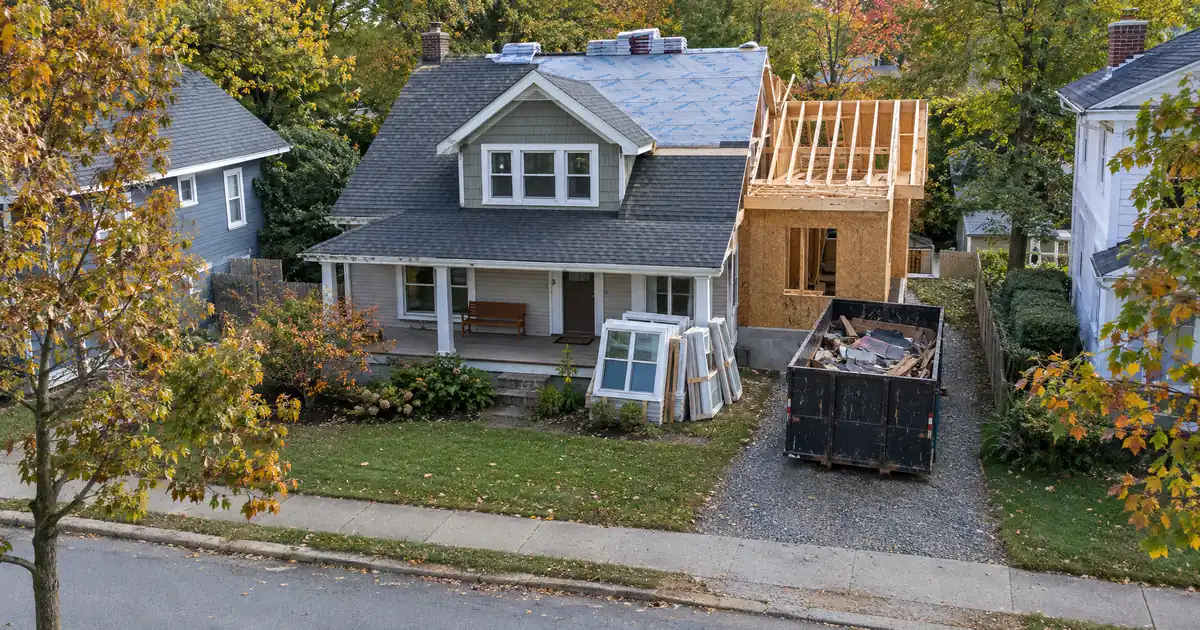
If you are buying a property that needs a gut rehab, it cannot replace a flip loan. A DSCR lender wants a habitable property with a lease or a supportable market rent. It does not release money in draws as work gets done.
For many investors the right answer is both, in sequence: flip-style financing for the project, then DSCR once the rent roll exists. Lendmire’s complete DSCR loans guide covers the basics of the long-term side if you want the full picture.
What this loan actually costs to carry.
Hard money is sized against the project and priced by time. Enter the deal and see how much the program will lend, the cash required at closing, the carry while you hold it, and what is left at the exit.
Leverage tiers on the current program: 85% with fewer than 2, 90% with 2 or more, 93% with 5 or more completed projects — every tier capped at 75% of after-repair value. Loan amounts up to $5,000,000, larger by exception; terms of 6 to 18 months, interest-only, no prepayment penalty. The rehab portion funds in draws against completed work, not at closing.
Program parameters shown update from Lendmire’s centralized guideline source. Rate, points, and months are editable assumptions, not quoted terms.
Cost cap sets the loan · positive spread
Illustrative estimate only — not a quote, Loan Estimate, approval, or commitment to lend. Rate, points, and months are editable assumptions. Hard money is business-purpose financing for real estate investors, not a consumer mortgage. Leverage on the current program tops out at 93% of project cost for investors with a documented track record, capped at 75% of after-repair value, with rehab funding up to 100% of the documented budget released in draws; actual terms vary by lender, borrower experience, property, and exit. Lendmire is a mortgage broker, not a lender.
Key Terms Defined
DSCR (debt service coverage ratio): Monthly rent divided by the monthly obligation on the property. Lenders use it to judge whether the rent covers the loan.
PITIA: Principal, interest, taxes, insurance, and association dues. A standard DSCR test divides rent by this full figure.
ITIA: The same obligation with principal removed. On an interest-only test, this is the denominator.
Interest-only period: A stretch at the start of the loan when payments cover interest and no principal. After it ends, payments rise to include principal.
After-repair value (ARV): What a property is expected to be worth once renovations are done. Flip loans are sized against it.
Personal guarantee: A promise from an individual to stand behind a loan made to an LLC.
How an LLC Borrows on a DSCR Loan
The LLC is a normal borrower on these loans. Entity vesting is common, subject to lender program eligibility, and most files are built around it.
The lender reviews the LLC and the person behind it. Expect to provide:
- The LLC’s formation documents and operating agreement.
- A lease, or a market-rent appraisal when the property is vacant or being re-leased.
- Tax, insurance, and association figures for the property.
- Credit and assets for the guarantor.
- A business-purpose certification.
The guarantor point surprises people. The LLC is the borrower, yet the individual owner often still stands behind the loan. An LLC protects your other assets from claims against the property. It does not remove the lender’s need for a creditworthy person behind the file.
The LLC also does not change the payment test. The qualifying ratio looks at the property, whether it is titled personally or in an entity. If you want the full qualification checklist for entity borrowers, Lendmire’s article How to Qualify for an Interest-Only DSCR Loan for LLC-Titled Borrowers goes deeper.
One note on classification. DSCR loans are designed for non-owner-occupied investment properties. Because they are business-purpose investor loans, they are reviewed differently from a standard owner-occupied mortgage. The business-purpose exemption in Regulation Z is the governing text, and it turns on the purpose of the credit rather than on whether the borrower is an entity. A law firm’s commentary on the exemption walks through how that purpose test works. That is also why DSCR files can qualify primarily on property-level rental income covering the payment, subject to lender guidelines. It is a feature of the loan’s classification, not a shortcut around underwriting.
How Interest-Only Changes the Coverage Number
Interest-only changes the denominator and nothing else. Rent stays the same. The payment in the test gets smaller because principal drops out of it.
Here is an illustration with made-up ratios, not program terms. Picture a rental that covers its fully amortizing payment at about 0.92x. Judged on interest alone, the same rent might read near 1.1x. A file that missed the floor on an amortizing basis could clear it on an interest-only basis.
Two cautions belong right here.
First, programs differ on which payment they test. Some lenders review the file on the interest-only payment. Others test on the fully amortizing payment even when you pay interest-only. Ask which one applies before you count on the improved ratio.
Second, 1.00 is where many select programs start, not a universal standard. A separate select-lender path takes coverage below 1.00, with leverage and terms adjusted. Interest-only does not lower any program’s floor. It only changes the ratio you calculate against it.
Clearing the ratio is also not the same as positive cash flow. DSCR compares rent to PITIA only. Repairs, vacancy, management, utilities, and capital expenses sit outside the calculation. An interest-only file can pass the test and still be thin in real life.
What Interest-Only Does Not Change
Many investors assume interest-only is a looser product. It is not.
Across Lendmire’s network, the underlying rules stay in place:
- Leverage. Most purchase files land at 75%–80% LTV on an investment property, and select high-leverage programs reach 85% with roughly a 700+ score. Cash-out refinances top out around 75% LTV, with about six months of seasoning as the common expectation.
- Credit. A 620 floor exists in parts of the network, most programs want around 660, and 700+ unlocks the strongest leverage tiers. Interest-only structures tend to sit toward the stronger end of that range, since they are an optional feature on select programs.
- Reserves. These vary by lender, leverage, loan size, and transaction type. Around six months of PITIA is common. Conservative rate-term files at modest leverage under $1,500,000 can see reserves waived, while larger loans typically step up to about nine months.
- Loan size. Loans of up to $3,000,000 are available on standard programs, with smaller balances available through select lenders. Above $2,500,000 the network generally holds to 30-year fixed structures, so interest-only is unlikely on the largest loans.
The structural spine of the network is the 30-year fixed. Extended 40-year terms and interest-only periods come through select lenders, and ARM structures exist for investors who want them. All of this is subject to lender guidelines, and every file is underwritten individually.
Interest-Only DSCR Versus a Fix-and-Flip Loan
The two products share one feature, interest-only payments, and almost nothing else. They solve different problems.
| Factor | Interest-Only DSCR | Fix-and-Flip |
|---|---|---|
| Purpose | Hold a finished rental | Buy and renovate a project |
| Property condition | Habitable and rentable | Can need heavy work |
| Rehab funding | None | Budget released in draws |
| Sizing basis | Value and rental coverage | Project cost and ARV |
| Term | Long, with interest-only option | 6–18 months |
| Prepayment | Often carries a penalty | Typically none |
| Exit | Hold, or refinance later | Sell, or refinance into long-term debt |
On the hard-money side, program details vary by lender, property, and experience. Leverage is generally sized on project cost, with a cap tied to after-repair value. At the top tier, which is reserved for experienced investors with several completed projects, the loan can reach 93% of project cost. Fewer completed projects mean lower tiers, and every tier stays capped at 75% of ARV. Terms run 6–18 months, interest-only, and the minimum credit score sits around 620. Underwriting there is asset-based: the property, the plan, and the exit.
Notice what this means for the title question. A flip loan can put you in a property with far less cash than a DSCR purchase requires. A DSCR purchase asks for about 20%–25% down in most cases. A flip loan can fund much of the work itself. If your project needs capital for rehab, the DSCR product cannot step in.
Notice also what the DSCR loan gives you. There is no maturity cliff a few months out. You are not forced to sell or refinance on a short timeline. For a stabilized rental you plan to keep, that breathing room matters more than extra leverage.
DSCR vs. conventional financing
There are two common ways to finance an investment property, and they qualify you differently — here’s how investors weigh them.
Why investors choose it
- Qualifies on the property’s rental income — no personal tax returns, W-2s, or pay stubs needed to document income.
- No personal debt-to-income ceiling to clear, so existing mortgages and obligations don’t cap your borrowing the same way.
- Can be closed in an LLC, keeping the property inside a business entity.
- Built for scaling — not held to the limit on number of financed properties that conventional financing applies.
- Underwriting centers on the deal: generally qualifies when the rent covers the payment, a 1.00x coverage ratio being a common baseline (confirmed in underwriting).
- Designed specifically for investment property, including long-term and, where the program allows, short-term rentals.
Where it’s strong
- Often the lowest ongoing financing cost for a buyer who fully qualifies on personal income — a fit for a first property or a cost-first purchase.
Trade-offs for investors
- Requires full personal income documentation and must fit within a debt-to-income limit — salary, existing debts, and other mortgages all count.
- Typically held in your personal name rather than a business entity.
- Caps how many financed properties you can carry, which can become a ceiling as a portfolio grows.
- Evaluates you as a borrower as much as the property, which usually means more paperwork.
How investors usually choose: a first or single property often optimizes for the lowest financing cost; portfolio builders often optimize for leverage, vesting in an LLC, and scaling past conventional caps. The right answer depends on your goals, the property, and current guidelines — both paths run through select lenders in Lendmire’s wholesale network, with eligibility and terms confirmed in underwriting.
Which Loan Fits Which Scenario
Run your own deal through these cases.
Turnkey rental you plan to hold. Interest-only DSCR is the natural fit. The property is rent-ready, the lease supports the ratio, and a long term fits the plan.
Cosmetic work only. This is the gray zone. Fresh paint and flooring on an otherwise habitable property may still pass a DSCR review, but the lender decides. If the property cannot be rented as-is, expect to bridge first.
Heavy rehab. Use a flip or bridge loan. DSCR will not release rehab funds, and a property that is not habitable does not qualify.
BRRRR (buy, rehab, rent, refinance, repeat). Use both in order. Short-term financing carries the project. After the property is leased and stabilized, many investors refinance into long-term DSCR financing, a path Lendmire brokers. A lease or market rent supported by an appraisal is generally part of that refinance.
A flip that stalls and becomes a hold. This happens often. If the resale market softens and you decide to keep the property, a finished unit can move to a DSCR loan. That works well when the renovation is done and the property can be leased.
Entity Timing and Title
Decide the entity question before you buy, not after. If the LLC takes title at purchase, the loan can close in the LLC’s name from the start. If the property is titled personally, or in an entity set up for the flip, moving it later adds steps and can complicate the file.
Single-member and multi-member LLCs both appear in this lending, and the lender reviews ownership and operating agreement language either way. Newer entities can borrow, but expect questions about who stands behind the loan. Rules vary by lender and by state, so a short conversation about structure before you contract saves problems later.
The Step-Up Risk and How to Plan for It
The payment is low during the interest-only period. Then it rises, because principal gets added back across the remaining term. The remaining term is shorter than the original one, so the increase can be sharper than a simple amortizing schedule would suggest.
A few habits keep this manageable:
- Model the amortizing payment at purchase, not at the end of the interest-only period.
- Treat the interest-only years as a window to raise rents or improve the property, not as permanent cash flow.
- Decide early whether your exit is to sell, refinance, or convert to an amortizing schedule.
- Remember that interest-only builds no equity through paydown. Any equity growth must come from appreciation or improvements.
When Interest-Only DSCR Is the Wrong Tool for an LLC
Skip it in these cases:
- The property needs substantial work before anyone could live in it.
- You need purchase leverage beyond what the program allows, such as financing against project cost.
- You plan to sell within a year or two and want no prepayment penalty. Flip loans typically have none, while DSCR loans often do.
- Your coverage is so thin that even interest-only does not clear the program floor. That points toward re-examining the deal, not hunting for a different structure.
- The property type is not offered. DSCR in the network does not cover manufactured homes, log homes, or barndominiums.
Short-term rentals are a separate lane. Purchases go up to 75% LTV and refinances come in lower, with hosting history expected. Short-term rental rules can vary by city, county, HOA, and property type, so investors should confirm local rules before relying on projected rental income. The exact numbers vary by lender and program and follow a full review of property, leverage, and credit.
Talking Through Your Deal
If you are buying, rehabbing, or refinancing an investment property and want to see how the numbers work, Lendmire can help you compare options based on the project, the exit plan, leverage, and your goals. The brokerage arranges DSCR and short-term financing through select lenders in its wholesale network across 41 markets, including Washington, D.C. Reach the team at 828-256-2183 or request a quote.
Tax treatment can depend on how the funds are used and how the property is held; investors should keep clear records and speak with a qualified tax professional before relying on any deduction. This article is general information, not legal or tax advice, so consult a qualified attorney or CPA about your own situation.
Frequently Asked Questions
Does an LLC need a personal guarantor on an interest-only DSCR loan?
Usually yes. The LLC is the borrower, but the lender typically wants an individual guarantor with credit and assets behind the file. Some programs differ, so the answer depends on the lender and the loan.
Can the loan fund renovations?
No. DSCR financing is built for a property that is already habitable and rentable. If the property needs rehab, a short-term loan generally funds the work first, and DSCR follows once the property is leased.
Which payment does the lender use to test coverage?
It depends on the program. Some test on the interest-only payment, which raises the ratio. Others test on the fully amortizing payment even if you pay interest-only. Ask before you build your numbers around the lower figure.
Can a brand-new LLC qualify?
A new entity can often borrow, since the file rests on the property and the guarantor. Lenders still review formation documents and ownership, and requirements vary by program and lender.
What happens when the interest-only period ends?
The payment rises to include principal for the remaining term. You can pay it, refinance, or sell. Plan the exit before closing, and model the amortizing payment from the start.
About Lendmire
As a non-QM mortgage broker (NMLS# 2371349), Lendmire facilitates DSCR investor loans across 41 markets, including Washington, D.C. DSCR eligibility is generally reviewed around property-level rental income instead of personal income documentation, subject to lender guidelines, serving LLC-structured portfolios and self-employed borrowers who don’t fit conventional boxes. A two-time Scotsman Guide Top Mortgage Workplace (2025, 2026).
Get Started
Ready to find the right loan for you?
In about 30 seconds you can review financing options available for your investment property. No commitment required.
Informational only. Not a Loan Estimate, approval, or commitment to lend. Program availability and eligibility are subject to lender guidelines, credit approval, property review, and underwriting.
References
1. CFPB – Regulation Z, 12 CFR 1026.3
2. Doss Law – Business Purpose Exemption Simplified
This article is part of Lendmire’s hard money loan program — full qualification details, guidelines, and scenarios live on the program page.
Related reading: How to Structure a Trust With a Trustee Guarantor for a DSCR Loan · Syndication vs Joint Venture on a DSCR Loan With Passive Investors · Joint Venture vs Multi-Member LLC for a Super Jumbo DSCR Loan
Brandon Miller
Founder & CEO, Mortgage Loan Originator, Lendmire LLC
- Mortgage Loan Originator · NMLS# 1129696 · Verify on NMLS Consumer Access
- North Carolina Real Estate Broker · License# 343312 · Verify on NCREC
- North Carolina Insurance Producer · License# 19053198 · Property, Casualty, Life, Health · Verify on NAIC SBS
- Lendmire LLC · Firm NMLS# 2371349 · Verify firm licensure
Disclosures. The information presented in this article is general market commentary, not financial, legal, or tax advice. Lendmire is a mortgage brokerage (NMLS# 2371349) — not a direct lender or depository institution — and loan placement is subject to lender underwriting. Nothing in this content represents a commitment to lend. Loan terms, pricing, and program availability vary based on borrower qualifications, property characteristics, and state of subject property, and are subject to change at any time. Lendmire complies with Equal Housing Opportunity requirements. Consumer access: nmlsconsumeraccess.org.