
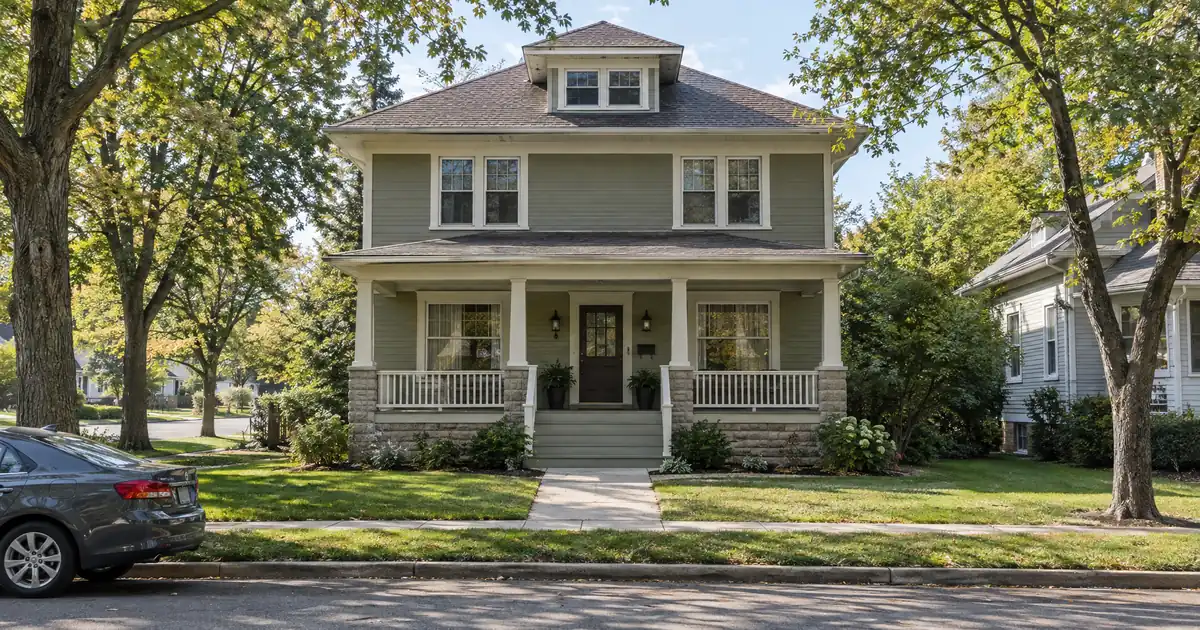
The Quick Read: Usually yes, because no rule caps how many LLC-held rentals can run cash-out refinances in the same window, but each file must pass its own tests and the lender sets a private limit on total exposure to one guarantor. Each property needs its own appraisal, rent coverage, and seasoning, while credit, liquidity, and reserves are shared across every file.
- Each rental gets its own note, lien, appraisal, and coverage test.
- Cash-out on standard rentals tops out around 75% LTV, with about 6 months of seasoning, subject to lender guidelines.
- Coverage of 1.00 is where select programs start, and each cash-out raises the payment on that property.
- The guarantor’s credit, cash, and reserves are shared across every loan.
- The real ceiling is lender exposure, and a broker with several lenders can route around it.
What Does “At the Same Time” Mean for LLC-Held Rentals?
It means one of three things: parallel files with separate notes closing in the same window, staggered files closing one after another, or one pooled loan over several properties. The first two are separate loans. The third is a blanket loan, which is a different product with different risk.
DSCR Cash-Out Calculator
Run the cash-out numbers in your market
Rate source: Freddie Mac 30-yr average via FRED® — Federal Reserve Bank of St. Louis · effective Oct 8, 2026
Prefilled with starting assumptions — enter your property’s value, balance, taxes, and insurance for a more accurate picture.
Program parameters update from Lendmire’s centralized guideline source. Taxes and insurance are editable estimates.
As of Oct 8, 2026 · General Freddie Mac market benchmark, not a Lendmire loan offer. Property value, balance, taxes, and insurance are editable estimates. Maximum loan-to-value varies by lender, program, property type, and seasoning. Not a Loan Estimate, approval, or commitment to lend. Program availability and eligibility are subject to lender guidelines, credit approval, property review, and underwriting.
Plenty of investors blur these together. They are not the same. Parallel closings keep every property on its own note. A blanket loan puts one note across several properties, usually with a blended coverage test.
Nothing in the DSCR structure stops parallel files. The limits come from the lender’s appetite and from the guarantor’s finances, not from a statute. For a deeper look at running several at once, see Lendmire’s piece Can You Run Five Rental Cash-Out Refinances at the Same Time?.
Why Is There No Legal Cap on Concurrent Cash-Outs?
DSCR loans to LLCs are business-purpose investor loans, so they are reviewed differently from a standard owner-occupied mortgage. Federal consumer-credit rules exempt credit extended primarily for a business purpose, and credit extended to anyone other than a natural person, as laid out in the CFPB’s Regulation Z page. That exemption addresses consumer disclosure rules. It is not a lending-limit statute, and it sets no property count.
So the cap, where one exists, is a lender policy. Nothing more.
Where Does the “10 Properties” Number Come From?
It comes from agency guidance, and it does not govern DSCR files. Fannie Mae’s Selling Guide sets a financed-property limit for second homes and investment properties on loans sold to the agency. It counts properties where the borrower is personally obligated, and a multi-unit property counts once.
That is a delivery condition for agency loans. DSCR loans are non-QM and are not sold on that basis, so the count does not apply. Investors who quote the 10-property figure at a DSCR lender are applying the wrong rulebook.
What Is Judged Per Property and What Is Shared?
Each file stands on its own for collateral and rent. The guarantor’s resources are shared across all of them. That split explains almost every problem in a multi-file batch.
| Per property | Shared across the portfolio |
|---|---|
| Appraisal and value | Guarantor credit |
| Rent and coverage test | Guarantor liquid assets |
| Seasoning clock | Reserves |
| Note and lien | Lender exposure to one borrower |
| Title and insurance | Payment history on every loan |
A weak property does not drag down the others on separate notes. A low appraisal shrinks that one loan, because the 75% ceiling applies to the lower value. But a late payment on one loan can affect later approvals, since the same guarantor sits behind all of them.
Separate Notes or a Blanket Loan?
A blanket loan trades isolation for one set of paperwork. Neither is automatically cheaper.
| Factor | Separate notes | Blanket loan |
|---|---|---|
| Underwriting | Property by property | Often blended across the pool |
| Weak property | Stands alone | A strong one can offset it |
| Low appraisal | Shrinks that loan only | Affects the pool |
| Selling one property | Pay off that note | Needs a release clause |
| Default exposure | Isolated | Cross-collateralized |
| Closings | Several | One |
Pooling changes the paperwork, not the leverage cap.
One LLC or Many?
A single LLC holding every rental concentrates the paperwork. One LLC per property spreads it out, but multiplies it. Either way, the guarantor is usually the same person, so exposure still stacks at the guarantor level.
With many entities, the document burden grows. Each LLC needs its own formation papers, operating agreement, and signing authority. A multi-member LLC may need one or several members to guarantee, depending on the lender. Names must match across the note, title, insurance, appraisal, and lease. One mismatch on one entity can stall that file while the others sit waiting.
Moving a property into an LLC before a refinance is generally not required. If the property sits in a personal name, the refinance can vest title in the LLC at closing. Deeding in first can, in some cases, trigger a due-on-sale clause on the existing loan. Lenders rarely enforce it, but it is a risk with no payoff.
Worked Example: Parallel vs. Staggered
Run the numbers on a hypothetical portfolio of four LLC-held rentals, each seasoned past the roughly 6-month mark. These are modeled assumptions, not market data.
Say three clear 1.30x coverage before the cash-out. The fourth sits at 1.10x. At 75% LTV, each cash-out raises that property’s payment, so coverage falls. The three stronger properties may land near 1.15x to 1.20x after the pull. The fourth could drop toward 1.00x or below, where it may need a select-lender path with leverage and terms adjusted. Final terms depend on lender guidelines, property type, leverage, and the borrower’s complete credit picture.
A parallel plan runs all four together. It is efficient if the guarantor has enough liquidity for four sets of closing costs and four reserve requirements. A staggered plan pulls the three strong ones first, then retests the fourth. The staggered path costs more calendar time but keeps the weak file from holding up the strong ones. These specifics are subject to lender guidelines and a full review of property, leverage, and credit.
The weak property under separate notes simply gets a smaller loan, or waits. Under a pool, its weakness hides inside the blend, which feels easier until a release is needed.
What Can Go Wrong When You Close in Parallel?
Most failures are paperwork or liquidity, not math. These are the usual ones:
- Low appraisal on one file. That loan shrinks, and the cash you planned to recycle shrinks with it.
- Reserves counted once but needed repeatedly. Reserves apply per loan. Many programs commonly expect about 6 months of PITIA, and about 9 months above $1,500,000. Cash-out proceeds may satisfy part of that on some files, depending on the lender.
- Mismatched names. Title, insurance, and the application disagree on the LLC’s name.
- Prepayment charges. A penalty on the loan being replaced can erase the benefit of a quick re-pull on the same property.
- Thin cushion. If every property sits near 1.00x, vacancy or repairs have nowhere to go. DSCR compares rent to PITIA only. Clearing 1.00 is not the same as positive cash flow, since repairs, vacancy, and management sit outside it.
- Stacked costs. Several appraisals, several sets of closing costs, one guarantor’s cash.
An illustrative note on appraisal forms: the usual forms are the 1004 for single-family, the 1025 for two-to-four units, and the 1007 rent schedule.
What Is the Real Ceiling? Lender Exposure
The practical limit is how much total balance one lender will hold with one guarantor. Exposure caps are set lender by lender and counted against the guarantor. There is no published single number, so ask before ordering appraisals.
Practitioner commentary on forums says some programs carry an exposure limit that is rarely enforced, and that a broker can route around it. Treat that as opinion, not a rule. Across a wholesale network, the working approach is simple: put the files you most want with the first lender, then send the rest to a second lender. That means a second set of entity documents and a second set of reserves.
Lendmire’s piece DSCR Cash-Out Refinance for Rentals Held in an LLC or Trust walks through the entity side of that.
Entity Document Checklist for a Multi-LLC Batch
Fewer gaps means fewer reasons for a file to stall. Gather these before the first order goes in:
1. Articles of organization and operating agreement for each LLC.
2. Evidence of who can sign for the entity, such as a member or manager.
3. A separate personal guaranty from the guarantor on each loan.
4. Current leases and rent evidence for every unit.
5. Insurance binders showing the LLC as the named insured.
6. Title information confirming how vesting will read.
7. Reserves documentation covering every loan in the batch, not just the first.
8. Payoff statements, with any prepayment terms, on the loans being replaced.
Confirm vesting early. A borrower who sees only a personal name on early paperwork should raise it before closing, not at the table.
How Should You Choose: Parallel, Staggered, or Pooled?
Match the structure to your weakest point.
- Choose parallel if every property clears coverage with room, seasoning is met on each, and your cash covers every file’s costs and reserves.
- Stagger if one property is thin, liquidity is tight, or a lender may hit its exposure limit mid-chain. Order the pulls by widest coverage margin and most usable equity, then recheck headroom after each.
- Pool if equity is spread thin across many properties and you want one note, accepting cross-collateralization and release costs.
This is genuinely a toss-up on mixed portfolios. A pool can rescue a weak file, but it ties your strong properties to it.
Myths Versus Facts
Myth: the 10-property limit applies to DSCR loans. It is an agency delivery condition and does not govern non-QM investor files.
Myth: no limit means unlimited approvals. Lender exposure policy, reserves, and guarantor liquidity still bind.
Myth: an LLC hides the debt. DSCR lenders still pull the guarantor’s credit and review other obligations.
Myth: pooling resets the count or raises proceeds. Neither is automatic.
Myth: deed everything into the LLC first. That is a conventional habit, not a DSCR requirement.
Myth: the LLC alone guarantees the loan. A person normally signs a separate guaranty.
What Program Numbers Apply Across the Network?
Across the wholesale network, cash-out on standard rentals typically tops out around 75% LTV, with about 6 months of seasoning measured from title recording. Short-term-rental collateral generally tops out lower, around 70% on a cash-out. Coverage of 1.00 is where select programs start. A separate select-lender path takes coverage below 1.00 with leverage and terms adjusted. Credit tiers run from a 620 floor through 660, 680, and 700, with stronger tiers opening better leverage. Standard programs reach up to $3,000,000. Manufactured homes, log homes, and barndominiums are not offered.
Equity available depends on rent used for lender review, PITIA, reserves, and the leverage ceiling, so it is not a guaranteed cash figure. All of this is subject to lender guidelines and property review, and none of it is a commitment to lend. The complete DSCR loans guide covers the program basics.
This article is general information, not legal or tax advice. Tax treatment can depend on how the funds are used and how the property is held; investors should keep clear records and speak with a qualified tax professional before relying on any deduction. Consult an attorney or CPA about your own situation.
Frequently Asked Questions
Can I close all of them on the same day?
It is possible, but it depends on the lender and on how many files are in the batch. Each loan needs its own appraisal, title work, and documents, so the practical limit is paperwork and the guarantor’s liquidity, not a rule. Many investors split the batch to keep one slow file from holding the rest.
Does one weak property sink the rest?
Not on separate notes. Each property has its own rent test and appraisal, so a weak one gets a smaller loan or waits. On a blanket loan, the weak file is blended into the pool, which can help it but also ties the strong properties to it.
Do I need to move title into the LLC first?
Generally no. If a property sits in your personal name, the refinance can vest title in the LLC at closing. Deeding in beforehand can raise due-on-sale questions on the existing loan with no benefit.
Is there a cap on how many I can do?
No law sets one. The ceiling is each lender’s total exposure to one guarantor, which is not published as a single number. Ask before ordering appraisals.
Can I split the batch across lenders?
Yes, and it is often the cleanest fix when one lender reaches its limit. The tradeoff is a second set of entity documents and a second set of reserves. A broker with several lenders can route files accordingly.
Investors weighing their equity options can start with Lendmire’s guide to cash-out refinance on an investment property.
About Lendmire
Lendmire, NMLS# 2371349, is a mortgage brokerage focused on investor financing, arranging DSCR loans in 40 states plus Washington, D.C. — 41 markets total. Qualification is based on the property’s income rather than personal income documentation, subject to lender guidelines, making it a fit for LLC-held rentals and scaling portfolios. Scotsman Guide named Lendmire a Top Mortgage Workplace in both 2025 and 2026.
Get Started
Ready to find the right loan for you?
In about 30 seconds you can review financing options available for your investment property. No commitment required.
Informational only. Not a Loan Estimate, approval, or commitment to lend. Program availability and eligibility are subject to lender guidelines, credit approval, property review, and underwriting.
References
1. CFPB Regulation Z, Section 1026.3 (business-purpose exemption)
2. Fannie Mae Selling Guide B2-2-03, Multiple Financed Properties for the Same Borrower
This article is part of Lendmire’s investment property cash-out refinance program — full qualification details, guidelines, and scenarios live on the program page.
Related reading: DSCR Cash-Out Requirements for a Private Lender or Seller Note Payoff · How to Qualify for a DSCR Cash-Out on Rental Cash Flow, Not Income · How Much a DSCR Cash-Out Funds an Airbnb in Another Market
Brandon Miller
Founder & CEO, Mortgage Loan Originator, Lendmire LLC
- Mortgage Loan Originator · NMLS# 1129696 · Verify on NMLS Consumer Access
- North Carolina Real Estate Broker · License# 343312 · Verify on NCREC
- North Carolina Insurance Producer · License# 19053198 · Property, Casualty, Life, Health · Verify on NAIC SBS
- Lendmire LLC · Firm NMLS# 2371349 · Verify firm licensure
Legal disclosures. Lendmire (NMLS# 2371349) is a state-licensed mortgage brokerage that arranges financing through wholesale lender relationships. Lendmire is not a direct lender, depository institution, or registered financial advisor. The discussion above is general informational content about real estate financing — it is not financial, legal, or tax advice, and readers should consult licensed professionals for guidance on their individual circumstances. Loan inquiries are subject to lender underwriting; this article does not represent a commitment to lend. Loan terms, rates, and qualification standards vary by borrower, property, and state, and are subject to change at any time. Equal Housing Opportunity. NMLS Consumer Access: nmlsconsumeraccess.org.