
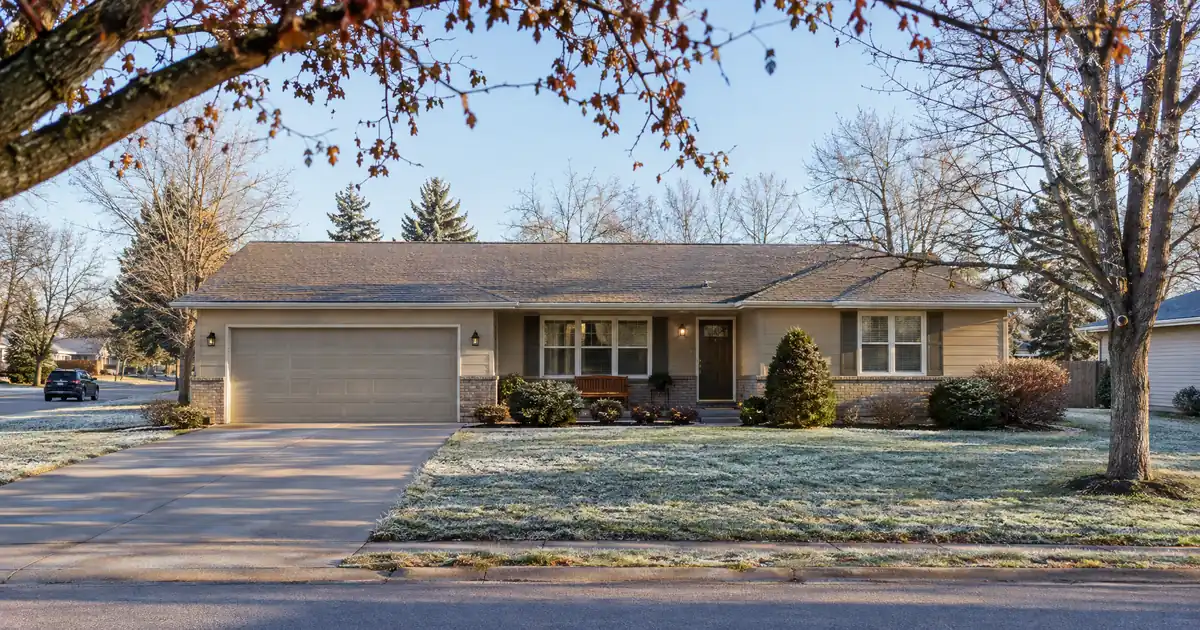
The Quick Read: Usually not, because a refinance leaves the property financed, and the conventional limit counts financed properties rather than loans or their pricing, so trading a cheap, flexible mortgage for a pricier DSCR loan typically buys you nothing under the cap. Keep the low loan and use DSCR for the next purchase.
- A refinance does not usually free a conventional slot. Paying a loan off completely or selling the property does.
- The cheap loan is an asset. Giving it up costs you the low payment, closing costs, and possibly a prepayment penalty.
- Moving a property can make sense if you need cash-out conventional won’t give, want LLC vesting, or can only finance the next deal on DSCR.
- DSCR qualifies primarily on property-level rental income covering the payment, subject to lender guidelines, so your paycheck stops being the bottleneck.
- Sequencing usually beats converting: buy conventionally while you can, then add DSCR as you near the limit.
Key Terms Defined
You will see these terms throughout. Each one is defined here once.
DSCR (debt service coverage ratio): the property’s monthly rent divided by its full monthly housing payment. A result of 1.20 means rent covers the payment with 20% to spare.
PITIA: principal, interest, taxes, insurance, and any association dues. It is the full payment that rent gets measured against.
LTV (loan-to-value): the loan balance as a percentage of the property’s value.
Rate-and-term refinance: a new loan that replaces the old balance. You take no cash out.
Cash-out refinance: a new, larger loan that pays off the old one and hands you the difference.
Seasoning: the waiting period a lender wants after you buy before it will refinance you. About six months is the common expectation on cash-out files.
Prepayment penalty: a fee for paying the loan off early, usually during the first several years.
Personal obligation: being legally on the hook for a loan yourself, rather than only an entity you own.
Why the Cheap Loan Is Worth Protecting
A low-cost conventional mortgage on a rental is worth real money. It sits there lowering your monthly carry, usually with no prepayment penalty, and you can sell or refinance whenever you like.
A DSCR refinance replaces it with debt that generally costs more. Across the network of DSCR lenders Lendmire works with, the loans are priced for investors, and the premium over a conventional loan is real. Fees come with it. A prepayment penalty is common, and lenders usually offer a trade: a longer penalty period for better pricing.
That is the cost side. The benefit side is narrower than most investors assume.
Here is the logic that trips people up. You are near the conventional limit, so you think: “If I move one loan to DSCR, I free a slot.” It feels intuitive. It is also usually wrong, and the next section shows why.
Not ideal, then, as a default move. But there are real exceptions, and we will get to them.
Does a Refinance Actually Free Up a Slot?
Not by itself. The conventional limit counts properties, not mortgages.
The Fannie Mae Selling Guide counts one-to-four unit residential properties on which the borrower is personally obligated. Two loans on one house count as one property. A multi-unit building counts once. A financed primary residence is included. Commercial property, buildings above four units, timeshares, vacant lots, and certain manufactured homes are excluded.
One secondary explainer, HomeBuyer.com, puts the ceiling at 10 financed properties for second homes and investment properties. It also notes that primary-residence loans have no count limit, with an exception for one affordable-lending program. The guide itself is the authority, so read it before you plan around any number.
Now apply that to your situation. Replace the low loan on Property A with a DSCR loan, and Property A is still financed. The count does not move.
What matters is the personal obligation. If you sign the new loan personally, the cap is not obviously relieved. If the new note sits in an LLC, treatment depends on the loan’s terms, any personal guaranty, and how the conventional lender reads your credit report. That is a question to settle with the lender before you close, not something to assume.
Only two things reliably reduce the count: paying a property’s debt off entirely, or selling the property.
DSCR loans themselves are not sold to the agencies. So the agency count and income rules do not govern them. DSCR lenders still set their own limits on loan size, leverage, and total exposure to one borrower. “No cap” does not mean “unlimited.”
Lendmire’s piece Should a W-2 Investor Near the Conventional Cap Use a DSCR Loan? covers that broader question in more depth.
The Decision at a Glance
| Your situation | Usual best move |
|---|---|
| Qualify conventionally, room under the cap | Keep the low loan |
| Near the cap, next deal is coming | Use DSCR on the new purchase |
| Want cash out conventional won’t give | Consider DSCR cash-out |
| Want the property held in an LLC | Consider a DSCR refinance |
| Property type conventional won’t finance | DSCR may be the only route |
| No deal on the horizon | Do nothing |
That last row is a legitimate answer. Some investors near the cap have no purchase planned for a long time. For them, the cap is hypothetical, and a refinance solves a problem they do not have.
A Worked Example in Ratios
Here is a modeled scenario, built on assumptions rather than market data. Say you own three rentals on conventional loans and your pipeline holds one more purchase. Run three paths.
Path one: keep everything. You leave the three cheap loans alone. The new purchase goes on DSCR. Your count under the conventional limit stays where it is. Your existing payments stay low. This path costs the least and preserves your options.
Path two: convert one property and pull cash. Say the converted rental was bought several years ago, has meaningful equity, and rents covering its full payment at roughly 1.3x today. A DSCR cash-out refinance tops out around 75% LTV across most of the network, and the property needs about six months of seasoning. The new payment is higher on the whole balance, not only the cash you pulled. Coverage on the new, larger payment may fall to something like 1.1x. Still above 1.00, but the cushion has thinned. Terms vary by lender guidelines, property type, leverage, credit profile, and full file review.
Path three: convert as a pure rate-and-term swap. You take no cash. The balance is roughly the same, but the pricing is higher and fees apply. Rent coverage drops because the payment rose and the rent did not. You gain LLC vesting and possibly relief from conventional documentation. You gain no cash and probably no count relief.
Of the three, path three is the weakest unless LLC vesting is the goal. Path two works only when you genuinely need the cash and the coverage survives the higher payment. Path one is boring and frequently best.
Remember what the coverage number does and does not tell you. It compares rent to PITIA only. Clearing 1.00 is not the same as positive cash flow, because repairs, vacancy, management, utilities, and capital expenses sit outside the calculation.
Which Loan Would You Even Convert?
If you do convert something, the intuitive pick is the highest-cost loan, since you give up the least. That is sound for rate-and-term logic. But the property matters too.
Consider these filters:
- Rent coverage on the new payment. A low-balance property with modest rent may fail the rent test after refinancing, even if it looks fine today. A DSCR file rests on the property clearing the coverage requirement.
- Equity. Cash-out needs equity. Most files cap leverage around 75% LTV on a cash-out, so a recently purchased property with little equity is a poor candidate.
- Seasoning. If you bought recently, the property may not be eligible for cash-out yet.
- Property type. Manufactured homes, log homes, and barndominiums are not offered in the network’s DSCR programs. Do not plan around converting one.
- Property size. Loan sizes run up to $3,000,000 on standard programs, and smaller balances route through select lenders. Above $2,500,000, the network generally holds to 30-year fixed structures.
Often the honest answer is that the lowest-rate loan is the one you leave alone, and the property you convert is the one with the most equity and the strongest rent.
Costs and Traps Before You Convert
Whole-balance repricing. You do not pay the higher cost only on the extra cash. You pay it on the entire balance. That is the biggest hidden cost of converting a cheap loan.
The prepayment clock. Many DSCR loans carry a prepayment penalty. Investors often choose a term they are comfortable with and plan to refinance after it expires. That makes sense, but it also means you are locked in for that stretch. Going back to conventional later means a second refinance, with its own costs.
Closing costs. Fees come with any refinance. Add them to the break-even math.
Reserves. Reserves vary by lender, leverage, loan size, and transaction type. They commonly run around 6 months of PITIA. Conservative rate-and-term files at modest leverage under $1,500,000 can see reserves waived. Loans above that size typically step up to about 9 months. Each new DSCR loan needs its own reserves, so converting several properties ties up cash fast.
Credit. A 620 floor exists in parts of the network, most programs want around 660, and 700 or more unlocks the strongest leverage tiers.
Lender limits. A single lender may cap how much total exposure it takes on one borrower. Plan for that if you intend to scale.
Break-even is simple in concept. Add up the extra cost of carrying the higher-priced debt, plus closing costs and any penalty. Compare that to the value of what you gain: usable cash, LLC protection, or a financed deal you could not otherwise do. If the gain does not clearly beat the cost, keep the loan.
One more point. If you pull cash, tax treatment can depend on how the funds are used and how the property is held; investors should keep clear records and speak with a qualified tax professional before relying on any deduction.
When Moving a Property to DSCR Does Make Sense
There are four good reasons. If none applies, the answer is no.
1. The refinance pays off that property’s conventional loan, and you are not personally obligated on the new one. This is the only route that could change your conventional count. Verify it with the lender and the current guide. Do not assume it.
2. You need cash-out conventional will not allow. DSCR cash-out may fit, up to around 75% LTV on most files.
3. You want LLC vesting. DSCR programs commonly accommodate it, subject to lender program eligibility.
4. The next acquisition only works on DSCR. A non-warrantable condo is a classic example. Conventional will not finance it, and DSCR may.
On the DSCR side, here is what leverage looks like. Purchases most often land at 75% to 80% LTV, meaning 20% to 25% down. Select high-leverage programs reach 85% LTV, with roughly a 700 or better score. Coverage of 1.00 is where many select programs start, and a separate select-lender path takes coverage below 1.00 with leverage and terms adjusted. A larger down payment lowers the payment and can lift the ratio. It does not erase leverage caps, credit floors, reserve rules, or property eligibility. The strongest files clear both tests: enough equity and enough rental coverage.
For the full picture of how these loans work, see Lendmire’s complete DSCR loans guide.
Sequencing Beats Converting
For a salaried investor, timing usually matters more than any single refinance. The sequence that tends to work looks like this:
- Count first. List every one-to-four unit property where you are personally obligated. Check your credit report, because the mortgages reported there are what an underwriter sees.
- Buy conventionally while you qualify. The cheaper product is the better product, so use it as long as it is available to you.
- Build DSCR relationships before you need them. Have a broker walk you through files while the cap is still a few deals away.
- Move to DSCR for new purchases as the count approaches the limit. At that point the cap is a gate, not a price. The cheaper product is simply unavailable for that deal, and price comparisons stop mattering.
- Revisit conversions only when a specific trigger shows up. Cash-out you truly need, an LLC, or an unfinanceable property type.
When It Is Not Worth It
Skip the conversion in these cases:
- You still qualify conventionally with room to spare.
- You plan to sell soon, and a prepayment period would get in the way.
- The property is your own primary residence. DSCR loans are for non-owner-occupied investment property.
- Rent coverage on the new payment would be thin.
- You have no pending deal that needs the extra room.
Also keep in mind that going back is not free. Returning to conventional later means qualifying again on income, paying new costs, and waiting out any penalty period.
Frequently Asked Questions
Does the conventional cap apply to DSCR loans?
No. DSCR loans are not sold to the agencies, so the agency property count does not govern them. Individual DSCR lenders still set their own limits on loan size, leverage, and total exposure to one borrower. Expect each new DSCR loan to need its own down payment and reserves.
Does refinancing one property into DSCR free a conventional slot?
Usually not. The count is of financed properties, and a refinance leaves the property financed. Paying the debt off completely or selling the property lowers the count. If you are weighing an entity-held loan, ask the lender how it treats your personal obligation before you rely on any relief.
Can I go back to conventional after a DSCR refinance?
Often yes, but it takes a new conventional refinance, which means qualifying on income again. Any prepayment penalty on the DSCR loan comes due if you pay off early. Plan the exit before you enter.
Is there a limit on how many DSCR loans I can have?
Not an agency-style count, but lenders set practical ceilings. Loan size, leverage, your cash, and a lender’s total exposure to you all matter. Spreading files across several lenders in a wholesale network can help.
Can I use DSCR for my next purchase instead of converting an existing loan?
Yes, and for most salaried investors near the cap, this is the better path. The new property qualifies primarily on property-level rental income covering the payment, subject to lender guidelines. Your existing cheap loans stay untouched.
Next Step
If you are buying or refinancing a rental property and want to see how the numbers work, Lendmire can help you compare DSCR loan options based on the property income, credit profile, leverage, and investor goals. Reach the team at 828-256-2183 or request a quote. Lendmire is a mortgage broker arranging DSCR investor loans through select lenders in its wholesale network, across 40 states plus Washington, D.C. Program terms vary, every file is underwritten individually, and nothing here is a commitment to lend.
About Lendmire
Lendmire (NMLS# 2371349), a non-QM mortgage broker serving investors in 41 markets including Washington, D.C., helps structure DSCR scenarios commonly evaluated around a property’s rental income rather than personal income paperwork, subject to lender guidelines. A Scotsman Guide Top Mortgage Workplace in 2025 and 2026, Lendmire places loans through wholesale investor lenders and is not a direct lender.
Get Started
Ready to find the right loan for you?
In about 30 seconds you can review financing options available for your investment property. No commitment required.
Informational only. Not a Loan Estimate, approval, or commitment to lend. Program availability and eligibility are subject to lender guidelines, credit approval, property review, and underwriting.
References
1. Fannie Mae Selling Guide, B2-2-03: Multiple Financed Properties for the Same Borrower
2. HomeBuyer.com: Fannie Mae Multiple Financed Properties for the Same Borrower
This article is part of Lendmire’s DSCR loan program — full qualification details, guidelines, and scenarios live on the program page.
Related reading: Can You Get a DSCR Loan for an Airbnb in New Jersey? · Can You Get a DSCR Loan for an Airbnb in Illinois? · Can You Get a DSCR Loan for an Airbnb in Kentucky?
Brandon Miller
Founder & CEO, Mortgage Loan Originator, Lendmire LLC
- Mortgage Loan Originator · NMLS# 1129696 · Verify on NMLS Consumer Access
- North Carolina Real Estate Broker · License# 343312 · Verify on NCREC
- North Carolina Insurance Producer · License# 19053198 · Property, Casualty, Life, Health · Verify on NAIC SBS
- Lendmire LLC · Firm NMLS# 2371349 · Verify firm licensure
Legal disclosures. Lendmire (NMLS# 2371349) is a state-licensed mortgage brokerage that arranges financing through wholesale lender relationships. Lendmire is not a direct lender, depository institution, or registered financial advisor. The discussion above is general informational content about real estate financing — it is not financial, legal, or tax advice, and readers should consult licensed professionals for guidance on their individual circumstances. Loan inquiries are subject to lender underwriting; this article does not represent a commitment to lend. Loan terms, rates, and qualification standards vary by borrower, property, and state, and are subject to change at any time. Equal Housing Opportunity. NMLS Consumer Access: nmlsconsumeraccess.org.