
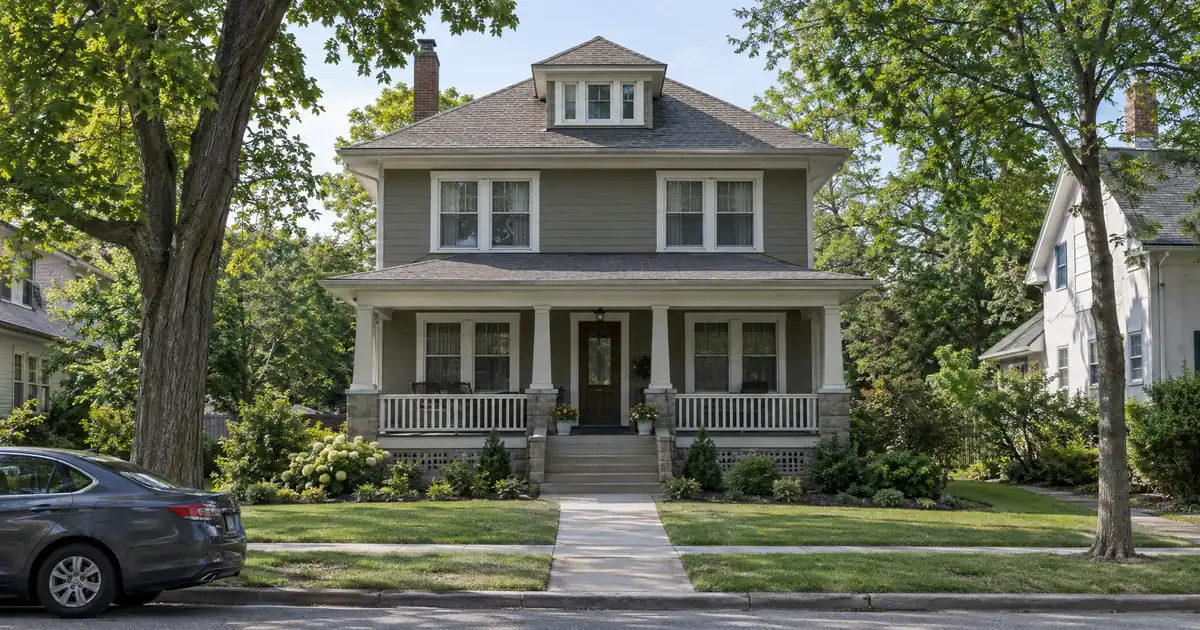
The Quick Read: A low value on a first home equity line shrinks the line. It does not cancel the application. The first move is to find out what produced the number, audit it for factual errors, and ask the lender to request a reconsideration of value with evidence attached. The lender decides whether the number changes.
- A low value cuts the line by more than the percentage miss, because the first mortgage balance stays fixed.
- A reconsideration works on documented errors or clearly better comparable sales, not on disagreement.
- Many lines at or below $500,000 use an automated valuation, which has no appraiser to appeal to.
- The fallbacks are a full appraisal, a smaller line, a different product, or waiting for equity to build.
- Investment-property lines through Lendmire’s network cap at 70% CLTV and $500,000, so thin equity feels a miss hardest.
Most low-appraisal advice online is written for home purchases. It talks about renegotiating with a seller or walking away under a contingency. None of that applies here. A HELOC has no seller and no contingency. There is a lender, a valuation, and a formula.
How large a line the equity supports.
An equity line is sized by combined loan-to-value, occupancy, and credit — not by rental coverage. Switch the occupancy or the credit band and the ceiling moves with it.
Investment-property lines require a 700 minimum credit score; second-home lines start at a 640 minimum and primary-residence lines at 600, and the combined-LTV ceiling steps down as the credit band drops on primary-residence and second-home lines and holds on investment-property lines; the line cap steps down on primary-residence lines and holds at every tier on investment-property and second-home lines.
A debt-to-income ratio above 45% requires 680+ credit. Profiles under 640 are limited to single-family homes. At least 75% of the approved line is drawn at closing. Ceilings, floors, and caps update from Lendmire’s centralized guideline source.
Line estimate
Illustrative estimate only — not a quote, Loan Estimate, approval, or commitment to lend. The rate is an editable assumption; equity-line pricing is variable through both the draw and repayment periods and never converts to fixed. Occupancy and credit drive the ceiling together: an investment property tops out at 70% combined LTV (minimum credit 700, line cap $500,000); a second home tops out at 90% combined LTV (minimum credit 640, line cap $500,000), with the ceiling stepping down as the credit band drops (the cap holds at every tier); a primary residence tops out at 90% combined LTV (minimum credit 600), and its $750,000 maximum line is available only at 75% combined LTV or below with a 700-or-better credit profile (720 on the longer-runway program) and a full appraisal. Lines above $500,000 require a full appraisal. Credit, debt-to-income, property type, and full underwriting review all affect the final line.
Key Terms Defined
Appraised value: The opinion of value the lender uses to size the line.
CLTV: Combined loan-to-value, meaning the first mortgage plus the new line, divided by the property’s value.
Headroom: The room left under the CLTV cap after the existing mortgage is subtracted.
Reconsideration of value (ROV): A lender’s written request that the valuation preparer reassess the report based on errors or new information.
AVM: An automated valuation model, a software estimate with no appraiser behind it.
Why Does a Low Value Cut the Line So Hard?
The line is a subtraction problem, so a small miss in value removes a bigger share of the line. The formula is value times the lender’s percentage, minus what you already owe. The CFPB’s HELOC booklet walks through this with a generic teaching example: 75% of a $100,000 value, less a $40,000 mortgage, leaves a $35,000 potential line. That is an illustration, not a program cap. The booklet also notes the lender looks at your ability to repay when setting the actual limit.
Run the percentages instead of dollars. Say the first mortgage is 45% of the value you expected, and the cap is 70% CLTV. Expected headroom is 25% of that value. Now the valuation comes in 10% low. The cap applies to a lower number, so headroom falls to roughly 18% of the original expected value. That is about a 28% smaller line from a 10% miss.
Two things follow. A low value does not mean the home lost value. Only the equity math moved. And the borrower with the lowest first mortgage loses the least in percentage terms.
What Produced the Number?
Start by asking which kind of valuation you got. A full appraisal gives you something to reconsider. An AVM or a lighter evaluation does not have an appraiser behind it.
Bank regulators allow depository institutions to use an evaluation instead of an appraisal below a dollar threshold. The agencies raised that threshold from $250,000 to $400,000 in a 2019 Federal Reserve release. Treat that as the historical bank rule only. A non-bank wholesale investor sets its own valuation tiers.
On Lendmire’s network, lines at or below $500,000 ordinarily run an automated valuation with no traditional appraisal, though a higher CLTV can trigger a secondary valuation. Every line above $500,000 requires a full appraisal. And a borrower may request a full appraisal in any case. Subject to lender guidelines, that last point matters most when you hold an AVM number you think is wrong.
How to Audit the Report for Errors
Check facts before arguing value. Factual errors in an appraisal report can often be documented and corrected, which makes them a stronger starting point than a difference of opinion.
1. Check the property description. Bed and bath counts, square footage, finished areas, and unit configuration should match your records and any permits.
2. Check the comparable sales. Look at distance, size, age, condition, and sale date. Ask whether better matches closed nearby more recently.
3. Check for omitted improvements. A renovation the report never mentions counts only if you can document it.
4. Note what is opinion. If the only complaint is that the number feels low, there is nothing to reconsider.
Federal guidance describes deficiencies as errors or omissions, discrimination, or unreasonable or unsupported methods, data, or conclusions, as the ABA Banking Journal explains. That is a useful sorting tool for your audit.
How Do You Build and Submit a Reconsideration?
Build a short, factual packet and submit it in writing through your lender or broker, not to the appraiser. Under the interagency guidance, a reconsideration is a request from the financial institution to the preparer of the valuation. It starts with the lender.
A strong packet is built from the items below.
- Recent closed sales that are closer or more similar than those the appraiser used, with addresses, prices, and dates.
- Permits, receipts, and an itemized scope for improvements.
- Photos showing condition.
- A written explanation that lists each error and the correction.
Keep the tone flat and factual. Cost is not value, so receipts alone do little. Comps and permits carry the argument. Add rent comparables only if rent was part of the miss on your product.
This is guidance, not a right. The agencies’ announcement says the guidance advises on policies institutions may use so consumers can supply information that was not considered. It does not guarantee a higher number, and the value can stay where it is.
What If There Is No Appraiser to Appeal To?
A model has no opinion to revise. If an AVM set your line, the usual remedy is to ask for a full appraisal, where the program permits one. That costs money. The CFPB booklet lists the appraisal fee among up-front costs to compare. Weigh that cost against what the larger line is worth to you.
Also expect the lender’s review process to cover whatever valuation method it uses. The ABA piece confirms that “valuation” is broader than an appraisal and includes machine-produced estimates. So you can raise errors in an AVM input, such as a wrong square footage, even if you cannot argue with the model.
Where Investment Lines Break the General Rule
The standard low-appraisal advice assumes a primary residence. Investment properties on Lendmire’s network follow different terms.
| Factor | Investment property | Primary residence |
|---|---|---|
| Max CLTV | 70% | Up to 90% at 720+ |
| Max line | $500,000 | $750,000 |
| Min credit | 700 | 600 |
| Draw structure | 5-yr draw, 25-yr repay | Two structures |
With a 70% ceiling and no higher tier, an investment line has less cushion. A modest valuation miss can erase headroom entirely if the first mortgage is already large. That is why investors with a thin equity position feel this the most.
Other edge cases an investor hits:
- Vesting. The line must be held by the individual borrower or a revocable living trust. LLCs and similar entities cannot hold title. A rental already deeded to an LLC needs a vesting change, or a DSCR cash-out instead.
- Each rental stands alone. A low value on one property does not change the room on another. But a borrower is limited to three lines in total.
- Property type. Manufactured homes, co-ops, condotels, log homes, commercial, mixed-use, and agricultural zoning are not eligible.
- Availability. HELOC lines are offered through Lendmire’s 16 full-service states, narrower than its DSCR footprint.
Market surveys report that some lenders reach higher CLTV caps on equity lines. Those figures describe the broader market. On Lendmire’s network, an investment line stops at 70% CLTV.
What Do You Do Next? A Decision Table
| If this happened | Usually the right move |
|---|---|
| Documented factual error | Submit a reconsideration with proof |
| AVM set the value | Ask for a full appraisal |
| Better comps exist | Submit a reconsideration with those comps |
| Value is fair, line is small | Take a smaller line or wait |
| Line too small for the goal | Compare a DSCR cash-out refinance |
Do not stretch to take the full reduced line just because it is offered. Draw only what the project needs. On Lendmire’s network, at least 75% of the line is drawn at closing, so size it carefully, subject to lender guidelines.
If the line comes back too small for the plan, a DSCR cash-out refinance is the structural alternative. It qualifies primarily on property-level rental income covering the payment, subject to lender guidelines, and the appraisal still sets the value. Cash-out tops out around 75% LTV across most of the network. The complete DSCR loans guide covers how that path works. Clearing 1.00 coverage is not the same as positive cash flow, since repairs, vacancy, and management sit outside the calculation.
For a related situation, Lendmire’s piece How to Respond to a Low Rental HELOC Appraisal as a First-Time Landlord covers a landlord-specific angle.
Mistakes That Cost Investors Value
- Appealing on opinion alone. Without a documented error or better comps, the request goes nowhere.
- Contacting the appraiser directly. The process runs through the lender.
- Assuming a right to a re-appraisal. The lender decides, and it may keep the original conclusion.
- Treating renovation cost as value. Show comps and permits.
- Quoting a success rate. Reconsiderations succeed mainly where there are factual errors or clearly better comps. No reliable percentage applies.
- Ignoring the occupancy. An investment line and a primary-residence line carry different ceilings.
Tax treatment can depend on how the funds are used and how the property is held; investors should keep clear records and speak with a qualified tax professional before relying on any deduction.
Frequently Asked Questions
Does a low appraisal mean my HELOC is denied?
Usually not. It more often means a smaller line, because the cap applies to a lower value. Denial happens when the first mortgage already uses all the headroom the cap allows. Each outcome stays subject to lender guidelines and full file review.
Can I appeal the valuation myself?
Not directly to the appraiser. The federal definition makes a reconsideration a lender request, so you submit your evidence through the lender or broker. The lender decides whether to forward it and whether the value changes.
What if my valuation was automated?
Ask for a full appraisal. A model cannot be reconsidered the way a report can. On Lendmire’s network, a borrower may request a full appraisal on any line, and one is required above $500,000. Expect an appraisal fee.
Will the revised number always be higher?
No. A reassessment can leave the value unchanged, and in some cases it can come back lower. Submit only documented corrections so you are not inviting a worse result.
Should I switch lenders after a low value?
Sometimes. Different lenders use different valuation methods and caps. Switching makes sense when your evidence is thin but your equity is real. Lendmire can compare HELOC options across its wholesale network based on the property, the equity available, credit profile, and combined leverage. Reach the team at 828-256-2183.
If you are considering a home equity line and want to see how the numbers work, Lendmire can help you compare HELOC options based on the property, the equity available, credit profile, combined leverage, and your goals. You can request a quote here.
About Lendmire
Lendmire (NMLS# 2371349) is a mortgage brokerage serving homeowners and real estate investors in its 16 full-service states. Home equity lines of credit are arranged through wholesale lending channels; Lendmire brokers the line and the lender underwrites each application under its occupancy-based guidelines. Scotsman Guide named Lendmire a Top Mortgage Workplace in both 2025 and 2026.
Get Started
Ready to find the right loan for you?
In about 30 seconds you can review financing options available for your home or investment property. No commitment required.
Informational only. Not a Loan Estimate, approval, or commitment to lend. Program availability and eligibility are subject to lender guidelines, credit approval, property review, and underwriting.
References
2. Federal Reserve – 2019 appraisal threshold release
3. ABA Banking Journal – Reconsideration of Value
This article is part of Lendmire’s home equity line of credit program — full qualification details, guidelines, and scenarios live on the program page.
Related reading: Can a Five-Plus Rental Owner Challenge a Low HELOC Appraisal? · How to Respond to a Low Rental HELOC Appraisal as a First-Time Landlord · Can a First-Time HELOC Borrower Dispute a Low Appraisal?
Brandon Miller
Founder & CEO, Mortgage Loan Originator, Lendmire LLC
- Mortgage Loan Originator · NMLS# 1129696 · Verify on NMLS Consumer Access
- North Carolina Real Estate Broker · License# 343312 · Verify on NCREC
- North Carolina Insurance Producer · License# 19053198 · Property, Casualty, Life, Health · Verify on NAIC SBS
- Lendmire LLC · Firm NMLS# 2371349 · Verify firm licensure
Disclosure information. Lendmire is a state-licensed mortgage brokerage under NMLS# 2371349. Lendmire is not a depository institution, direct lender, or financial advisor — all loans referenced are placed through wholesale lender partners and are subject to each lender's underwriting standards. This article is provided for general informational purposes and is not a commitment to lend, nor does it constitute financial, legal, or tax advice. Loan programs, terms, rates, and qualification standards change without notice and depend on borrower profile, property type, and the state in which the subject property is located. Equal Housing Opportunity provider. NMLS Consumer Access: nmlsconsumeraccess.org.