
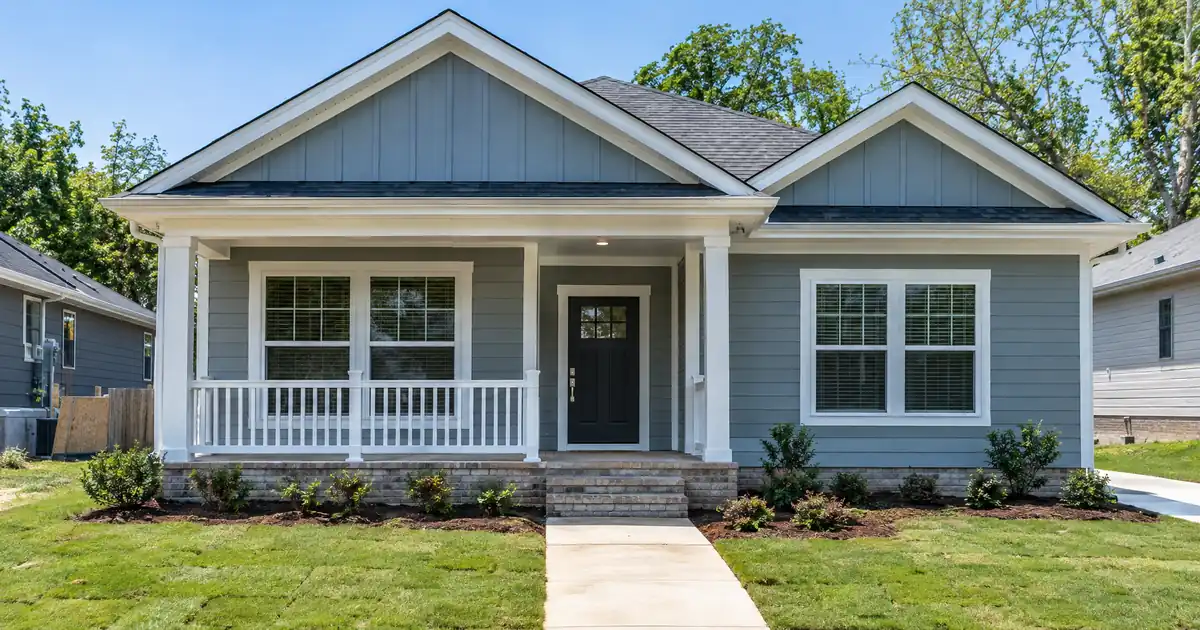
The Quick Read: A DSCR cash-out refinance pays a money partner back by replacing whatever debt sits on the rehabbed rental with a new first-lien loan, then routing the leftover proceeds through title to the partner, so the investor keeps the property as long as the appraised value, the rent coverage, and the ownership clock all clear. Lendmire arranges these loans as a broker through select lenders in its wholesale network. Every file is reviewed individually and is subject to lender guidelines.
- The new lender orders its own appraisal. Your after-repair estimate is a planning number, not a loan input.
- Most cash-out programs in the network top out at 75% LTV on a standard rental, and about 6 months of ownership, measured from title recording, is the common expectation.
- Value and rent are separate tests, and the weaker one sets the loan size.
- Whether the partner holds a note or an ownership stake decides how the payback is documented and paid.
- Clearing 1.00 coverage does not mean the property cash-flows. Repairs, vacancy, management, and capex sit outside the ratio. Terms depend on the lender’s guidelines, the property type, the leverage, and a full review of the credit profile.
What Does the Partner Actually Own?
The partner holds either a debt claim or an equity claim, and the payback mechanics differ for each. A lender-partner is repaid principal plus agreed interest, usually through title at closing. An equity partner is repaid under the operating agreement, which governs return of capital, any preferred return, and the split of what remains.
DSCR Cash-Out Calculator
Run the cash-out numbers in your market
Rate source: Freddie Mac 30-yr average via FRED® — Federal Reserve Bank of St. Louis · effective Oct 8, 2026
Prefilled with starting assumptions — enter your property’s value, balance, taxes, and insurance for a more accurate picture.
Program parameters update from Lendmire’s centralized guideline source. Taxes and insurance are editable estimates.
As of Oct 8, 2026 · General Freddie Mac market benchmark, not a Lendmire loan offer. Property value, balance, taxes, and insurance are editable estimates. Maximum loan-to-value varies by lender, program, property type, and seasoning. Not a Loan Estimate, approval, or commitment to lend. Program availability and eligibility are subject to lender guidelines, credit approval, property review, and underwriting.
| Factor | Note (lender-partner) | Equity (owner-partner) |
|---|---|---|
| What they hold | A promissory note, often with a lien | A membership or ownership interest |
| “Paid back” means | Principal plus interest retired | Capital returned, then split per agreement |
| Proof of payback | Payoff letter and lien release | Distribution record and signed acknowledgment |
| After payback | Partner has no further claim | Depends on whether the agreement ends their stake |
The last row in the table is where disputes start. Getting capital back does not automatically end an equity partner’s ownership. The agreement should say whether a refinance distribution is a return of capital, a buyout, or both. Investor-education guidance on joint ventures, such as this joint venture explainer, makes the same point. How refinance proceeds are split belongs in writing before any money moves.
DSCR loans are designed for non-owner-occupied investment properties. Because they are business-purpose investor loans, they are reviewed differently from a standard owner-occupied mortgage. The loan is reviewed primarily on property-level rental income covering the payment, subject to lender guidelines.
The Three Tests the New Loan Must Pass
The new loan has to clear a time test, a value test, and a rent test. The weakest of the three sets the outcome, and a strong score on one does not rescue a failure on another.
Time. Most cash-out programs in the network expect about 6 months of ownership, measured from title recording. Finishing the rehab early does not shorten that clock. It starts at recording, not at the last paint coat.
Value. The new lender orders its own appraisal and lends on that number. Cash-out on a standard rental tops out around 75% LTV across most of the network. A short-term rental collateral file is tighter, with cash-out at 70%. An optimistic after-repair estimate that the appraiser does not support simply shrinks the loan. The exact numbers vary by lender and program and follow a full review of property, leverage, and credit.
Rent. The appraisal also produces a market-rent opinion. Appraisers use form 1007 for one-to-four-unit properties and form 1025 for small multifamily. Coverage is monthly rent divided by the full monthly obligation: principal, interest, taxes, insurance, and any HOA dues. A coverage ratio of 1.00 is where many select programs start. A separate select-lender path takes coverage below 1.00, with leverage and terms adjusted. Stronger ratios generally open better pricing and leverage.
Here is the part investors miss. A loan can be big enough on value and still fail on rent, because paying the partner back makes the new loan larger and the payment larger with it. A property that covered comfortably at the hard money balance may look thin at the cash-out balance.
Other file requirements matter as well, and all of them are subject to lender guidelines:
- Credit. A 620 floor exists in parts of the network, most programs want around 660, and 700+ unlocks the strongest leverage tiers.
- Reserves. Commonly around 6 months of PITIA, stepping up to about 9 months on loans above $1,500,000.
- Loan size. Standard programs run up to $3,000,000, and smaller balances route through select lenders.
- Property type. Manufactured homes, log homes, and barndominiums are not offered in the network’s DSCR programs.
The program details in Lendmire’s complete DSCR loans guide cover how these pieces interact.
Closing Order of Operations
The sequence matters, because the old lien comes off before the partner is paid. A clean closing follows these steps:
1. Title requests a payoff statement from each existing lienholder, including accrued interest and fees.
2. The new lender’s first lien is recorded in first position, so every prior lien is paid at closing.
3. Title wires the payoffs to the old lenders.
4. Closing costs are paid from the loan proceeds.
5. Any remaining proceeds go to the borrower, or directly to the partner when the closing instructions say so.
6. The investor collects lien releases, a partner payoff acknowledgment, and a record of the distribution.
Paying the partner directly through title is the cleaner trail. The alternative is for the investor to take the proceeds and then pay the partner. That has the same economic effect, but it leaves a gap where a dispute can form. If the partner is secured with a recorded lien, that lien has to be paid off at closing anyway. Lendmire’s piece Can a Cash-Out Refinance Pay Off a Money Partner Note Coming Due? goes deeper on the note side.
Working Backward From the Partner’s Due Date
Start with the date the partner expects repayment and subtract each gate in reverse. The ownership clock is the only gate with a stable program figure, so everything else gets planned around it.
| Phase | What happens | Gate |
|---|---|---|
| Rehab | Work completes | Certificate or final sign-off |
| Lease-up | Tenant signs, deposit and first rent collected | Executed lease |
| Seasoning | About 6 months from title recording | Program ownership clock |
| Appraisal | Lender orders value and rent opinion | Value must support the payoff |
| Underwriting | Credit, reserves, entity documents reviewed | Lender conditions cleared |
| Closing | Payoffs wired, partner paid | Recorded releases |
A partner paid monthly interest during the hold can absorb much of the rent. Planning lease-up and seasoning together avoids paying the partner longer than intended. If the partner’s due date falls before the seasoning clock ends, the refinance cannot help. That is a negotiation problem, not a lending problem.
Where the General Rule Breaks
No lien to pay off. If the partner’s money was unsecured, the subject property may reach closing with no lien on it. Underwriting typically still treats a refinance on a lien-free property as a cash-out. The cash-out limits and seasoning still apply, and the lender’s guidelines govern.
Delayed financing. There is an agency concept called delayed financing, built for properties bought with cash. It generally does not fit a financed purchase, and it returns documented cost rather than after-repair value. DSCR programs set their own seasoning terms, so do not plan around it.
Two payoffs. If hard money and a partner note both sit on the property, both must be retired at closing. Two payoffs lower the surplus. Lendmire’s article Paying Off a Hard Money Loan With a DSCR Cash-Out Refinance: Getting the Rehab Money Back covers that side of the waterfall.
Entity and guarantor questions. When the rehab sits in an LLC with the partner as a member, the lender reviews the operating agreement, the ownership split, and who guarantees the loan, subject to lender program eligibility. A partner holding a large equity share can prompt extra lender review. One joint venture explainer flags more than 20% as a trigger point, and that threshold is lender-specific, so confirm it early.
Quitclaim myths. A deed change does not release anyone from the old loan. Removing a partner from the property record and removing them from the debt are separate actions.
Securities questions. Pooling several passive investors can create a securities offering. The test asks whether money is invested in a common enterprise with profits coming from others’ efforts, and the SEC’s discussion of the Howey test notes that it originated in a real estate case. A single money partner is a different situation. This is a question for a securities attorney, not for loan underwriting.
Tax treatment can depend on how the funds are used and how the property is held, and the IRS explains that cancelled debt may be taxable, so investors should keep clear records and speak with a qualified tax professional before relying on any deduction.
When the Proceeds Fall Short
A shortfall is common enough to plan for. Most of the fixes trade time, cash, or partner goodwill, and each has a cost.
| Fallback | How it works | Main risk |
|---|---|---|
| Owner brings cash | Investor covers the gap at closing | Ties up reserves needed for the file |
| Phased payout | Partner takes part now, rest later | Needs written partner consent |
| Renegotiate the split | Partner accepts a smaller payout or stake | May strain the relationship |
| Payoff-only now | Retire old debt, delay the partner payout | Leaves the partner’s claim open |
| Extension | Partner agrees to a later due date | Costs more carry during the hold |
| Sale | Property sells and all parties are paid | Investor does not keep the asset |
Extended terms and interest-only periods are available through select lenders in the network. They can improve the coverage ratio on a larger balance, but they do not change the LTV cap, the credit floor, the reserve rules, or property eligibility.
DSCR vs. conventional financing
There are two common ways to finance an investment property, and they qualify you differently — here’s how investors weigh them.
Why investors choose it
- Qualifies on the property’s rental income — no personal tax returns, W-2s, or pay stubs needed to document income.
- No personal debt-to-income ceiling to clear, so existing mortgages and obligations don’t cap your borrowing the same way.
- Can be closed in an LLC, keeping the property inside a business entity.
- Built for scaling — not held to the limit on number of financed properties that conventional financing applies.
- Underwriting centers on the deal: generally qualifies when the rent covers the payment, a 1.00x coverage ratio being a common baseline (confirmed in underwriting).
- Designed specifically for investment property, including long-term and, where the program allows, short-term rentals.
Where it’s strong
- Often the lowest ongoing financing cost for a buyer who fully qualifies on personal income — a fit for a first property or a cost-first purchase.
Trade-offs for investors
- Requires full personal income documentation and must fit within a debt-to-income limit — salary, existing debts, and other mortgages all count.
- Typically held in your personal name rather than a business entity.
- Caps how many financed properties you can carry, which can become a ceiling as a portfolio grows.
- Evaluates you as a borrower as much as the property, which usually means more paperwork.
How investors usually choose: a first or single property often optimizes for the lowest financing cost; portfolio builders often optimize for leverage, vesting in an LLC, and scaling past conventional caps. The right answer depends on your goals, the property, and current guidelines — both paths run through select lenders in Lendmire’s wholesale network, with eligibility and terms confirmed in underwriting.
Key Terms Defined
Cash-out refinance: A new loan larger than the existing debt, with the difference paid out at closing.
DSCR (debt service coverage ratio): Monthly rent divided by the full monthly obligation of principal, interest, taxes, insurance, and any HOA dues.
PITIA: The full monthly obligation on a rental: principal, interest, taxes, insurance, and association dues.
Seasoning: The ownership period a lender expects before it will allow cash-out, measured from title recording.
Return of capital vs buyout: Return of capital hands back what a partner put in, while a buyout ends the partner’s ownership stake.
Common Mistakes
- Planning on the after-repair estimate. The lender uses its own appraisal, so size the partner’s payback against a lower value too.
- Treating the payoff as fixed. Per-diem interest and fees shift the number until closing.
- Reading 1.00 as profit. The ratio compares rent to PITIA only, so repairs, vacancy, management, and utilities still come out of the investor’s pocket.
- Mixing partner types. Paying an equity partner as though they held a note, or the reverse, is a common source of disputes.
- Skipping the written agreement. If the repayment clause says nothing about refinance proceeds, the partner’s expectations and the investor’s plan may not match.
What the Decision Looks Like in Practice
This approach tends to work for an investor who plans to keep the property, has rent that covers the larger balance with room to spare, and has a partner whose due date sits beyond the seasoning clock. It tends to fail when the partner’s share is large relative to the equity, when rent is thin at the new balance, or when the appraisal risk is not cushioned.
If the numbers don’t pencil on this property, the answer may be a different exit rather than a different loan type. Selling the rehab, bringing in a second partner, or paying the partner down over time can each beat a payoff that strains coverage for years. A larger down payment on future purchases can lift coverage, but it never erases leverage caps, credit floors, reserve rules, or property eligibility. The strongest files clear both tests: enough equity and enough rental coverage.
If you are buying or refinancing a rental property and want to see how the numbers work, Lendmire can help you compare DSCR loan options based on the property income, credit profile, leverage, and investor goals. Lendmire is a broker with DSCR programs across 41 markets, including Washington, D.C., and the editable calculator on the site offers an illustrative estimate you can adjust as the appraisal and payoff figures firm up.
Frequently Asked Questions
Can a DSCR cash-out refinance pay off a money partner?
Yes, when the new loan is large enough after the existing payoffs and closing costs, and the property still covers the larger payment. Title pays off prior liens first, and any remaining proceeds can go to the partner under the closing instructions. Whether it works depends on the appraised value, the cash-out LTV cap, rent coverage, and the ownership clock.
Does the lender use my after-repair value?
No. The new lender orders its own appraisal and lends on that value, and the appraisal also supplies a market-rent opinion. Treat your after-repair estimate as a planning figure and test the payoff against a lower appraisal.
How long do I have to own the property before cash-out?
Most programs in the network expect about 6 months of ownership, measured from title recording. Finishing the rehab does not shorten that clock, and the exact requirement varies by lender and file.
Does paying my partner back end their ownership?
Not automatically. For a note, a payoff letter and lien release end the claim. For an equity partner, the operating agreement has to say whether the distribution is a return of capital, a buyout, or both.
What if the appraisal comes in low?
The loan shrinks and the proceeds shrink with it, so the partner may not be paid in full. Common fixes include bringing cash to closing, a phased payout, renegotiating the split, or retiring only the old debt now. Running a break-even appraisal before committing shows how much cushion exists.
For how equity extraction works on an investment property, see Lendmire’s guide to cash-out refinance on an investment property.
References
1. Addicted to ROI: JV partnerships vs syndication
2. SEC: Statement on the Howey test
3. IRS: Home foreclosure and debt cancellation
About Lendmire
Lendmire, NMLS# 2371349, is a non-QM mortgage broker serving real estate investors in 41 markets, including Washington, D.C., through DSCR investor loan programs. Qualification is generally reviewed around the subject property’s rental income, not the borrower’s W-2 history — a practical fit for LLC-titled portfolios and self-employed investors. All scenarios remain subject to lender review and program guidelines. Two consecutive Scotsman Guide Top Mortgage Workplace recognitions (2025, 2026).
Get Started
Ready to find the right loan for you?
In about 30 seconds you can review financing options available for your investment property. No commitment required.
Informational only. Not a Loan Estimate, approval, or commitment to lend. Program availability and eligibility are subject to lender guidelines, credit approval, property review, and underwriting.
Sources and Uses: The Waterfall in Round Numbers
The cleanest way to test a payback is to index the appraised value at 100 and work down. These are modeled assumptions, not market data.
Assume the appraisal supports 100 and the program allows 75% LTV on a standard rental cash-out. The new loan is 75 units. Now subtract what must be paid. Final terms depend on the lender’s guidelines, the property type, and the borrower’s complete credit picture.
| Line | Units |
|---|---|
| New loan (75% of 100) | 75 |
| Hard money payoff, including accrued interest | 55 |
| Closing costs | 3 |
| Left for the partner | 17 |
If the partner is owed 17, the file works with no cash left over for the investor. The break-even appraisal comes from reversing the formula. Add the payoff, the costs, and the partner’s amount (75 in total), then divide by the LTV cap (0.75). That gives a required value of 100.
Now run the downside. If the appraisal comes in 8% lower, value is 92 and the loan is 69. After the payoff and costs, 11 remains, so the partner is short by 6. Nothing about the rehab changed, but the file no longer pays the partner in full.
The rent test then runs alongside this. At the larger balance, coverage might land around 1.2x, which clears a program that starts at 1.00. If it lands closer to 0.9x, the deal moves to the select-lender path below 1.00, where leverage is adjusted downward. That reduction can shrink the proceeds further.
In files like this, the investors who stay out of trouble run the break-even appraisal before they sign the partner agreement. They also treat the payoff statement as a moving number, because per-diem interest and fees change the figure up to the closing date.
This article is part of Lendmire’s investment property cash-out refinance program — full qualification details, guidelines, and scenarios live on the program page.
Related reading: Do Fintech Rental HELOCs Allow LLC-Owned Properties? · Cross-Collateral Line vs Super Jumbo DSCR Cash-Out: Equity and Risk · Can You Get a DSCR Cash-Out Refinance When the Ratio Falls Below 1.0?
Brandon Miller
Founder & CEO, Mortgage Loan Originator, Lendmire LLC
- Mortgage Loan Originator · NMLS# 1129696 · Verify on NMLS Consumer Access
- North Carolina Real Estate Broker · License# 343312 · Verify on NCREC
- North Carolina Insurance Producer · License# 19053198 · Property, Casualty, Life, Health · Verify on NAIC SBS
- Lendmire LLC · Firm NMLS# 2371349 · Verify firm licensure
Important disclosures. Lendmire (NMLS# 2371349) is a licensed mortgage brokerage. Lendmire is not a direct lender, depository institution, or financial advisor. All loan inquiries are subject to lender underwriting; this article does not constitute a commitment to lend. Rates, terms, and program guidelines are subject to change without notice and vary by borrower profile, property type, and state. Information in this article is general in nature and is not financial, legal, or tax advice. Equal Housing Opportunity. NMLS Consumer Access: nmlsconsumeraccess.org.