
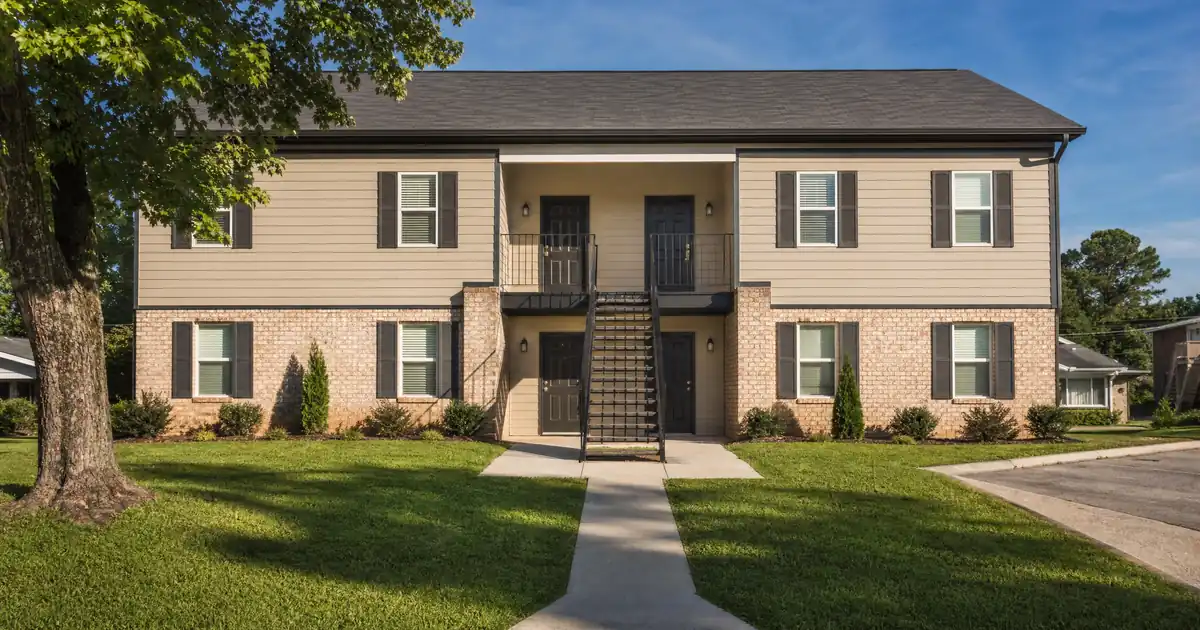
Multifamily 5+ 40-Year DSCR Loan Complete Guide — The Quick Read: A building with five units or more gets underwritten on its net operating income. It does not get underwritten on gross rent. That’s a different math problem than a duplex or fourplex. A 40-year term almost always means one of two setups. The first is full 40-year amortization. The second is a 10-year interest-only period that later converts into a 30-year payment. Each setup changes the coverage ratio in a different way. Above roughly $2.5 million in loan size, most programs in Lendmire’s wholesale network switch back to a straight 30-year fixed loan. This happens no matter what the investor wants. This guide walks through the mechanics, the worked math, and the places where the general rule breaks down.
Key Terms Defined
DSCR (debt service coverage ratio) compares a property’s income to its debt payment. A ratio above 1.00 means the income covers the payment. Below 1.00 means it doesn’t.
DSCR Calculator
Run the numbers in your market
Rate source: Freddie Mac 30-yr average via FRED® — Federal Reserve Bank of St. Louis · effective Aug 27, 2026
Prefilled with local estimates — enter your own rent or nightly figures, taxes, insurance, and HOA for a more accurate picture.
Program parameters update from Lendmire’s centralized guideline source. Taxes and insurance are editable estimates.
As of Aug 27, 2026 · General Freddie Mac market benchmark, not a Lendmire loan offer. Rent, nightly rate, occupancy, taxes, and insurance are editable estimates. Short-term rental figures are estimates only and vary significantly by season, property type, management approach, and local short-term-rental rules — confirm local regulations before relying on them. Qualifying income for short-term rentals varies by program — some use appraisal market rent, others use documented STR history or projections — and is confirmed in underwriting. Not a Loan Estimate, approval, or commitment to lend. Program availability and eligibility are subject to lender guidelines, credit approval, property review, and underwriting.
NOI (net operating income) is rental income minus vacancy and operating costs, like management, maintenance, and reserves. This is the income figure that drives underwriting on 5+ unit buildings. It is not the raw rent roll.
PITIA stands for principal, interest, taxes, insurance, and association dues. It is the full monthly payment used as the DSCR denominator on smaller residential files.
Interest-only (IO) period is a stretch of the loan term where the payment covers interest only. The loan balance doesn’t go down during this time.
Amortization is the schedule that pays down a loan’s principal balance over time until it reaches zero.
Reserves are liquid funds a lender wants you to have available after closing. They’re usually measured in months of PITIA. They act as a cushion if rent falls short.
Seasoning is the minimum length of time a lender wants you to own a property before approving a cash-out refinance on it.
Where the Math Actually Changes at Five Units
Cross from four units to five, and the underwriting model flips completely. Lenders stop dividing gross rent by the payment. Instead, they divide net operating income by annual debt service. That single change explains why a five-unit building can show a much lower coverage number than an investor’s own quick math suggests — even when the rent roll looks strong.
| Unit Count | Appraisal Method | DSCR Formula | Typical Experience Ask |
|---|---|---|---|
| 1–4 units | Comparable rent schedule | Gross rent ÷ PITIA | Often fine for a first-time investor |
| 5–10 units | Income-approach commercial appraisal | NOI ÷ annual debt service | Some landlord or ownership history preferred |
| 10+ units | Full commercial narrative appraisal | NOI ÷ debt service, tighter vacancy/reserve assumptions | Multifamily or property-management experience typically expected |
The appraisal switch isn’t a lender preference. It’s a form limitation. Fannie Mae’s Selling Guide confirms that its standard small-income-property appraisal form only covers two- to four-unit properties. There is no residential form built for a five-unit building. That’s a big reason the deal shifts into commercial-style underwriting once it crosses that line. The same guide matters for another reason too: any loan under standard qualified-mortgage rules caps its term at 30 years. That’s exactly why a 40-year structure only shows up in the non-QM, business-purpose DSCR space. You won’t find it on a conventional owner-occupied mortgage.
For the basic mechanics of DSCR underwriting on a single property, Lendmire’s complete DSCR loans guide is the fuller starting point. The framework below picks up where Lendmire’s single-family 40-year DSCR loan guide leaves off, once a building crosses the four-unit line.
How Underwriting Builds the NOI Number
Two documents anchor a 5+ unit file before anyone even calculates a coverage ratio. The first is the trailing 12-month operating statement, called the T12. The second is the current rent roll. Underwriters lean on real, trailing performance, not a seller’s projected number. They want actual vacancy, actual maintenance costs, and actual concessions — not what the property could theoretically earn under perfect management.
From there, the lender rebuilds the NOI instead of just accepting the number the seller gives them. That usually means three things. The lender marks vacancy to match what the broader rental market is actually running. It adds a management fee even if the owner self-manages. And it carves out a per-unit replacement reserve for future capital repairs. The gap between a simple gross-rent calculation and a properly built NOI-based DSCR can be big. The same building can show very different coverage numbers depending on which method gets used. That’s exactly why an investor’s own quick math and the lender’s underwritten number don’t always match.
A DSCR loan qualifies mainly on whether the property’s income covers the payment, subject to lender guidelines. On a 5+ unit deal, that means the fully rebuilt NOI has to cover the annual debt service — not the sticker-price rent roll.
The 40-Year Term, Decoded
The term “40-year DSCR loan” actually describes two very different structures. Knowing which one a term sheet is offering matters more than the label itself.
| Structure | How Principal Amortizes | Effect on the DSCR Denominator |
|---|---|---|
| True 40-year full amortization | Principal pays down over the full 40 years | Lower monthly obligation than a 30-year loan, so coverage improves modestly |
| 40-year term, 10-year IO then 30-year tail | No principal reduction for the first 10 years, then amortizes like a standard 30-year loan | Lowest possible payment during the IO years, then the obligation steps up once amortization begins |
Across Lendmire’s wholesale network, the second structure shows up more often on multifamily files. It solves a specific problem. Picture a building where rent is climbing but hasn’t fully stabilized yet. The investor needs breathing room today more than equity buildup this year. The 40-year label is doing real work here. It describes the total term of the note — not necessarily how long principal is actually amortizing.
One structural note matters for larger multifamily deals. Extended terms are mostly available below roughly $2.5 million in loan size, across most programs Lendmire places. Above that size, the network generally sticks to 30-year fixed structures. That means a bigger 5+ unit acquisition may not have the same 40-year or IO flexibility as a smaller one.
Same Building, Three Amortization Structures
Picture a five-unit property with a modeled NOI that stays fixed across all three scenarios. Only the financing structure changes. This is illustrative math, not a market quote. Every real file underwrites off the lender’s own rebuilt NOI and actual loan terms.
Run it through a standard 30-year fully amortizing loan, and coverage lands in the low-to-mid 1.0x range. The property clears its obligation, but not by much.
Stretch that same loan to a full 40-year amortization schedule, and the payment shrinks slightly. That’s because principal spreads over a longer runway. Coverage ticks up a bit, maybe into the high-1.0x to low-1.1x range, without changing anything about the property itself.
Now structure the 40-year term as a 10-year interest-only period. No principal gets repaid during those first ten years. So the payment drops further, and coverage can jump meaningfully — sometimes into the 1.3x-plus range on the same NOI. That’s the appeal of an IO structure on a multifamily file with real cash-flow pressure.
The catch shows up at year ten, or whenever a rate-term refinance resets the clock. Once the loan converts to its 30-year amortizing tail, the payment jumps back up. Coverage falls back toward whatever the fully amortizing number would have been. It can even land lower, if rents haven’t grown enough in the meantime. Investors using an IO structure to clear a tight ratio today should model that reset before they rely on it.
DSCR vs. conventional financing
Two common ways to finance an investment property in this market. They qualify you differently — here’s how investors weigh them.
Why investors choose it
- Qualifies on the property’s rental income — no personal tax returns, W-2s, or pay stubs needed to document income.
- No personal debt-to-income ceiling to clear, so existing mortgages and obligations don’t cap your borrowing the same way.
- Can be closed in an LLC, keeping the property inside a business entity.
- Built for scaling — not held to the limit on number of financed properties that conventional financing applies.
- Underwriting centers on the deal: generally qualifies when the rent covers the payment, a 1.00x coverage ratio being a common baseline (confirmed in underwriting).
- Designed specifically for investment property, including long-term and, where the program allows, short-term rentals.
Where it’s strong
- Often the lowest ongoing financing cost for a buyer who fully qualifies on personal income — a fit for a first property or a cost-first purchase.
Trade-offs for investors
- Requires full personal income documentation and must fit within a debt-to-income limit — salary, existing debts, and other mortgages all count.
- Typically held in your personal name rather than a business entity.
- Caps how many financed properties you can carry, which can become a ceiling as a portfolio grows.
- Evaluates you as a borrower as much as the property, which usually means more paperwork.
How investors usually choose: a first or single property often optimizes for the lowest financing cost; portfolio builders often optimize for leverage, vesting in an LLC, and scaling past conventional caps. The right answer depends on your goals, the property, and current guidelines — both paths run through select lenders in Lendmire’s wholesale network, with eligibility and terms confirmed in underwriting.
Lendmire’s wholesale network sees this pattern often enough across DSCR multifamily files that it’s worth flagging directly. An IO-driven coverage number is a snapshot of the easiest years. It is not a permanent number. The strongest files clear coverage on the eventual amortizing payment too, not just the IO-era one.
What Lenders Actually Look For on 5+ Unit Files
Purchase leverage on most 5+ unit DSCR files lands in the 75%–80% loan-to-value range. Select high-leverage programs reach 85% for borrowers with a 700-plus credit score. Cash-out refinances top out lower, around 75% LTV across most of the network. Most lenders also want roughly six months of ownership seasoning before they’ll consider one.
Credit requirements vary by program. A 620 floor exists in parts of the network, but most programs want a score around 660. A 700-plus score is generally what unlocks the top leverage tiers. Loan amounts on standard programs run up to roughly $3 million. Smaller-balance deals get routed through select lenders that handle them.
Reserves flex with leverage, loan size, and transaction type. Six months of PITIA is common on most files. Conservative rate-term refinances at modest leverage under $1.5 million sometimes see reserves waived entirely. Loans above that size typically step up to around nine months.
Coverage below 1.00 is genuinely available through select lenders in the network. Leverage and terms just adjust to compensate. A no-ratio path also exists through a narrower set of lenders, generally reserved for borrowers who already own a primary residence. Neither option is the norm. Both come with tighter pricing and leverage than a file that clears 1.00 cleanly on its own.
A bigger down payment shrinks the monthly payment and can lift the coverage ratio. But it never overrides a credit floor, a reserve requirement, or a property-eligibility rule. The strongest files clear both tests at once: enough equity in the deal, and enough NOI to cover the debt. Terms vary by lender guidelines, property type, leverage, credit profile, and full file review.
Where the General Rule Breaks
The five-unit line reappears in an unexpected place — inside the same rulebook that exempts these loans from consumer mortgage rules in the first place. Regulation Z defines a “dwelling” as a residential structure of one to four units. Anything larger simply falls outside that definition. That’s a big reason non-QM DSCR underwriting is the default path for 5+ unit acquisitions, not a workaround. DSCR loans are built for non-owner-occupied investment properties. Because they are business-purpose investor loans, they get reviewed differently than a standard owner-occupied mortgage.
There’s a narrower trap inside that same rule. Say an owner plans to live in one unit of a small multifamily building. Buying rental property with three or more units automatically counts as business-purpose. But improving or maintaining that same owner-occupied building only gets the exemption at five units or more. It’s a niche scenario. Still, it shows the unit-count line doesn’t sit in one tidy place.
Government-insured and bank-balance-sheet multifamily programs also draw a five-unit floor. But they run a completely different qualification model. They require a stabilized, already-income-producing building with years of audited operating history, plus real borrower-level net worth and liquidity tests. That works fine for a stabilized asset an investor plans to hold for decades. It doesn’t work at all for a value-add acquisition, a recent conversion, or a building still filling up. In those situations, a DSCR loan can still close, because it underwrites current or near-term income instead of demanding years of stabilized history.
Mixed-use buildings are another gray zone. How much commercial square footage or income a lender will tolerate, before treating the building as commercial-retail instead of multifamily, varies program by program. This is genuinely a case-by-case call, not a fixed rule. Confirm it against a specific lender’s guidelines rather than assume it.
Short-term rental income layered onto a 5+ unit building narrows the lender pool even further. It’s too large for most retail residential DSCR shelves. It’s often too small for institutional lenders, who prefer bigger loan sizes. That’s a real gap in the market, not a misconception. Investors chasing that combination should expect fewer eligible programs than either a straight 5+ unit long-term-lease deal or a 1-4 unit STR deal would see on its own. Lendmire’s short-term rental 40-year DSCR loan guide covers the smaller-scale version of this in more depth.
Which Structure Fits Your Strategy
| Investor Strategy | Structure That Usually Fits | Why |
|---|---|---|
| Buy-and-hold, low turnover expected | 30-year fixed or full 40-year amortization | Builds equity steadily, no future payment jump to plan around |
| Value-add or lease-up still in progress | 40-year term with 10-year IO | Frees up cash flow while rents are climbing toward stabilized levels |
| Planning to sell or refinance within 3-5 years | 40-year IO | Maximizes cash flow through the hold, since the IO window may outlast the exit |
None of these are guaranteed outcomes. Every file still goes through credit, property, and lender review. Program availability also shifts by borrower profile and building.
Refinancing or Pulling Cash Out of a Multifamily Property
A 5+ unit building that has gained equity or stabilized its income since purchase can typically refinance at up to roughly 75% LTV for cash-out. Most programs want around six months of ownership seasoning first. Rate-and-term refinances follow similar leverage logic, but without the seasoning pressure, since no cash comes back to the borrower. For the fuller walkthrough of how rate-and-term and cash-out mechanics differ, Lendmire’s investment property refinance playbook breaks both down in detail.
Tax treatment can depend on how refinance proceeds get used and how the property is held. Investors should keep clear records and talk to a qualified tax professional before relying on any deduction.
If you’re buying or refinancing a 5+ unit rental and want to see how the numbers actually pencil out, Lendmire can help compare DSCR loan options. That comparison looks at the property’s income, your credit profile, your leverage, and what you’re trying to accomplish with the hold.
Frequently Asked Questions
Why does my DSCR come out lower on a 5+ unit deal than my own math? Because the lender divides rebuilt net operating income by annual debt service, not gross rent by the payment. Vacancy gets marked to market. A management fee gets added, even if you self-manage. A replacement reserve gets carved out. All three shrink the income side of the ratio — often producing a much lower number than a quick gross-rent calculation would suggest.
Is a 40-year DSCR loan always interest-only? No. Some programs offer a true 40-year fully amortizing schedule with no IO period at all. The more common structure across Lendmire’s network pairs a 10-year interest-only period with a 30-year amortizing tail. These are two different products with different long-term payment behavior. It’s worth confirming which one a specific term sheet is actually offering.
Can an LLC or foreign national qualify for a multifamily DSCR loan? Entity borrowers are common on 5+ unit files, subject to program eligibility. Several lenders in Lendmire’s network also work with foreign nationals on DSCR structures. Both scenarios still go through property, credit, and reserve review. Availability and terms vary by lender and by the specific deal.
What happens to my payment when the interest-only period ends? The loan converts to a fully amortizing schedule, usually over the remaining 30 years. The payment steps up because principal reduction starts. Coverage typically falls back toward whatever the fully amortizing ratio would have been on the same NOI — sometimes lower, if rents haven’t kept pace. Modeling that reset before closing avoids a surprise later.
Can I get a DSCR loan on a 5-8 unit property with short-term rental income? It’s possible, through select lenders in the network. But the pool is narrower than for either a straight long-term-lease multifamily deal or a smaller 1-4 unit STR property. Short-term rental rules can also vary by city, county, HOA, and property type. Confirm local rules before relying on projected rental income.
About Lendmire
Lendmire (NMLS# 2371349) is a DSCR-focused mortgage broker. It helps arrange investor financing across 40 markets, including Washington, D.C., through wholesale and investor-lending channels. DSCR eligibility is generally reviewed by the lender around the property’s rental income, rather than personal income documentation, subject to lender guidelines. That works well for self-employed investors, LLC operators, and portfolios above four financed properties. Scotsman Guide named Lendmire a Top Mortgage Workplace in both 2025 and 2026.
Get Started
Ready to find the right loan for you?
In about 30 seconds you can review financing options available for your home or investment property. No commitment required.
Informational only. Not a Loan Estimate, approval, or commitment to lend. Program availability and eligibility are subject to lender guidelines, credit approval, property review, and underwriting.
References
1. Fannie Mae Selling Guide / Form 1025 Reference
2. CFPB Regulation Z §1026.2 — Definitions
Brandon Miller
Founder & CEO, Mortgage Loan Originator, Lendmire LLC
- Mortgage Loan Originator · NMLS# 1129696 · Verify on NMLS Consumer Access
- North Carolina Real Estate Broker · License# 343312 · Verify on NCREC
- North Carolina Insurance Producer · License# 19053198 · Property, Casualty, Life, Health · Verify on NAIC SBS
- Lendmire LLC · Firm NMLS# 2371349 · Verify firm licensure
Compliance and disclosures. Lendmire (NMLS# 2371349) is a licensed mortgage broker and is not a direct lender, depository institution, financial advisor, or tax professional. Content in this article is general market analysis and educational information — not financial, legal, or tax advice for any specific situation. Lendmire does not guarantee loan approval; every transaction is subject to underwriting by the funding lender. Mortgage pricing and loan program guidelines are subject to change at any time without notice and vary by borrower characteristics, property type, and state regulations. Lendmire complies with Equal Housing Opportunity. Licensure verification: NMLS Consumer Access.


