
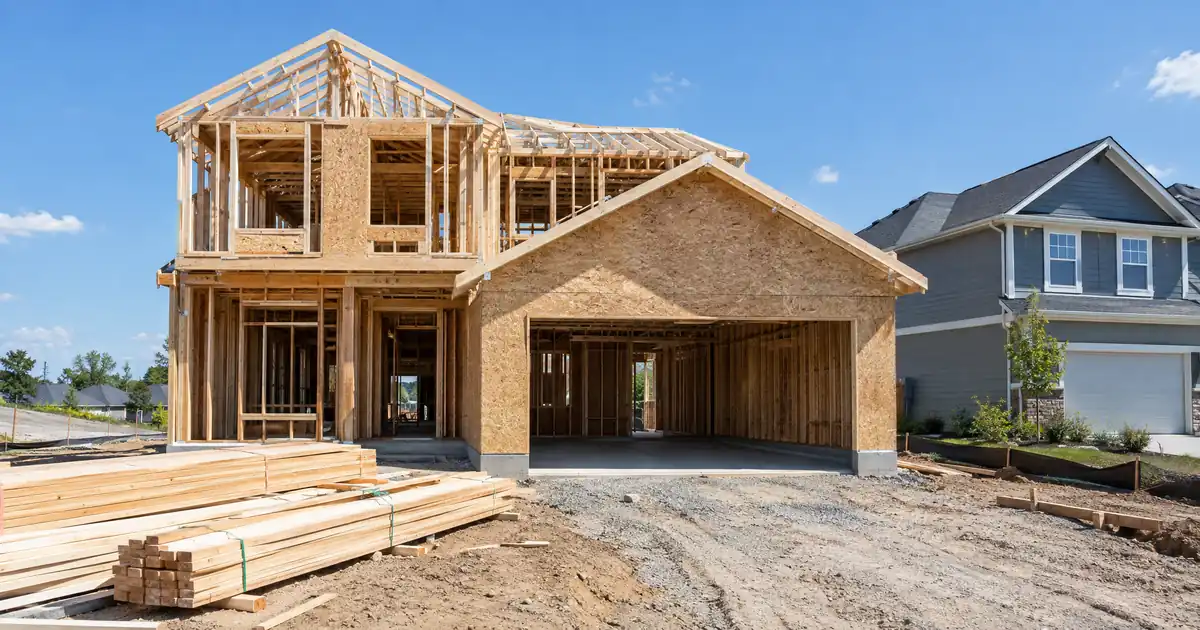
The Quick Read: Buyers have more leverage this fall than a year ago. Builders are handing out incentives. But mortgage rates have climbed for four straight weeks, and that erodes much of what you gain at the negotiating table. This column is written as of September 28, 2026, and every figure below carries its source and date.
Key Takeaways
- NAR’s August report, released September 10, put supply at 4.9 months. NAR called that the highest reading in over ten years. Freddie Mac’s weekly survey rose four weeks in a row, from 6.66% on August 27 to 7.03% on September 24. That is 37 basis points.
- Prices have not fallen. NAR’s median existing-home price was still up 1.6% from a year earlier.
- Builder incentives are the loudest leverage signal. Compare the full cost of any incentive against the loan it comes with.
- Different rate surveys show different numbers. Compare quotes from the same day, and name the source every time.
What Changed This Month?
Rates moved up in four steps, and not gently. Freddie Mac’s survey put the 30-year fixed at 6.71% for the week of September 3, 6.76% for September 10, 6.95% for September 17 and 7.03% for September 24. A year earlier, the same survey read 6.30%. The biggest single jump was 19 basis points, in the week of September 17, per Freddie Mac’s release that day.
A basis point is one-hundredth of a percentage point. So 37 basis points is more than a third of a point. That is not a rounding error on a 30-year loan.
Freddie’s own economist said the housing market “remains supported by a solid labor market,” per the September 24 release. Demand is not collapsing because of jobs. It is softening because of cost.
The Mortgage Bankers Association tells the same story from a different angle. Its survey for the week ending September 18, released September 23, put its 30-year conforming contract rate at 7.12%. That was up from 6.97% and the highest since May 2024, per the MBA’s weekly release. Refinance applications ran 62% below a year earlier. Purchase applications, unadjusted, were 11% below a year earlier.
The Fed raised rates. On September 16, the Federal Reserve’s statement showed a 12–0 vote to lift the target range by a quarter point, to 3¾–4%. The statement said inflation “remains elevated.” That was the first hike since 2023, per the research I pulled for this column.
The Fed does not set mortgage rates. Mortgage rates follow longer-term yields more closely. On that front, the 10-year Treasury yield sits near 5.2%. The MBA’s chart of the week said it had been about 4% back in February.
Supply is up, and sales are down. NAR’s August report, released September 10, showed existing-home sales down 2.0% from July, at a 3.98 million annual pace. Inventory was 1.62 million homes, up 5.9% from August 2025. Months of supply rose from 4.6 to 4.9. That is all in NAR’s August release.
NAR said the added supply gives buyers better chances to negotiate. Sales are still up 1.6% for the year through August, so this is a cooling, not a collapse.
Builders are paying to move homes. The NAHB’s September builder survey, released September 16, showed confidence down three points to 32. That is its lowest reading since September 2025. Sixty-six percent of builders used sales incentives, up from 63% in August. Thirty-eight percent cut prices, and the average cut held at 6%. NAHB said weaker buyer traffic came largely from rising mortgage rates. Details are in the NAHB release.
Is the Buyer Leverage Real?
Yes, in some places and on some homes. But it is not the same as falling prices. Leverage here means time and terms. You have more homes to compare, and more sellers willing to talk about credits, repairs and closing dates.
Here is what supports it:
- Months of supply at the highest level NAR has recorded in over a decade.
- Weekly data from Realtor.com, relayed by a trade outlet on September 24, showing active inventory up 5.8% from a year ago. Median list prices fell for a 36th straight week.
- Redfin’s report for the four weeks ending September 13, released September 17, showing pending sales at a near-three-year low. That is a demand signal.
Here is what cuts against it:
- NAR’s median existing-home price was $429,100, up 1.6% from a year earlier, per NAR’s housing snapshot. Sellers are not dropping the headline number.
- Redfin’s median sale price was up 2%. Twenty-five percent of homes still sold above asking price, and days on market held at 46.
- The Realtor.com data also showed days on market one day shorter than a year ago. The buyers still shopping may be well qualified.
- New listings were up only 1.5% from a year earlier in Redfin’s data. That is well below the inventory growth NAR and Realtor.com report. The three sources measure different things, so they will not match. They point the same way, though: more choice, and not a flood.
One more caution on the new-home side. Census reported that August new-home sales rose from the prior month, but Census called the change not statistically significant, per its report of September 24. The average new-home price fell from a year earlier, according to Inman’s report on September 25. An average can drop because builders are selling a different mix of homes. It does not always mean the same house got cheaper.
What Does It Mean for Home Buyers?
The trade is real: more bargaining power against a higher borrowing cost. For most buyers the monthly payment matters more than the sticker price. When rates rise 37 basis points in a month, the same loan costs more each month. I am not putting a dollar figure on that, because it depends on your loan and your file. But the direction is clear.
A plain hypothetical shows the scale. If a rate moves from 6.66% to 7.03%, the price of borrowing rises by more than a third of a point. A seller credit or a modest price cut has to be big enough to offset that. Sometimes it is. Sometimes it is not.
Different buyers feel this differently.
First-time and rate-sensitive buyers. The MBA’s data shows purchase applications well below last year. It also shows more buyers turning to adjustable-rate mortgages, which were 9.8% of applications that week. An adjustable-rate mortgage, or ARM, starts with one rate and can reset later. That can cut early costs. It also shifts risk onto you. If you take one, know when it can adjust and how far.
Buyers eyeing new construction. Builders are motivated. Incentives at their highest share since December tell you that. But an incentive is not free money. Trade-offs can hide in the price, the loan that comes with the deal, or the upgrades you give up. Ask for the offer in writing and compare it against a plain cash discount.
Investors. Investor and DSCR loans were 35% of non-QM lock volume in August 2026, up from 28% a year earlier, per Optimal Blue data cited by HousingWire on September 12. Non-QM means a loan that falls outside the standard rules for conventional mortgages. A DSCR loan is reviewed mainly on the property’s rental income. It is a fit for people buying rentals. If that is you, our DSCR loans guide explains how it works. I state no figures here, because the current guidelines are subject to lender review and change.
Owners with equity. Refinancing is weak. The MBA said the refinance pace was the slowest since February 2025. If you were waiting for a refinance window, this is not one.
My Take
I think buyers are reading this market half right. They see the supply headlines and assume the deal is coming. They see the rate headlines and assume they have to wait. Both instincts are partly wrong.
Waiting for lower rates is a bet, and the sources do not agree on direction. Markets were pricing another Fed hike in December, per Advisor Perspectives on September 16. The MBA, meanwhile, forecasts rates staying elevated in coming quarters. I do not know who is right, and no one can say with certainty. A plan that only works if rates fall is not a plan.
The stronger play, in my view, is to treat the negotiating room as the part you can control. You cannot move the 10-year yield. You can move the price, the credits and the terms. That is where this season pays.
Honestly, this one is close to a toss-up for many buyers. A patient buyer with a stable job and flexibility gets the most from the softer market. A buyer who needs to move on a fixed date gets less, because the rate cost lands either way. Which one you are matters more than any headline.
I would also push back on one myth. “Supply is up, so prices are falling” is not what the data shows. NAR’s median price is still higher than a year ago. Room to negotiate is not the same as a price decline.
Which Rate Number Is the Rate?
They are all real, and none of them is a quote. Three sources in this column give three levels, and each is right for its own method.
- Freddie Mac’s survey put the 30-year fixed at 7.03% for the week of September 24. It covers conforming purchase loans for borrowers with 20% down and excellent credit, per Freddie’s own method note.
- The MBA’s contract rate was 7.12% for the week ending September 18.
- Mortgage News Daily’s index showed its 30-year fixed at 7.43% on September 25, per its Freddie Mac survey page dated that day. It is a daily index, so it runs on a different clock and method.
The gap between them comes from method, timing and borrower profile. Freddie’s survey is also not a quote. Borrowers outside the standard conforming box, including many non-QM borrowers, sit outside it entirely.
This matters when you shop. Quotes gathered on different days are not comparable. In a market that moved 19 basis points in one week, a Monday quote and a Friday quote can differ for reasons that have nothing to do with the lender. Gather your quotes on the same day, on the same loan scenario, and write down the date.
What I’d Do Now
Start with a clear picture of your budget, then use the market’s softness on price and terms. None of this is advice to buy or sell at a specific time. It is how I would think about the next few months.
Know your number before you tour. Get your loan options sorted first. Our loan options page carries the current guidelines for the programs we arrange, subject to lender guidelines. I keep figures off this column on purpose, so the page stays the single source of truth. A broker like me compares programs across lenders. The lenders review your file and make the credit decision.
Understand the lock before you need it. A rate lock is an agreement that holds your quoted terms for a set period while your loan moves through review. Floating means you have not locked, so your rate can change with the market. In a month like this one, floating cost buyers. My rule is simple: if you like the terms and the deal works, lock it. Floating is a bet on direction, and September showed how that can go.
Trade price against terms deliberately. With more supply, ask for what matters most to you:
- A lower price if you plan to hold the home a long time.
- Seller credits toward closing costs if cash is tight.
- Repairs found in inspection, either done or credited.
- A flexible closing date that fits your move.
Read builder incentives with a pencil. Incentives can look big and still cost you. HousingWire reported around September 17 that discounts were not lifting demand. That tells me buyers are doing the math and finding it thin. Compare the incentive against a plain price cut and the cost of the loan attached to it.
Use winter to your advantage, not against you. Fewer buyers tend to shop in cold months. Realtor.com flagged the week of September 27 to October 3 as its “best time to buy,” and noted active listings are still about 11% below pre-pandemic levels. Treat that framing as marketing. The useful part is the timing: sellers of homes that have sat are more open to talking. Tour in bad weather. You learn things about a house you cannot learn in June.
Do not stretch on the hope of a refinance. MBA data shows refinances are far below last year. If a rate falls later, you may get an option. Do not count on it to make a purchase work today.
Talk It Through
If you’re weighing a purchase or a refinance this fall, Lendmire can walk you through how the current programs fit your file. Call 828-256-2183 or request a quote.
Frequently Asked Questions
Is it a good time to buy a house right now?
It depends on your situation, not the calendar. Buyers have more inventory and more room to negotiate than a year ago, per NAR’s August report. But borrowing costs rose four weeks in a row through September 24, per Freddie Mac. If you have a stable income and need a home, the leverage helps. If you are stretching to make the numbers work, the higher rate is the risk to watch.
Are home prices dropping because supply is up?
No, not on the national numbers. NAR’s median existing-home price was $429,100 in August, up 1.6% from a year earlier. The 8.8% drop in average new-home prices that Inman reported on September 25 may reflect a change in the mix of homes sold. Room to negotiate is real, but it is not a nationwide price decline.
Should I lock my rate or wait for it to fall?
Lock when the terms work for your budget and the deal is in hand. Rates rose 37 basis points between Freddie Mac’s August 27 and September 24 readings. Sources disagree on what comes next, and the market was pricing another Fed hike in December as of September 16. Waiting is a bet. If it fails, you pay for it every month.
Why do the rate numbers I see online not match?
They measure different things at different times. Freddie Mac’s weekly survey put the 30-year at 7.03% for September 24. The MBA’s contract rate was 7.12% for the week ending September 18. Mortgage News Daily’s daily index was 7.43% on September 25. None of them is a quote. Your own figure depends on your file, your loan and the day you gather it.
Do builder incentives make new construction a better deal?
Sometimes, but only after you compare the whole package. NAHB reported on September 16 that 66% of builders were using incentives and 38% were cutting prices. Ask what the incentive costs you in price, upgrades or loan terms, and compare it against a plain price cut. A bigger headline number is not always a better deal.
About Lendmire
Lendmire (NMLS# 2371349) is a non-QM mortgage brokerage arranging DSCR investor loans in 41 markets — 40 states plus Washington, D.C. — and consumer mortgage programs, including bank statement, HELOC and down payment assistance options, in 16 states through wholesale lenders. Lendmire is the broker, never the lender; every file is underwritten by the lender under its own guidelines. Scotsman Guide named Lendmire a Top Mortgage Workplace in both 2025 and 2026.
Get Started
Ready to find the right loan for you?
In about 30 seconds you can review financing options available for your home or investment property. No commitment required.
Informational only. Not a Loan Estimate, approval, or commitment to lend. Program availability and eligibility are subject to lender guidelines, credit approval, property review, and underwriting.
References
1. Freddie Mac Primary Mortgage Market Survey
2. Freddie Mac release, September 17, 2026
3. Freddie Mac release, September 24, 2026
4. MBA Weekly Applications Survey, released September 23, 2026
5. Federal Reserve FOMC statement, September 16, 2026
6. NAR existing-home sales, August 2026
7. NAHB September builder sentiment
8. WRE News — Housing Inventory Listing Prices September
10. Inman, new-home sales, September 25, 2026
11. Advisor Perspectives, Fed decision, September 16, 2026
This article is part of Lendmire’s Mortgage News series — every loan program’s qualification details, guidelines, and scenarios live on the loan options page.
Related reading: Home for the Holidays: The Perks of Buying a Home During the Festive Season · Are There Any Extras Included when I Buy Real Estate? · Why You Need a Real Estate Agent to Find Your Dream Home, And How to Find One
Brandon Miller
Founder & CEO, Mortgage Loan Originator, Lendmire LLC
- Mortgage Loan Originator · NMLS# 1129696 · Verify on NMLS Consumer Access
- North Carolina Real Estate Broker · License# 343312 · Verify on NCREC
- North Carolina Insurance Producer · License# 19053198 · Property, Casualty, Life, Health · Verify on NAIC SBS
- Lendmire LLC · Firm NMLS# 2371349 · Verify firm licensure
Important disclosures. Lendmire (NMLS# 2371349) is a licensed mortgage brokerage. Lendmire is not a direct lender, depository institution, or financial advisor. All loan inquiries are subject to lender underwriting; this article does not constitute a commitment to lend. Rates, terms, and program guidelines are subject to change without notice and vary by borrower profile, property type, and state. Information in this article is general in nature and is not financial, legal, or tax advice. Equal Housing Opportunity. NMLS Consumer Access: nmlsconsumeraccess.org.