
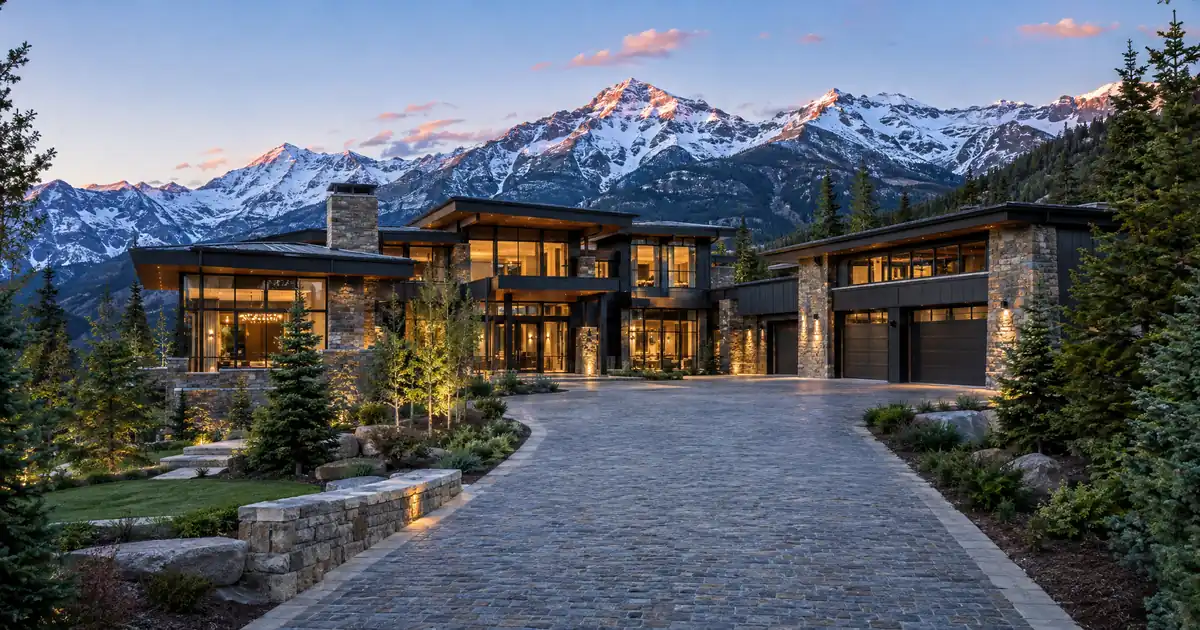
Does A Newly Built Vacation Rental Qualify For A Jumbo DSCR Loan — The Quick Read: Yes, once the home is finished. A newly built vacation rental can qualify for jumbo DSCR financing after it has a certificate of occupancy, is rent-ready, and has an appraisal supporting market rent or short-term rental income. What it cannot do is fund the construction itself — DSCR loans are take-out financing for a completed asset, not a builder’s loan. The size, leverage, and documentation path all shift once the property crosses into jumbo territory.
A jumbo DSCR loan is underwritten based on a property’s rental income, not traditional personal-income documentation or W-2s. That’s the whole idea behind a DSCR loan — lenders measure the payment against what the property earns, not what the borrower earns. Because DSCR loans are business-purpose products for non-owner-occupied property, they get underwritten differently than a standard consumer mortgage. That distinction matters even more once construction becomes part of the story.
Short-Term Rental Calculator
Run the STR numbers in your market
Rate source: Freddie Mac 30-yr average via FRED® — Federal Reserve Bank of St. Louis · effective Sep 17, 2026
Prefilled with local estimates — enter your nightly rate, occupancy, taxes, and insurance for a more accurate picture.
Short-term rental income is documented with a 12-month history or a market data report. Program parameters update from Lendmire’s centralized guideline source.
As of Sep 17, 2026 · General Freddie Mac market benchmark, not a Lendmire loan offer. Nightly rate, occupancy, taxes, and insurance are editable estimates. Qualifying income for short-term rentals varies by program — some use appraisal market rent, others use documented STR history or projections — and is confirmed in underwriting. Not a Loan Estimate, approval, or commitment to lend. Program availability and eligibility are subject to lender guidelines, credit approval, property review, and underwriting.
Can A Brand-New Vacation Rental Actually Close On A DSCR Loan?
Yes — but only after the building is done, not while it’s being built. Underwriters need a completed, rentable structure because DSCR math depends on real or projected rental income, and you can’t project income off a foundation and framing.
The trigger event is the certificate of occupancy. Once a project has that document, a final inspection, and working utilities, it moves from “under construction” to “eligible for permanent financing.” Lenders in the network treat this as a hard gate, not a formality — no CO, no DSCR file. If a builder or investor is carrying a separate construction loan, that loan gets paid off by the DSCR loan at closing. The two loans are never the same transaction; think of the construction loan as the bridge and the DSCR loan as what replaces it once the bridge is no longer needed.
This sequencing catches people off guard more than anything else in this process. An investor who assumes their construction lender will simply “convert” the loan into permanent financing at the same terms can get a rude surprise. The permanent loan gets underwritten fresh — current appraised value, current rent conclusion, current guidelines. Nothing carries over automatically.
How Does Income Get Qualified With No Rental History?
An appraiser’s rent conclusion carries the file when there’s no lease or booking history yet. For long-term rental treatment, that typically means a market rent schedule from the appraisal. For a property meant to run as a nightly rental, that same long-term form usually undersells the income — so a short-term rental income analysis, platform history, or bank statements showing deposits often does the real work instead.
Across the wholesale network, lenders typically use the appraisal’s short-term rent analysis to qualify short-term rentals on new construction. They calculate this at 80% of gross projected income. This income path is reserved for experienced investors — generally those who’ve owned income property for twelve months within the last three years. First-time landlords buying a new-build vacation home usually need to qualify using the long-term market rent conclusion instead, since they can’t use the short-term rental income path yet.
That 80% figure isn’t arbitrary. It builds in room for slow months, off-season gaps, and the reality that a brand-new listing has zero reviews and zero track record on any booking platform. A property that looks great on a spreadsheet at 100% projected occupancy needs to look fine at 80%, because that’s the number the coverage ratio actually gets built on.
What Loan Sizes And Leverage Apply Once It’s “Jumbo”?
“Jumbo” in DSCR lending just means the loan crosses past the standard program ceiling — there’s no agency rulebook defining it the way there is for conforming mortgages. Across the wholesale network, standard DSCR programs run up to $3,000,000, and a larger ladder carries qualified investors from $150,000 up to $10,000,000 for the right file.
Leverage steps down as the loan gets bigger. On files with coverage at 1.00 or better, purchase and rate-and-term leverage typically run 80% up to $1,000,000, stepping to 75% through $3,000,000, then down to 65% between $3,000,000 and $4,000,000, and 60% from $4,000,000 to $10,000,000 on a case-by-case basis. Cash-out is more conservative at every tier — 75% up to $1,000,000, 70% through $1,500,000, and 60% up to $3,000,000, with no cash-out available above that on this ladder. Every figure above $4,000,000 gets reviewed individually before submission, and it’s purchase or rate-and-term only at that size — no cash-out.
Short-term rental files and no-ratio files stop at $2,000,000 regardless of how far the standard ladder goes. If a newly built vacation rental is priced well above that — a luxury coastal or mountain new-build easily can be — the file may need to lean on the long-term rental income path rather than the short-term rental analysis to access the larger loan sizes. Lendmire has arranged financing on properties like this before; for a look at how a much larger vacation property gets structured, the super-jumbo DSCR loan for a luxury vacation home walks through a comparable scenario.
Does Coverage Below 1.00 Kill The File?
Not automatically. Say a newly built vacation rental has rent projections that fall below a 1.00 coverage ratio. Real paths forward still exist through select lenders in the network. Sub-1.00 coverage is available, but leverage and terms adjust to compensate, subject to underwriting.
That’s a meaningfully different conversation than a flat rejection. An investor whose projected rent covers roughly 0.90x of the payment isn’t automatically shut out — they’re looking at reduced leverage and different terms rather than the sharpest pricing tier. No-ratio qualification, where the lender doesn’t score a DSCR number at all, is also a real select-program path up to $2,000,000, generally reserved for borrowers with a seven-year clean housing payment history and no late payments in the last 24 months (0x30x24). It isn’t available for short-term rental income files, and the leverage on a no-ratio approval will run below what a strong coverage number earns.
Run the numbers on a coastal new-build priced at $2.4 million with a projected long-term rent conclusion clearing roughly 1.05x coverage on the full monthly obligation. At 75% purchase leverage on the standard ladder, that file sits comfortably in the range where full leverage applies — assuming credit, reserves, and the appraisal all support it. Drop that same projection to 0.85x, and the file likely still moves forward, just at reduced leverage and probably with a larger reserve cushion behind it.
What Documentation Does A New-Build File Actually Need?
This file needs more paperwork than a typical purchase of an existing home. The appraisal and completion documents matter a lot here. Expect a certificate of occupancy (or the local equivalent), a final inspection, and proof of active utilities. You’ll also need either the long-term rent schedule or the short-term rental income analysis from the appraiser — whichever income path applies to your loan.
Credit needs to clear a 660 floor on most files, stepping up to 700 above $3,000,000, alongside a clean housing payment history and no major derogatory events within the last 48 months. Two appraisals are required above $2,000,000, which matters more for new construction than for an existing home — comps are thinner for a brand-new custom build in a resort market, and a second independent opinion protects against an appraisal that leans too optimistic on a property with no true twins nearby.
Reserves typically mean six months of the full monthly housing payment (or interest-only carrying costs, if the loan is structured that way) sitting in your accounts after closing. This steps up to twelve months if you’re a first-time real estate investor. You won’t face extra reserve requirements for other financed properties you already own, and the network supports up to 20 financed properties on file.
What About Prepayment And The Interest-Only Option?
Many DSCR loans, including new-build vacation rental files, have a prepayment structure and an interest-only option. You should understand both before closing. Interest-only payments are available for up to 120 months on 30- and 40-year terms. This option caps leverage at 75% and requires coverage of at least 0.75x, based on the interest-only payment. Final terms depend on lender guidelines, the property type, leverage, and your complete credit picture.
That interest-only runway can matter a lot on a newly built vacation rental, where actual booking performance in year one is genuinely unknown. Lower carrying costs during the ramp-up period give the investor room to build a track record before the property has to prove itself at full amortized payments.
Key Terms Defined
DSCR (Debt Service Coverage Ratio): monthly rental income divided by the full monthly housing payment — principal, interest, taxes, insurance, and any HOA dues. A ratio of 1.00 means the rent exactly covers the payment.
Certificate of occupancy: the local government’s sign-off that a building is legally safe to occupy. This document is what turns a construction project into an eligible DSCR property.
Take-out financing: permanent financing that pays off a construction or bridge loan once a project is finished. A DSCR loan is take-out financing, never the construction loan itself.
DSCR vs. conventional financing
Two common ways to finance an investment property in this market. They qualify you differently — here’s how investors weigh them.
Why investors choose it
- Qualifies on the property’s rental income — no personal tax returns, W-2s, or pay stubs needed to document income.
- No personal debt-to-income ceiling to clear, so existing mortgages and obligations don’t cap your borrowing the same way.
- Can be closed in an LLC, keeping the property inside a business entity.
- Built for scaling — not held to the limit on number of financed properties that conventional financing applies.
- Underwriting centers on the deal: generally qualifies when the rent covers the payment, a 1.00x coverage ratio being a common baseline (confirmed in underwriting).
- Designed specifically for investment property, including long-term and, where the program allows, short-term rentals.
Where it’s strong
- Often the lowest ongoing financing cost for a buyer who fully qualifies on personal income — a fit for a first property or a cost-first purchase.
Trade-offs for investors
- Requires full personal income documentation and must fit within a debt-to-income limit — salary, existing debts, and other mortgages all count.
- Typically held in your personal name rather than a business entity.
- Caps how many financed properties you can carry, which can become a ceiling as a portfolio grows.
- Evaluates you as a borrower as much as the property, which usually means more paperwork.
How investors usually choose: a first or single property often optimizes for the lowest financing cost; portfolio builders often optimize for leverage, vesting in an LLC, and scaling past conventional caps. The right answer depends on your goals, the property, and current guidelines — both paths run through select lenders in Lendmire’s wholesale network, with eligibility and terms confirmed in underwriting.
No-ratio loan: a program that skips the DSCR calculation entirely and qualifies the file on credit history, reserves, and leverage instead.
Short-term rental income analysis: an appraiser’s estimate of nightly-rental income potential, used instead of a standard long-term rent schedule when a property is intended to operate on platforms like Airbnb.
The Regulatory Line That Matters Here
DSCR loans are business-purpose loans for non-owner-occupied investment property. That’s why they get reviewed on a different track than a standard owner-occupied mortgage. Business or investment purpose credit isn’t subject to standard consumer mortgage disclosure rules under Regulation Z. This exemption is part of why lenders can underwrite based on property income in the first place. That’s the whole regulatory story here — one paragraph, and now back to the property.
Local STR Rules Can Override The Loan Approval
An approved DSCR file doesn’t guarantee a legal short-term rental operation. Short-term rental rules can vary by city, county, HOA, and property type, so investors should confirm local rules before relying on projected rental income. Some jurisdictions require the owner to occupy the home for part of the year to legally operate as a home-share, which makes a purely investment-owned nightly rental impossible regardless of how strong the DSCR math looks — a dynamic covered in more detail by United States Real Estate Investor. A lender can sign off on the coverage ratio and the appraisal, and the property can still be unrentable as a nightly stay if local zoning says no.
That risk sits with the investor and the property, never the loan structure. It’s worth confirming before locking in a purchase contract on a new build — not after closing.
Common Mistakes On New-Build Vacation Rental Files
- Assuming the construction lender will roll the loan into permanent financing automatically. It won’t — the permanent DSCR loan is underwritten fresh, on its own timeline.
- Treating AirDNA projections as the coverage figure. Programs discount that gross projection, often to 80% of the figure, before it reaches the DSCR formula.
- Skipping local STR rule research until after the purchase. A property can pencil perfectly and still be illegal to rent nightly.
- Underestimating reserve requirements. First-time investors face a higher reserve bar than repeat investors with an existing rental portfolio.
- Assuming a first-time landlord can qualify on short-term rental income. That income path is typically reserved for investors with prior rental property ownership.
Frequently Asked Questions
Can a DSCR loan fund the actual construction of a vacation rental?
No. DSCR loans are permanent take-out financing for a completed, rent-ready property. Construction itself needs a separate builder’s or construction loan, which the DSCR loan pays off once the certificate of occupancy is issued and the property is ready to be appraised and rented.
Does a new-build vacation rental need rental history to qualify?
No. The appraisal supplies the income figure through a market rent schedule or a short-term rental income analysis, since a brand-new property has no lease or booking history to document.
How high can loan amounts go on a newly built vacation rental?
Standard DSCR programs run to $3,000,000, with a ladder reaching $10,000,000 for qualified files reviewed individually above $4,000,000. Short-term rental income and no-ratio qualification are both capped at $2,000,000 on this ladder, so a larger new-build vacation home may need to qualify on long-term rent instead.
What if the projected rent doesn’t fully cover the payment?
Coverage below 1.00 is a real path through select lenders in the network, though leverage and terms adjust to compensate, subject to underwriting. No-ratio qualification is also available up to $2,000,000 for borrowers with a clean seven-year housing history, separate from the coverage-based path.
Can a first-time real estate investor buy a new-build STR with DSCR financing?
Usually only by qualifying on long-term market rent rather than short-term rental income, since the short-term rental income path is generally reserved for investors with at least twelve months of prior rental property ownership. First-time investors also typically carry a higher reserve requirement than repeat investors.
If you’re weighing a new-build vacation rental against jumbo DSCR financing, the moving pieces — completion timing, income documentation, leverage by loan size, coverage ratio — are worth mapping before you’re under contract, not after. Lendmire can help compare how the numbers work based on the property’s projected income, credit profile, leverage, and your goals as an investor; reach the team at 828-256-2183 or through Lendmire’s mortgage quote page. For the full mechanics of how these loans work across scenarios, Lendmire’s complete DSCR loans guide is a good next stop.
Tax treatment can depend on how the funds are used and how the property is held; investors should keep clear records and speak with a qualified tax professional before relying on any deduction.
Self-employed borrowers can compare both super jumbo programs on Lendmire’s self-employed mortgages page.
About Lendmire
Lendmire (NMLS# 2371349) is a mortgage brokerage focused on DSCR investor financing, helping arrange programs through wholesale and investor-lending channels in 40 markets, including Washington, D.C. DSCR loans are evaluated by the lender on property cash flow rather than personal income, subject to lender guidelines, supporting LLC closings and accommodating investors with four or more financed properties. Scotsman Guide Top Mortgage Workplace in both 2025 and 2026.
Investors focused on short-term rentals can review DSCR loans for Airbnb and short-term rentals.
Get Started
Ready to find the right loan for you?
In about 30 seconds you can review financing options available for your home or investment property. No commitment required.
Informational only. Not a Loan Estimate, approval, or commitment to lend. Program availability and eligibility are subject to lender guidelines, credit approval, property review, and underwriting.
References
1. CFPB — Regulation Z § 1026.3 Exempt Transactions
2. United States Real Estate Investor — Laws That Impact Short-Term Rental Investors
Brandon Miller
Founder & CEO, Mortgage Loan Originator, Lendmire LLC
- Mortgage Loan Originator · NMLS# 1129696 · Verify on NMLS Consumer Access
- North Carolina Real Estate Broker · License# 343312 · Verify on NCREC
- North Carolina Insurance Producer · License# 19053198 · Property, Casualty, Life, Health · Verify on NAIC SBS
- Lendmire LLC · Firm NMLS# 2371349 · Verify firm licensure
Compliance and disclosures. Lendmire (NMLS# 2371349) is a licensed mortgage broker and is not a direct lender, depository institution, financial advisor, or tax professional. Content in this article is general market analysis and educational information — not financial, legal, or tax advice for any specific situation. Lendmire does not guarantee loan approval; every transaction is subject to underwriting by the funding lender. Mortgage pricing and loan program guidelines are subject to change at any time without notice and vary by borrower characteristics, property type, and state regulations. Lendmire complies with Equal Housing Opportunity. Licensure verification: NMLS Consumer Access.


