
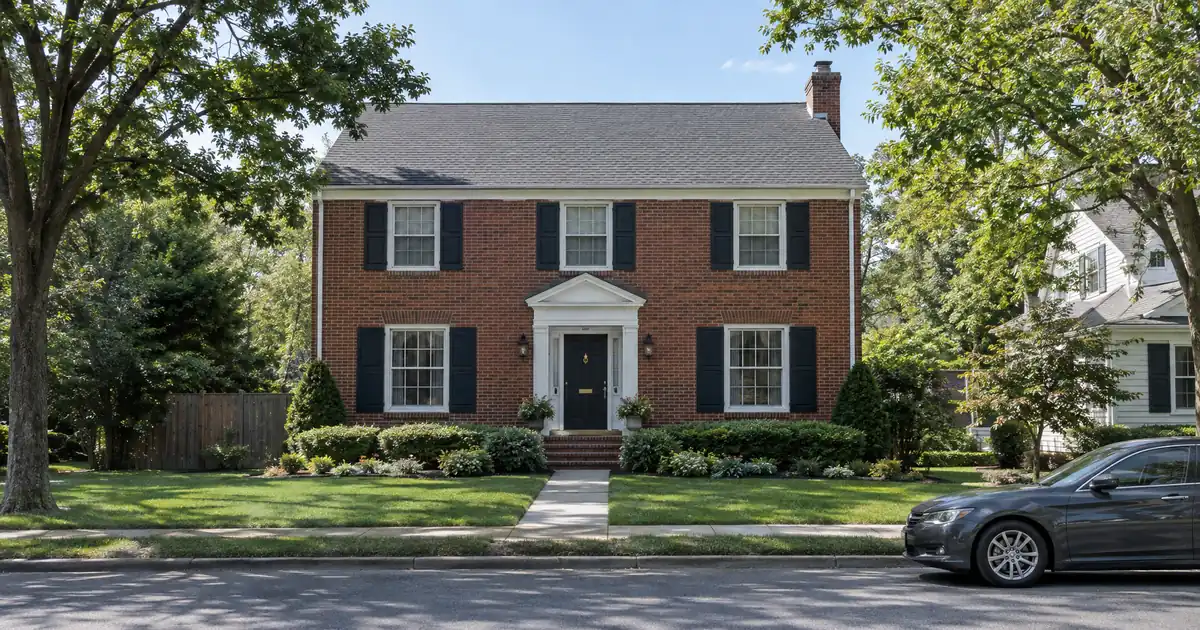
The Quick Read: Yes. A no-tax-return line of credit drops the 1040 from the file, but the lender still verifies income or assets, credit, title, and value, and owning the home free and clear does not waive any of that. A paid-off home changes the lien position and the equity math. It does not replace proof that the borrower can repay.
- The tax return can be replaced with bank statements, asset statements, or rental income records, depending on the program.
- Credit, debt-to-income, title, vesting, and a valuation are still reviewed on a free-and-clear home.
- A paid-off home makes the new line a first-lien position, so there is no payoff or existing-mortgage paperwork for that property.
- Title held in an LLC usually cannot take a HELOC at all, which is where a DSCR cash-out refinance enters the picture.
- Investment-property lines are the tightest: a 70% CLTV ceiling and a $500,000 maximum line on the network.
Equity is collateral. It is not repayment capacity. That one distinction explains most of what follows.
How large a line the equity supports.
An equity line is sized by combined loan-to-value, occupancy, and credit — not by rental coverage. Switch the occupancy or the credit band and the ceiling moves with it.
Investment-property lines require a 700 minimum credit score; second-home lines start at a 640 minimum and primary-residence lines at 600, and the combined-LTV ceiling steps down as the credit band drops on primary-residence and second-home lines and holds on investment-property lines; the line cap steps down on primary-residence lines and holds at every tier on investment-property and second-home lines.
A debt-to-income ratio above 45% requires 680+ credit. Profiles under 640 are limited to single-family homes. At least 75% of the approved line is drawn at closing. Ceilings, floors, and caps update from Lendmire’s centralized guideline source.
Line estimate
Illustrative estimate only — not a quote, Loan Estimate, approval, or commitment to lend. The rate is an editable assumption; equity-line pricing is variable through both the draw and repayment periods and never converts to fixed. Occupancy and credit drive the ceiling together: an investment property tops out at 70% combined LTV (minimum credit 700, line cap $500,000); a second home tops out at 90% combined LTV (minimum credit 640, line cap $500,000), with the ceiling stepping down as the credit band drops (the cap holds at every tier); a primary residence tops out at 90% combined LTV (minimum credit 600), and its $750,000 maximum line is available only at 75% combined LTV or below with a 700-or-better credit profile (720 on the longer-runway program) and a full appraisal. Lines above $500,000 require a full appraisal. Credit, debt-to-income, property type, and full underwriting review all affect the final line.
What Does “No Tax Return” Actually Mean?
It means the lender accepts something other than a tax return to show you can repay. It does not mean no documents. The label is shorthand for “no traditional income paperwork,” and borrowers who read it literally get surprised at the application stage.
Across the wholesale network Lendmire places files with, the substitute evidence varies by program and borrower type. Common substitutes include:
- Personal or business bank statements
- Asset statements
- Profit-and-loss statements
- Rent rolls or leases on rental property
- Retirement or benefit income records
Four terms get mixed up constantly:
| Label | What it really means |
|---|---|
| No tax return | Returns replaced by other income evidence |
| Bank-statement path | Deposits stand in for documented income |
| Property-income (DSCR) | The property’s rent is the qualifying basis |
| Zero verification | Not a compliant modern product |
That last row matters. A file with nothing verified is not a legitimate modern loan, whatever a marketing page implies.
Why Do Lenders Still Verify Anything?
Because a lender that cannot show a borrower can repay is taking collateral risk it did not price. Equity protects the lender after a default. It does nothing to make a default less likely, and underwriting exists to address the likelihood.
There is also a regulatory backdrop, and it is subtler than most explainers suggest. The CFPB’s ability-to-repay rule for closed-end loans requires verification of the income or assets a lender relies on, and it says a borrower’s own statement does not satisfy that. That rule governs closed-end loans, though, not ordinary open-end lines like a HELOC. So no federal rule says a HELOC lender must collect traditional personal-income documentation. Documentation requirements come mostly from the lender’s own standards and from the investors who buy or fund the loans.
That is why a no-tax-return HELOC can exist at all, and why it is still underwritten. The CFPB’s own consumer material says a lender sets the credit limit by also weighing your ability to repay, looking at income, debts, other obligations, and credit history. That booklet is an older edition, so treat it as a statement of principle rather than current wording.
What Changes When the Home Is Paid Off?
A paid-off home changes three things: the lien position, the equity math, and the paperwork for the old mortgage. It leaves the repayment review, the credit review, and the title review exactly where they were.
The new line becomes the first lien. With no mortgage ahead of it, the line sits in first position. On the network, a standalone line can be placed in first or second lien position, so a free-and-clear home is a clean fit structurally.
The equity math gets simpler. The CFPB describes a HELOC as an open-end line that lets you borrow repeatedly against the equity in your home, meaning value minus what you owe. When nothing is owed, nothing is subtracted, and the combined loan-to-value ceiling alone sets the limit.
The old-mortgage paperwork disappears. No payoff letter, no mortgage statement for that property.
What does not change: credit score, debt-to-income, reserves where required, property type, occupancy, and a valuation.
Here is the catch most borrowers miss. A paid-off home trades one proof for another. You no longer prove the old loan is gone, but you may need to prove the home is actually free and clear. That means a title search, the recorded deed, and confirmation that earlier liens were released.
What Are the Network’s Actual Limits on a Paid-Off Home?
The ceilings depend on occupancy and credit, and the occupancy tier is the first thing that decides which table applies. These figures reflect select wholesale-network guidelines, are subject to lender guidelines and full file review, and are not a commitment to lend.
| Occupancy | Max CLTV | Max line | Credit floor |
|---|---|---|---|
| Primary residence | Up to 90% (720+ only, up to $500,000) | $750,000 | 600 |
| Second home | Up to 90% (720+ only, up to $500,000) | $500,000 | 640 |
| Investment property | 70% | $500,000 | 700 |
A few details sit inside that table. On a primary residence, 90% CLTV exists only at a 720-or-better credit profile and only up to $500,000. Lines at or below $500,000 ordinarily use an automated valuation rather than a traditional appraisal, though a borrower can request a full appraisal in any case.
Debt-to-income tops out at 50%, drops to 45% for credit profiles from 600 to 679, and is qualified on the interest-only payment calculated on the maximum draw. A ratio above 45% requires a 680 minimum.
For context on the broader market, NerdWallet reports that equity lines on investment property involve a smaller lender pool, stricter qualification, and less borrowing power than lines on a primary home. Market surveys report different credit and leverage figures than the network does. Those describe the wider market, not what the network offers. On the network, the investment ceiling is 70% CLTV, full stop.
What Documents Replace the Tax Return?
The replacement depends on how the borrower earns. The right path is the one that shows real repayment capacity most cleanly, not the one with the least paper.
| Borrower profile | Common substitute | Typical snag |
|---|---|---|
| Self-employed | Bank statements or P&L | Deposits that don’t match stated income |
| Retiree | Benefit and retirement distribution records | Irregular distributions |
| Rental owner | Leases, rent records | Vacant or undocumented units |
| High-asset borrower | Asset statements | Assets held in ineligible vehicles |
Practitioner pattern: the file that stalls is rarely the one with unusual income. It is the one where the substitute evidence and the borrower’s stated story disagree, such as deposits that include transfers between the borrower’s own accounts. Cleaning that up before submission saves more time than any shortcut in the paperwork itself.
Some items stay on the list no matter the path: photo ID, proof of ownership, homeowners insurance, a credit report, and a property valuation. Credit reports run on a single-bureau score model keyed to the primary wage earner and must be no more than 90 days old at closing.
Does Title and Vesting Matter on a Free-and-Clear Home?
Yes, and for investors it is often the deciding issue. A HELOC on the network must be vested in the individual borrower or an inter vivos revocable living trust. LLCs, corporations, partnerships, and irrevocable, blind, or land trusts cannot hold title.
That is the sharpest structural difference from a DSCR loan. If a paid-off rental already sits in an LLC, the options are a vesting change or a different product altogether. Moving a property out of an LLC can carry its own consequences for liability protection and for existing insurance, so it is a decision to weigh before the application, not during it.
For an LLC-held rental, a DSCR cash-out refinance is the property-based alternative, available subject to lender program eligibility. It qualifies primarily on property-level rental income covering the payment, subject to lender guidelines, rather than on the borrower’s personal returns. On a paid-off rental there is no first mortgage to replace, which makes the structure simple. The tradeoff is that a DSCR cash-out is a closed-end lump sum rather than a revolving line, and cash-out refinances on standard rentals generally top out around 75% LTV across most of the network. Lendmire’s complete DSCR loans guide covers how that structure works in full.
Two cautions on DSCR. A coverage ratio of 1.00 or better only means rent covers principal, interest, taxes, insurance, and any HOA dues. It does not mean the property cash-flows after repairs, vacancy, management, and capital expenses. And 1.00 is where many select programs start, while a separate select-lender path takes coverage below 1.00 with leverage and terms adjusted.
Which Path Fits Which Investor?
The decision turns on how the property is titled, what the money is for, and whose capacity the lender should read.
A HELOC fits when the home is in your own name or a revocable trust, you want flexible access to reserve capital, and your personal credit and debt-to-income profile are strong. It reads the borrower. On the network’s structures, at least 75% of the line is drawn at closing, interest-only draw periods run 3 or 5 years, and repayment fully amortizes afterward. Pricing floats and never converts to fixed, which matters for anyone planning to carry a balance.
A DSCR cash-out fits when the rental is in an LLC, your personal income is hard to document cleanly, or you want a permanent lump sum rather than revolving credit. It reads the property.
Neither fits when the cash would fund a purchase the numbers don’t support. Pulling equity into a deal that only works at a thin margin turns a paid-off asset into a leveraged one, and the lender’s willingness to lend is not an endorsement of the plan. Consider whether the use of funds earns more than the cost of carrying them.
One more flip point. A W-2 borrower with clean, easily verified returns may find that a conventional documentation path is simpler and cheaper than any alternative-doc route. A no-tax-return product earns its place when returns understate real cash flow, which happens often with heavy depreciation and deductions, not as a default for everyone who prefers privacy.
For borrowers comparing lender options on this specific product, Lendmire has a separate piece, Which Lenders Offer No Tax Return HELOC Options?, that covers the topic in more detail.
How Do You Prepare and Apply?
Sequence the work so the slowest items start first.
1. Confirm occupancy and titling. Individual or revocable trust is workable; an LLC is not.
2. Pull the recorded deed and confirm prior liens are released.
3. Decide which income evidence best represents you and gather it.
4. Check your credit profile against the tier you are aiming for, because the leverage ceiling steps up with the score.
5. Confirm the property type is eligible.
6. Size the line to the use of funds, not to the maximum available.
Eligible property types include single-family, 2-4 units, PUDs, townhomes, and condominiums, including non-warrantable. Manufactured homes, co-ops, condotels, log homes, commercial, mixed-use, and agricultural-zoned properties are not eligible.
Availability is narrower than many investors expect. The HELOC program is offered in Lendmire’s 16 full-service states only (AL, CA, CO, FL, GA, IN, MI, MT, NM, NC, OH, PA, TN, TX, VA, WA), which is smaller than the 41-market DSCR footprint. Individual states carry their own overlays, including Texas rules for primary residences and listing restrictions in several states.
A line is also a real obligation. The CFPB’s HELOC brochure reminds borrowers to consider a line only if they are confident they can keep up with payments, since falling behind could put the home at risk. That applies with extra force to an owner-occupied home.
Tax treatment can depend on how the funds are used and how the property is held; investors should keep clear records and speak with a qualified tax professional before relying on any deduction.
If you are considering a home equity line and want to see how the numbers work, Lendmire can help you compare HELOC options based on the property, the equity available, credit profile, combined leverage, and your goals. Reach the team at 828-256-2183 or through the quote request page.
Key Terms Defined
CLTV: Combined loan-to-value, the total of all liens against the property divided by its value.
Open-end credit: A revolving line you can draw on, repay, and draw on again up to a limit.
Draw period: The stretch of the line when you can borrow, often interest-only on this network.
Vesting: How the property is legally titled, such as an individual, a revocable trust, or an LLC.
DSCR: Debt service coverage ratio, a rental property’s income measured against its full monthly obligation.
Frequently Asked Questions
Does owning my home outright let me skip income verification?
No. Equity secures the line, but it does not show you can repay it. Lenders still look at credit, debt-to-income, and income or asset evidence, and they set the credit limit with repayment ability in mind. What you skip is the old-mortgage paperwork, not the repayment review.
Can a paid-off rental held in an LLC get a HELOC?
Generally not on this network. Title must sit with the individual borrower or an inter vivos revocable living trust, and LLCs cannot hold it. The usual alternatives are a vesting change or a DSCR cash-out refinance, subject to lender program eligibility.
Is a no tax return HELOC the same as a DSCR loan?
They are different products. A HELOC reads the borrower’s capacity and is an open-end line. A DSCR loan is reviewed primarily on property-level rental income covering the payment, subject to lender guidelines, and a cash-out version is a closed-end lump sum.
What is the most I can borrow against a paid-off investment property?
On the network, an investment-property line carries a 70% CLTV ceiling and a $500,000 maximum line, with a 700 minimum credit profile. Those are eligibility ranges, not guarantees, and each file is reviewed individually.
Does federal law require traditional personal-income documentation for a HELOC?
No. The federal ability-to-repay rule applies to closed-end loans, so it does not set a tax-return requirement for ordinary HELOCs. The documentation you are asked for comes from the lender’s own standards and its investors.
About Lendmire
Lendmire — NMLS# 2371349 — is a mortgage broker that arranges home equity lines of credit in its 16 full-service states through wholesale lenders, on primary residences, second homes and investment properties. Every line is subject to the lender’s guidelines and full underwriting. Scotsman Guide named Lendmire a Top Mortgage Workplace in both 2025 and 2026.
Get Started
Ready to find the right loan for you?
In about 30 seconds you can review financing options available for your home or investment property. No commitment required.
Informational only. Not a Loan Estimate, approval, or commitment to lend. Program availability and eligibility are subject to lender guidelines, credit approval, property review, and underwriting.
References
1. CFPB — Ability-to-repay requirements, 12 CFR 1026.43
2. CFPB — HELOC booklet (earlier edition)
3. NerdWallet — HELOC on an investment property
This article is part of Lendmire’s home equity line of credit program — full qualification details, guidelines, and scenarios live on the program page.
Related reading: How Much Equity a Top-Leverage Hard Money Rehab Needs for DSCR Cash-Out · Can You Stack DSCR Cash-Outs One After Another on Different Rentals? · How to Free One Rental From a Blanket Loan With DSCR Cash-Out
Brandon Miller
Founder & CEO, Mortgage Loan Originator, Lendmire LLC
- Mortgage Loan Originator · NMLS# 1129696 · Verify on NMLS Consumer Access
- North Carolina Real Estate Broker · License# 343312 · Verify on NCREC
- North Carolina Insurance Producer · License# 19053198 · Property, Casualty, Life, Health · Verify on NAIC SBS
- Lendmire LLC · Firm NMLS# 2371349 · Verify firm licensure
Compliance and disclosures. Lendmire (NMLS# 2371349) is a licensed mortgage broker and is not a direct lender, depository institution, financial advisor, or tax professional. Content in this article is general market analysis and educational information — not financial, legal, or tax advice for any specific situation. Lendmire does not guarantee loan approval; every transaction is subject to underwriting by the funding lender. Mortgage pricing and loan program guidelines are subject to change at any time without notice and vary by borrower characteristics, property type, and state regulations. Lendmire complies with Equal Housing Opportunity. Licensure verification: NMLS Consumer Access.