
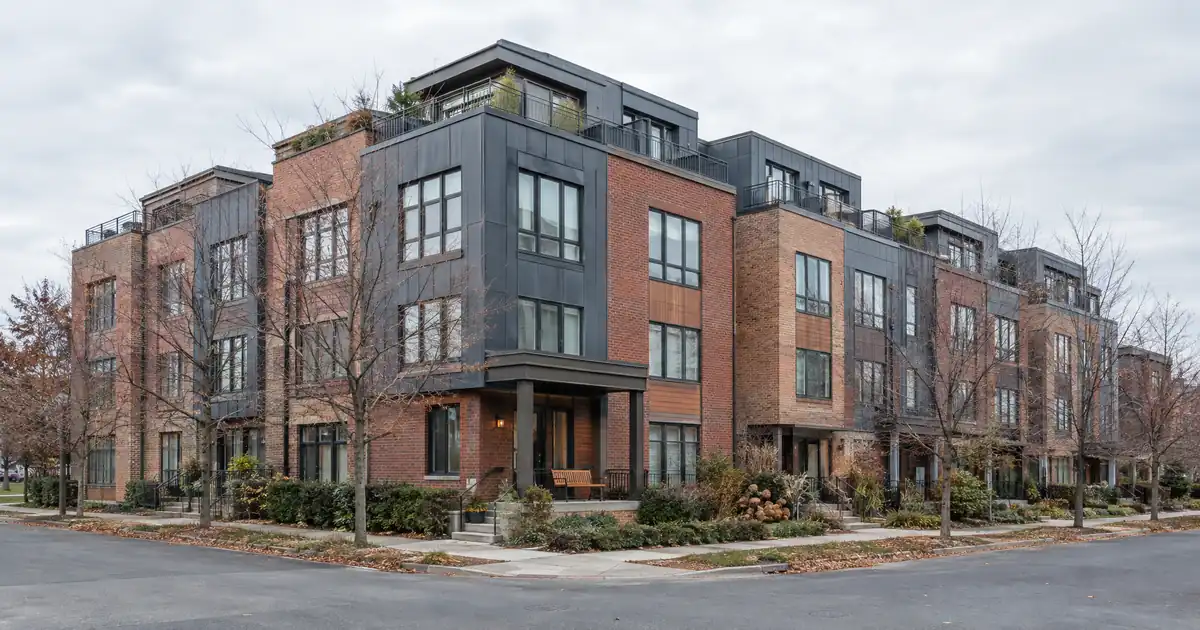
The Quick Read: A non-warrantable condo is a unit in a building that fails the standard project tests mortgage lenders use, and the label is a financing category, not a defect in the unit. HOA dues then sit in the denominator of the DSCR ratio, added to principal, interest, taxes, and insurance, never subtracted from rent.
- Non-warrantable is a classification by exclusion, so no single national definition or percentage exists.
- On DSCR files, the label usually changes the program path, leverage, and loan size rather than ending the deal.
- HOA dues count in PITIA (principal, interest, taxes, insurance, and association dues), so higher dues mean lower coverage.
- Clearing 1.00 on a DSCR file does not mean the unit produces positive cash flow.
- A rental ban in the HOA documents ends the plan no matter how the building is labeled.
Picture two units that rent for the same amount. One is a house. One is a condo with steep monthly dues. The condo posts the weaker ratio, and the reason is simple arithmetic. This guide walks through how the label works, how underwriting reads the building, and where dues land in the math. For the bigger picture on how these loans work, see the complete DSCR loans guide.
DSCR Calculator
Run the numbers in your market
Rate source: Freddie Mac 30-yr average via FRED® — Federal Reserve Bank of St. Louis · effective Oct 15, 2026
Prefilled with starting assumptions — enter your own rent or nightly figures, taxes, insurance, and HOA for a more accurate picture.
Program parameters update from Lendmire’s centralized guideline source. Taxes and insurance are editable estimates.
As of Oct 15, 2026 · General Freddie Mac market benchmark, not a Lendmire loan offer. Rent, nightly rate, occupancy, taxes, and insurance are editable estimates. Short-term rental figures are estimates only and vary significantly by season, property type, management approach, and local short-term-rental rules — confirm local regulations before relying on them. Qualifying income for short-term rentals varies by program — some use appraisal market rent, others use documented STR history or projections — and is confirmed in underwriting. Not a Loan Estimate, approval, or commitment to lend. Program availability and eligibility are subject to lender guidelines, credit approval, property review, and underwriting.
Key Terms Defined
Non-warrantable condo: A condo project that fails a lender’s project review, so it falls outside standard financing channels.
PITIA: Principal, interest, taxes, insurance, and association dues. It is the full monthly obligation on the property.
DSCR (debt service coverage ratio): Qualifying monthly rent divided by PITIA. A result of 1.00 means rent equals the obligation.
Special assessment: A one-time or temporary charge the HOA levies on owners, usually for a repair or a shortfall.
Condotel: A condo building run partly like a hotel, with rental programs and front-desk services.
Portfolio loan: A loan the lender keeps instead of selling on the secondary market.
How Is a Non-Warrantable Condo Defined?
A condo is non-warrantable when its building or HOA fails the project tests a lender applies. Nobody publishes one official list. Homebuyer.com notes that non-warrantable condos are not specifically defined in mortgage guidelines. Projects are reviewed, and the ones that fail are non-warrantable by exclusion.
The term has an origin story. It comes from the condo project standards that U.S. mortgage agencies apply to the loans they buy. That is where the word comes from. It is not the test a DSCR lender runs. DSCR lenders do not sell loans to those agencies, so each program sets its own building review.
The triggers fall into familiar categories:
| Trigger | Why lenders care | Can it affect a DSCR file? |
|---|---|---|
| Heavy investor ownership | Fewer owner-occupants, more turnover risk | Often, through leverage limits |
| One owner holds many units | Concentrated risk if that owner defaults | Often |
| Excess commercial space | Building behaves less like housing | Sometimes |
| Delinquent HOA dues | Budget stress, deferred upkeep | Yes |
| Thin HOA reserves | Special assessments become likelier | Yes |
| Pending litigation | Legal costs can hit every owner | Yes |
| New or unfinished construction | Developer still controls the HOA | Often |
| Condotel or rental-program operation | Hotel-like use, narrow lender pool | Often |
Thresholds for each trigger vary by source and by lender. Published ranges for single-owner concentration alone run from roughly 10% to 25%, and that spread is the evidence there is no universal number. Treat any single percentage you read online as one lender’s rule.
How Do DSCR Lenders Read the Building Differently?
On a DSCR file, a failed project test usually routes the loan to a different program path instead of a decline. Across the wholesale network Lendmire places files with, a non-warrantable building typically means tighter leverage and sometimes a smaller maximum loan, with terms set by the individual lender.
Here is the practical split. Some issues block only agency-style loans. Others worry every lender. High investor concentration is the first kind: a DSCR lender is lending to an investor anyway. Delinquent dues, thin reserves, and active litigation are the second kind, because they threaten the building’s health and the unit’s value.
Most DSCR programs in the network want around 660 on credit, with a 620 floor in parts of the network and 700+ for the strongest leverage tiers. Purchases typically land at 75%-80% LTV (loan-to-value, the loan as a share of the price) on an investment property. A non-warrantable label can pull a file below those levels, subject to lender guidelines. Fewer lenders will touch a given building, so the pool narrows. Homebuyer.com reports that education sites commonly cite 20% or more down for these loans. In this network, 20%-25% down is the typical purchase range, and the building’s status can push a file toward the upper end.
Portfolio lending is the concept behind this. DSCR lenders already operate that way, which is why building problems become pricing and leverage questions rather than automatic stops.
Where Do HOA Dues Sit in PITIA?
HOA dues belong in the denominator. The DSCR formula is qualifying monthly rent divided by PITIA, and the “A” is the association dues. A lower ratio is the direct result of higher dues.
The mechanics run in five steps:
1. The building is reviewed. The lender looks at the HOA questionnaire or budget, reserves, delinquency, litigation, and ownership concentration.
2. Rent is set. Rent used for lender review comes from a signed lease or the appraiser’s market rent. The appraiser uses the 1007 rent schedule on a single unit and the 1025 form on a 2-4 unit property. Many programs use the lower of lease and market rent, though this varies by lender.
3. PITIA is built. Principal and interest, taxes, insurance, and association dues are added together.
4. Dues are verified. The figure comes from the HOA documents or the appraisal.
5. The ratio is calculated. Rent divided by PITIA gives the coverage number.
Dues are never netted from rent the way a repair budget might be. Think of the formula as a fraction. Subtracting dues from the top would be a different calculation, and DSCR does not work that way. Dues go on the bottom, and they push the ratio down.
The same logic runs backward when a lender sizes a loan. The lender divides eligible rent by the target ratio, then subtracts taxes, insurance, and dues. What remains is the room for principal and interest. Higher dues shrink that room, which shrinks the loan the property can carry.
One more point catches people. Dues count whether the tenant or the landlord pays them. A lease that makes the tenant responsible for HOA fees does not remove the line from PITIA, subject to lender guidelines.
The commercial world uses a different formula. Residential DSCR on 1-4 units divides rent by PITIA, with dues included.
What Does the Ratio Look Like With and Without Dues?
Run the numbers on one condo three ways, using relative terms rather than dollars. Say a unit’s rent covers principal, interest, taxes, and insurance at about 1.25x before any dues are counted. That is a comfortable cushion at the usual 1.00 starting point many select programs use.
Add modest dues, and the ratio slides toward the low 1.1s. Add dues that run high, the kind common in a building with heavy master-policy insurance costs, and the same unit can drift toward or below 1.00. Nothing about the rent changed. Only the bottom of the fraction grew.
Now raise the dues again after a board vote. Coverage falls again. A unit that qualified at contract can look different at the lender’s review if the HOA budget changed in between. This is why the dues figure should come from a current HOA budget, not a listing sheet.
If a file lands below 1.00, paths exist. Coverage below 1.00 is available through select lenders in the network, with leverage and terms adjusted. A larger down payment also lowers the obligation and can lift the ratio. It never erases leverage caps, credit floors, reserve rules, or property eligibility. The strongest files clear both tests: enough equity and enough rental coverage.
DSCR vs. conventional financing
There are two common ways to finance an investment property, and they qualify you differently — here’s how investors weigh them.
Why investors choose it
- Qualifies on the property’s rental income — no personal tax returns, W-2s, or pay stubs needed to document income.
- No personal debt-to-income ceiling to clear, so existing mortgages and obligations don’t cap your borrowing the same way.
- Can be closed in an LLC, keeping the property inside a business entity.
- Built for scaling — not held to the limit on number of financed properties that conventional financing applies.
- Underwriting centers on the deal: generally qualifies when the rent covers the payment, a 1.00x coverage ratio being a common baseline (confirmed in underwriting).
- Designed specifically for investment property, including long-term and, where the program allows, short-term rentals.
Where it’s strong
- Often the lowest ongoing financing cost for a buyer who fully qualifies on personal income — a fit for a first property or a cost-first purchase.
Trade-offs for investors
- Requires full personal income documentation and must fit within a debt-to-income limit — salary, existing debts, and other mortgages all count.
- Typically held in your personal name rather than a business entity.
- Caps how many financed properties you can carry, which can become a ceiling as a portfolio grows.
- Evaluates you as a borrower as much as the property, which usually means more paperwork.
How investors usually choose: a first or single property often optimizes for the lowest financing cost; portfolio builders often optimize for leverage, vesting in an LLC, and scaling past conventional caps. The right answer depends on your goals, the property, and current guidelines — both paths run through select lenders in Lendmire’s wholesale network, with eligibility and terms confirmed in underwriting.
Why Do Dues Run High in Non-Warrantable Buildings?
The same problems that cause the label often inflate the dues. That link is easy to miss, and it hits the ratio twice.
- Litigation. Legal costs get funded through the association budget.
- Master-policy insurance. Buildings with project problems can face higher premiums, and the HOA passes them through to owners inside the dues.
- Reserve catch-up. A building with thin reserves often raises dues to rebuild them.
- Delinquent owners. When neighbors stop paying, the remaining owners carry the budget.
So a non-warrantable condo can face a pricing and leverage squeeze from the label and a lower ratio from higher dues. Meanwhile, the building’s rent usually does not rise to match. Screen for this before ordering an appraisal.
What About Special Assessments, Fee Frequency, and Optional Fees?
Special assessments are the least uniform piece. Depending on the lender, an assessment is treated as a reserves or cash-to-close issue, or converted to a monthly amount that enters PITIA. Ask which treatment applies before you assume the ratio ignores it.
Dues frequency is simple conversion. Quarterly dues divide by three to get a monthly figure. Annual dues divide by twelve. Lenders want the monthly equivalent in the calculation.
Know what the fee includes. Many associations bundle master insurance, water, trash, or amenities into one charge. Mandatory association assessments are consistently counted. Some underwriters may exclude charges for amenities the owner can decline, but that is lender-specific.
Interest-only structures change the principal-and-interest piece. Interest-only periods are available through select lenders in the network, and the payment used for the ratio and for reserves may reflect interest only. Confirm how the specific program computes it.
Reserves tie back to dues too. Reserves are commonly around 6 months of PITIA, and PITIA includes dues. Higher dues raise the reserve requirement. Loans above $1,500,000 typically step up to about 9 months, and conservative rate-and-term files at modest leverage can see reserves waived, varying by lender and file.
Warrantable, Non-Warrantable, Condotel, and Rental-Restricted: Four Different Questions
Warrantability is a financing test. Rental permission is a separate matter, and the HOA documents decide it.
A warrantable building can still ban short-term rentals, or even leases under a minimum term. A non-warrantable building might allow rentals freely. A condotel is a building type, usually with narrower lender pools and higher dues. A rental ban kills the DSCR plan outright, because there is no rent used for lender review to count.
For short-term rental use, dues count the same way. Only the rent side changes, to the method the program uses for short-term income. In the network, short-term rental purchases run up to 75% LTV, with a 640+ score and about 12 months of hosting history typical. Each figure is subject to lender guidelines and a complete review of property type, leverage, and credit.
A two-unit condo adds a wrinkle. It can mean one unit in a condo regime or both units of a building held as condos. The appraisal form and the rent test differ between those.
What Does the Ratio Leave Out?
Clearing 1.00 is not positive cash flow. DSCR compares rent to PITIA only. Vacancy, repairs, management fees, utilities, and capital expenses all sit outside the calculation.
A condo at 1.05x can lose money in a month with a vacancy or a roof assessment. Treat the ratio as a lender’s test, then build your own budget on top. Exit risk belongs in that budget too. A non-warrantable label shrinks the pool of buyers who can finance the unit, so resale can take longer.
Pre-Offer Checklist
Get these from the HOA or management company before you go under contract:
- The current budget and reserve study
- The delinquency report
- Litigation disclosures
- The master insurance summary
- The rental rules, including any minimum lease term or cap on rentals
- Any pending or recent special assessments
- The ownership breakdown, if the HOA will share it
Then screen in order: rental permission first, dues second, building flags third. Rental permission decides whether the plan exists. Dues decide whether coverage is workable. Flags decide leverage and lender options. The related piece How HOA Dues and Condo Status Affect DSCR PITIA covers the same ground from the status side.
Common Mistakes
- Netting dues from rent. Dues go in the denominator.
- Forgetting dues entirely. The ratio looks great until the lender adds them.
- Assuming a tenant-paid HOA drops out. It still counts.
- Treating one lender’s threshold as the rule. Percentages vary widely.
- Assuming warrantable means rentable. The HOA documents decide.
- Using a stale dues figure. Budgets change.
- Reading 1.00 as profit. It is a coverage test only.
Manufactured homes, log homes, and barndominiums are not offered in the network’s DSCR programs, so a condo is a very different property class from those and sits inside the eligible range.
Frequently Asked Questions
Does non-warrantable mean I cannot get a DSCR loan?
No. DSCR lenders review the building on their own terms, so the label usually means a different program path, with leverage and loan size adjusted. Eligibility still depends on the building, your credit, reserves, and lender guidelines.
Do HOA dues reduce my rent in the DSCR calculation?
No. Dues are added to PITIA in the denominator. Rent stays the numerator. The effect is a lower ratio, not a reduced income figure.
If my tenant pays the HOA, do dues still count?
Generally yes. Dues are part of the property’s monthly obligation whoever writes the check, subject to lender guidelines.
Is there one percentage that makes a condo non-warrantable?
No. Thresholds for investor concentration, single-owner holdings, commercial space, and delinquency vary by lender and source. Published ranges for single-owner concentration alone differ by more than double.
How are special assessments treated?
It depends on the lender. Some treat them as a reserves or cash-to-close item, and others convert an active assessment into a monthly figure inside PITIA. Ask for the treatment before you offer.
If you are buying or refinancing a rental property and want to see how the numbers work, Lendmire can help you compare DSCR loan options based on the property income, credit profile, leverage, and investor goals. Tax treatment varies; consult a qualified professional.
Whatever the building’s label, the dues line decides more files than the definition does, so read the HOA budget before the listing photos.
About Lendmire
Lendmire, NMLS# 2371349, is a mortgage brokerage focused on investor financing, arranging DSCR loans in 40 states plus Washington, D.C. — 41 markets total. Qualification is based on the property’s income rather than personal income documentation, subject to lender guidelines, making it a fit for LLC-held rentals and scaling portfolios. Scotsman Guide named Lendmire a Top Mortgage Workplace in both 2025 and 2026.
Get Started
Ready to find the right loan for you?
In about 30 seconds you can review financing options available for your investment property. No commitment required.
Informational only. Not a Loan Estimate, approval, or commitment to lend. Program availability and eligibility are subject to lender guidelines, credit approval, property review, and underwriting.
References
1. Homebuyer.com – Non-Warrantable Condo
This article is part of Lendmire’s DSCR loan program — full qualification details, guidelines, and scenarios live on the program page.
Related reading: Personal DSCR vs Non-Recourse on a Cross-Collateralized Portfolio · How Super Jumbo DSCR Cross-Collateral Rules Work for Non-Real-Estate Assets · Desk vs Field vs Second Appraisal on a Non-Warrantable Condo DSCR
Brandon Miller
Founder & CEO, Mortgage Loan Originator, Lendmire LLC
- Mortgage Loan Originator · NMLS# 1129696 · Verify on NMLS Consumer Access
- North Carolina Real Estate Broker · License# 343312 · Verify on NCREC
- North Carolina Insurance Producer · License# 19053198 · Property, Casualty, Life, Health · Verify on NAIC SBS
- Lendmire LLC · Firm NMLS# 2371349 · Verify firm licensure
Legal disclosures. Lendmire (NMLS# 2371349) is a state-licensed mortgage brokerage that arranges financing through wholesale lender relationships. Lendmire is not a direct lender, depository institution, or registered financial advisor. The discussion above is general informational content about real estate financing — it is not financial, legal, or tax advice, and readers should consult licensed professionals for guidance on their individual circumstances. Loan inquiries are subject to lender underwriting; this article does not represent a commitment to lend. Loan terms, rates, and qualification standards vary by borrower, property, and state, and are subject to change at any time. Equal Housing Opportunity. NMLS Consumer Access: nmlsconsumeraccess.org.