
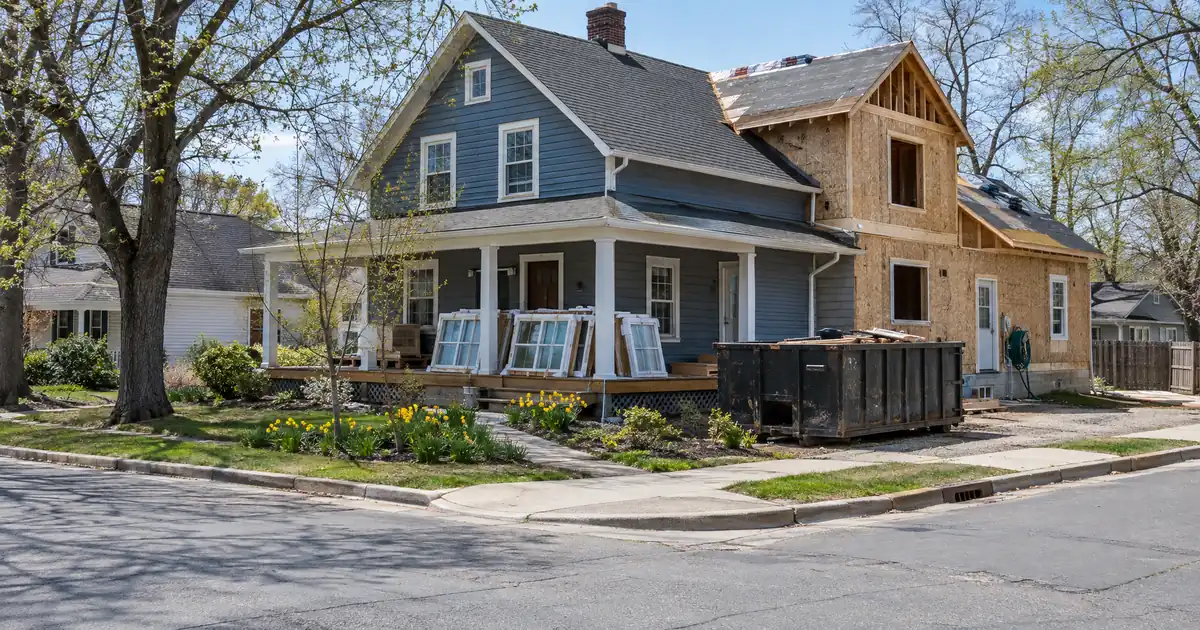
The Quick Read: A DSCR appraisal gives back only what the market pays for the finished condition, not what the investor spent. Cosmetic work usually returns through a better condition rating and renovated comparable sales, and no fixed percentage applies across files. The lender’s appraised value then runs through the leverage cap, and the separate rent opinion decides the coverage ratio.
- No national percentage exists. Credit depends on local sold comps.
- Small, visible updates tend to recover the most. Large remodels recover less.
- Value and rent are tested separately, so a nicer finish can raise one and not the other.
- The value that counts is the lender’s appraiser’s, not the investor’s spreadsheet.
- Documentation (scope, invoices, before/after photos) helps the work get recognized.
Investors planning light cosmetic work want one answer: how many of those dollars come back as loan proceeds. The honest answer is a framework, not a number. This article walks through how the appraiser handles the work, where the credit leaks, and how to plan around it.
DSCR Calculator
Run the numbers in your market
Rate source: Freddie Mac 30-yr average via FRED® — Federal Reserve Bank of St. Louis · effective Oct 22, 2026
Prefilled with starting assumptions — enter your own rent or nightly figures, taxes, insurance, and HOA for a more accurate picture.
Program parameters update from Lendmire’s centralized guideline source. Taxes and insurance are editable estimates.
As of Oct 22, 2026 · General Freddie Mac market benchmark, not a Lendmire loan offer. Rent, nightly rate, occupancy, taxes, and insurance are editable estimates. Short-term rental figures are estimates only and vary significantly by season, property type, management approach, and local short-term-rental rules — confirm local regulations before relying on them. Qualifying income for short-term rentals varies by program — some use appraisal market rent, others use documented STR history or projections — and is confirmed in underwriting. Not a Loan Estimate, approval, or commitment to lend. Program availability and eligibility are subject to lender guidelines, credit approval, property review, and underwriting.
Key Terms Defined
Appraised value: the as-is opinion of value the lender’s appraiser reports, which sets the loan-to-value denominator.
Contributory value: what a feature adds to market value as shown by comparable sales, not what it cost.
Condition rating: the appraiser’s grade of the property’s physical state, which drives adjustments against comps.
Market rent: the appraiser’s opinion of achievable rent, taken from rental comps and not from the borrower’s target.
Coverage ratio (DSCR): monthly rent divided by the full monthly obligation of principal, interest, taxes, insurance, and any HOA dues.
Cost basis: what the investor paid for the property plus documented improvements.
What Does the Appraiser Actually Do With Cosmetic Work?
The appraiser measures contributory value from the market, not from the contractor’s invoice. A residential appraisal firm’s educational page explains that contributory value is set by the market. Its main tool is paired-sales analysis, which compares otherwise similar renovated and unrenovated sales.
On a DSCR file the lender orders the appraisal. The report produces two outputs: an as-is value and a market rent. The rent comes from a single-family rent schedule (Form 1007) for one unit or a small residential income property report (Form 1025) for two to four units, per the form names on the Fannie Mae forms list. Those are form names only. DSCR loans are not agency products, and agency rules do not carry over.
Here is how the work shows up, step by step.
1. The appraiser rates the property’s condition and pulls sold comps.
2. The appraiser adjusts in the sales comparison grid for condition and quality. Where sales data is thin, a cost-based adjustment (replacement cost minus depreciation) may stand in, and it is still not dollar for dollar.
3. The appraiser checks the finished product against the neighborhood. If the work pushes the property past what nearby sales support, the adjustment gets limited.
4. Rent is tested separately, from rental comps.
The result: cosmetic work often appears as a better condition rating and a modest adjustment, not as a line item that mirrors the invoice.
So How Much Comes Back?
No reliable national figure exists, and any page that gives one without a method is guessing. The closest hard numbers come from resale research, and they come with a caveat.
The National Association of Realtors compares contractor cost estimates with Realtor estimates of value added at resale. In its 2025 Remodeling Impact Report release, a new steel front door recovers 100% of cost, a closet renovation 83%, and a fiberglass front door 80%. NAR’s resale editorial puts a minor kitchen upgrade at 60%, a bathroom renovation at 50%, and a new primary suite at 54%.
The pattern is the useful part. Small, visible, low-cost updates recover the most. Mid-range interior remodels recover roughly half to three-fifths. These are homeowner resale estimates on a model house, not DSCR appraisal outcomes. Treat them as direction, not as a formula.
| Cosmetic item | How it shows in the report | Likely credit |
|---|---|---|
| Paint, hardware, fixtures | Condition rating | Small but visible |
| Flooring | Condition adjustment | Moderate, comp-dependent |
| Kitchen or bath refresh | Quality adjustment | Partial |
| Landscaping, cleanup | Condition and curb view | Small |
| Full gut remodel | Over-improvement risk | Often below cost |
The credit levels are qualitative. They shift with the neighborhood and the tier of buyer the comps reflect.
Why Cost and Value Split
An improvement may support a higher appraised value, depending on comps and underwriter review. It never earns credit just because it was expensive.
Appraisers call an improvement that costs more than the market will pay for a superadequacy. A GrahmsGuide explainer describes the neighborhood price ceiling that causes it. Put a high-end kitchen into a modest-price block, and the appraiser cannot find supporting comps. The spend stays on your side of the ledger.
This also resolves a contradiction in investor advice. One camp says cosmetic work adds nothing. Another says it adds value. Both are right, depending on the comps. If nearby sales are tired and dated, a clean finish stands out and earns an adjustment. If nearby sales are already renovated, the same work only brings you to par.
From Appraised Value to Dollars Back
The credit passes through the leverage cap before it becomes proceeds. Across the wholesale network, purchase loans typically land at 75%-80% LTV on an investment property, and cash-out refinances top out around 75% LTV. Credit scores and reserves apply on top of that, subject to lender guidelines.
Consider three outcomes on a refinance, using an index of 100 for the property’s value before the work and no dollar figures:
- Full credit: the appraisal reflects the finished condition. Value moves up, and proceeds follow at the cash-out cap.
- Partial credit: the appraiser credits part of the spend. Proceeds rise, but less than the plan assumed.
- No credit: comps show no renovated-versus-unrenovated gap. Value stays flat, and the payoff and closing costs stay the same.
The last case is the one that hurts. A low appraisal shrinks cash-out because the payoff on any prior financing does not shrink with it. Lendmire’s piece How Much Rehab Money a DSCR Cash-Out Returns on a Low Appraisal covers that side in detail. A sound planning habit is to underwrite the exit on the low end of sold comps, and to leave a cushion below the projected value.
Does the Rent Opinion Move Too?
Not necessarily. The appraiser’s market rent comes from rental comps, not from the finish level you chose. A cosmetic upgrade can lift value without lifting supportable rent, and the reverse can happen too.
This matters because the coverage ratio runs on rent. Across the network, 1.00 is where select programs start, and stronger ratios open better pricing and leverage. A separate select-lender path takes coverage below 1.00, with leverage and terms adjusted. Clearing 1.00 is not the same as positive cash flow, since repairs, vacancy, management, and capex sit outside the calculation.
So the file has two tests. Enough equity, shown by value. Enough rental coverage, shown by rent. Cosmetic work helps the first more often than the second.
Which Value Does the Lender Use?
The lender’s appraiser sets the value that counts. Your after-repair spreadsheet is not an input. A DSCR appraisal reports as-is value and market rent on a rent-ready property, and it does not carry a separate after-repair value conclusion. The one exception is a report issued subject to completed repairs, covered in the next section.
That is a real contrast with agency multifamily practice, where Freddie Mac’s moderate rehab appraisal guidance has appraisers conclude both an as-is value and an as-if-renovated value. That is a contrast only. It is not a DSCR rule.
Some lenders also size early in the ownership window off documented cost or purchase price rather than appraised value. Across the network, about 6 months of seasoning is the common expectation on a cash-out refinance. Until a file clears the lender’s seasoning test, rehab value may not reach loan proceeds at all. Ask how a lender treats recent rehab before choosing one.
DSCR vs. conventional financing
There are two common ways to finance an investment property, and they qualify you differently — here’s how investors weigh them.
Why investors choose it
- Qualifies on the property’s rental income — no personal tax returns, W-2s, or pay stubs needed to document income.
- No personal debt-to-income ceiling to clear, so existing mortgages and obligations don’t cap your borrowing the same way.
- Can be closed in an LLC, keeping the property inside a business entity.
- Built for scaling — not held to the limit on number of financed properties that conventional financing applies.
- Underwriting centers on the deal: generally qualifies when the rent covers the payment, a 1.00x coverage ratio being a common baseline (confirmed in underwriting).
- Designed specifically for investment property, including long-term and, where the program allows, short-term rentals.
Where it’s strong
- Often the lowest ongoing financing cost for a buyer who fully qualifies on personal income — a fit for a first property or a cost-first purchase.
Trade-offs for investors
- Requires full personal income documentation and must fit within a debt-to-income limit — salary, existing debts, and other mortgages all count.
- Typically held in your personal name rather than a business entity.
- Caps how many financed properties you can carry, which can become a ceiling as a portfolio grows.
- Evaluates you as a borrower as much as the property, which usually means more paperwork.
How investors usually choose: a first or single property often optimizes for the lowest financing cost; portfolio builders often optimize for leverage, vesting in an LLC, and scaling past conventional caps. The right answer depends on your goals, the property, and current guidelines — both paths run through select lenders in Lendmire’s wholesale network, with eligibility and terms confirmed in underwriting.
Finish First, or Go “Subject To”?
Many programs treat cosmetic wear as acceptable as-is. Safety, structural, and systems problems usually must be cured before funding. Each lender sets its own line.
An appraisal can also come back subject to completed repairs. In that case the appraiser values the property as if the work is done, and the work must then be finished and verified before funding. That is the narrow case where an as-if-completed value appears on a DSCR report. Not every program allows it. Where a file can go subject-to, completion proof or a repair escrow usually follows.
The cleaner path is to finish the work, then order the appraisal. The appraiser sees the real condition, and the report needs less explaining.
Paperwork That Gets the Work Recognized
Appraisers cannot credit what they cannot see or document. The packet that helps:
- An itemized scope of work with invoices.
- Before and after photos with dates.
- Renovated sold comps from the same area.
- A lease or rent comps, if rent is the question.
A stale listing photo or an older public record can leave the “before” state visible to the appraiser. Handing over the packet corrects that. Those items also form the base of any later reconsideration request.
If the Appraisal Under-Credits the Work
A reconsideration of value works on factual errors and omitted work, not on opinion. Merely adding comps often fails, because the real dispute usually sits in the adjustments. The request goes through the lender or broker, never straight to the appraiser. A packet showing work the report missed, plus recent in-neighborhood sales with condition adjustments, is the version that can move a number.
| Option | When it fits |
|---|---|
| Bring more cash | The gap is small and the deal still pencils |
| Take a smaller loan | Value is firm, proceeds fall short |
| Dispute with documentation | The report omitted completed work |
| Wait and reappraise | Comps will catch up or work is unfinished |
For a related view, see Lendmire’s piece How Much Rehab Cost a DSCR Appraisal Returns in a Slipping Market. The point stands either way: the number that counts is the lender’s, not yours.
Is the Cosmetic Spend Worth It?
It is worth it when the comps back it up. Run this check before you buy materials.
1. Pull sold comps from the last several months. Do renovated sales clear unrenovated ones in the same tier?
2. Match the scope to what buyers in that tier expect. Do not build past the block.
3. Spend first on small, visible items. NAR’s figures point there.
4. Price the exit on the low end of comps, with room below it.
5. Check the coverage ratio on market rent, not on the rent you hope for.
Lendmire’s complete DSCR loans guide lays out how these files are structured. Light cosmetic wear is often acceptable as-is, so some work is optional. Skip it when the comps show no gap.
Frequently Asked Questions
Do paint and flooring raise a DSCR appraisal?
They can, through the condition rating and a comp adjustment, but only to the extent nearby sales show a gap between renovated and dated homes. Where comps are already updated, the work brings the property to par rather than above it.
Does a DSCR loan fund the rehab itself?
Standard DSCR programs finance a rent-ready property, not the construction. Light repairs are often handled with the investor’s own cash first, then a DSCR refinance follows once the property is complete. Planned work does not guarantee eligibility.
Is there a fixed percentage of rehab cost the appraiser credits?
No. Credit comes from market evidence, not a formula. Resale research shows small, visible items recovering the most and mid-range interior remodels recovering roughly half to three-fifths, but those are homeowner estimates, not DSCR outcomes.
Will cosmetic work raise my market rent?
Not automatically. The appraiser pulls market rent from rental comps. A nicer finish may help tenant quality and retention without changing the rent the report supports.
Can I plan on skipping the appraisal after a rehab?
Across the wholesale network, plan on an appraisal. Eligibility, value, and rent all run through the lender’s appraiser, subject to lender guidelines.
If you are buying or refinancing a rental property and want to see how the numbers work, Lendmire can help you compare DSCR loan options based on the property income, credit profile, leverage, and investor goals. Tax treatment varies, so consult a qualified professional.
About Lendmire
Lendmire, NMLS# 2371349, is a non-QM mortgage broker serving real estate investors in 41 markets, including Washington, D.C., through DSCR investor loan programs. Qualification is generally reviewed around the subject property’s rental income, not the borrower’s W-2 history, a practical fit for LLC-titled portfolios and self-employed investors. All scenarios remain subject to lender review and program guidelines. Two consecutive Scotsman Guide Top Mortgage Workplace recognitions (2025, 2026).
Get Started
Ready to find the right loan for you?
In about 30 seconds you can review financing options available for your investment property. No commitment required.
Informational only. Not a Loan Estimate, approval, or commitment to lend. Program availability and eligibility are subject to lender guidelines, credit approval, property review, and underwriting.
References
1. madisonparkappraisal.com: Do Renovations Add Appraisal Value
2. Fannie Mae Selling & Servicing Guide Forms
3. NAR: Top Remodeling Projects for Homeowner Satisfaction and Cost Recovery
4. NAR: 12 Remodeling Projects That Offer the Best Value at Resale
5. GrahmsGuide: Impact of Renovations on Appraisal Values
6. Freddie Mac: Multifamily Moderate Rehab Appraisal Best Practices
This article is part of Lendmire’s DSCR loan program — full qualification details, guidelines, and scenarios live on the program page.
Related reading: How Much Insurance Moves the DSCR in a Permit-Capped STR Market · How to Refinance a Mid-Rehab Rental Out of Hard Money Into DSCR · How Much Rehab Cost a DSCR Lender Credits a First-Time Flipper
Brandon Miller
Founder & CEO, Mortgage Loan Originator, Lendmire LLC
- Mortgage Loan Originator · NMLS# 1129696 · Verify on NMLS Consumer Access
- North Carolina Real Estate Broker · License# 343312 · Verify on NCREC
- North Carolina Insurance Producer · License# 19053198 · Property, Casualty, Life, Health · Verify on NAIC SBS
- Lendmire LLC · Firm NMLS# 2371349 · Verify firm licensure
Compliance and disclosures. Lendmire (NMLS# 2371349) is a licensed mortgage broker and is not a direct lender, depository institution, financial advisor, or tax professional. Content in this article is general market analysis and educational information — not financial, legal, or tax advice for any specific situation. Lendmire does not guarantee loan approval; every transaction is subject to underwriting by the funding lender. Mortgage pricing and loan program guidelines are subject to change at any time without notice and vary by borrower characteristics, property type, and state regulations. Lendmire complies with Equal Housing Opportunity. Licensure verification: NMLS Consumer Access.